
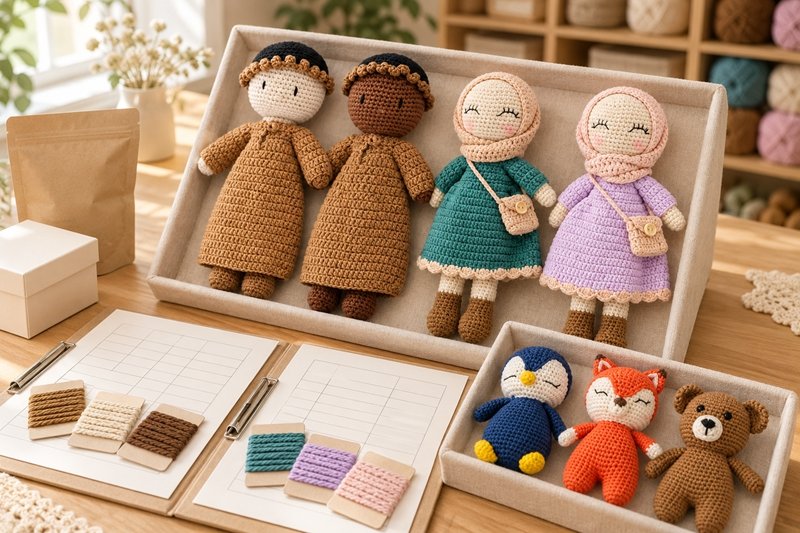
Buyers should compare two custom crochet quotations against the same product specification, quantity assumptions and delivery scope. A lower unit price may reflect a different yarn, simpler construction, reduced packaging or excluded development work. Before selecting a supplier, identify those differences and ask each supplier to confirm what its quotation includes.
This guide is for brands, gift companies, retailers and importers evaluating custom crochet proposals. It focuses on making quotations comparable, rather than estimating a universal product price or choosing a supplier on price alone.
Start With One Shared Product Reference
Two suppliers can interpret the same reference image differently.
One may quote a detailed interpretation with embroidered features and separately attached accessories. Another may assume a simplified shape, fewer decorative elements or a different yarn.
Both quotations can appear to describe the same product while covering different work.
Give each supplier the same reference package, including:
- The design or approved reference images.
- Target dimensions and measurement points.
- Intended use and target market.
- Required materials and identifying features.
- Accessories and attachment requirements.
- Quantity by design and color.
- Packaging requirements.
- Required development and approval stages.
- Delivery destination and requested delivery scope.
Ask suppliers to list assumptions and proposed changes. A reference image should not be treated as a complete manufacturing specification.
For preparing those inputs, see What Should Brands Include in a Custom Crochet Product Development Brief?.
Build a Side-by-Side Comparison Sheet
Use a comparison sheet that separates confirmed information from assumptions.
| Comparison area | What buyers should check | Why a difference matters |
|---|---|---|
| Product version | Design reference, dimensions and required details | A simplified interpretation may require less work |
| Manufacturing route | Handmade crochet or a clearly described alternative | Different processes produce different surfaces and structures |
| Yarn and filling | Material specifications and approved references | Material changes can affect appearance, feel and consumption |
| Construction | Parts, seams, embroidery and attachments | Assembly requirements influence work content |
| Order quantities | Quantity per design, color and total order | Different quantity assumptions can change pricing |
| Packaging | Individual pack, inserts, labels and outer cartons | A product-only price may exclude retail preparation |
| Development | Sample scope, revisions and approval stages | Initial development costs may sit outside the unit price |
| Quality scope | Acceptance criteria, inspection and records | Different verification requirements create different obligations |
| Delivery scope | Named delivery terms, location and included transport | Prices may cover different portions of the journey |
| Commercial conditions | Currency, payment stages, validity and exclusions | The payable amount and commitments may differ |
Mark unclear items as “not confirmed.” Do not assume that an omitted requirement is included.
Compare the Product Being Quoted
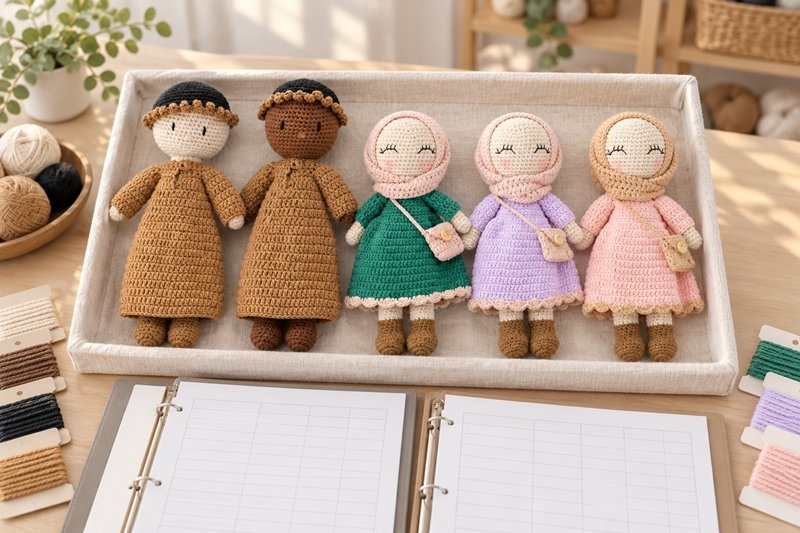
Dimensions and Proportions
Confirm which dimensions the quotation uses and how they are measured.
For soft products, “height” might include ears, a hanging loop or another extension. A difference in interpretation can affect both the finished product and packaging.
Also check proportions. Two products with the same total height may have different head sizes, body volumes or limb lengths.
Yarn and Surface Appearance
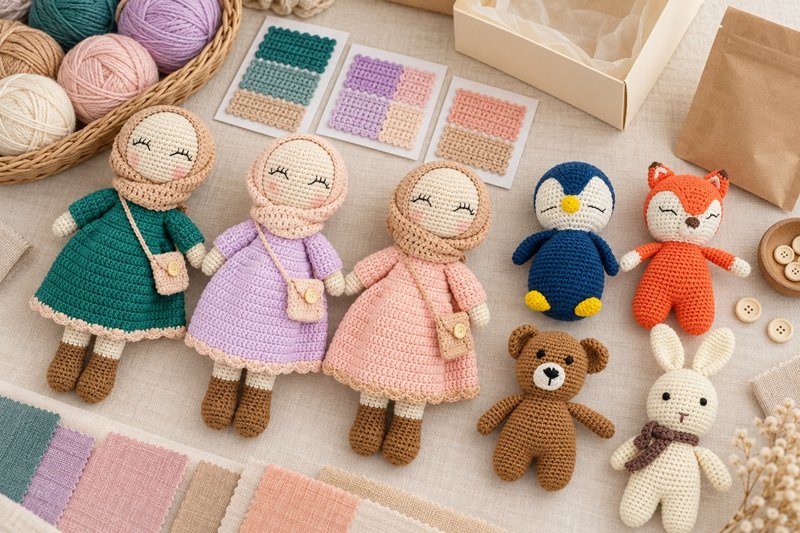
Ask for the proposed yarn specification rather than relying on descriptions such as “cotton yarn” or “soft yarn.”
Check the relevant material identity, yarn construction, thickness and color reference. These details can influence stitch definition, shape and the product’s appearance.
Features and Assembly
Review details that are easy to overlook in a photograph:
- Embroidered versus applied facial features.
- Separate versus integrated parts.
- Decorative trims and clothing.
- Removable accessories.
- Hanging loops or other attachments.
- Finishing and yarn-end treatment.
Ask each supplier to explain where its proposed construction differs from the brief.
Manufacturing Route
Confirm whether the price covers handmade crochet or another defined construction.
An alternative route should not be treated as equivalent merely because the product depicts the same character. Compare the physical samples and resulting product specifications.
Check Quantity Assumptions at SKU Level
An order total does not fully describe the production requirement.
A quotation for one design in one color may not be comparable to a quotation for several designs and color combinations, even when the total number of units is the same.
Record:
- Quantity per design.
- Quantity per color or material variant.
- Total order quantity.
- Any minimum quantity applying to a design or component.
- Whether quantities can be combined for pricing.
- The quantity basis for each quoted price tier.
Ask what changes if the buyer revises the mix.
For example, moving units from one design to another may affect material purchasing or production planning. Obtain a revised quotation where the original assumptions no longer apply.
Avoid selecting a price tier based on an order volume that the business does not intend to purchase.
Separate Development Costs From Production Costs
A unit price may exclude the work needed to reach an approved product.
Review development charges separately, including:
- Initial sample development.
- Material sourcing for sampling.
- Additional sample versions.
- Packaging prototypes.
- Sample shipment.
- Any agreed treatment of development charges after an order.
Confirm what the quoted sample scope delivers. “Sample fee” may refer to different numbers of products, versions or development activities.
Also ask how changes requested after approval will be handled. A revised design may require a new sample, new materials or updated pricing.
For the separate question of sample pricing, see Why Do Crochet Sample Prices Vary?.
Confirm the Packaging and Quality Scope
Packaging Inclusions
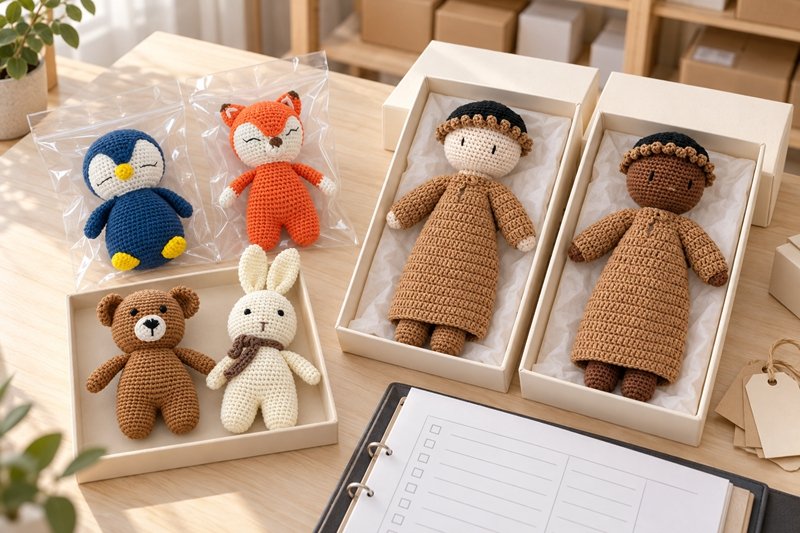
Identify whether the price includes:
- Individual product protection.
- Retail boxes or pouches.
- Hangtags and printed inserts.
- Buyer-supplied artwork application.
- SKU identification.
- Outer cartons.
- Any required sorting or packing arrangement.
Packaging specifications should include the relevant material, size, structure and print requirements.
A plain protective bag and a retail gift box are different deliverables. Neither should be inferred from a general phrase such as “packing included.”
Quality Requirements
Check that each quotation acknowledges the same product acceptance criteria and verification requirements.
Relevant points may include:
- The approved sample reference.
- Dimensions and appearance requirements.
- Workmanship criteria.
- Inspection stages.
- Required records or reports.
- Handling of nonconforming products.
If product-specific testing is required, identify whether it is included, separately quoted, buyer-arranged or still awaiting assessment.
A quotation that mentions testing should define its scope. A general statement about supplier experience does not establish that a particular product evaluation is included.
Make Delivery Scope Comparable
A price covering goods at one location cannot be directly compared with a price that includes additional transport and handling.
Record the named delivery terms, specified location and included services. Ask suppliers to explain exclusions where the wording is unclear.
For comparison purposes, establish which costs remain outside each quotation, such as transport or other services that the buyer will arrange.
Keep uncertain estimates separate from confirmed supplier charges. Do not turn a provisional freight estimate into a guaranteed delivered cost.
For the broader cost calculation, see How to Calculate Landed Cost for Imported Crochet Products.
Compare Commercial Conditions and Schedule Assumptions
Check the quotation’s currency, validity period, payment stages and conditions for price changes.
Then examine the schedule:
- What event starts the production lead time?
- Must the sample and artwork be approved first?
- Are materials already available or still subject to sourcing?
- Does the quoted period include packaging?
- Is transit included or listed separately?
- Which buyer approvals are needed to maintain the schedule?
Two quotations stating the same number of days may start from different milestones.
Record those milestones before assessing whether the proposal supports the intended launch.
Ask for Clarification Before Negotiating
When a price difference appears, ask what explains it.
Useful clarification questions include:
- Which yarn and construction does this price assume?
- Have all pictured accessories been included?
- Does the price cover the specified retail packaging?
- What quantity mix was used?
- Which development activities are charged separately?
- What inspection or testing scope is included?
- Where does the supplier’s delivery responsibility end?
- Which assumptions would trigger a revised quotation?
Once the scope is clear, buyers can discuss alternatives more effectively.
A supplier might propose simpler embroidery, a revised accessory or another packaging format. Evaluate each proposal against the product’s identity and commercial requirements.
Document accepted alternatives before requesting the final quotation.
Use an Illustrative Comparison to Find the Real Difference
Consider two hypothetical quotations for the same character product.
Quotation A appears cheaper, but assumes a different yarn and basic protective packaging. Quotation B includes the requested yarn, embroidered details and a printed retail box.
The buyer cannot conclude that A is better value from the unit prices alone.
A useful next step is to ask:
- Supplier A to quote the requested specification.
- Supplier B to identify any optional packaging costs.
- Both suppliers to confirm the same quantities and delivery scope.
- Both suppliers to list remaining exclusions.
This example is illustrative, not a report of an actual UMY project.
The outcome should be a clear comparison of equivalent proposals or explicitly different options.
Discuss a Defined Quotation Scope With UMY Crochet
For a custom project, a useful quotation discussion connects the design, materials, construction, quantities and retail requirements.
Share one controlled brief and ask the project team to identify:
- Confirmed requirements.
- Proposed alternatives.
- Assumptions requiring sample evaluation.
- Development and production charges.
- Packaging and delivery inclusions.
- Information still needed to finalize the proposal.
This gives the buyer a clearer basis for evaluating the product and the commercial offer together.
Frequently Asked Questions
Does a lower unit price mean a better quotation?
Only when the product and commercial scope meet the buyer’s requirements. First establish what each price includes.
Can buyers compare quotations based on the same photograph?
A photograph is a starting reference. Confirm dimensions, materials, construction, quantities and packaging so that suppliers are quoting a defined product.
Should sample fees be included in the comparison?
Yes, but record them separately from production unit prices. Confirm the development scope and any agreed treatment of those charges.
Why can the same total order quantity produce different prices?
The design and color mix can change material purchasing and work requirements. Compare quantities at SKU level.
What should buyers do when an inclusion is missing?
Ask for written confirmation. Mark it as unresolved until the supplier confirms whether it is included or separately charged.
Can buyers request a lower-cost alternative?
Yes. Ask the supplier to specify the proposed changes and assess their effect on appearance, construction and retail requirements before approval.
When should a quotation be updated?
When a change affects its assumptions, such as design, materials, quantities, packaging or delivery scope. Obtain the revised proposal before committing to the changed order.
Request a Custom Crochet Quotation Review
Ask UMY Crochet to assess the project inputs and provide a proposal with clearly stated specifications, assumptions, inclusions and development requirements.
 Chinese