

Understanding What You're Really Paying for in Custom Crochet Product Development
One of the most common questions we receive from new buyers is:
"Why is the sample price so much higher than the production price?"
It's a fair question.
At first glance, a crochet sample may look identical to the products that will later be manufactured in bulk.
So why does it often cost more?
At UMY Crochet Factory, we have specialized in crochet manufacturing since 2013, helping retailers, museum stores, gift brands, distributors, startups, and corporate buyers across more than 150 countries and regions develop custom crochet products.
Over the past 12 years, we've prepared thousands of custom samples ranging from simple crochet keychains to highly detailed character collections, baby gift sets, museum souvenirs, and branded promotional products.
One thing we've consistently observed is:
A sample is not simply one product—it is the beginning of an entire product development process.
Understanding what goes into sample development helps buyers make better sourcing decisions and build stronger long-term partnerships with manufacturers.
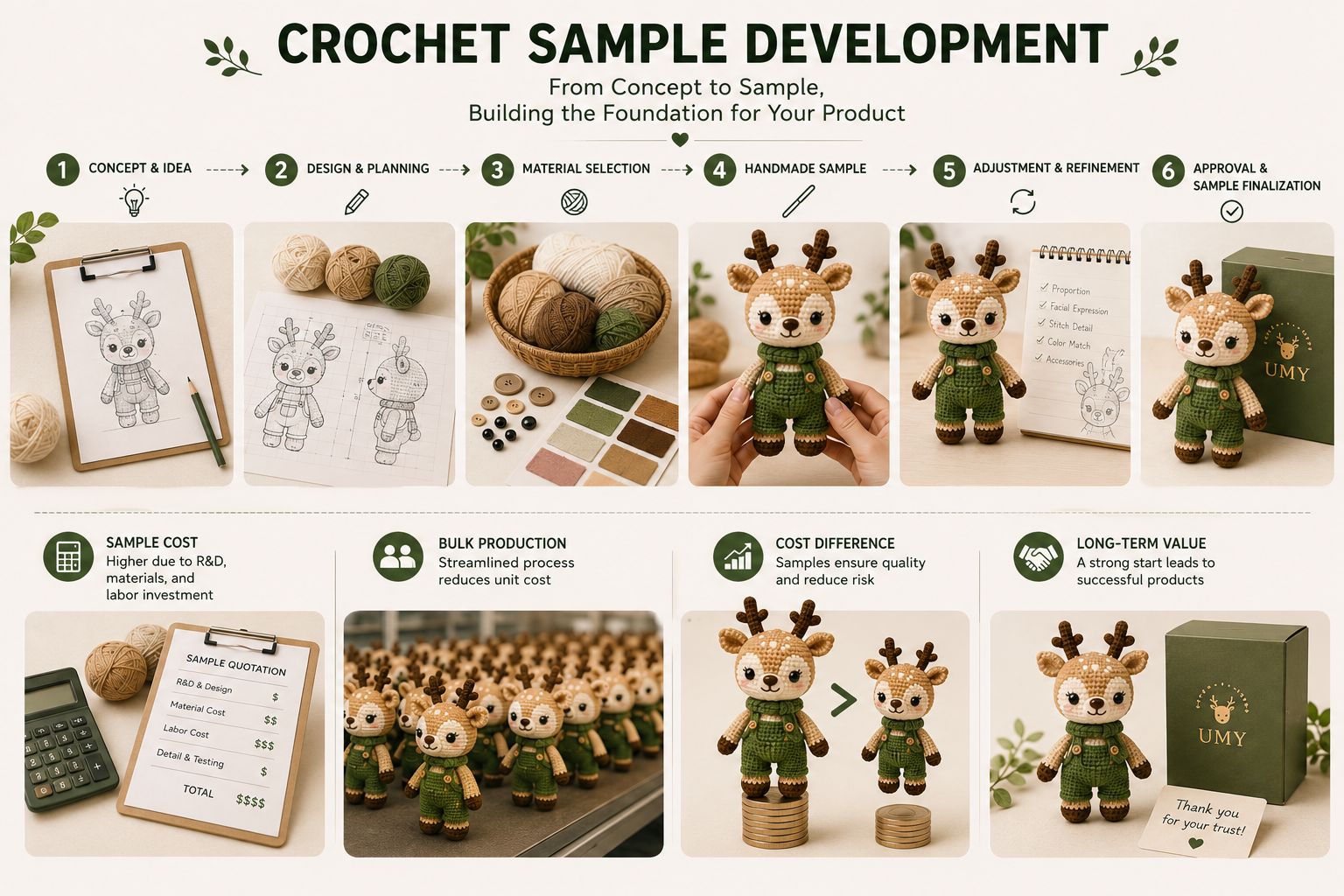
Why Are Crochet Samples More Expensive Than Bulk Orders?
Many first-time buyers assume that sample pricing is calculated using the same method as production pricing.
In reality, they are completely different.
Mass production benefits from:
- Standardized workflows
- Repeated production
- Material purchasing efficiency
- Shared setup costs
- Production line optimization
A custom sample has none of these advantages.
Instead, every sample starts from zero.
Before a single stitch is made, manufacturers typically need to complete:
- Design evaluation
- Technical planning
- Material selection
- Pattern development
- Prototype adjustments
- Internal quality review
In many cases, the labor required to develop the first sample is greater than the labor required to manufacture multiple production pieces.
That is why sample pricing reflects development work rather than production efficiency.
The 7 Main Factors That Affect Crochet Sample Prices
1. Product Complexity
The biggest factor influencing sample cost is not size.
It is complexity.
For example, a 15 cm crochet mascot with multiple accessories may require significantly more development time than a 30 cm doll with a simple body structure.
Development complexity may include:
- Multiple color changes
- Layered construction
- Embroidery
- Clothing
- Accessories
- Special shaping
- Facial expression adjustments
One lesson we've learned is:
Complexity usually influences sample cost more than product size.
2. Design Development Time
Unlike production orders, custom samples often require pattern creation from scratch.
Depending on the project, our development team may work from:
- Hand sketches
- AI-generated concepts
- Product photos
- Character artwork
- Customer ideas
Pattern development involves experimentation, adjustments, and multiple construction tests before reaching a manufacturable solution.
This development work becomes part of the sample cost.
3. Material Preparation
Custom samples rarely use standardized materials immediately.
Before production begins, manufacturers often need to source or prepare:
- Specific yarn colors
- Organic cotton
- Velvet yarn
- Wooden accessories
- Safety components
- Custom labels
- Packaging materials
Sometimes materials must be ordered specifically for a single project.
This preparation contributes to overall sample pricing.
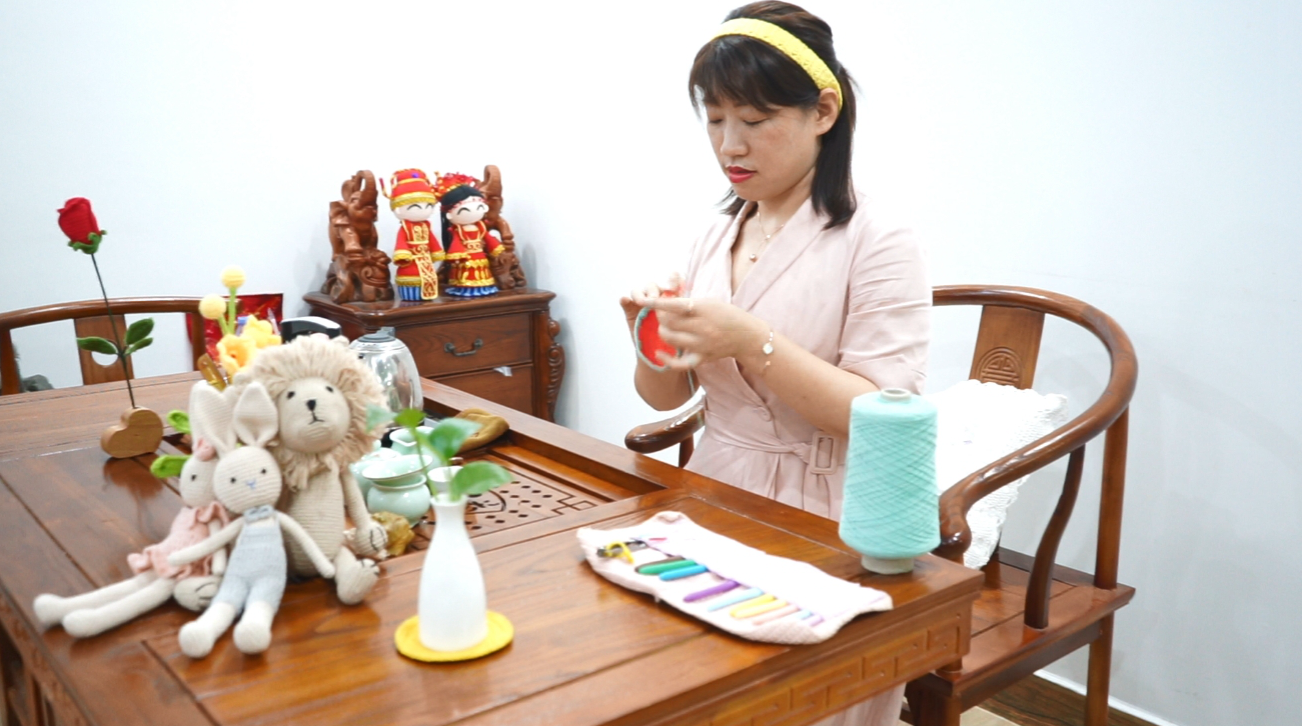
4. Labor Time
Crochet remains a highly skilled handmade craft.
Sample makers are typically among the factory's most experienced technicians.
Unlike production workers following standardized methods, sample technicians often spend time:
- Testing construction methods
- Refining proportions
- Improving appearance
- Solving technical challenges
One thing we've consistently observed is:
You're paying not only for labor—but for experience.
5. Revision Requirements
Few custom products are approved after the first version.
Many projects require adjustments such as:
- Facial expressions
- Color matching
- Size modifications
- Clothing revisions
- Packaging updates
- Accessory improvements
Each revision adds additional development time.
Experienced manufacturers typically consider this possibility during initial sample planning.
6. Custom Packaging Development
Sometimes the product is only part of the sample.
The project may also include:
- Gift boxes
- Story cards
- Hang tags
- Barcode labels
- Instruction cards
- Retail packaging
Packaging development often involves separate design work and prototype production.
For gift-oriented products, packaging can represent a significant portion of total sample development costs.
7. Product Testing and Internal Quality Review
Before presenting a sample to customers, experienced factories usually conduct internal reviews.
These may include:
- Construction evaluation
- Appearance inspection
- Material verification
- Safety review
- Packaging compatibility
- Production feasibility assessment
The objective is not simply to create a beautiful sample.
It is to create a product that can be manufactured consistently on a larger scale.
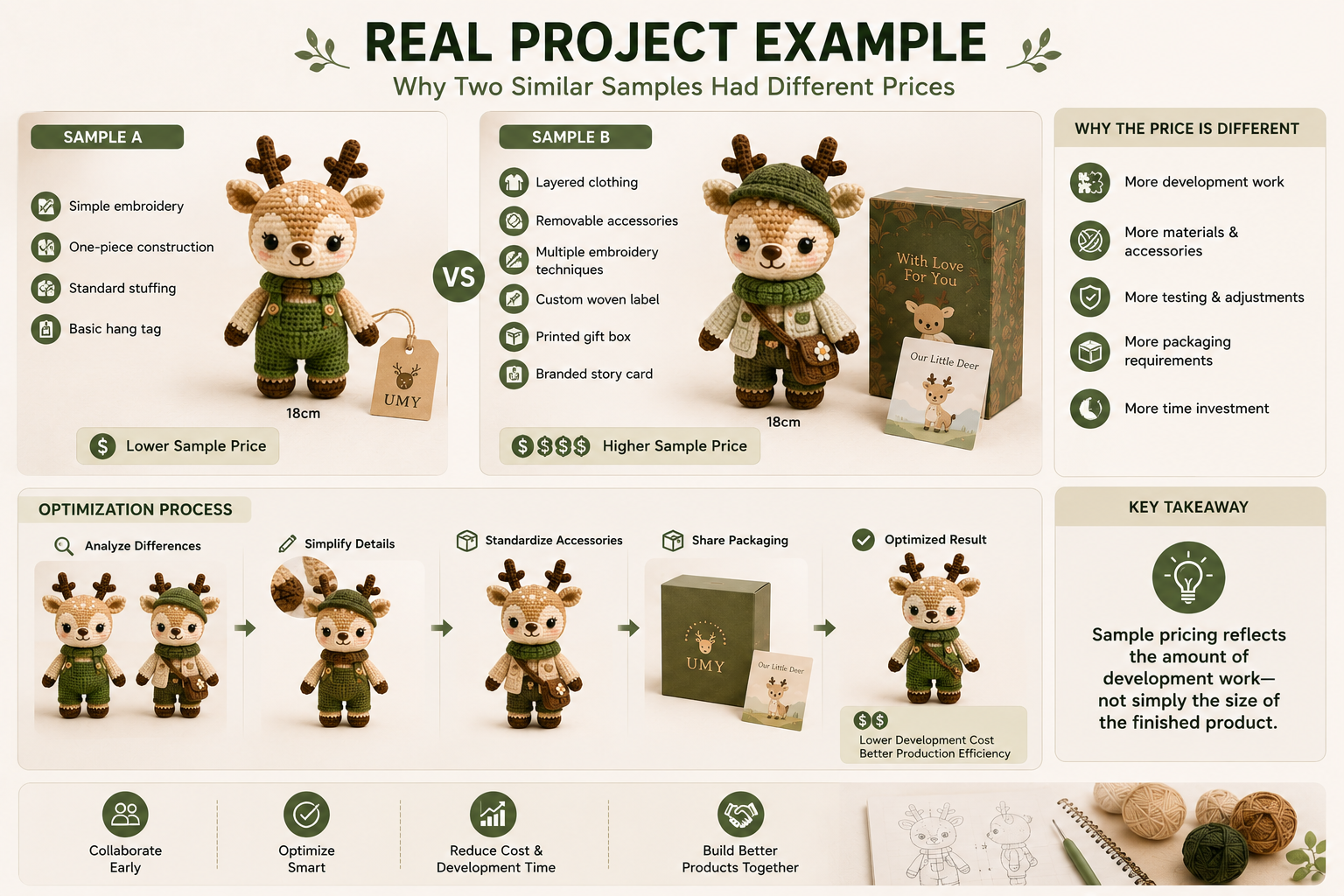
Real Project Example: Why Two Similar Samples Had Different Prices
A gift brand approached us with two crochet character concepts.
At first glance, both products appeared almost identical.
Both were approximately 18 cm tall, used similar yarn colors, and shared the same overall shape.
However, after reviewing the artwork, our development team identified several important differences.
The first design featured:
- Simple embroidery
- One-piece construction
- Standard stuffing
- Basic hang tag
The second design included:
- Layered clothing
- Removable accessories
- Multiple embroidery techniques
- Custom woven label
- Printed gift box
- Branded story card
Although the products looked similar, the second project required significantly more development work.
Our team needed additional time to:
- Develop new crochet patterns
- Test accessory attachment methods
- Optimize clothing proportions
- Ensure packaging compatibility
Rather than simply quoting a higher price, we worked closely with the customer to identify opportunities for optimization.
Together, we:
- Simplified several decorative details
- Standardized accessory construction
- Shared packaging across multiple products
This project reinforced one important lesson:
Why Many Crochet Factories Refund Sample Fees
One question we hear frequently is:
"If I place a production order later, will the sample fee be refunded?"
In many cases, the answer is yes.
Although policies vary between manufacturers, many professional crochet factories treat sample development as the first stage of a long-term partnership rather than a separate profit center.
At UMY Crochet Factory, sample fee policies are discussed according to each project's requirements, order quantity, and development scope.
For qualified production orders, part or all of the sample development cost may be credited back according to the agreed quotation terms.
The reason is simple.
A production order allows the factory to recover development costs through long-term manufacturing rather than through a single prototype.
One thing we've consistently observed is:
What We Commonly Observe Across Sample Development Projects
After supporting customers across more than 150 countries and regions, we've noticed several recurring patterns.
Buyers often underestimate development time.
Creating a crochet sample is not simply making one product.
It involves:
- Design interpretation
- Technical planning
- Pattern creation
- Material preparation
- Construction testing
- Internal review
Each stage contributes to the final result.
Most revisions improve commercial success.
Some customers worry when revisions are suggested.
In reality, revisions are often where products become more manufacturable, more attractive, and more commercially successful.
Small adjustments made during sampling frequently prevent much larger problems during production.
Early communication reduces costs.
Projects with clear objectives and complete information generally require fewer revisions, resulting in faster development and more accurate pricing.
Development is an investment—not an expense.
The sample stage establishes:
- Production standards
- Quality expectations
- Material specifications
- Packaging solutions
These foundations support every future production order.
One lesson we've learned over the past 12 years is:
A well-developed sample often saves far more money than it costs.
Common Misunderstandings About Crochet Sample Pricing
"The sample should cost the same as the production price."
Production pricing benefits from economies of scale.
Sample pricing reflects individual product development.
They are fundamentally different processes.
"Larger products are always more expensive."
Not necessarily.
A small character with complex accessories may require substantially more labor than a much larger product with a simple structure.
Complexity often matters more than size.
"The factory already knows how to make crochet products."
Every custom design is unique.
Even experienced manufacturers must evaluate:
- Stitch structure
- Shape stability
- Material compatibility
- Production feasibility
Each new design requires technical development.
"Revisions mean the factory made mistakes."
Not at all.
Revisions are a normal and valuable part of product development.
Most successful custom collections evolve through collaborative improvements.
"The cheapest sample is always the best option."
Low sample prices sometimes indicate limited development support.
An experienced development team often creates greater long-term value by identifying potential production issues before mass manufacturing begins.
How Buyers Can Reduce Sample Development Costs
Although sample development requires investment, there are practical ways to improve efficiency.
We usually recommend:
✓ Provide clear reference images.
✓ Share approximate dimensions.
✓ Explain the intended market.
✓ Confirm packaging requirements early.
✓ Consolidate revision feedback into fewer review rounds.
✓ Discuss future production plans openly.
These steps help manufacturers prepare more efficient development strategies while minimizing unnecessary revisions.
UMY Crochet Factory at a Glance
Since 2013, UMY has focused exclusively on custom crochet manufacturing.
Today, we support retailers, museum stores, gift brands, distributors, startups, and corporate buyers in more than 150 countries and regions.
Our capabilities include:
- 12+ years of crochet manufacturing experience
- 2,000+ artisan production network
- OEM and ODM development
- Sample development within approximately 7–15 working days, depending on project complexity
- Product design optimization
- Packaging development
- International quality management processes
- Large-scale handmade production support
Our goal is not simply to create beautiful samples.
Our goal is to develop products that succeed in real-world production and retail environments.
Frequently Asked Questions
Why is the sample price higher than the production price?
Because sample pricing includes product development, technical evaluation, pattern creation, material preparation, and prototype refinement—activities that are shared across production orders but concentrated into a single prototype.
Can I develop a sample from only a sketch or AI-generated image?
Yes.
Many successful projects begin with sketches, illustrations, AI-generated concepts, or reference photos.
Our development team helps transform creative ideas into production-ready crochet products.
How many revisions are usually included?
This depends on the project.
Most custom products require one to three revision rounds before final approval.
Can sample fees be refunded?
In many cases, yes.
For qualified production orders, sample fee arrangements can often be credited according to the agreed quotation terms.
How long does crochet sample development usually take?
Most custom crochet samples are completed within approximately 7–15 working days, depending on product complexity, material availability, and revision requirements.
Final Thoughts
A crochet sample is much more than a single handmade product.
It is the foundation of successful product development.
After supporting retailers, museum stores, gift brands, distributors, startups, and corporate buyers across more than 150 countries and regions, we've found that the most successful projects begin with thoughtful planning, open communication, and careful prototype development.
A professionally developed sample provides far more than pricing.
It establishes:
✓ Product feasibility
✓ Manufacturing standards
✓ Material specifications
✓ Quality expectations
✓ Packaging compatibility
✓ Production efficiency
Rather than asking, "Why does the sample cost more?", a better question is:
"How much value will a well-developed sample create for future production?"
In our experience, the answer is almost always far greater than the initial development investment.
Ready to Develop Your Custom Crochet Sample?
At UMY Crochet Factory, we help customers transform sketches, illustrations, AI-generated artwork, and creative concepts into production-ready crochet products through professional sample development.
From technical evaluation and prototype creation to packaging development and large-scale manufacturing, our team supports every stage of the process.
Contact us today to discuss your project and begin developing a crochet sample designed for long-term commercial success.
 Chinese