
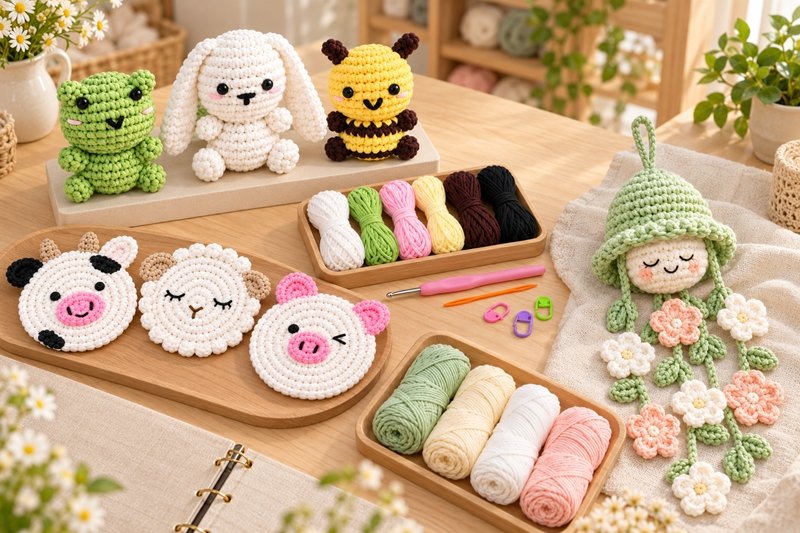
Yarn quantities for a retail crochet kit should be based on measured consumption from the final design, using the approved yarn and instructions. Each color needs its own allowance for the intended user’s making variation and any planned practice steps. Buyers should validate the proposed packed quantities through complete kit trials before approving them for production.
This guide is for crochet kit brands, craft retailers and private-label product development teams. It explains how to turn a sample’s yarn consumption into a documented packing specification without relying on one maker’s result or an arbitrary allowance.
Why a Finished Sample Does Not Establish the Packed Quantity
A successful sample proves that one maker completed the design with the materials available. It does not establish how much yarn every retail customer will need.
Consumption can change with:
- Stitch tension and working technique.
- The approved yarn’s thickness and construction.
- Hook selection.
- The length of starting and finishing tails.
- Sewing, embroidery and assembly methods.
- Practice exercises included in the instructions.
- Cutting and restarting during the making process.
The relevant question is not simply, “How much yarn did the sample use?”
It is:
Can the intended customer complete the approved project using the quantity supplied for every color?
Freeze the Design and Material References First
Consumption testing needs a stable reference.
Before measuring yarn use, identify the approved versions of:
- The finished product design.
- The crochet pattern.
- The video tutorial, where supplied.
- The yarn specification for each color.
- The hook and other relevant tools.
- The assembly and finishing instructions.
- Any practice section that uses the supplied yarn.
If the pattern changes after testing, review the affected quantities. Adding a limb, changing a stitch sequence or extending a decorative feature can change consumption.
A yarn substitution also requires review. The same packed weight of a different yarn does not necessarily provide the same usable length or produce the same result.
For that separate decision, see the material specification and sample validation requirements established for your project.
Create a Consumption Record for Each Color
List each color separately, even when several use the same yarn type.
A practical development record can include:
| Field | What to record | Why it matters |
|---|---|---|
| Color identification | Internal color code and approved reference | Prevents quantities being assigned to the wrong yarn |
| Material specification | Fiber information, yarn construction and supplier reference | Connects the test to the material being packed |
| Design use | Body, limbs, decoration, embroidery or assembly | Shows where the yarn is consumed |
| Starting quantity | Measured amount issued for the trial | Establishes the test input |
| Remaining usable quantity | Yarn still available after completion | Helps calculate usable consumption |
| Separate waste | Discarded tails, offcuts and other recorded waste | Explains differences between trials |
| Trial details | Maker, pattern version, hook and finished dimensions | Makes results interpretable |
| Proposed packed quantity | Quantity selected after reviewing trials | Becomes the packing target |
| Verification method | Weight, length or controlled pre-cut quantity | Defines how packing will be checked |
Use consistent units and record how measurements were taken. Do not combine results measured in different ways without a documented conversion.
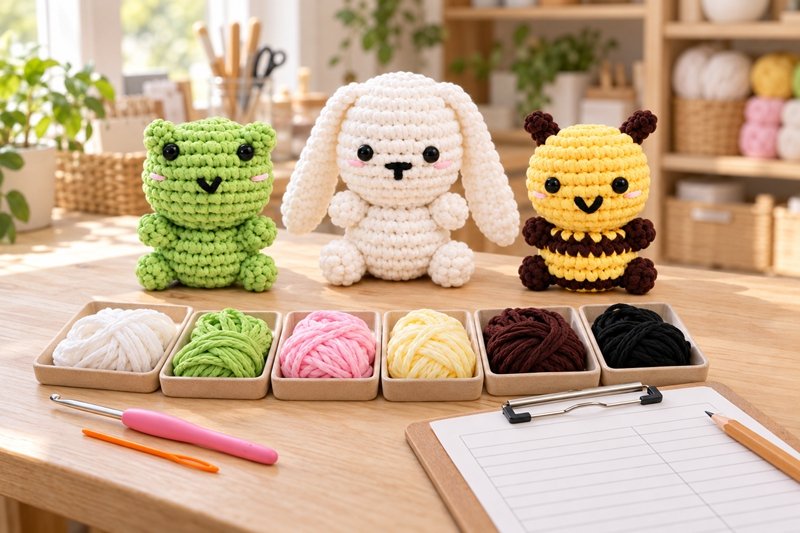
Choose a Measurement Method That Fits the Yarn
Measuring by Weight
Weight can be useful for development trials and packing control when the yarn specification is fixed.
Use a scale suitable for the quantities being measured. Account for the container, wrapper or winding support so that the recorded value represents the yarn.
Small quantities deserve particular attention. If a detail uses very little yarn, a scale with insufficient resolution may not provide a useful reading.
Measuring by Length
Length can be useful for short embroidery pieces, assembly strands or components supplied as pre-cut lengths.
Define the measurement method, including how the yarn is handled. Stretching a flexible yarn while measuring it can produce a misleading result.
If a supplier’s weight-to-length information is used during planning, confirm its suitability for the actual yarn being supplied.
Using Both Methods
A project may use weight for the main yarn portions and length for short detail strands.
That is workable when each component has a clear packing specification. The important point is that development, packing and inspection teams understand the method assigned to each item.
Measure More Than One Complete Make
An experienced sample maker may work more consistently and waste less yarn than a first-time customer.
Use trials that reflect the intended audience as well as technical development. Record complete makes using the approved materials and instructions, and investigate meaningful differences between results.
For each trial:
- Measure the yarn supplied for every color.
- Record the relevant material and instruction versions.
- Complete the project, including sewing and embroidery.
- Measure usable leftovers and record waste.
- Check the finished result against the intended dimensions and appearance.
- Note where yarn was used for practice, restarting or corrections.
A low-consumption result is not useful evidence if the maker skipped a feature or produced an incorrectly sized item.
Likewise, a high-consumption result should be examined before it becomes the packing target. It may reveal a confusing instruction, an unsuitable technique or a material mismatch that needs correction.
For the wider learning experience, tutorial testing should assess whether the intended user can follow the complete project. Yarn quantity testing contributes to that review but does not replace it.
Set the Allowance From Evidence
There is no single allowance percentage that suits every crochet kit.
A practical allowance should reflect the design, material, intended user and observed trial results. Consider:
- Variation in valid completed makes.
- Starting and finishing tails required by the instructions.
- Sewing and embroidery consumption.
- Planned practice steps.
- Reasonable cutting and restarting observed during testing.
- The packing process’s ability to deliver the specified quantity consistently.
Evaluate the allowance by color.
The main body color may have a different risk profile from a small contrast color. A short embroidery strand can be critical even though it contributes very little to the total kit weight.
Extra yarn should not conceal an unclear pattern. If trials show repeated confusion at the same step, improve the instruction and repeat the affected validation.
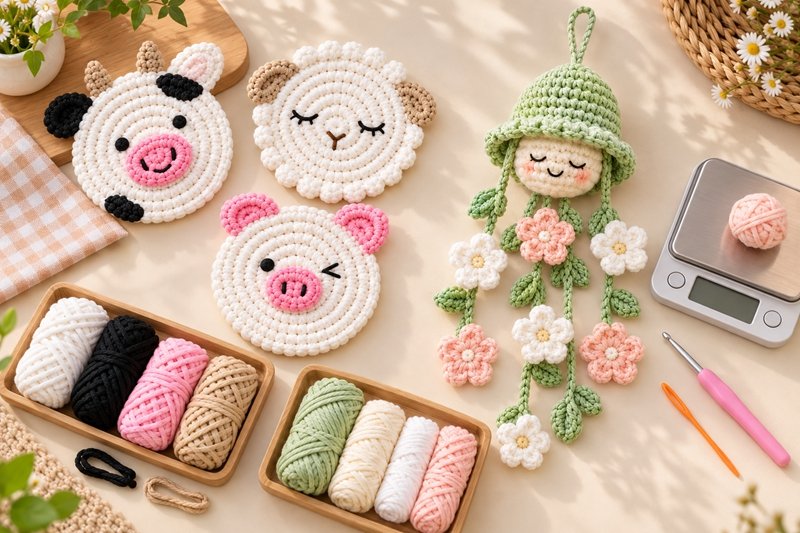
Test the Proposed Retail Portions
After selecting provisional quantities, prepare trial kits using the proposed retail portions.
This is different from giving makers large balls of yarn and measuring what remains. It checks the actual supply format the customer will receive.
Verify that:
- Every color is supplied in the specified quantity.
- Short strands are identifiable and usable.
- Yarn portions can be unwound without avoidable tangling.
- Required assembly yarn remains available at the relevant step.
- The supplied hook and instructions match the tested configuration.
- The project can be completed from the packed materials.
Record any shortage by color and by the step where it occurred.
Also review the presentation of leftovers. Remaining yarn can be a reasonable consequence of a validated allowance, but buyers should avoid unsupported packaging promises about how much extra yarn is included.
Translate the Results Into a Packing Specification
Once validation is complete, give the packing team a controlled specification.
For each yarn component, define:
- SKU and instruction version.
- Color code and approved yarn reference.
- Target packed quantity.
- Agreed acceptable packing range.
- Measurement method.
- Winding or pre-cut format.
- Identification and separation requirements.
- Verification and recordkeeping requirements.
The lowest quantity allowed by the packing specification should remain sufficient under the validated conditions. A packing tolerance should not consume the allowance intended for the customer.
For example, if development approves a target portion but packing routinely supplies less, the original user trials may no longer represent the delivered kit.
The component record should connect to the kit’s bill of materials. For the broader packing check, see How to Check Every Component in a Crochet Kit Before Retail Packing.
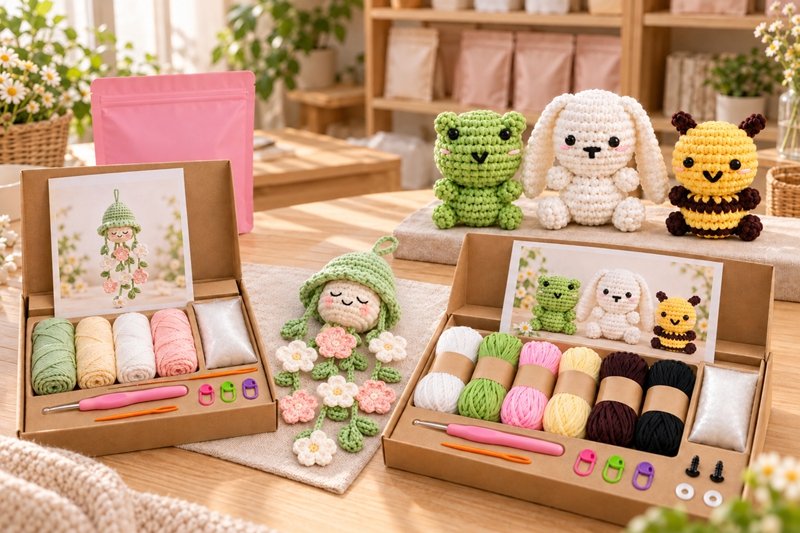
Review Quantities When the Kit Changes
Revisit the consumption record when changes could affect yarn use.
Relevant changes include:
- A revised pattern or assembly method.
- A different yarn specification.
- A new finished size.
- A changed hook.
- Additional practice instructions.
- New embroidery or decorative features.
- A different yarn portioning process.
Define the scope of the review according to the change. A packaging artwork correction may not affect consumption, while a material or pattern change can require new making trials.
Keep old and new specifications distinguishable so that yarn portions, instructions and finished-product references remain aligned.
Discuss Yarn Planning With UMY Crochet
UMY Crochet is a product development and manufacturing partner for crochet, DIY craft kits, knitted toys and creative gifts.
For a retail crochet kit project, yarn planning should be considered alongside design feasibility, component selection, instructions and packaging.
A useful project discussion starts with:
- The proposed finished design and target user.
- The yarn and tool references.
- The pattern and assembly requirements.
- Available consumption records.
- The proposed retail yarn format.
- Validation and packing requirements.
The project team should agree which trials and records are required before finalizing the packed quantities.
For the broader development process, see How to Develop a Crochet Kit for Retail: From Product Concept to Shelf-Ready Packaging.
Frequently Asked Questions
Can one finished sample establish the yarn quantity?
It can provide an initial consumption reference. Validate the proposed quantity through additional complete makes and trials using the intended retail portions.
Should every color receive the same allowance?
Not necessarily. Different colors serve different functions and may show different consumption risks. Review each color separately.
Is weight or length better for packing yarn?
The suitable method depends on the yarn and component. Weight may work for main portions, while length may suit short pre-cut strands. Document the selected method.
Should yarn for sewing be included in the consumption test?
Yes. Include all assembly and finishing required to complete the product, including embroidered details.
Does extra yarn solve problems with beginner instructions?
It may accommodate reasonable making variation, but it cannot resolve unclear instructions. Repeated trial problems should trigger an instruction review.
Can the same yarn quantities be used after a material change?
Do not assume they can. Review usable length, making behavior, finished dimensions and complete-project consumption with the replacement material.
How can buyers investigate reports of yarn shortages?
Identify the SKU, material and instruction versions, affected color and making step. Check the supplied quantity and reproduce the project under the relevant conditions before deciding what to change.
Request a Crochet Kit Yarn Quantity Review
Share your finished-product reference, pattern version, intended user, proposed yarn specifications and any existing consumption records.
Ask UMY Crochet to review the development inputs and discuss yarn quantity validation, retail portion formats and packing requirements for your kit.
 Chinese