
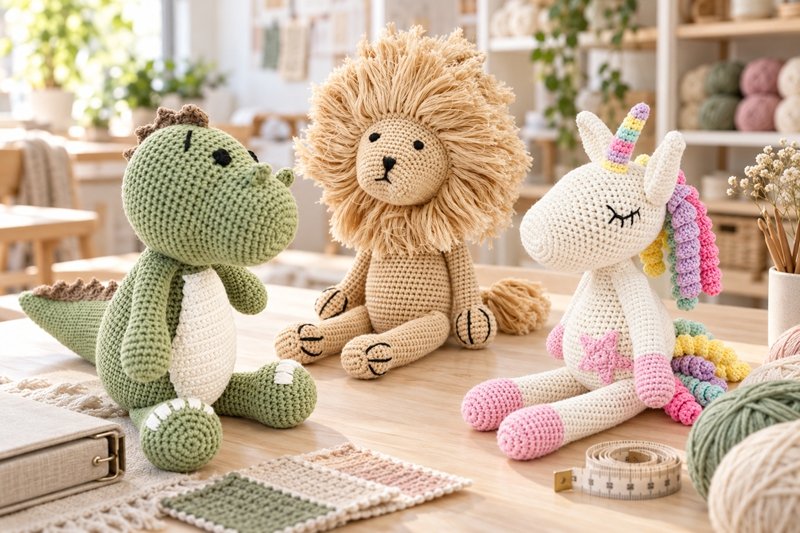
Define acceptable handmade variation by identifying which product features must remain consistent, which can vary within agreed limits and which differences require correction. Use physical reference samples, a consistent measurement method and photographs of borderline examples to make those decisions usable during production and inspection.
“Handmade” explains how a product is made. Buyers and manufacturers still need a shared definition of what an acceptable finished product looks like.
Who Needs a Handmade Variation Standard?
This guide is for brands, retailers, gift companies, product developers and quality teams purchasing handmade crochet products.
It is particularly useful when:
- Several makers contribute to one order.
- A character has recognizable proportions or facial features.
- Products will be displayed together.
- A successful SKU is being reordered.
- Different reviewers disagree about whether an item is acceptable.
The focus is visual and dimensional acceptance. Product safety and functional requirements need their own appropriate assessment; they should not be treated as discretionary handmade variation.
1. Identify What Matters to the Product
Start with the features that affect recognition, presentation or intended function.
These may include:
- Overall silhouette.
- Head-to-body proportion.
- Facial expression.
- Eye and ear placement.
- Clothing and accessory details.
- Color arrangement.
- Sitting or standing position.
- Packaging fit.
Ask why each feature matters.
A slight difference in an inconspicuous stitch may have little effect on presentation. A small change in eye placement may noticeably alter a character’s expression.
For a coordinated collection, also review products together. Individually acceptable pieces may look inconsistent when displayed side by side.
2. Separate Requirements Into Clear Categories
Use categories that help reviewers decide what to do.
| Category | Meaning | Example of how to document it |
|---|---|---|
| Essential design feature | Must follow the approved design | Retain the specified facial expression and accessory |
| Controlled characteristic | Assessed against an agreed range or reference | Measure seated height using the documented method |
| Acceptable visual variation | Difference that does not materially alter the product | Use physical examples showing acceptable shape variation |
| Correction required | Difference exceeds an agreed criterion | Identify the feature and required adjustment |
| Unresolved | No shared decision has been established | Hold for review rather than guessing |
These categories are an editorial framework, not a universal industry grading system.
Agree terminology with the manufacturing partner. The useful result is a repeatable decision, regardless of the names used.
3. Use the Approved Sample as a Starting Reference
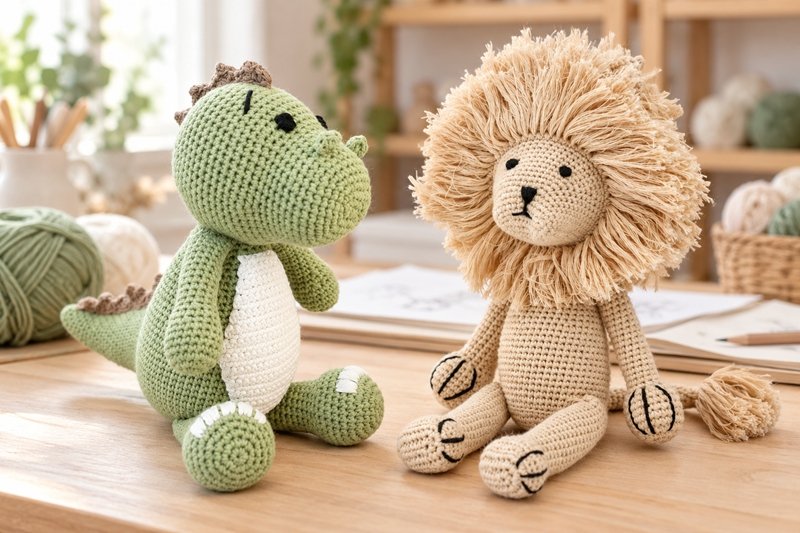
An approved sample establishes an important reference, but one sample may not explain every acceptable difference.
Connect it with:
- Product specifications.
- Material references.
- Dimension requirements.
- Detail photographs.
- Examples of accepted and rejected variation.
Avoid asking inspectors to reproduce a subjective impression such as “make every face friendly.”
Identify the features responsible for that impression: eye placement, mouth shape, muzzle alignment or another visible characteristic.
For retaining the approved reference itself, see How to Manage an Approved Crochet Sample Before Bulk Production.
4. Define Dimensions and Measurement Methods Together
A dimension is useful only when reviewers measure it consistently.
Specify:
- Whether the product is seated, standing or laid flat.
- The measurement start and end points.
- Whether ears, horns, hair or accessories are included.
- Whether the product is measured without compression.
- The target and agreed acceptable variation.
Do not apply one tolerance to every feature automatically.
The appropriate criteria depend on the design, materials, construction and use. A dimension affecting packaging fit may need a different review from a decorative detail.
Also assess proportions. A product can meet its overall height requirement while having an unacceptable head or body shape.
5. Establish Visual Boundary Examples
Physical examples help explain where acceptance ends.
Where practical, assemble a small reference set containing:
- A representative approved product.
- An acceptable variation.
- A borderline example requiring a decision.
- An example that needs correction.
Use actual reviewed pieces where available. Do not invent inspection results or present generated images as evidence of real production acceptance.
Photograph each example under similar lighting and from the same angles. Annotate the specific difference being assessed.
Resolve Borderline Examples Before Bulk Inspection
A borderline example is useful because it reveals uncertainty.
Ask the responsible reviewers to decide whether it is acceptable and why. Record that decision so subsequent reviewers do not reopen the same question repeatedly.
If the team cannot agree, refine the criterion or obtain another physical example.
6. Review Facial Features and Assembly Carefully
For character products, examine the combined effect of several details.
Check:
- Whether the eyes are placed as intended.
- Whether the muzzle is centered.
- Whether the mouth follows the specified expression.
- Whether ears or horns have the intended orientation.
- Whether arms and legs are aligned.
- Whether clothing or accessories sit correctly.
Do not evaluate every feature in isolation. Several small differences can combine to change the character noticeably.
Similarly, a product should not be accepted solely because each measurement falls within a range if its overall appearance no longer follows the agreed reference.
7. Keep Color Decisions Connected to Material References
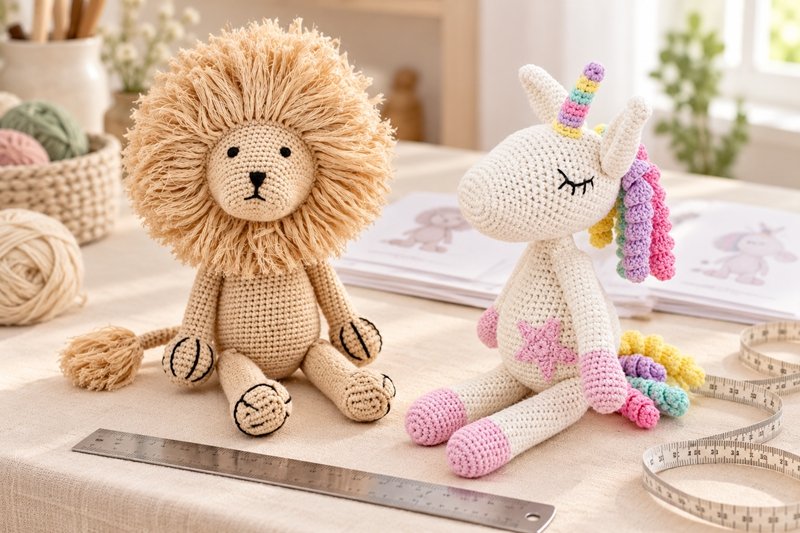
Agree how color will be assessed.
Use the designated material or color reference, consistent review conditions and a clear process for resolving differences.
Photographs support communication, but lighting and screens can change apparent color. Where color is important, retain suitable physical references.
For multi-color products, review the relationship between colors as well as each individual shade.
For a detailed treatment of this topic, see How to Control Crochet Color Consistency Across Samples and Bulk Production.
8. Write Correction Instructions That Can Be Executed
“Not good enough” does not tell a maker what to change.
A useful correction record contains:
- Product and version.
- Feature being assessed.
- Observed difference.
- Applicable reference.
- Required action.
- Evidence needed for another review.
For example:
| Observation | More useful instruction |
|---|---|
| Face looks different | Adjust the mouth shape to the marked reference photograph |
| Product is too tall | Recheck the specified seated-height measurement and revise the affected construction |
| Ears look uneven | Compare attachment positions with the approved front and side references |
| Accessory sits incorrectly | Restore the agreed orientation and confirm fit on the revised sample |
These are illustrative instructions, not findings from a specific order.
9. Check That Reviewers Apply the Criteria Consistently
Before relying on the standard, ask the relevant reviewers to assess the same small set of products independently.
Compare their decisions.
If one reviewer accepts a piece and another rejects it, identify the reason:
- Different measurement methods.
- Different reference versions.
- Unclear visual boundaries.
- A requirement that was never documented.
- Several small differences affecting the overall result.
Resolve the disagreement and update the reference.
This review exercise helps establish whether the criteria are usable. It does not replace the order’s agreed inspection plan.
10. Preserve the Standard Across Production and Reorders
Keep the acceptance criteria connected to the current product version.
Retain:
- Approved reference samples.
- Specifications and measurement instructions.
- Boundary examples.
- Detail photographs.
- Decisions on borderline cases.
- Revision history.
- Responsible reviewers.
Do not silently introduce a new standard during a reorder. Explain the change and obtain the required agreement before using it.
Discussing Acceptance Criteria With UMY Crochet
UMY Crochet is a product development and manufacturing partner for crochet, DIY craft kits, knitted toys and creative gifts.
For a custom project, buyers can bring their essential design features, presentation requirements and quality concerns into the sample discussion.
A practical review can cover:
- Features that must remain consistent.
- Dimensions and measurement methods.
- Visual differences that need physical examples.
- Material and color references.
- Correction instructions and review responsibilities.
- How the accepted standard will be retained for future orders.
The scope should be agreed for the actual product. This makes the approved reference more useful to both the buyer and the manufacturing team.
Frequently Asked Questions
Does handmade mean every difference must be accepted?
No. Agree which differences are acceptable and which affect the product’s design, presentation or requirements.
Is one approved sample enough?
It is an important starting point. Additional specifications and boundary examples may be needed to explain acceptable variation.
Should every measurement have the same tolerance?
No. Define criteria for the relevant features using consistent measurement methods and project-specific requirements.
Can photographs replace physical references?
They help communication, but some decisions about shape, color, texture or fit benefit from physical examination.
How should borderline products be handled?
Refer them to the designated reviewer, record the decision and improve the criterion where necessary.
What if inspectors disagree?
Compare the reference versions and assessment methods, then resolve the unclear requirement before continuing to apply it.
Should the standard be reviewed for reorders?
Confirm that the product and material version remain the same. Review affected criteria when specifications change.
Request a Handmade Variation Review
Share your product reference, essential character features, dimensional requirements and examples of differences that concern your team with UMY Crochet.
Request a sample review to define practical acceptance references and correction criteria before bulk production.
 Chinese