
Retail crochet kits need a replacement-component plan when a missing, damaged, or insufficient part could prevent the customer from completing the project. Before launch, the brand and manufacturer should agree on how each component will be identified, which parts can be replaced, and how a replacement request will be checked against the kit version.
This guide is for craft brands and retailers preparing packaged crochet kits for sale. It covers the records and decisions behind a workable replacement process, rather than setting a universal quantity of spare materials for every kit.
Why Replacement Planning Begins Before Packing
A customer may report that a hook is missing, a yarn color has run short, or an accessory is damaged. If the kit contains several similar colors or has been revised since launch, “send another piece” is not a precise instruction.
The replacement must match the kit the customer actually received. That calls for a component list, a way to identify the kit version, and an agreed route for handling requests. These records also help the brand distinguish a packing error from a material-quantity or instruction issue that needs a broader review.
Create a Component Record That Can Be Used After Launch
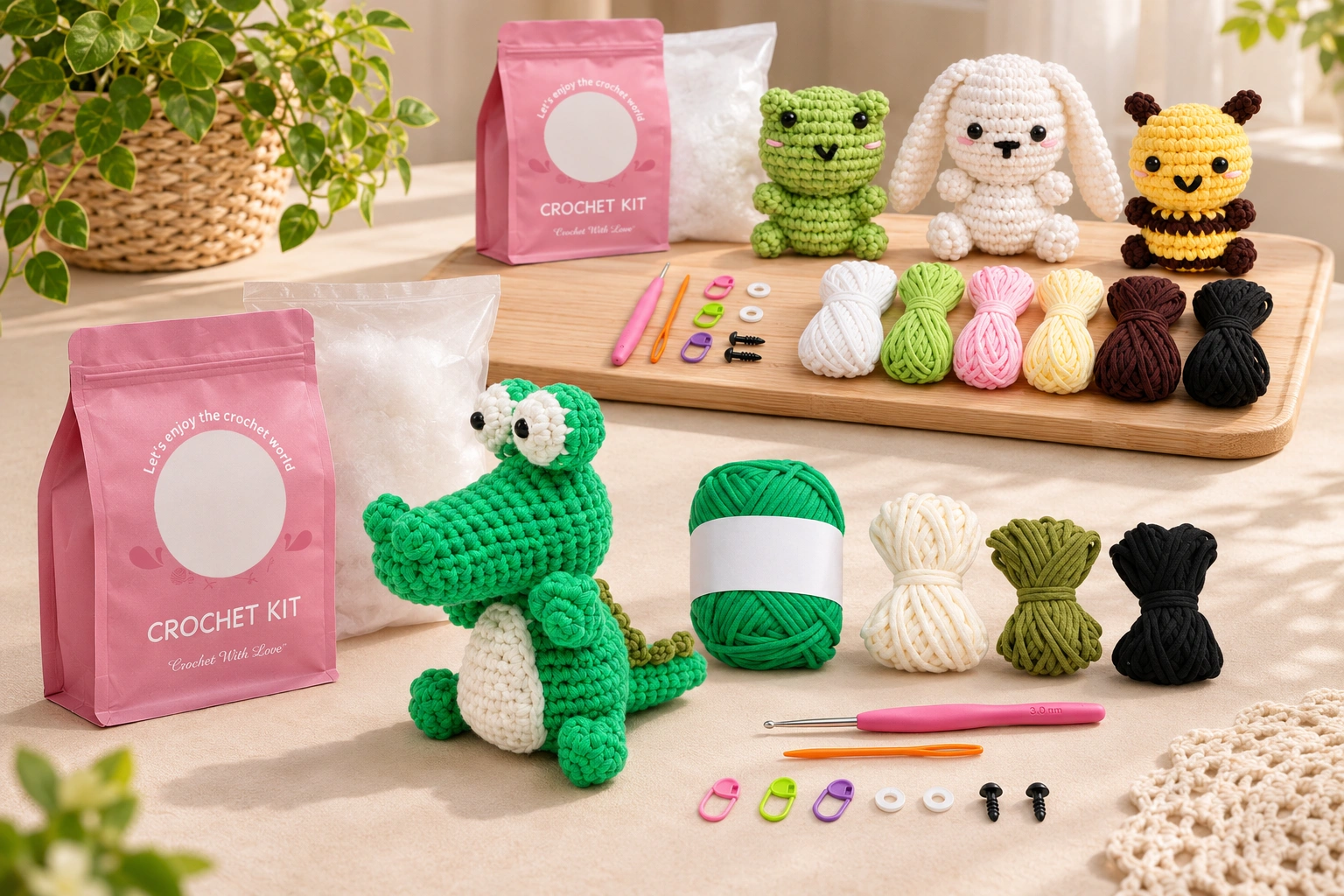
The packing list should do more than tell the packing team how many items go into a bag. It should also allow a customer-service colleague and a production contact to identify the correct replacement later.
| Record field | What it should answer |
|---|---|
| Kit name and SKU | Which retail product does the request concern? |
| Kit version or approved specification | Which set of components was packed? |
| Component identifier | Which exact part needs replacing? |
| Description and reference image | What does the part look like? |
| Packed quantity | How many should the customer have received? |
| Material or color reference | Which yarn or accessory variant is required? |
| Replacement unit | Is the part supplied individually, as a measured yarn portion, or as a small set? |
| Packing reference | Where is the part normally found in the kit? |
Use names that someone outside the development team can understand. “Pink yarn” may be sufficient for a single-color kit, but it becomes ambiguous when the project uses several pink shades. A color reference and photograph make the request easier to verify.
Decide Which Parts Can Be Replaced Separately
Not every component needs the same replacement method. Consider how the customer uses the part and whether it can be identified without taking apart a finished project.
Yarn
A replacement yarn portion should match the relevant kit version as closely as the agreed material and color references allow. Record the color, yarn specification, and replacement quantity. If a customer consistently needs more yarn than the kit provides, review the project instructions and packed allowance rather than treating every request as an isolated incident.
Tools and Small Accessories
Hooks, needles, markers, eyes, or other small accessories may be easier to replace as individual items or as a defined accessory set. The choice depends on the kit design and how the components are packed. Confirm the applicable product and market requirements before deciding whether a particular accessory belongs in a kit intended for a given audience.
Instructions and Digital Content
A missing printed instruction sheet may have a different resolution from a missing physical component. If the kit uses a linked tutorial, record the tutorial version associated with that kit. A revised tutorial should not silently change the material requirements for kits already sold.
Define a Simple Request and Verification Flow
The customer should not need to know the manufacturer’s internal material codes. A practical support request can ask for:
- The kit name or a photograph of the retail package.
- A photograph of the missing, damaged, or insufficient component where possible.
- The kit version, batch reference, or other identifier available on the pack.
- The customer’s description of the issue and the point reached in the project.
The brand can then match the request to its approved component record before asking the manufacturer for a replacement. Agree in advance who responds to the retail customer, who confirms the part, and who arranges fulfillment. The appropriate route may differ by sales channel and destination.
Keep the customer-facing process short. Detailed internal codes are useful for accuracy, but asking customers to identify an unfamiliar yarn lot or technical part name can slow down resolution.
Use Replacement Requests to Find Repeated Issues
A replacement log is also a development tool. Record the kit SKU and version, requested component, reason, and resolution. Review patterns periodically:
- Repeated missing-part reports may point to a packing or counting issue.
- Repeated yarn-shortage reports may call for a full project test and a review of the packed quantity.
- Repeated tool or accessory damage may call for a packaging or component review.
- Confusion between similar colors may indicate that the instructions or component identification need improvement.
A single report does not prove a production fault. Look at the physical evidence and the pattern across requests before changing a specification.
Plan the Process With the Manufacturing Partner
UMY Crochet is a product development and manufacturing partner for crochet, DIY craft kits, knitted toys and creative gifts. For a retail kit, the buyer can bring the approved project, packing list, instructions, and packaging plan into the development review. Together, these materials provide a basis for identifying components and checking whether a requested replacement matches the sold kit.
The brand should also decide how long it intends to support a kit after sale and what information it will retain for earlier versions. Availability and replacement arrangements should be discussed for the actual materials, order plan, and markets involved rather than assumed from the first sample.
Frequently Asked Questions
Does every crochet kit need a separate replacement stock?
Not necessarily. The brand should first identify which parts can reasonably be replaced and agree on a fulfillment method. The decision depends on the assortment, component availability, sales channels, and support commitment.
What if the customer cannot find a kit version number?
A package photograph, purchase information, and component photographs may help identify the version. Plan an identification method that customers can actually access.
Should spare yarn be added to every kit?
The packed yarn quantity should be validated through the complete project. A replacement plan handles exceptions; it should not substitute for an adequate, tested yarn allowance.
Can a later yarn batch be used to replace yarn from an earlier kit?
It may differ in appearance. Check the material and color references and assess the visible match before promising a like-for-like replacement.
Should small accessories be sent individually or as a set?
Either can work. Define the replacement unit in the component record so the support team and packing team respond consistently.
What should happen when many customers request the same component?
Review the requests together with the kit version, packing records, instructions, and project test. A repeated issue may require a specification or packing-process change.
Who should respond to the retail customer?
The brand or retailer should define its customer-facing support route. Its manufacturing partner can help identify the approved component and discuss the agreed replacement arrangement.
Prepare Your Kit Support Brief
If you are developing a retail crochet kit, share the project sample, proposed component list, instructions, packaging format, and intended sales channels with UMY Crochet. We can review how the components will be identified and which replacement decisions should be settled before packing begins.
<!--[googlesitekit-end-of-content]-->
 Chinese