
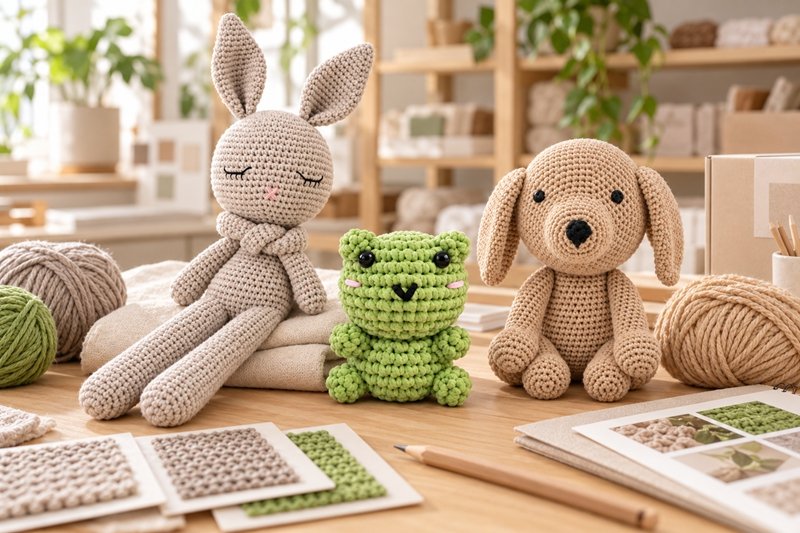
When changing yarn in a crochet product, recheck the finished shape, dimensions, color, surface appearance, construction, material consumption and packaging fit. For a crochet kit, also verify that the supplied yarn quantity, hook and instructions still work together.
A similar-looking yarn is not automatically an equivalent replacement. Treat the substitution as a controlled product change and agree what evidence is needed before accepting it.
Who Is This Guide For?
This guide is for brands, retailers, crochet kit developers, purchasing teams and quality teams considering a yarn change in an existing product.
A substitution may be proposed because:
- The original yarn is unavailable.
- A supplier or material specification changes.
- A different texture is requested.
- The product is being repositioned.
- A new color is being introduced.
- The buyer wants to evaluate another material option.
This guide focuses on what to revalidate after a proposed change. It does not rank yarns or prescribe one material for every crochet product.
1. Record Exactly What Is Changing
Create a clear comparison between the approved yarn and the proposed replacement.
Include available information about:
- Supplier and material reference.
- Fiber composition.
- Yarn construction.
- Thickness or relevant yarn specifications.
- Color reference.
- Surface texture.
- Proposed hook and pattern changes.
- Reason for the substitution.
Identify what is confirmed and what remains provisional.
A supplier’s description such as “same quality” is not enough to define the replacement. Ask which characteristics are being treated as equivalent and how that comparison will be assessed.
Keep the Approved Reference Available
Retain the existing product sample and its material record.
The comparison should refer to a known approved version. If the original reference is missing, document that limitation before deciding whether the new sample is acceptable.
2. Make a Product Sample With the Proposed Yarn
Make a representative product sample using the proposed yarn and record:
- Yarn reference.
- Hook used.
- Pattern version.
- Any construction adjustments.
- Material consumption.
- Filling and finishing method.
If the replacement needs a different hook or pattern, include those changes in the review. Otherwise, an apparently successful sample may conceal a specification change that has not been documented.
For a coordinated collection, identify which other designs use the same yarn. A successful substitution in one product does not automatically approve it for every SKU.
3. Compare Shape and Dimensions Using the Same Method
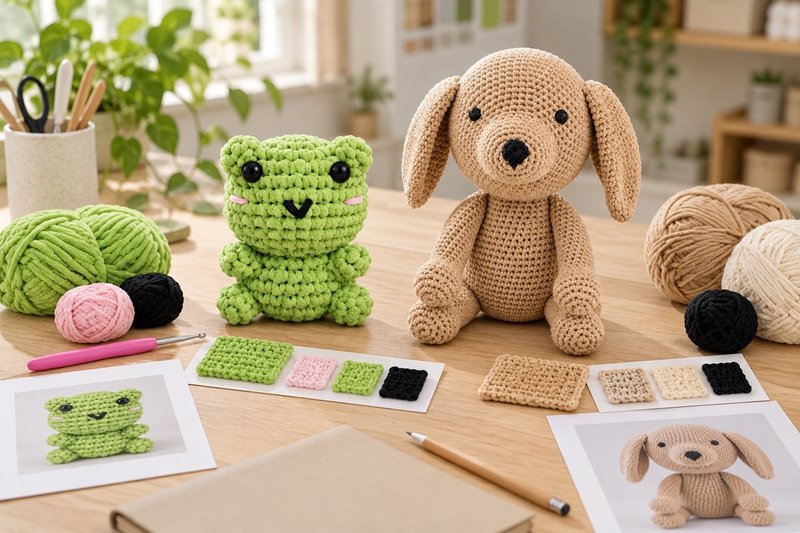
Measure the existing reference and proposed sample consistently.
Specify:
- Whether the product is seated, standing or laid flat.
- Which features are included.
- Where each measurement starts and ends.
- Whether the product is measured without compression.
Review the dimensions that matter to the product, such as:
- Overall height or length.
- Head and body proportions.
- Muzzle profile.
- Ear, horn or limb length.
- Accessory fit.
- Packaging dimensions.
Also examine the complete silhouette.
A sample can fall within an agreed overall height while having a different head-to-body proportion. Both measurements and visual review may therefore be necessary.
Agree acceptable variation for the specific product rather than applying a universal tolerance.
4. Recheck Color and Surface Appearance
Compare the proposed material under consistent lighting.
Review:
- Main color.
- Contrast between adjacent colors.
- Embroidery visibility.
- Stitch definition.
- Surface texture.
- Appearance of joins and color transitions.
- Relationship to other products in the collection.
Use physical references where possible. Photographs can support the review, but camera settings, lighting and screens can affect the apparent color.
Review the Character as a Whole
A material change may affect how a familiar character is perceived.
Ask whether:
- Facial features remain clear.
- Small details remain visible.
- The surface suits the brand’s intended presentation.
- The product still coordinates with related items.
- The approved reference images remain representative.
If new product photography is needed, include it in the change plan.
5. Examine Construction and Finishing Again
Review the new sample’s construction rather than assuming that the existing process remains suitable.
Check:
- Stitch appearance and visible openings.
- Shaping.
- Filling distribution.
- Piece alignment.
- Seams and attached features.
- Embroidery.
- Secured ends.
- Clean finishing.
- Sitting or standing behavior, where specified.
Identify whether the replacement changes the work needed to obtain the agreed result.
For example, the development team may propose a different hook, stuffing approach or attachment detail. Each adjustment should be recorded and reviewed within the change scope.
Where performance checks are relevant, agree a suitable method with the responsible team. Appearance alone does not establish performance.
6. Reassess Material Consumption and Cost
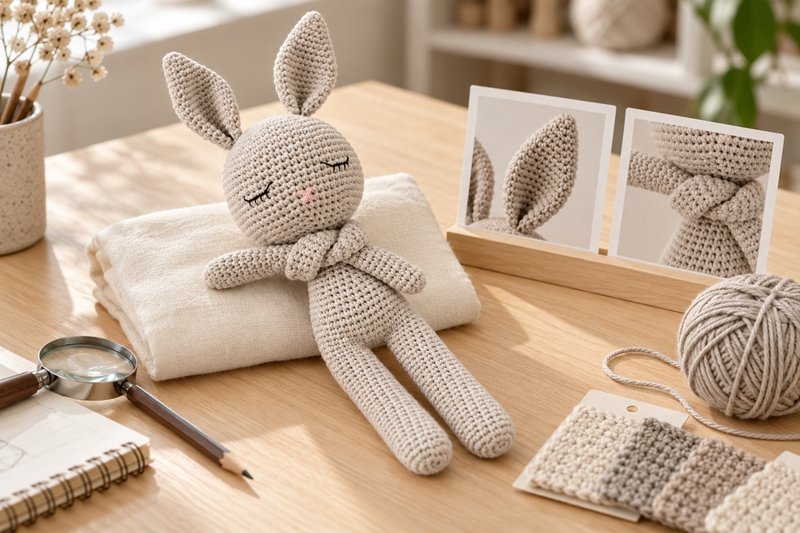
Measure consumption using the proposed sample and defined construction.
Review:
- Yarn required for each color.
- Cutting or finishing allowances.
- Material used during assembly.
- Any additional work introduced by the replacement.
- Changes to purchased components or packaging.
Do not assume that the same yarn weight will produce the same number of finished products.
For a quotation, clarify which approved specification the price covers. If the change affects materials, work content or packing, request a revised assessment before accepting the commercial result.
A lower yarn price does not by itself establish a lower finished-product cost.
7. Revalidate Crochet Kit Instructions and Contents
A yarn change in a kit affects the materials customers use to follow the tutorial.
Check:
- Whether the intended hook remains suitable.
- Whether stitches are easy to identify.
- Whether the pattern produces the expected shape.
- Whether the supplied quantity is sufficient.
- Whether written instructions and videos remain accurate.
- Whether the photographed materials match the revised kit.
- Whether the material behaves as expected during assembly.
If a pattern or hook changes, test the coordinated kit version rather than reviewing each component separately.
Retest the Affected Learning Steps
Ask testers who match the intended skill level to work through the relevant steps.
Record where the replacement causes hesitation, mistakes or a different result. If a change affects shaping or assembly, continue testing through the downstream steps.
8. Check Packaging Fit and Retail Information
Review the finished sample with its intended packaging.
Confirm whether:
- The product fits without unwanted compression.
- Important features remain visible.
- Accessories stay in position.
- The package still holds the product as intended.
- Kit materials fit the agreed packing arrangement.
- Product images remain accurate.
Also review any information affected by the material change.
Composition statements, material descriptions and care instructions should remain consistent with the revised specification and supporting evidence. Do not automatically carry over a statement from the previous yarn.
For the wider packaging process, see How to Design Retail-Ready Packaging for Crochet Products.
9. Identify Documents and Assessments Affected by the Change
List the documents connected to the existing material.
These may include:
- Material specification.
- Bill of materials.
- Product pattern.
- Work instructions.
- Approved sample record.
- Kit tutorial.
- Packaging artwork.
- Product photographs.
- Quotation.
- Relevant test or technical documentation.
Ask the responsible quality or compliance team which existing evidence remains applicable and which requires review.
Do not assume that documentation for one material automatically applies to another. The required assessment depends on the actual change, intended product and target market.
This change review does not replace market-specific product requirements.
10. Use a Clear Revalidation Checklist
| Review area | Question to resolve | Evidence to retain |
|---|---|---|
| Material identity | What exactly is replacing the approved yarn? | Original and proposed specifications |
| Dimensions | Does the product meet the agreed measurements? | Dimension sheet and method |
| Appearance | Are color, texture and character features acceptable? | Physical sample and photographs |
| Construction | Are shaping, joins and finishing acceptable? | Review notes and detail references |
| Consumption | How much yarn does the revised construction require? | Sample consumption record |
| Kit usability | Do materials, hook and instructions work together? | Coordinated kit test record |
| Packaging | Does the revised product or kit fit? | Packaging review |
| Information | Which descriptions and documents must change? | Updated document list |
| Approval | What is accepted, pending or rejected? | Written decision and scope |
An open item should remain visible until it is resolved or accepted through an explicit project decision.
11. Approve the Change Before Mixing Versions
Record the decision against a specific material and product version.
State:
- Which yarn is accepted.
- Which SKUs the approval covers.
- Any pattern, hook or construction changes.
- Which packaging and information versions apply.
- When the replacement may be introduced.
- How existing stock and work in progress will be handled.
- Whether the revised version must be kept separate.
Do not silently mix old and new material versions in one order.
If a mixed delivery is proposed, identify the differences and obtain the buyer’s decision before proceeding.
For the related task of maintaining references across repeat orders, see How to Keep Handmade Crochet Products Consistent Across Repeat Orders.
Discussing a Yarn Change With UMY Crochet
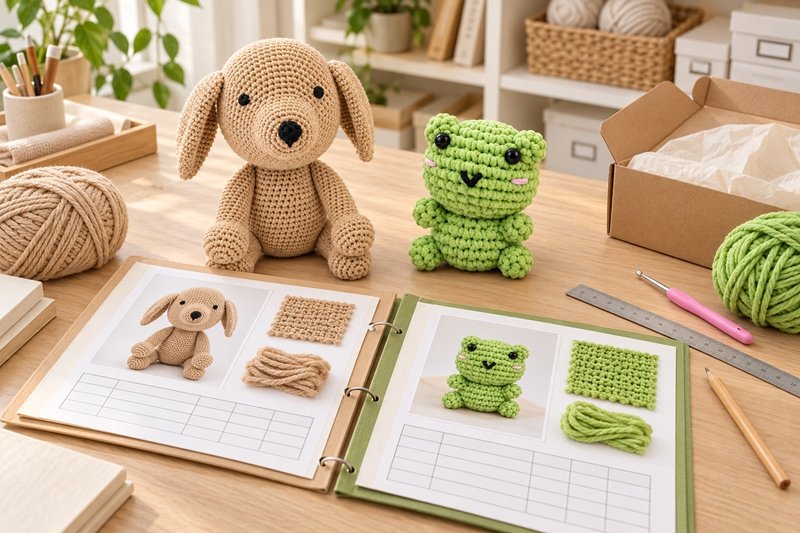
UMY Crochet is a product development and manufacturing partner for crochet, DIY craft kits, knitted toys and creative gifts.
When considering a substitution, buyers can provide the existing product reference, original material information and proposed replacement so that the review begins with a clear comparison.
A practical project discussion can cover:
- The reason for the change.
- Material characteristics that must remain consistent.
- Affected products and kit components.
- Sampling and measurement requirements.
- Construction, consumption and packaging checks.
- Documents and approvals needed before introduction.
The review scope should match the actual change. A color adjustment, a texture change and a change in yarn construction may require different evidence.
Frequently Asked Questions
Is the same color enough to approve a replacement yarn?
No. Also assess material identity, texture, dimensions, construction and any other characteristics relevant to the product.
Can buyers approve a yarn change using a swatch alone?
A swatch can support material review. Use a finished sample to assess effects on shape, assembly, filling and packaging fit.
Must the crochet pattern change when yarn changes?
Not always. Test the proposed material and record whether the existing pattern and hook still produce an acceptable result.
Should every SKU be reviewed separately?
Identify which designs are affected and agree a justified review scope. Approval for one product should not automatically be extended to every design.
Does cheaper yarn guarantee a cheaper finished product?
No. Consumption, work content, finishing and packaging may also change.
Should a crochet kit tutorial be retested?
Retest the affected steps when the substitution changes handling, visibility, shaping, consumption or the instructions needed to complete the kit.
Can old and new material versions be delivered together?
Only under an explicit agreement that identifies the versions and their differences. Do not mix them without the buyer’s decision.
Request a Yarn Substitution Review
Share your approved product sample, original yarn specification, proposed replacement, affected SKUs and reason for the change with UMY Crochet.
Request a development review to define the sample checks, document updates and approval conditions needed before introducing the new material.
 Chinese