
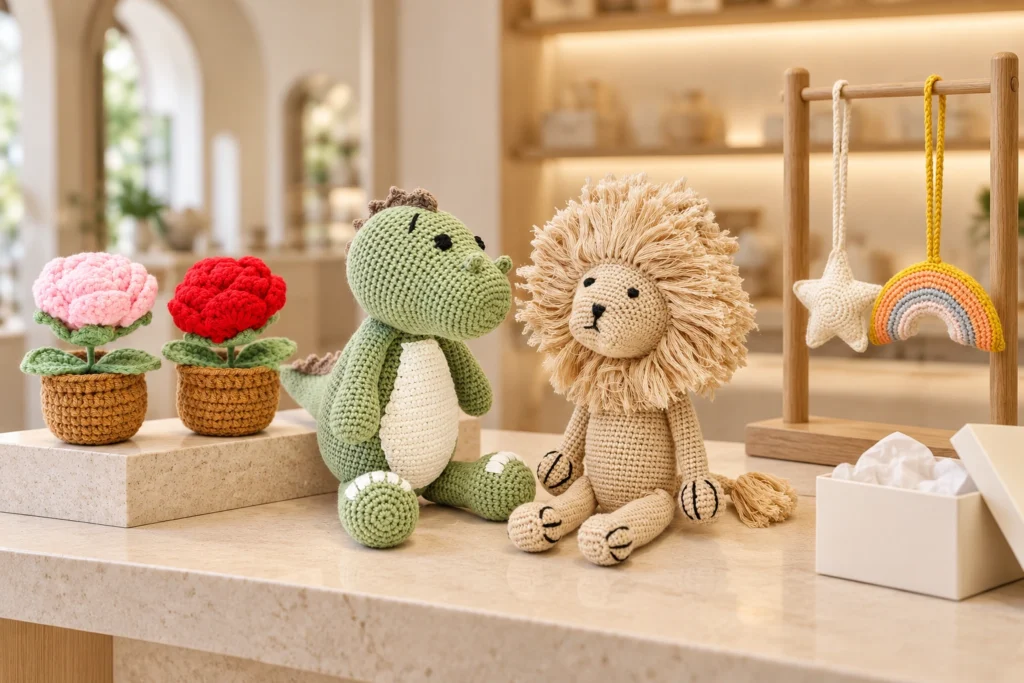
Before developing crochet products for a hotel gift shop, buyers should define the guest purchasing occasion, retail location, destination references, target commercial position and travel requirements. They should also distinguish products sold to guests from complimentary gifts, room accessories and display pieces, because each requires a different development brief.
This guide is for hotel retail teams, resorts, hospitality merchandise suppliers and product developers planning finished crochet gifts. It focuses on hotel shop merchandise and the decisions needed before sampling.
Separate Retail Merchandise From Other Hotel Uses
A product placed in a hotel is not automatically a retail product.
A small crochet character might be sold in the gift shop, presented to selected guests, used as a room decoration or displayed at reception. These uses can share a visual identity while requiring different quantities, packaging, handling and approval arrangements.
Define the primary use before selecting a product.
| Intended use | Main planning question | Development implication |
|---|---|---|
| Gift shop merchandise | Why would a guest choose to buy it? | Define the retail offer, presentation and sale configuration |
| Complimentary guest gift | Who receives it and on which occasion? | Define recipient groups, distribution and presentation |
| Room accessory | How will staff and guests interact with it? | Establish the relevant use and operational requirements separately |
| Reception display | What should the display communicate? | Define support, visibility and whether displayed items are for sale |
If one design serves several uses, create a separate configuration for each where necessary. Do not assume that a display sample, guest gift and retail unit can use identical packaging or commercial terms.
For a project centered on gifting rather than retail, see How to Plan a Multi-SKU Crochet Gift Program for Corporate Buyers.
Identify the Guest Purchasing Occasion
Define the situation in which the product is expected to be considered.
Possible occasions include selecting a small reminder of the stay, buying a gift to take home, choosing an item associated with a family visit or purchasing merchandise connected with a hotel experience.
Treat these as planning hypotheses until the hotel has evidence from its own retail activity.
Ask the retail team:
- Who is expected to purchase the item?
- Is the purchase mainly for the guest or someone else?
- Where will the guest encounter the product?
- Will staff explain it, or must the presentation work independently?
- What other products will be displayed nearby?
- Are there existing sales or customer feedback that can inform the brief?
Avoid designing for an undefined “hotel guest.” A compact departure gift and a statement collectible can require very different product decisions.
Define the Destination Reference
Destination relevance should come from identifiable references rather than a generic decorative theme.
The hotel may provide an approved reference connected with its surroundings, architecture, landscape or established visual identity. The development team should then identify which features can be translated clearly into crochet.
Create a reference brief that distinguishes:
- The source material supplied by the buyer.
- The features that must remain recognizable.
- Elements that may be simplified.
- Colors or details requiring approval.
- The person responsible for reviewing the interpretation.
An existing animal, flower or decorative item can be used as a format reference without being presented as an authentic destination symbol.
For the broader translation process, see How to Develop Culturally Relevant Crochet Gift Collections for Retail.
Choose a Product Format for the Intended Purchase
Select the format after defining the guest occasion and destination reference.
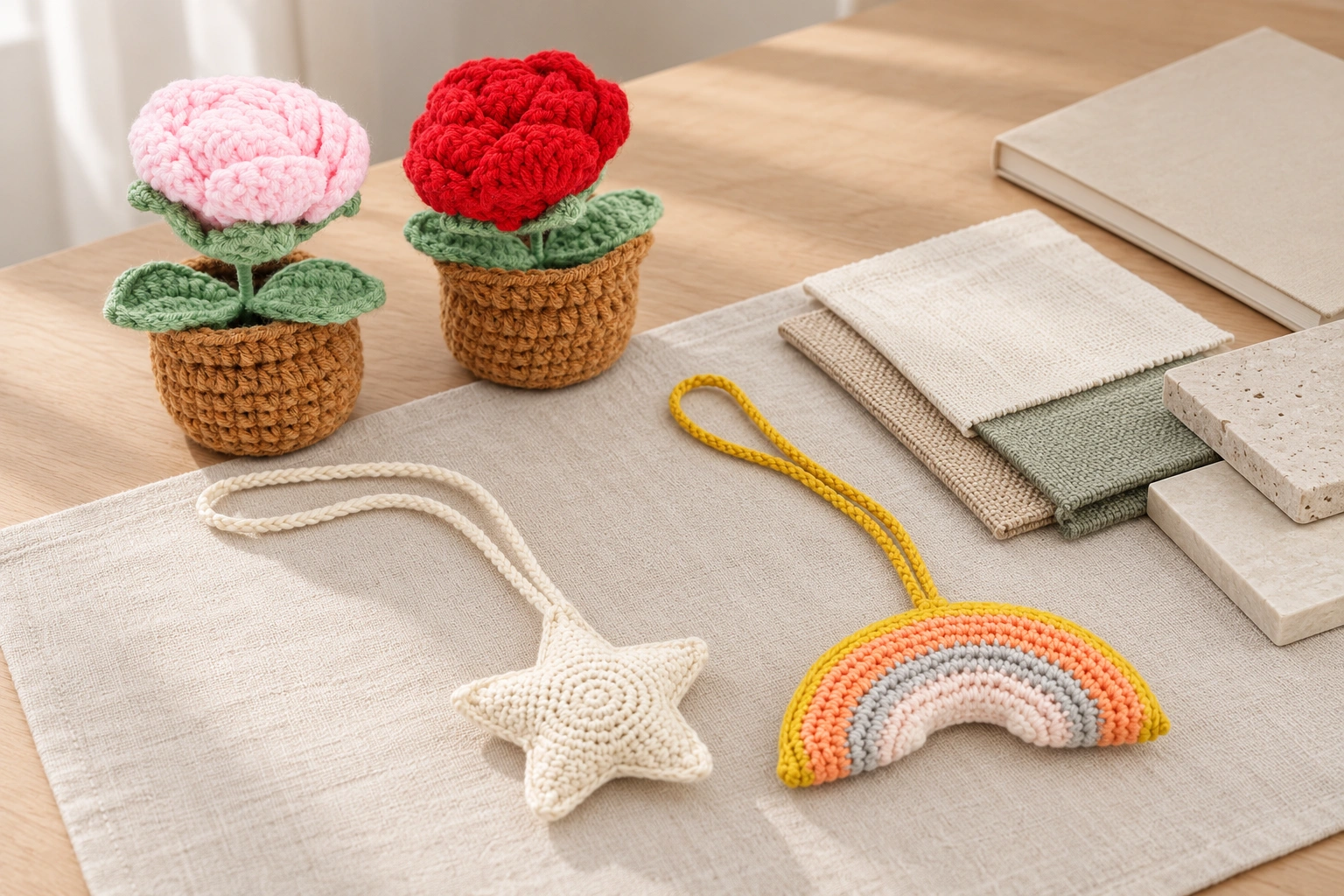
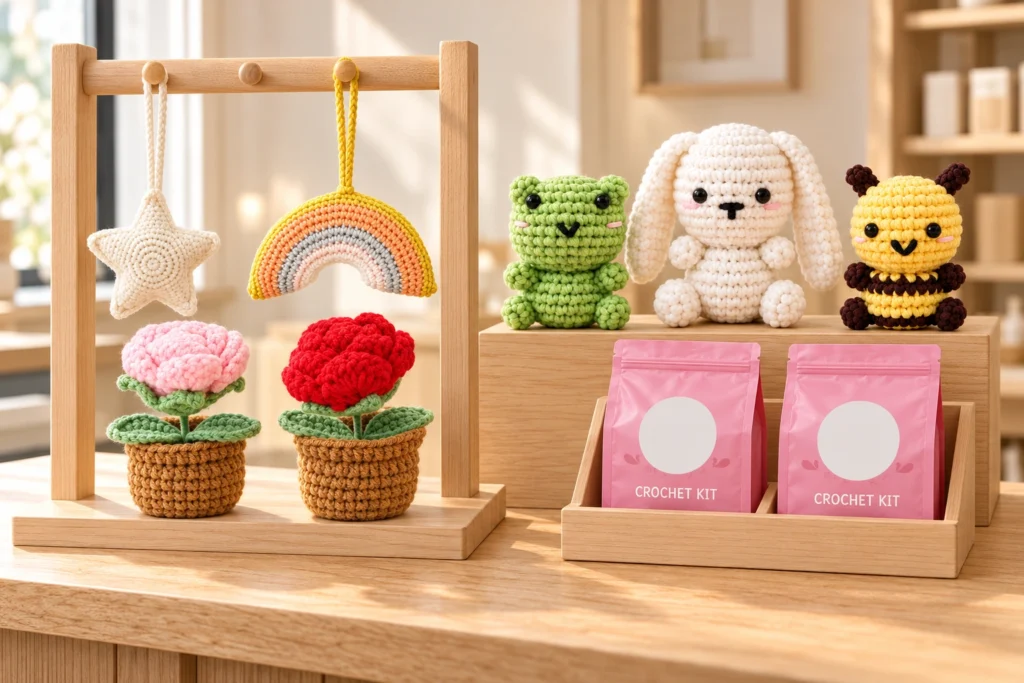
A compact hanging item, small figure, flower arrangement or packaged craft activity creates a different offer. Compare formats against the intended use rather than choosing solely from an attractive product photograph.
| Product format | Questions to resolve before sampling |
|---|---|
| Small crochet figure | How will it sit, be displayed and travel in its packaging? |
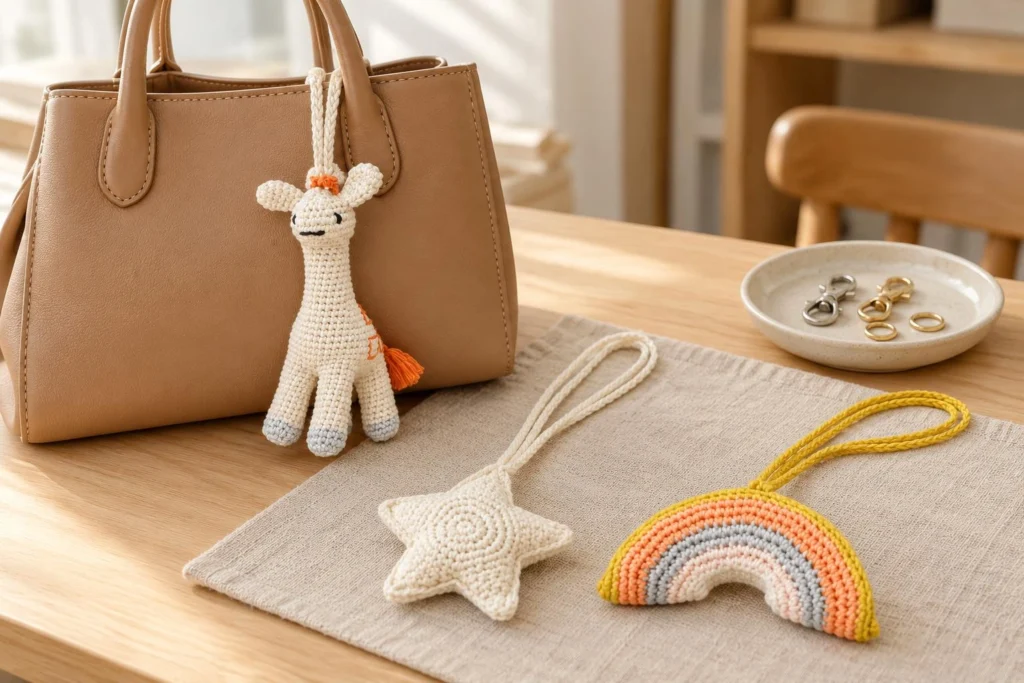
| Hanging ornament or charm | What attachment is included, and how will the guest understand its use? |
| Crochet flower or small decorative piece | Is it intended as a portable gift, a packaged keepsake or a larger purchase? |
| Coordinated gift set | Which items are included, and what keeps them organized? |
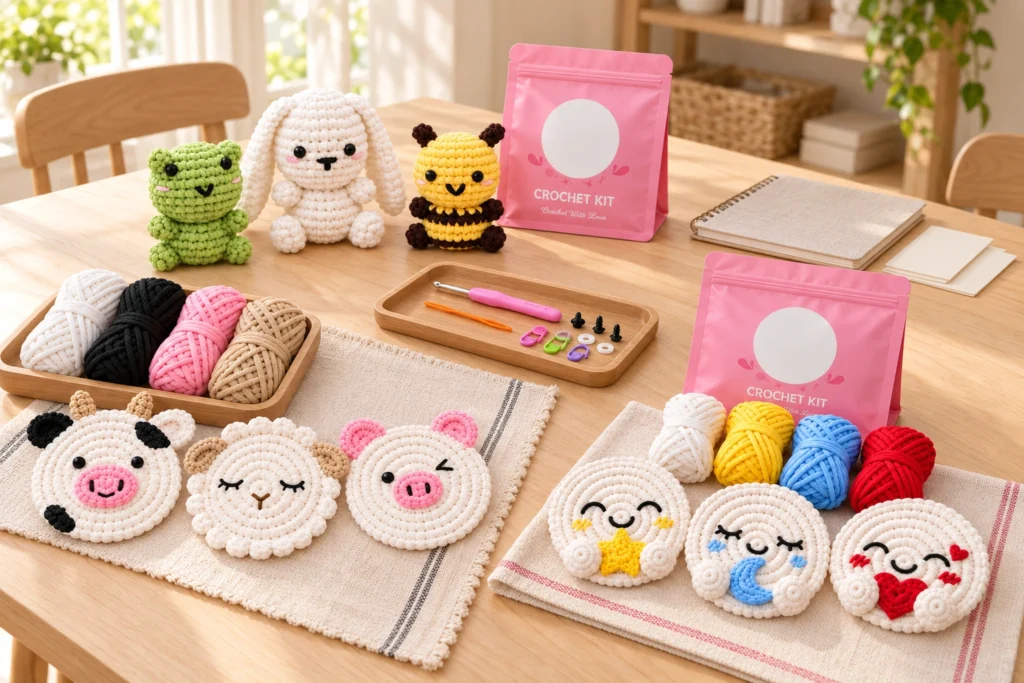
| DIY kit | Is it sold for independent use, connected to an activity, or both? |
If a craft kit is linked to a hotel workshop, prepare a separate teaching and configuration brief. A retail kit does not automatically define the resources needed for an instructor-led activity.
Similarly, a product that looks decorative should not be assigned additional functions without evaluating those uses.
Establish the Commercial Position
Before requesting a detailed quotation, provide the intended retail position and the assumptions behind the purchasing budget.
Clarify whether the product will be an accessible small gift, a mid-range keepsake or a more substantial collectible. These are project decisions, not fixed industry price categories.
Work backward from the hotel's own commercial requirements.
Identify:
- The proposed retail price or range.
- The applicable purchasing budget.
- Packaging and presentation costs.
- Transport and receiving costs relevant to the buying arrangement.
- Any separately scoped development work.
- The intended quantity by product and variant.
Keep assumptions visible. Do not compare a loose product quotation with a fully packaged retail offer as though they cover the same scope.
If the proposed design exceeds the budget, identify which features carry the destination identity before simplifying the product.
For a related approach to design decisions within a retail budget, see How to Develop Crochet Souvenirs Around a Museum Shop’s Target Retail Price.
Define What Travel-Ready Means for the Project
“Easy to carry” needs a practical definition.
Ask how the intended guest will handle the purchase after leaving the shop. The hotel may want a product that fits a small shopping bag, remains organized inside luggage or needs limited unpacking and arrangement after arrival.
Agree the relevant dimensions and handling expectations.
Review:
- The complete packaged size.
- Projecting parts that need space or support.
- Whether several items must remain together.
- The unpacking steps.
- Any permitted reshaping or arrangement.
- The condition expected when the gift is presented.
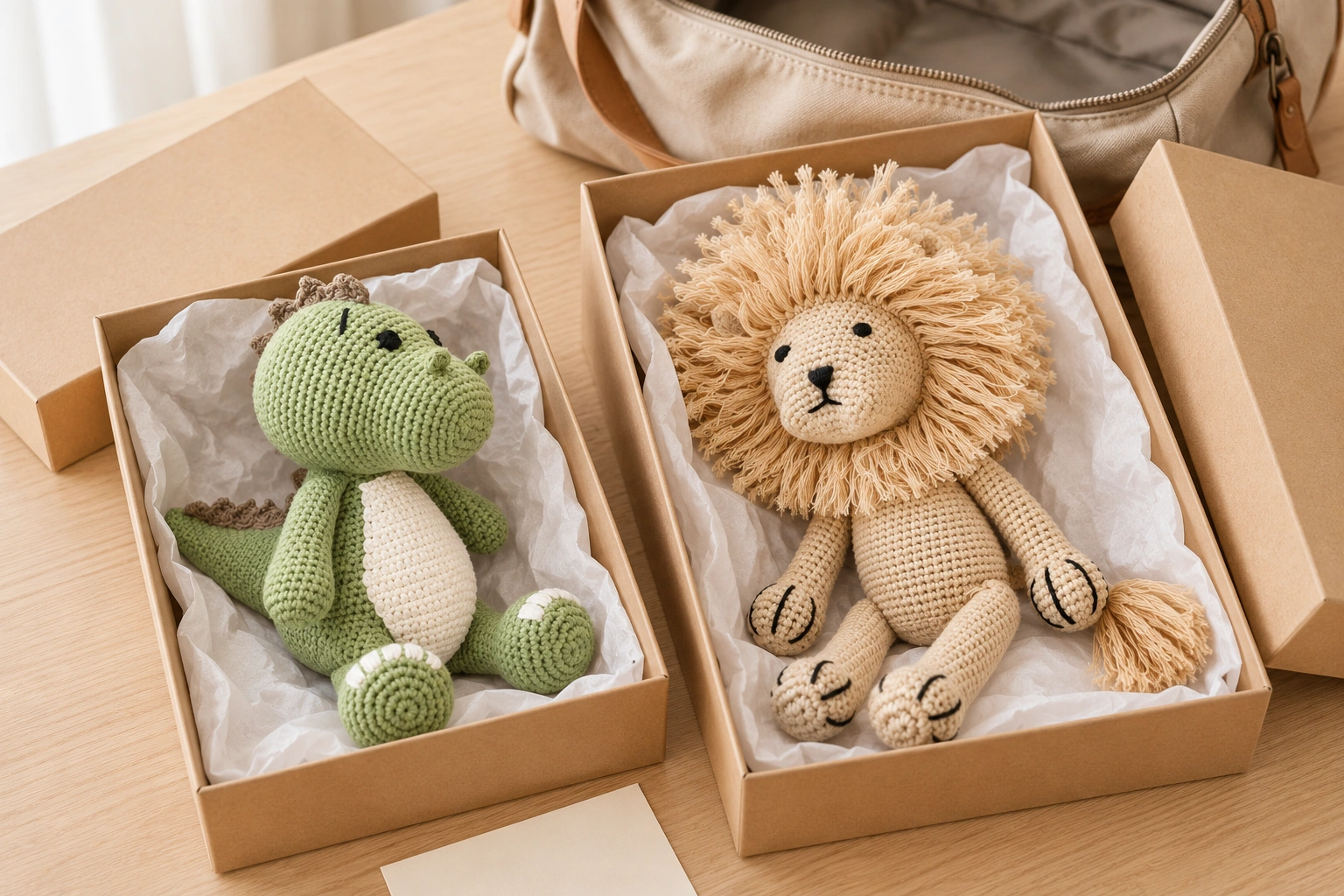
A soft product is not automatically suitable for compression. Flowers, long ears, loose yarn details and projecting accessories may require different protection.
Use a physical packed sample to evaluate the proposed arrangement. Do not describe a packaging concept as transport-tested unless that assessment has actually been completed.
Match Presentation to the Hotel Shop
The retail location influences what the product and packaging need to communicate.
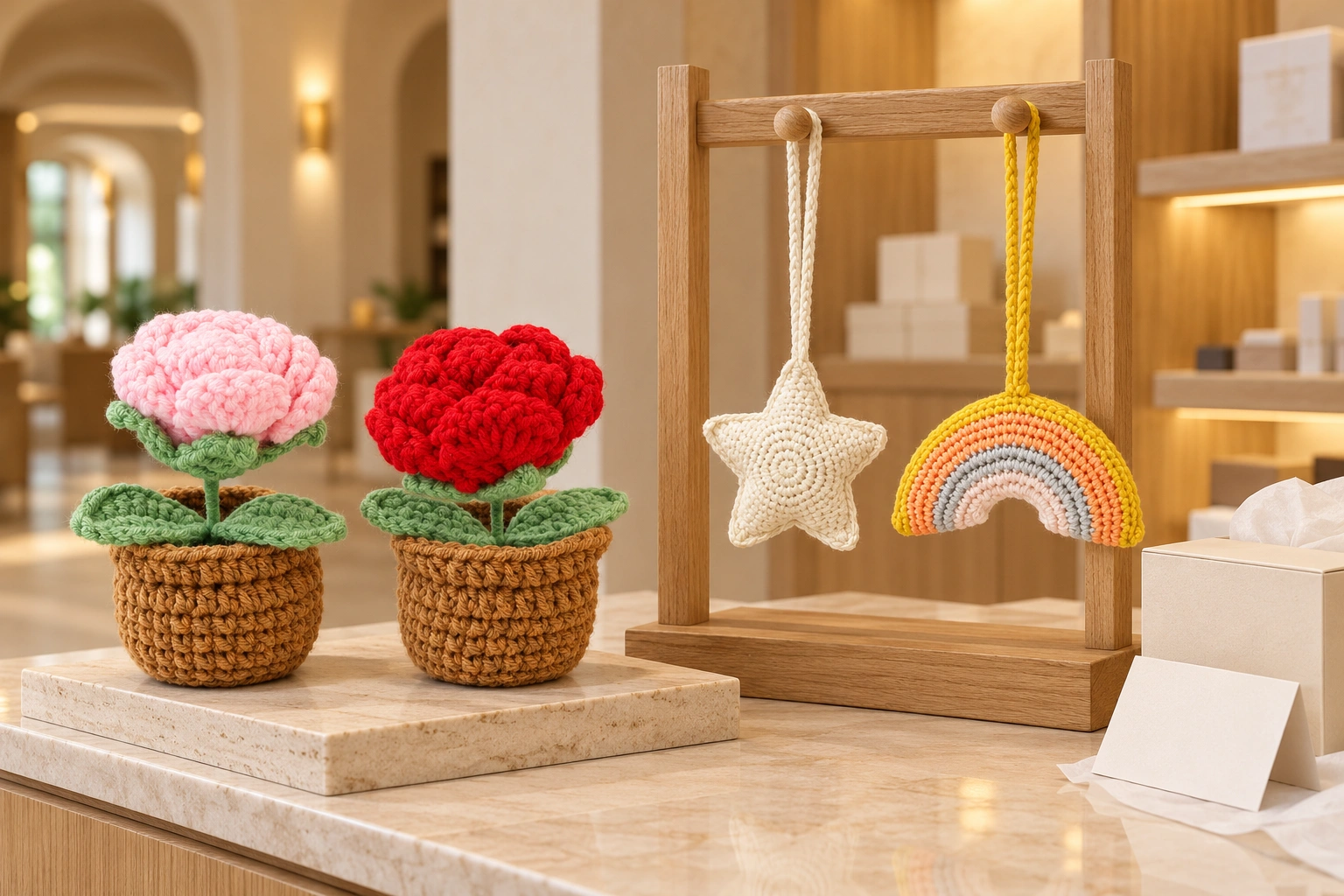
A staffed boutique may allow explanation through conversation. A small reception-side display may need a simpler, more self-contained presentation. Agree the actual selling arrangement with the hotel.
Define:
- Display footprint and product support.
- Whether merchandise is loose, hanging or packaged.
- Where product identity and price information will appear.
- Which items customers may handle.
- How staff will replenish the display.
- How the sale unit is distinguished from display-only material.
If a story card is included, have the buyer approve its factual content and relationship to the product. Do not invent a hotel collaboration, destination claim or cultural explanation for the packaging.
For the packaging framework, see How to Design Retail-Ready Packaging for Crochet Products.
Clarify Branding and Approval Responsibilities
Agree where any hotel branding will appear and who supplies the approved artwork.
Options may include a removable card, a tag or a defined packaging element. Product-level changes require their own development review.
Identify the responsible reviewer for:
- Destination interpretation.
- Product design and colors.
- Branding artwork.
- Packaging configuration.
- Commercial scope.
- Final sample approval.
Confirm that the buyer can supply the proposed references for the project and obtain the necessary approvals. Keep that responsibility explicit rather than assuming that every image or identity element supplied informally is ready for production use.
Review the Product in Its Intended Retail Context
Approve more than the product alone.
A useful review package includes:
- The proposed retail unit.
- Packaging and any approved inserts.
- The intended display arrangement.
- Guest unpacking and handling expectations.
- Product identification for ordering and replenishment.
- Outstanding decisions and their owners.
Use the review to check whether the destination connection is understandable, the commercial scope is clear and the product can be handled as intended.
Prepare a Hotel Retail Brief for UMY Crochet
For a hotel gift shop inquiry, share the intended guest purchasing occasion, destination references, product formats, commercial position and retail location. Include any existing display dimensions, packaging direction and approved branding resources.
The development discussion should clarify:
- Which concepts require original development.
- Which existing products are suitable as format references.
- What samples are needed for retail and travel handling reviews.
- Which packaging and branding elements are included.
- Who approves the destination interpretation.
- Which quantities, materials and timing require confirmation.
Keep retail merchandise and complimentary guest gifts separately identified where their configurations differ.
Frequently Asked Questions
Does hotel merchandise need the hotel logo on the product?
Not necessarily. The branding approach should suit the product and retail objective. An approved card, tag or packaging element may be considered, with the exact scope agreed before sampling.
Can an existing crochet design become a hotel shop product?
It can be considered as a starting point. Review its fit with the guest occasion, destination brief, presentation and commercial requirements.
Are decorative room products suitable for gift shop sale?
They may require a separate retail configuration. Check intended use, packaging, product information and handling rather than assuming that a room display item is ready to sell.
What makes a crochet gift suitable for travel?
Define the packaged dimensions, protection needs, unpacking steps and expected arrival presentation. Confirm them with a physical sample.
Should a hotel launch many designs at once?
Base the initial range on the retail brief, available display space and buying assumptions. Avoid adding variants without a clear role or a workable quantity plan.
Can a hotel-style photograph be used as evidence of a hospitality project?
No. A styled illustration should remain identifiable as a concept or presentation reference. A project claim needs actual supporting information and permission to publish it.
Discuss a Hotel Gift Shop Development Brief
Share your guest purchasing scenario, destination references, target retail position and packaging expectations with UMY Crochet. We can review the development inputs and identify the product and retail configurations to evaluate before sampling.
<!--[googlesitekit-end-of-content]-->
 Chinese