
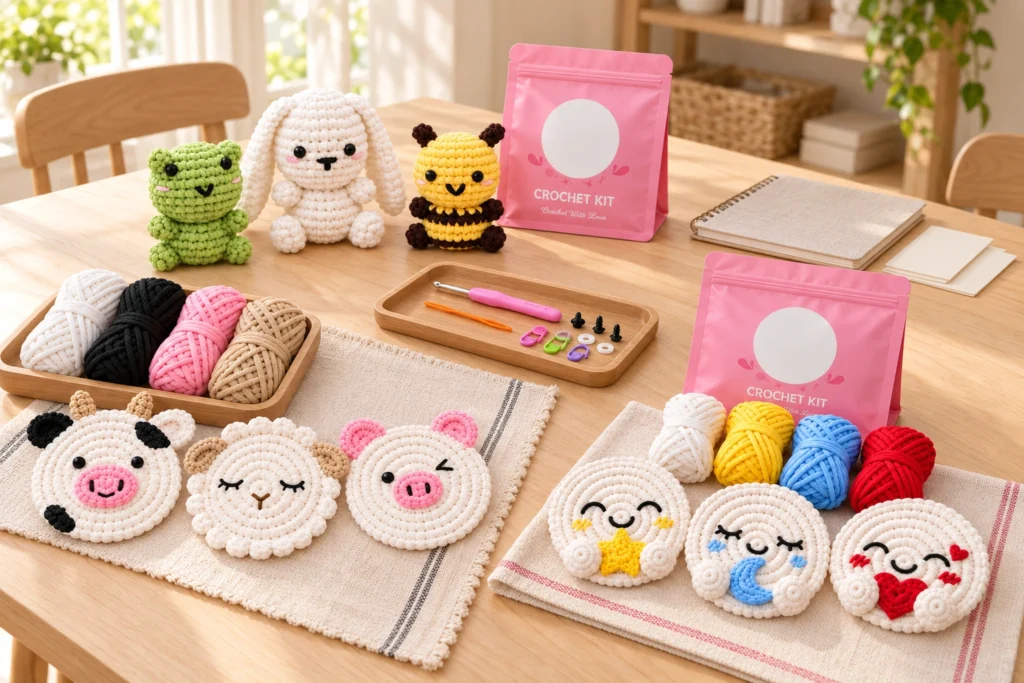
Crochet kits for instructor-led workshops should be configured around the teaching plan: what each participant will make, which steps will happen during the session, and which materials and tools must be available at each stage. Buyers should distinguish individual participant packs, shared classroom resources and instructor materials, then validate the configuration through a rehearsal.
This guide is for craft brands, retailers, workshop operators and institutional buyers developing crochet kits for group instruction. It focuses on the physical kit configuration and classroom preparation needed to support a defined lesson.
Define the Workshop Outcome Before Selecting Components
A finished product photograph does not establish whether a project suits a workshop.
Before choosing the kit contents, agree what participants should achieve during the session. The intended outcome might be a completed small item, one finished component, or sufficient progress to continue independently afterward.
These outcomes require different configurations.
A session that introduces basic stitches may need practice yarn separate from the project allocation. A workshop that continues at home needs clear take-home resources. A class using prepared components needs those components identified in the teaching plan and packing specification.
Define:
- The intended participants and assumed prior experience.
- The project and learning objectives.
- The planned teaching sequence.
- The session format and available teaching time.
- What participants are expected to complete during the class.
- What preparation the instructor will perform.
- What participants will take home.
Do not describe a workshop as suitable for complete beginners solely because an instructor will be present. Review the project demands, teaching support and physical materials together.
Separate Participant Packs From Shared Resources
A retail kit often assumes that one person will use its contents independently. A workshop configuration can distribute resources differently, provided the arrangement is explicit.
Use three categories.
| Configuration category | Typical contents to consider | Main approval question |
|---|---|---|
| Individual participant pack | Project yarn, allocated components, personal tools where included, instructions and take-home packaging | Can each participant follow the planned activity with their allocation? |
| Shared classroom resources | Agreed shared tools, demonstration materials and organized supply containers | Can participants access them at the required teaching stages? |
| Instructor pack | Reference sample, teaching sequence, demonstration pieces and configuration checklist | Can the instructor prepare, explain and check the activity? |
The final contents depend on the project. Do not assume that every tool should be shared or that every participant needs a duplicate of every demonstration resource.
For example, if several participants need the same shared tool during one assembly step, the configuration may create a queue. Resolve that through additional tools, a different activity sequence or another agreed arrangement before packing.
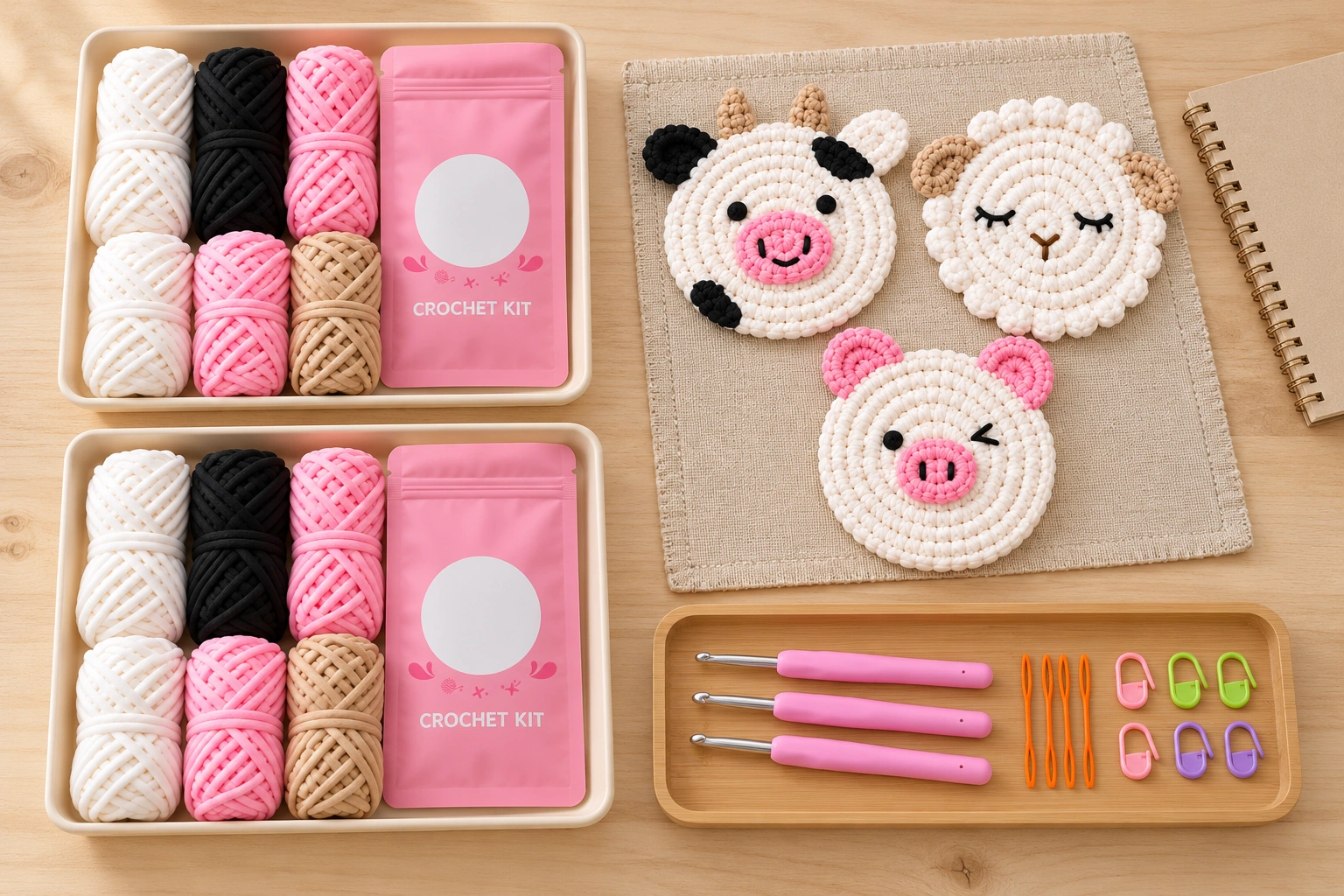
Specify the Contents of One Participant Pack
Create a participant-level bill of materials before calculating the group order.
For each item, record its identity, quantity or allocation, presentation and relationship to the lesson. Distinguish items included in the pack from items supplied by the venue, instructor or participant.
A useful specification includes:
| Item group | What to define | What to verify |
|---|---|---|
| Yarn | Material reference, color identification and allocation | The allocation supports the approved project and any planned practice |
| Tools | Included items and items provided separately | Tools match the project and teaching method |
| Project components | Filling, accessories or prepared parts where applicable | Correct identity, quantity and preparation state |
| Learning resources | Participant instructions and access method | Resources match the supplied configuration |
| Take-home materials | Bag, remaining supplies and continuation information | Participants can identify what to keep and how to continue |
| Pack identification | Project, variant and resource version | Instructor can distribute the correct packs |
If practice yarn is provided, identify whether it is additional to the project yarn. Avoid an arrangement in which participants unknowingly use their project allocation during an extended practice exercise.
For detailed material allocation, see How to Plan Yarn Quantities for a Retail Crochet Kit. Workshop development adds another question: which learning activities must that allocation support?
Make Preparation Responsibilities Explicit
Workshop preparation can be performed by the manufacturer, the workshop operator or the instructor. The responsibility should be agreed for each task.
Possible tasks include separating yarn, sorting colors, preparing demonstration stages, organizing shared tools and checking access to teaching resources.
Use a preparation checklist that states:
- What must be prepared.
- Who prepares it.
- What condition it must reach.
- When it must be ready.
- How completion will be checked.
If a project uses a prepared starting section or a partially completed component, define its construction and expected condition. The physical pack and participant instructions must both acknowledge that starting point.
Prepared work can also change the learning objective. If the instructor wants participants to learn the starting technique, supplying that step already completed may conflict with the lesson.
Build an Instructor Pack Around the Teaching Sequence
An instructor needs resources that explain the process, not just a finished display sample.
Depending on the agreed scope, useful resources can include:
- A finished reference product.
- Demonstration pieces showing selected construction stages.
- A component checklist for one participant pack.
- A lesson sequence linked to the participant instructions.
- Notes identifying which resources are shared.
- Preparation and end-of-session packing checklists.
- References for continuing the project after the workshop.
Label demonstration pieces by their purpose in the teaching materials. Do not leave the instructor to infer which unfinished piece illustrates which step.
Where physical demonstration pieces are required, include them in the development and quotation scope. They should not be assumed to accompany every group order automatically.
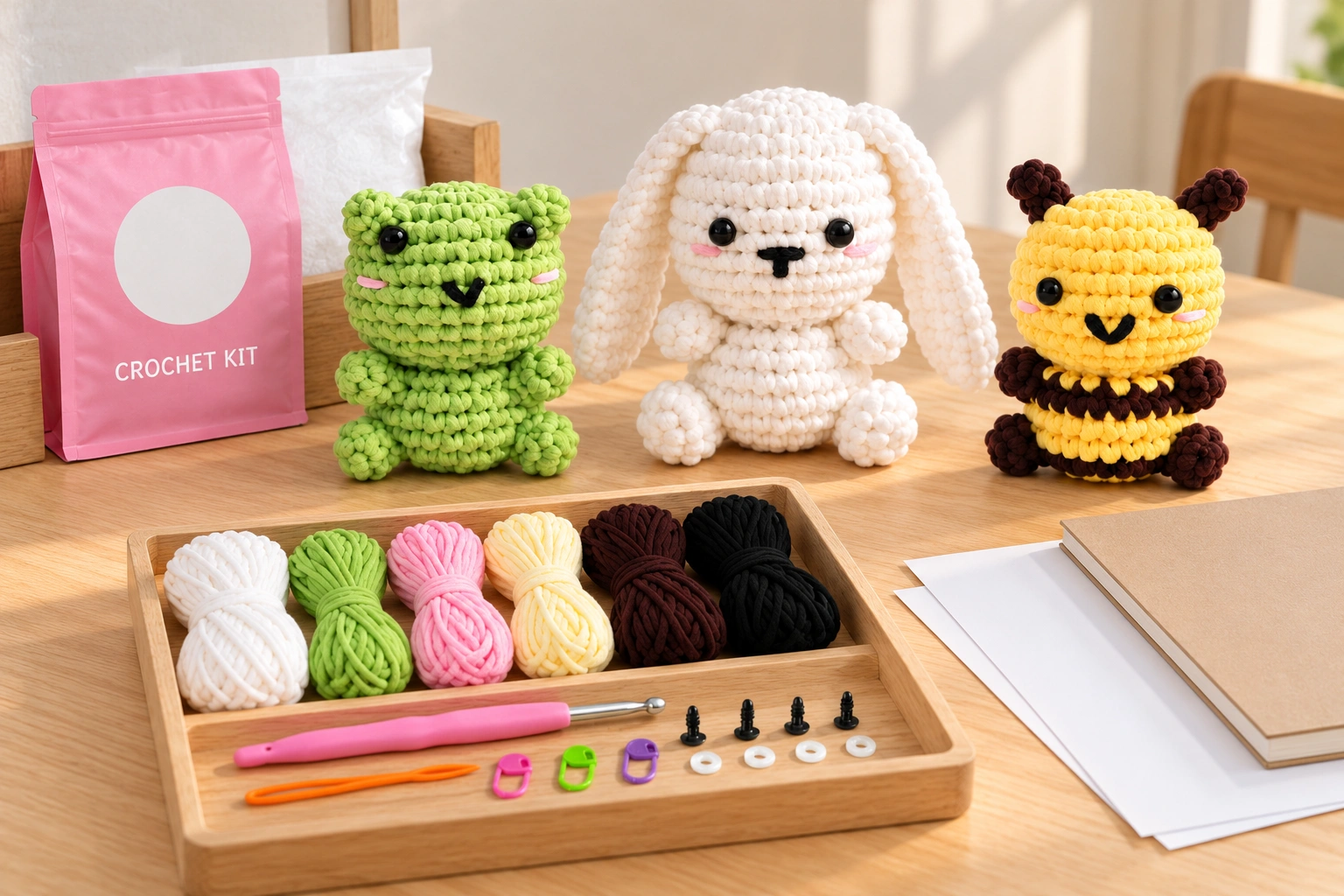
Rehearse the Configuration Before Approving the Group Order
A workshop rehearsal should examine how the supplied configuration works during teaching.
Use the proposed participant pack, shared resources and instructor materials. Where possible, include participants representative of the intended audience and record the assistance they need.
Observe:
- Whether materials can be identified when introduced.
- Whether participants can distinguish similar colors or components.
- Whether shared resources are available when needed.
- Whether unpacking and sorting interrupt the lesson.
- Whether the planned practice affects project material availability.
- Whether demonstration pieces help explain difficult stages.
- Whether participants understand the take-home arrangement.
Separate configuration problems from instruction problems. Missing access to a shared tool requires a different correction from an unclear explanation of a stitch.
For the underlying instruction review, see How to Validate Crochet Kit Instructions Before a Retail Launch.
Record changes from the rehearsal and repeat the affected steps using the revised configuration. One instructor completing the project alone does not establish how a group will use the resources.
Plan Additional Materials by Purpose
Extra materials should have an identified role.
Separate supplies intended for teaching demonstrations, accidental loss, additional practice and confirmed extra participants. These needs do not necessarily use the same components.
For example, additional practice yarn cannot replace a missing project accessory. An instructor demonstration pack may also contain different materials from a participant pack.
Avoid applying an unexplained percentage to every component. Agree the reserve contents and quantities based on the workshop format, rehearsal findings and organizer requirements.
Record who holds these supplies and how they will be issued during the activity.
Pack for Distribution and Take-Home Use
The group delivery should help the organizer distribute complete participant packs while keeping shared and instructor resources identifiable.
Confirm:
- The number of participant packs.
- Any project or color variants.
- Which resources are packed separately.
- How the organizer will recognize each configuration.
- Whether participant names or variant assignments are needed.
- What remains with the instructor after the session.
- What each participant takes home.
A workshop with mixed projects needs particular care. If participants receive different components or instructions, those differences should be visible before distribution.
Check the completed packs against the approved configuration. For the component verification method, see How to Check Every Component in a Crochet Kit Before Retail Packing.
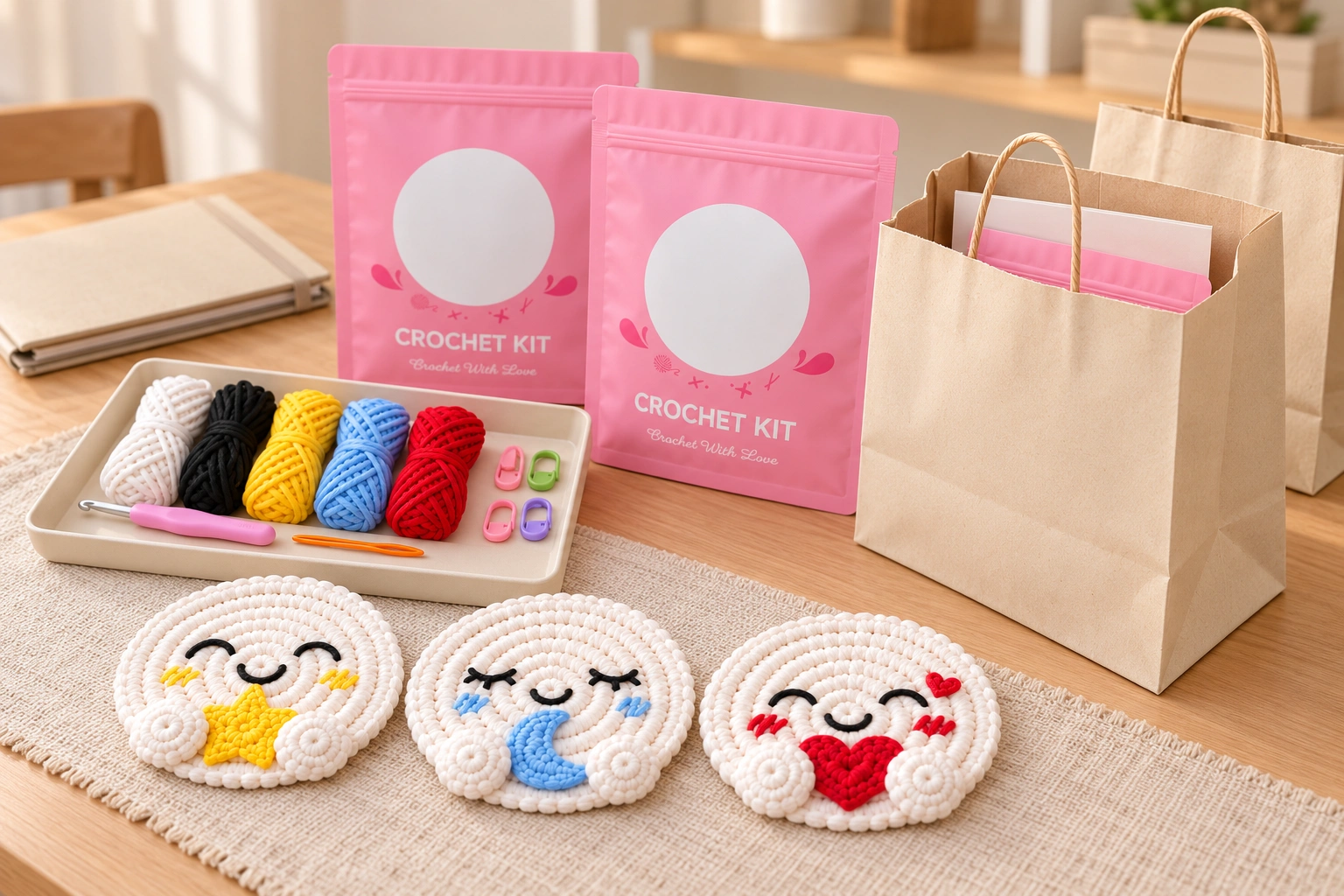
Define the Workshop Development Scope With UMY Crochet
For a workshop kit inquiry, provide the proposed project, participant profile, teaching format, expected participant count and intended session outcome. Include any existing instructions, component references and preparation requirements.
The development review should clarify:
- Which participant materials require sourcing or preparation.
- Whether shared tools are part of the supply scope.
- Which instructor samples or demonstration pieces are required.
- Who develops and approves the learning resources.
- Which configuration needs a physical rehearsal.
- What must be approved before group packing.
Confirm these responsibilities before comparing quotations. Participant packs, instructor materials, prepared components and learning resources may involve different development work and commercial terms.
Frequently Asked Questions
Can an existing retail crochet kit be used for a workshop?
It can be a starting point. Review it against the lesson plan, shared-resource arrangements, preparation tasks and take-home needs before approving it for group use.
Does every participant need a complete tool set?
That depends on the project and workshop format. Specify which tools are personal and which are shared, then check whether access works during the teaching sequence.
Should workshop packs include printed instructions?
Decide this from the teaching and continuation plan. Participants need an agreed way to follow relevant steps and continue afterward, whether the approved resources are printed, digital or combined.
Should all participants receive the same project?
A single project can simplify preparation and instruction. Mixed projects require a clear plan for distributing different components, teaching resources and support.
How much extra yarn should a workshop order include?
Determine this from the approved project allocation, planned practice and rehearsal findings. Keep additional practice supplies distinct from the yarn needed to complete each project.
Are instructor samples automatically included in a bulk kit order?
They should be explicitly included in the agreed scope. Confirm the number, preparation stage and purpose of any finished samples or demonstration pieces.
Request a Workshop Kit Configuration Review
Share your project references, participant profile, teaching sequence and planned group size with UMY Crochet. We can review the physical configuration requirements and clarify the participant packs, shared resources and instructor materials to include in the development scope.
<!--[googlesitekit-end-of-content]-->
 Chinese