
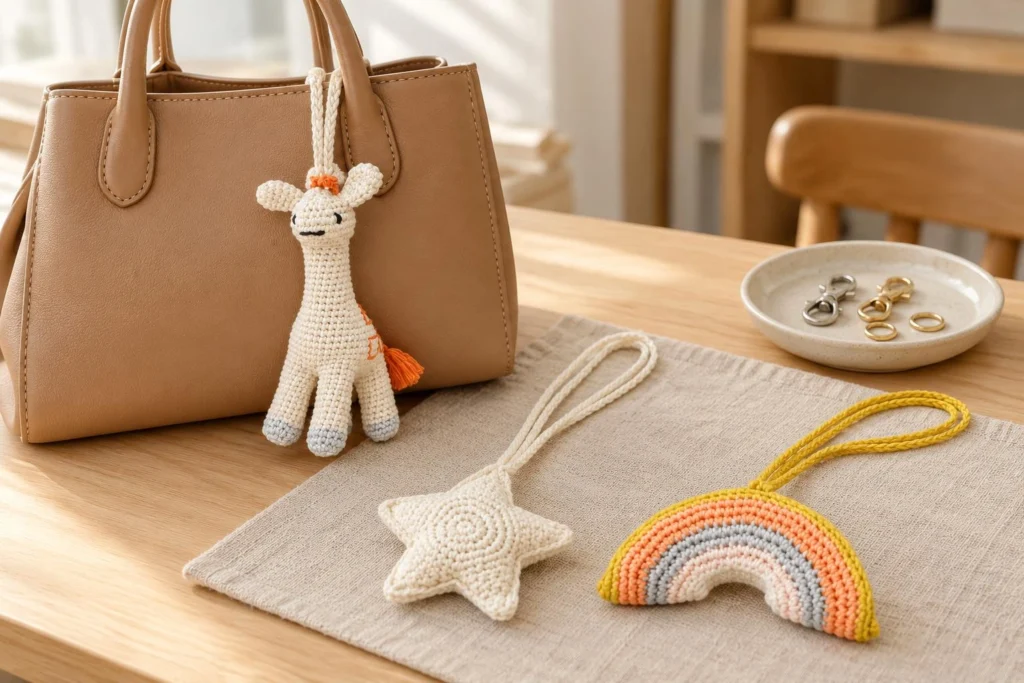
Buyers should specify the complete connection between a crochet bag charm and the bag: the attachment position on the crochet body, the connecting loop or tab, the hardware, and the opening needed to fit the intended bag. Approve these elements together on a physical sample, with agreed appearance and performance requirements.
This guide is for accessory brands, gift companies, character merchandise developers and retail buyers developing crochet bag charms. It focuses on attachment design and sample evaluation rather than general character development or product-format selection.
Define Where and How the Charm Will Be Attached
“Add a clasp” leaves several important decisions unresolved.
A charm intended for a narrow zipper pull may need a different connector from one attached around a thick handle. A connector that fits one bag can also sit awkwardly against another, even when it closes correctly.
Start with a defined attachment location and intended use.
| Intended attachment location | Information to provide | What to check on the sample |
|---|---|---|
| Existing bag ring | Ring dimensions, thickness and available access | Connector can pass through, close and move as intended |
| Handle or strap | Relevant dimensions and intended wrapping method | Loop or connector fits without forcing the bag or charm |
| Zipper pull | Pull opening and intended relationship to the zipper | Connection fits and does not obstruct normal operation |
| Dedicated accessory loop | Loop dimensions, material and position | Charm hangs in the intended orientation |
| Several bag styles | Representative attachment points or physical samples | Compatibility is established for each agreed configuration |
State whether the charm is intended only as a decorative accessory or has another agreed function. Do not imply that a decorative connector can carry the bag or serve as a load-bearing handle.
If compatibility is limited to specified bag styles, record that scope rather than describing the attachment as universal.
Map the Complete Connection From Crochet Body to Bag
The metal clasp is only one part of the attachment.
A typical configuration may include a crochet attachment point, a yarn loop or fabric tab, a connecting ring, and a clasp or strap. Other constructions are possible, but the full sequence should be visible in the specification.
For each connection, identify:
- Which component connects to which.
- Where the connection sits on the crochet product.
- Whether the connection is fixed, removable or intended to rotate.
- Which parts are visible during normal display.
- How the components are assembled.
- Which details must match the approved sample.
Avoid reviewing the hardware in isolation. A suitable clasp can still produce an unsuitable charm if its position makes the character turn away or if the connection distorts the crochet body.
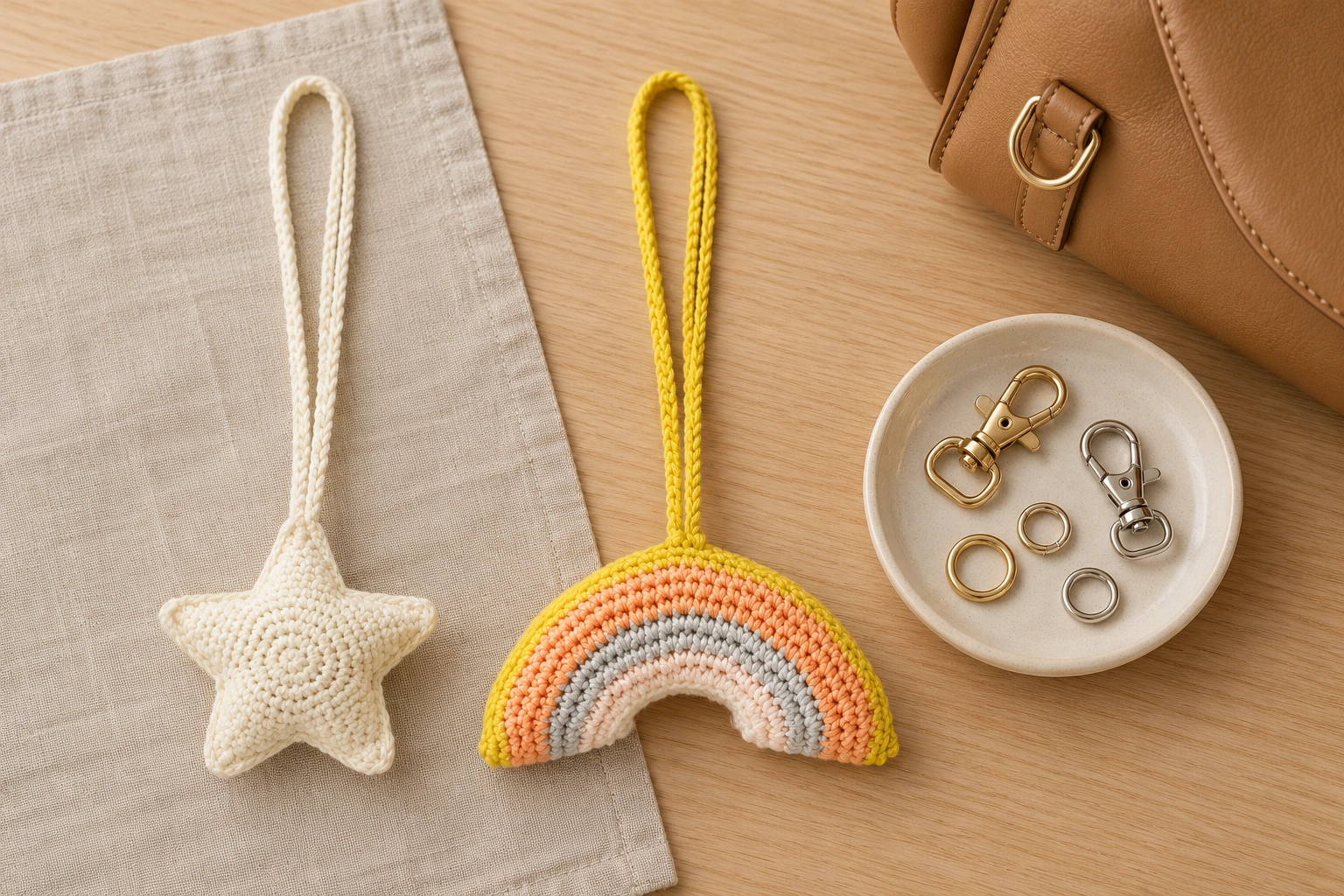
Specify the Attachment Position on the Crochet Body
The attachment position affects both appearance and hanging behavior.
A connection near the top center may help a character face forward, but the result also depends on the product's shape, weight distribution and connector arrangement. Side-mounted details, large ears or projecting accessories can change how the charm rests against a bag.
Use clear location references rather than a general instruction such as “attach at the head.”
Define:
- The location relative to identifiable construction features.
- The direction in which the loop or tab should emerge.
- The visible length of the connecting section.
- The intended hanging orientation.
- Any areas that must remain unobstructed.
Keep the connection clear of important character details where possible. A clasp that repeatedly covers the face may undermine the product presentation even if it operates correctly.
The manufacturer should propose a construction suitable for evaluation. The buyer should approve the result against agreed requirements rather than assuming that a particular number of stitches establishes adequate performance.
Choose Hardware Against the Actual Bag Reference
Hardware selection should address fit, operation, appearance and its relationship to the soft crochet product.
Depending on the design, options may include a clasp, split ring, openable ring or strap arrangement. Each should be assessed as part of the complete sample.
| Hardware detail | What to specify | Why it matters |
|---|---|---|
| Component reference | Agreed supplier or approved component identity | Similar-looking parts may differ in dimensions or operation |
| Overall dimensions | Length, width and relevant opening dimensions | Determines fit and visual proportion |
| Opening mechanism | How the connector opens and closes | Affects access at the intended bag location |
| Material and finish | Confirmed material description, color and finish reference | Supports consistent sourcing and appearance |
| Connecting interface | How hardware joins the yarn loop, tab or ring | Determines assembly and movement |
| Visible condition | Agreed finish and workmanship criteria | Helps identify unacceptable edges, marks or irregularities |
Do not infer material identity from color. A gold-colored finish does not establish the underlying metal, and a photograph does not confirm coating performance.
Any material or performance claim should be supported by evidence appropriate to the agreed product and use.
Review Hanging Length and Character Orientation
The distance between the bag and the crochet body affects how the charm is seen and handled.
A longer connection may make the character more visible below a handle, but it may also allow more movement or contact with other bag components. A shorter connection may keep the charm close to the bag while limiting access to the clasp.
Review the assembled sample in its intended position.
Check whether:
- The character faces the intended direction.
- The connector covers the face or a key design detail.
- The charm rests naturally against the bag.
- The attachment interferes with handles, openings or zippers.
- The product can be attached and removed using the agreed method.
- The visible loop and hardware suit the product's scale.
Record which adjustments are needed. Changing the connector length, attachment position or intermediate ring can produce different results, so evaluate the revised assembly rather than approving each change separately.
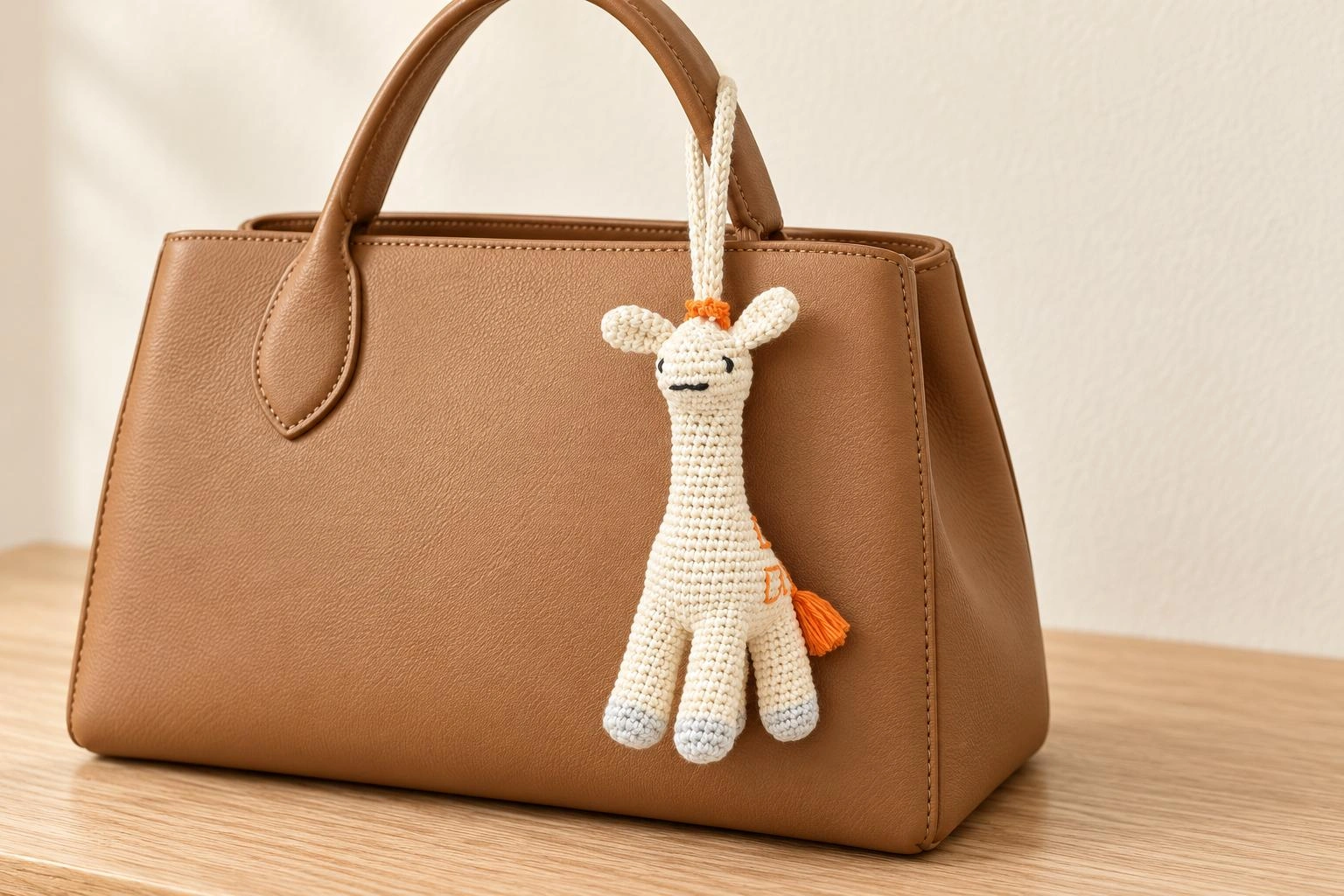
Agree Appearance and Performance Reviews Separately
An attractive hanging sample does not establish attachment strength or long-term durability.
Separate the review into two parts.
Appearance and Practical Fit
Use the complete product and representative bag reference to assess orientation, proportion, access and interference. Keep photographs showing the approved attachment method and normal resting position.
Performance Requirements
Agree the intended use, relevant evaluation methods, acceptance criteria and responsibility for assessment before production.
Potential review topics include connector operation, connection movement, attachment security and the effect of handling on the crochet body. The appropriate scope depends on the product and its intended use.
Do not invent a universal pull force, opening-cycle count or acceptance threshold. Where formal testing is required, agree the applicable method and criteria with the responsible quality team or qualified testing provider.
Keep the evaluation scope clear: a fit check on one bag does not establish compatibility with every bag, and a visual review does not replace a performance assessment.
Confirm the Assembly Sequence
Some hardware cannot be added after the crochet connection is closed. Other configurations require a separate joining operation.
Ask the manufacturer to clarify the assembly sequence during sampling:
- Prepare the specified loop, tab or attachment section.
- Introduce any hardware that must be captured during construction.
- Complete the connection using the proposed method.
- Add any remaining connector components.
- Check orientation and operation.
- Compare the finished assembly with the approved reference.
Record any steps that affect the visible result or require specific component dimensions.
If hardware is substituted later, reassess the affected connection. A new connector may change the opening, assembly route, hanging length or movement even when its finish looks similar.
Include the Attachment in Sample Approval
Approve the complete charm with its intended hardware attached.
The approval record should identify:
- Crochet product version.
- Attachment location and construction reference.
- Hardware and intermediate components.
- Overall hanging arrangement.
- Bag references used for fit review.
- Appearance approval.
- Performance evaluation status.
- Any unresolved conditions.
For the broader approval process, see What Should Buyers Approve in a Crochet Pre-Production Sample?.
Once approved, retain the assembly reference with the relevant specifications. See How to Manage an Approved Crochet Sample Before Bulk Production for sample identification and production handover.
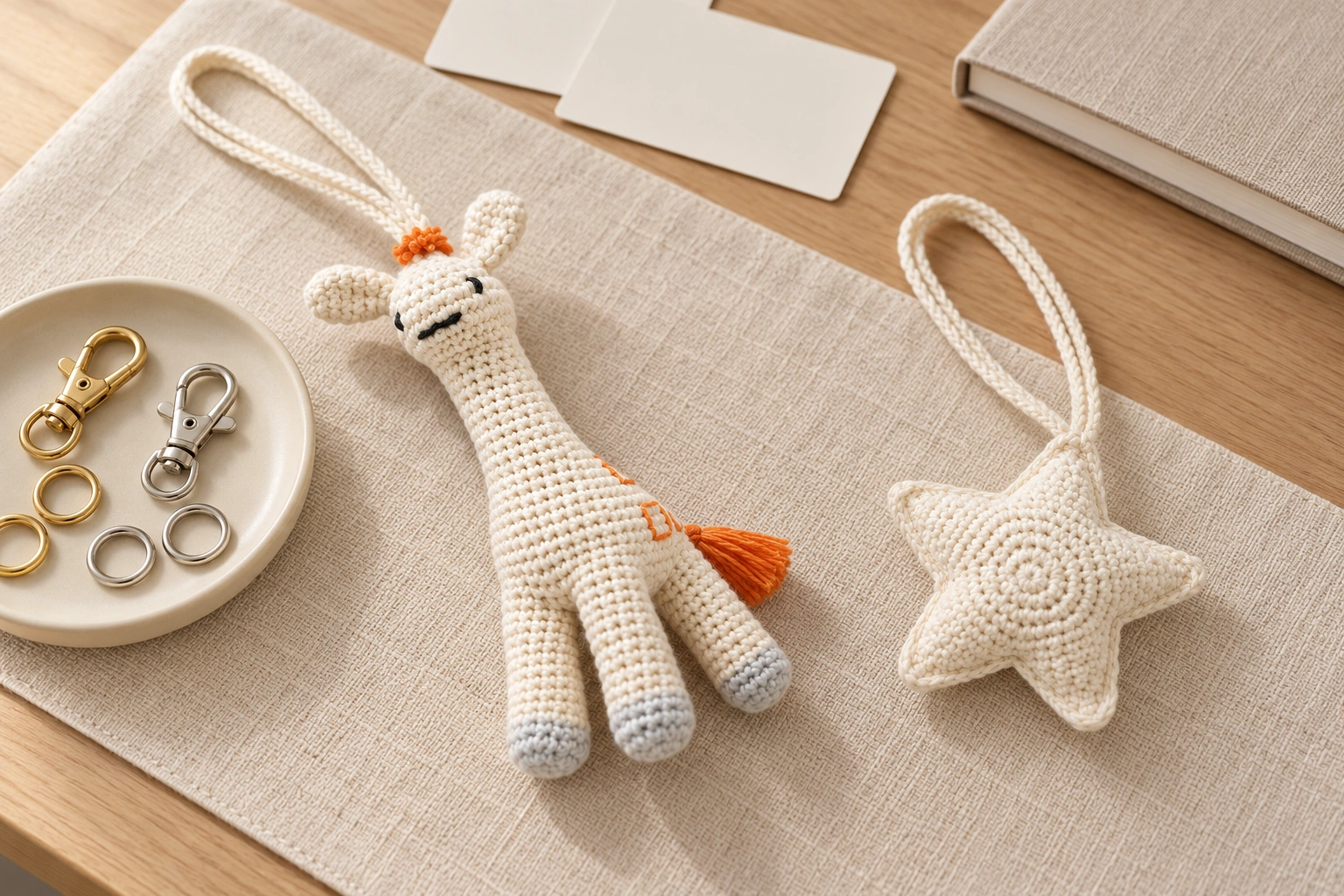
Prepare an Attachment Development Brief for UMY Crochet
For a bag charm project, provide the character or product reference, intended size, proposed bag attachment location and any preferred hardware. Physical bag samples or clear attachment-point measurements can help define the fit review.
The development discussion should clarify:
- Which attachment configurations should be sampled.
- Which hardware details are fixed and which need evaluation.
- How the character should hang.
- Which bag references define compatibility.
- What appearance and performance requirements must be approved.
- Which packaging details affect the assembled charm.
Confirm hardware availability, development scope and evaluation responsibilities before placing the production order. Do not assume that every photographed connector is available in the same material, finish or dimensions.
Frequently Asked Questions
Can the same clasp be used for every crochet charm?
Only if it suits each product and intended attachment point. Differences in charm size, construction, hanging position and bag access may require separate evaluation.
Is a larger clasp always better?
No. A larger clasp may fit some attachment points but look disproportionate, add unwanted weight or interfere with the product. Review fit and appearance together.
Can hardware be approved from a photograph?
Should the attachment loop be visible?
That depends on the design. Specify the intended visible length and position, then review whether it supports the desired hanging behavior and presentation.
Can a connector be changed after the sample is approved?
It should be treated as a component change. Recheck the affected fit, assembly, orientation and performance requirements before approving the replacement.
Does a successful fit check prove the attachment is durable?
No. Fit, appearance and durability are different questions. Agree the necessary performance evaluation separately.
Request a Crochet Bag Charm Attachment Review
Share your product reference, intended bag attachment point, preferred connector and desired hanging position with UMY Crochet. We can review the development inputs and identify the attachment configurations and complete samples that need evaluation before production approval.
<!--[googlesitekit-end-of-content]-->

 Chinese