
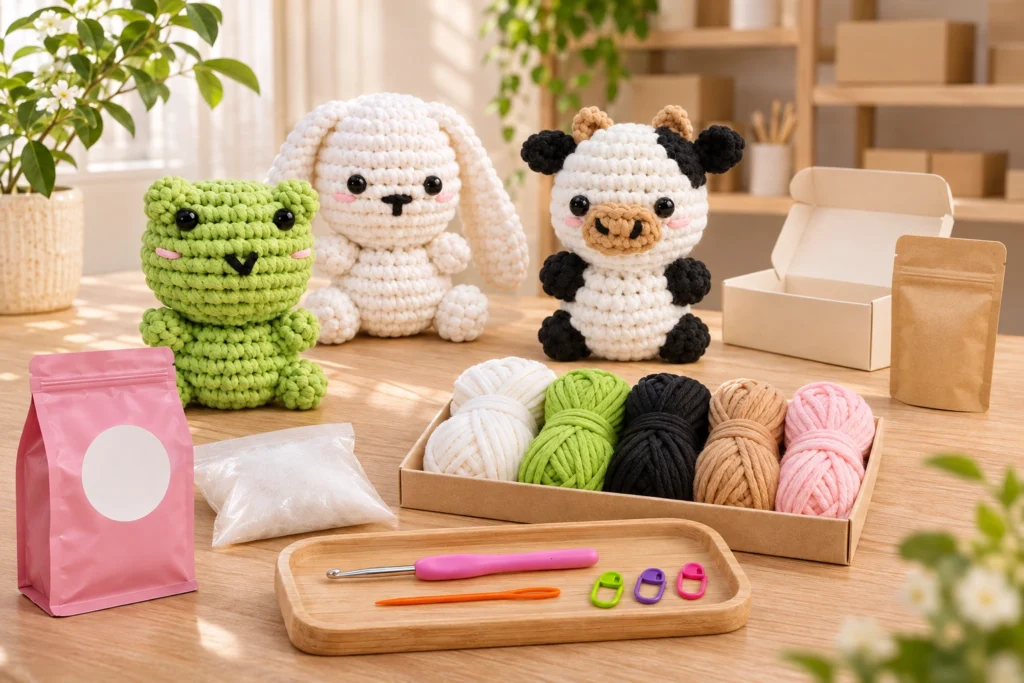
Craft brands should develop a tool-included crochet kit when the intended customer needs a defined set of tools to begin the project. A refill kit can suit customers who already own compatible tools, provided the packaging clearly identifies what is supplied and what they must provide themselves.
The decision should follow the customer’s starting equipment, the project requirements and the intended buying occasion. Removing a hook from an existing kit is only one part of developing a workable refill product.
What Is the Difference Between a Tool-Included Kit and a Refill Kit?
A tool-included crochet kit supplies the tools specified for its project alongside the project materials and instructions. It may still require household items, such as scissors, which should be disclosed.
A refill crochet kit supplies a defined project package while expecting the customer to reuse specified tools. Its contents might include yarn, filling, project accessories and instructions, depending on the approved configuration.
The word “refill” needs a precise meaning. It could describe another complete project without reusable tools, or additional materials for a previously purchased project. These are different products and should be named accordingly.
This guide focuses on choosing the product format for retail crochet kits. It is intended for craft brands, private-label buyers, retailers and product development teams.
| Decision point | Tool-included kit | Refill kit |
|---|---|---|
| Customer’s equipment | Supplies the specified project tools | Assumes access to identified compatible tools |
| Buying occasion | Can suit a first purchase or standalone gift | Can suit a subsequent project or equipped maker |
| Product information | Explain included tools and remaining requirements | Make excluded tools and compatibility especially clear |
| Development review | Evaluate supplied tools with the project | Evaluate the stated reusable tools with the project |
| Packaging | Accommodate tools and project materials | Develop around the revised contents |
| Commercial assessment | Include tool, packing and packaging costs | Assess savings alongside development and operating costs |
Neither format automatically determines the skill level. An experienced maker may want a convenient tool-included gift, while a beginner may already own a suitable hook.
Start With the Customer’s Equipment
Before selecting the format, define what the intended customer is reasonably expected to have.
Useful questions include:
- Is this their first crochet purchase?
- Are they buying another project within the same brand?
- Which tools did an earlier kit actually supply?
- Will the new project use those same tools?
- Is the product likely to be bought as a gift?
- Can the required tools be identified before purchase?
For example, a customer may have completed a previous animal project using one hook, yet need a different hook for a flower project made with another yarn. A refill proposition must account for that difference.

Define What “Refill” Includes
Write a contents list before developing the packaging or comparing prices.
Separate the components into three groups:
- Project materials: yarn by color, filling and other materials consumed during making.
- Project components: items incorporated into the finished object, where applicable.
- Reusable tools: the hook, finishing needle, stitch markers or other equipment specified by the project.
Assign every item explicitly. Do not assume that something should be excluded simply because it can be reused.
A brand might retain a finishing needle in a refill kit for convenience while excluding the crochet hook. Another might exclude both. Either configuration needs clear instructions and an accurate contents statement.
Keep project-specific components within the review. Removing reusable tools should not accidentally remove an item that becomes part of the finished product.
For component verification before sealing, see How to Check Every Component in a Crochet Kit Before Retail Packing.
What Makes a Reusable Tool Compatible?
Compatibility should be defined through identifiable tool requirements and practical project review.
Crochet Hook
Specify the intended hook size and any characteristics necessary for following the supplied instructions. If the refill is intended for an earlier branded kit, identify the relevant tool reference.
Do not assume every hook in a customer’s existing collection will produce the intended result.
Finishing Needle
Check whether the specified needle works with the supplied yarn and the finishing operations. A general reference to “your own needle” can leave the customer uncertain about what to use.
Stitch Markers and Other Equipment
State what is needed and, where relevant, how many are required at the same time. If instructions demonstrate a particular marker or tool, make sure customers can understand the equivalent requirement in the refill version.
Compatibility Across a Product Range
Create a project-to-tool matrix when several refill projects are planned.
Record which projects share tools, which require additional equipment and which need separate review. A shared brand or similar-looking finished object does not establish compatibility.
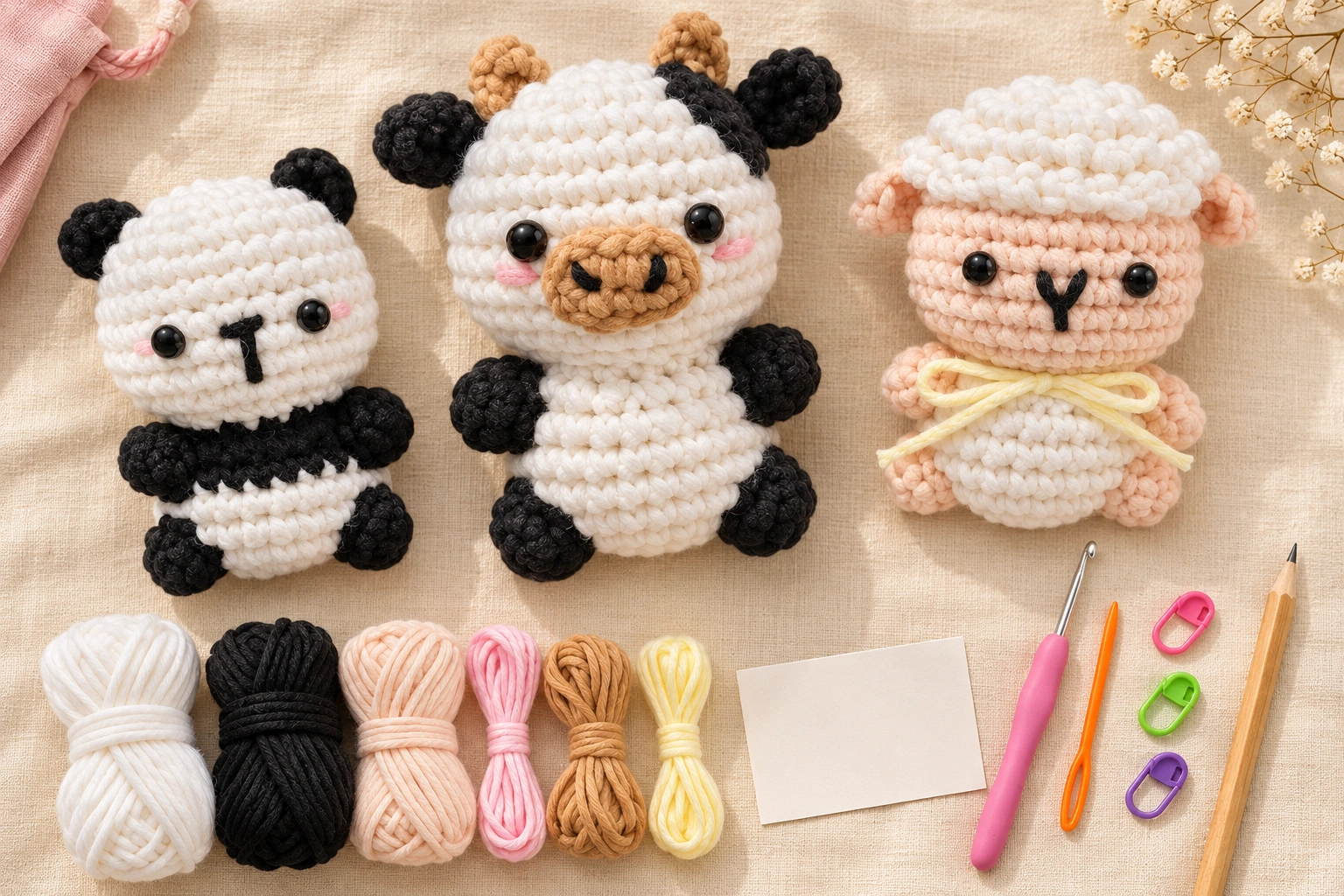
Can Both Formats Use the Same Instructions?
Some pattern content may be shared, but the complete instruction experience needs to match each configuration.
Check references to:
- Opening the package and identifying components.
- Selecting the hook.
- Finding needles and markers.
- Preparing materials.
- Following photographs or video demonstrations.
- Obtaining help when a required item is unavailable.
If the tool-included instructions say “use the hook supplied,” that wording needs attention in a refill version.
A shared video may be appropriate when the demonstrated method and tool requirements remain relevant. Confirm that its introduction does not incorrectly describe the refill contents.
Test the refill using its actual packed materials and the tools customers are instructed to provide. Record whether participants can identify the required equipment and complete the project.
For the wider testing process, see How to Validate Crochet Kit Instructions Before a Retail Launch.
How Should Packaging Distinguish the Two Formats?
Customers should be able to identify the format before purchasing.
A refill package needs a prominent description of its purpose, an accurate contents list and a clear statement of required tools. An online listing should communicate the same information.
Avoid relying on a small badge or a subtle color difference between otherwise identical packages.
Review the design in its intended purchasing context. On a shelf, check the visible front and side panels. Online, check the information customers see when selecting a variant.
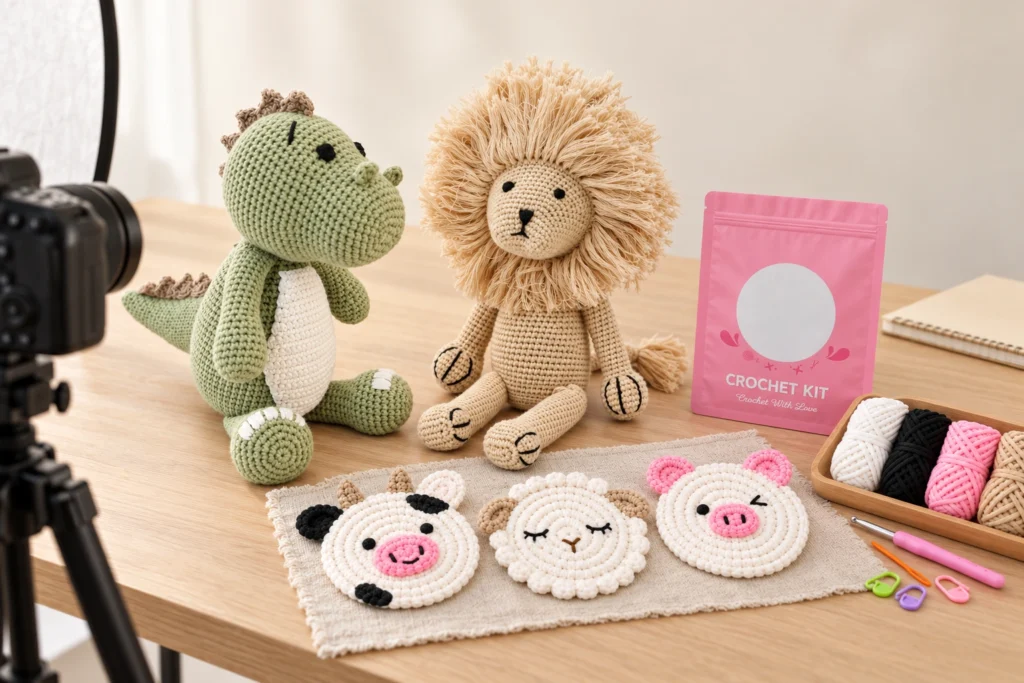
Product imagery also needs a clear role. Tools shown as styling props can create confusion if customers reasonably interpret them as included contents. Any necessary explanation should be visible and understandable.
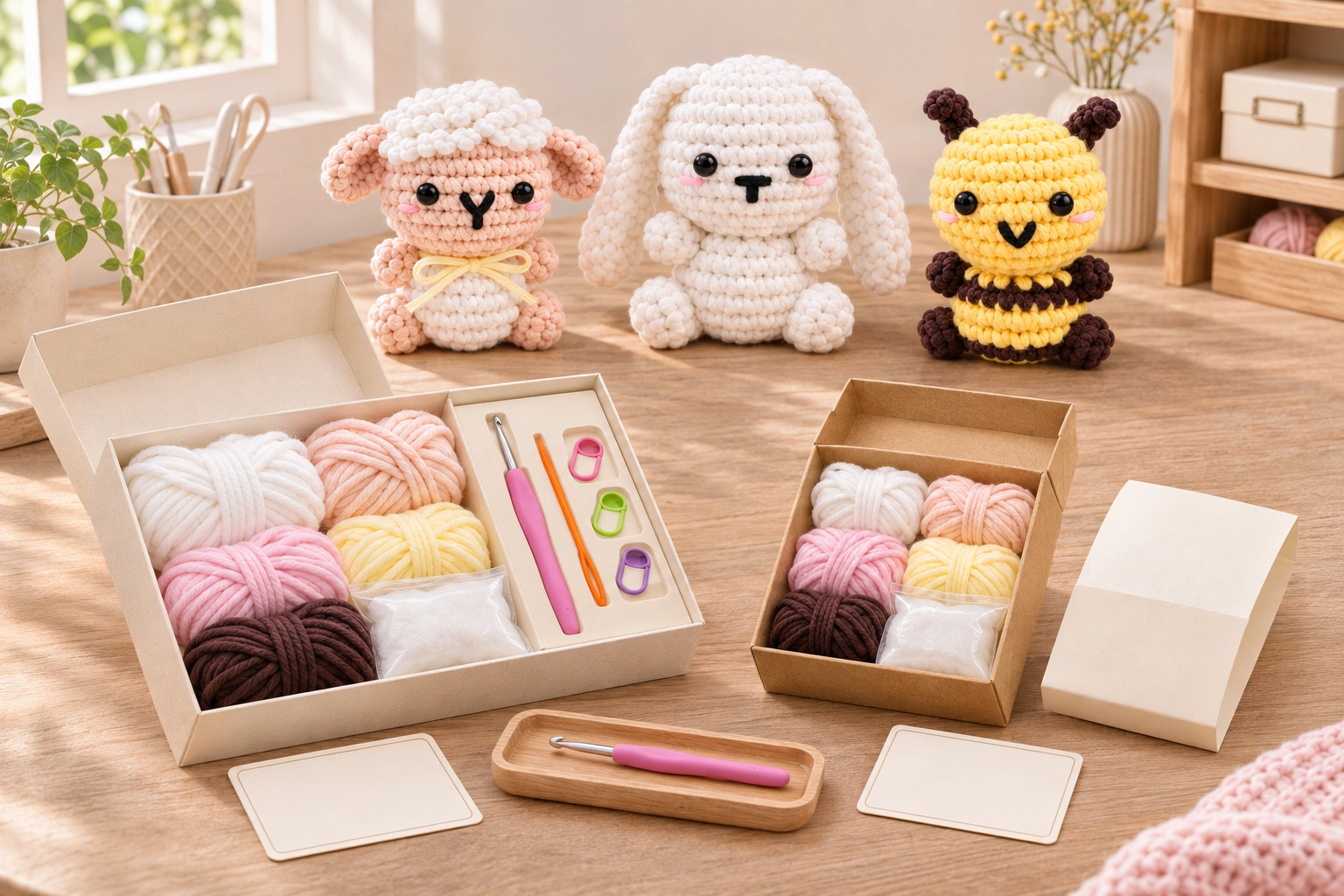
Does a Refill Kit Necessarily Cost Less?
Excluding tools can reduce some component costs, but the final difference depends on the complete configuration.
Compare:
- Removed tools and their application or packing work.
- Revised packaging dimensions and materials.
- Separate artwork and instruction versions.
- Assembly and checking requirements.
- Order quantities for each format.
- Storage and identification of similar-looking packs.
A smaller contents list does not automatically justify keeping the original package. Equally, a new package should have a practical reason to exist.
Ask for quotations based on the same project scope, with format differences clearly identified. Avoid promising a fixed saving before the specifications and quantities are reviewed.
Removing tools alone also does not establish an environmental benefit. Any such claim needs evidence appropriate to its scope.
Should a Brand Launch Both Formats Together?
Develop both when each serves a defined customer need and the team can manage the distinction.
A tool-included version may provide a clear first-project offer. A refill version may provide another project for customers with compatible equipment. This relationship should be understandable across packaging, instructions, listings and customer support.
Before committing to both, assess whether there is enough demand evidence to justify two configurations.
A focused trial can examine:
- Whether buyers understand the difference.
- Whether refill customers have the required tools.
- Which compatibility questions arise.
- Whether packing teams can distinguish the versions.
- Whether the commercial difference supports the intended positioning.
Set review criteria in advance. Sales alone will not explain whether a refill format is clearly understood.
How Can UMY Crochet Support the Format Review?
For a proposed tool-included and refill range, the development discussion can begin with the intended customer, project references and a component list for each format.
A practical review sequence is to:
- Define the equipment customers are expected to own.
- Identify included materials, components and tools.
- Assess tool compatibility with the proposed projects.
- Align instructions and packaging with each configuration.
- Review representative samples and quotations.
- Confirm separate packing references before production.
Refill configurations should be assessed for the specific project. Their availability, quantities and development requirements need confirmation.
Frequently Asked Questions
Is a refill crochet kit simply a kit without a hook?
Not necessarily. Define all included and excluded components. Some refill formats retain selected reusable tools, while others supply project materials only.
Are refill kits suitable for beginners?
They can be suitable when beginners already have the required compatible equipment and can follow the supplied instructions. Skill level and equipment ownership need separate assessment.
Can customers reuse tools from any earlier kit?
That should not be assumed. Identify the tool requirements for the new project and review compatibility with the earlier kit’s tools.
Should refill kits include instructions?
A new project needs clearly defined access to its instructions. A materials replenishment pack may instead refer to an existing project, but that relationship must be explicit.
Can the same packaging be used for both formats?
A shared structure may be possible if it fits both configurations. The artwork and product identification must still make their contents and requirements clear.
Can both formats share one packing checklist?
Each configuration needs an unambiguous component reference. Shared items can be managed consistently, but differences must be explicit enough to prevent substitutions or missing items.
Discuss Your Crochet Kit Configuration
Send UMY Crochet your project references, intended customer, proposed quantities and the tools you expect customers to own.
Include a draft contents list for each format and identify whether the refill is a new project or a materials replenishment pack. Request a configuration review covering compatibility, sample needs, packaging differences and quotation scope.
<!--[googlesitekit-end-of-content]-->
 Chinese