
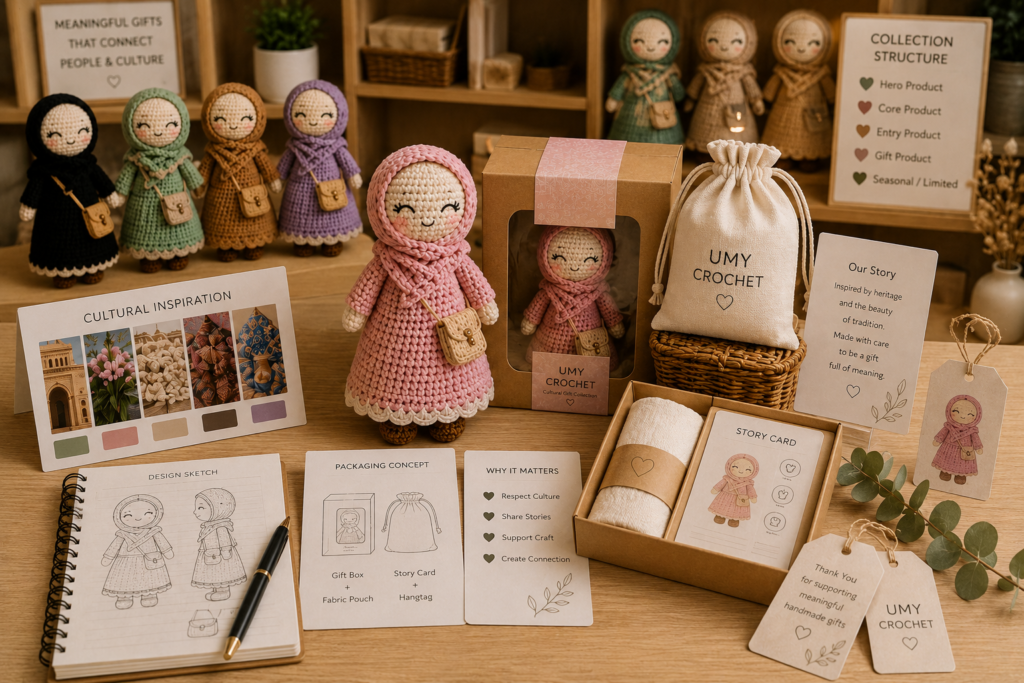
Developing a culturally relevant crochet gift collection should begin with meaning, audience, and permission—not with decorative symbols.
For retailers, gift brands, museums, cultural organizations, tourism businesses, and community-focused brands, the strongest products are usually those that translate a real cultural story into a product customers can understand, gift, display, and value.
A practical development process is:
Cultural Brief → Audience Definition → Reference Validation → Product Concept → Design Adaptation → Stakeholder Review → Sample → Packaging & Storytelling → Retail Architecture → Production
The central question should be:
What does this product represent, who is it for, and who is qualified to confirm that the interpretation is appropriate?
A culturally relevant product does not become meaningful simply because a familiar color, costume, religious symbol, architectural motif, or traditional pattern is added to it.
The design should have a clear connection to the intended community or story, use references responsibly, avoid stereotypes, and remain commercially understandable in a retail environment.
For buyers, this means cultural relevance is not only a creative decision.
It is also a research, approval, product-development, manufacturing, and merchandising decision.
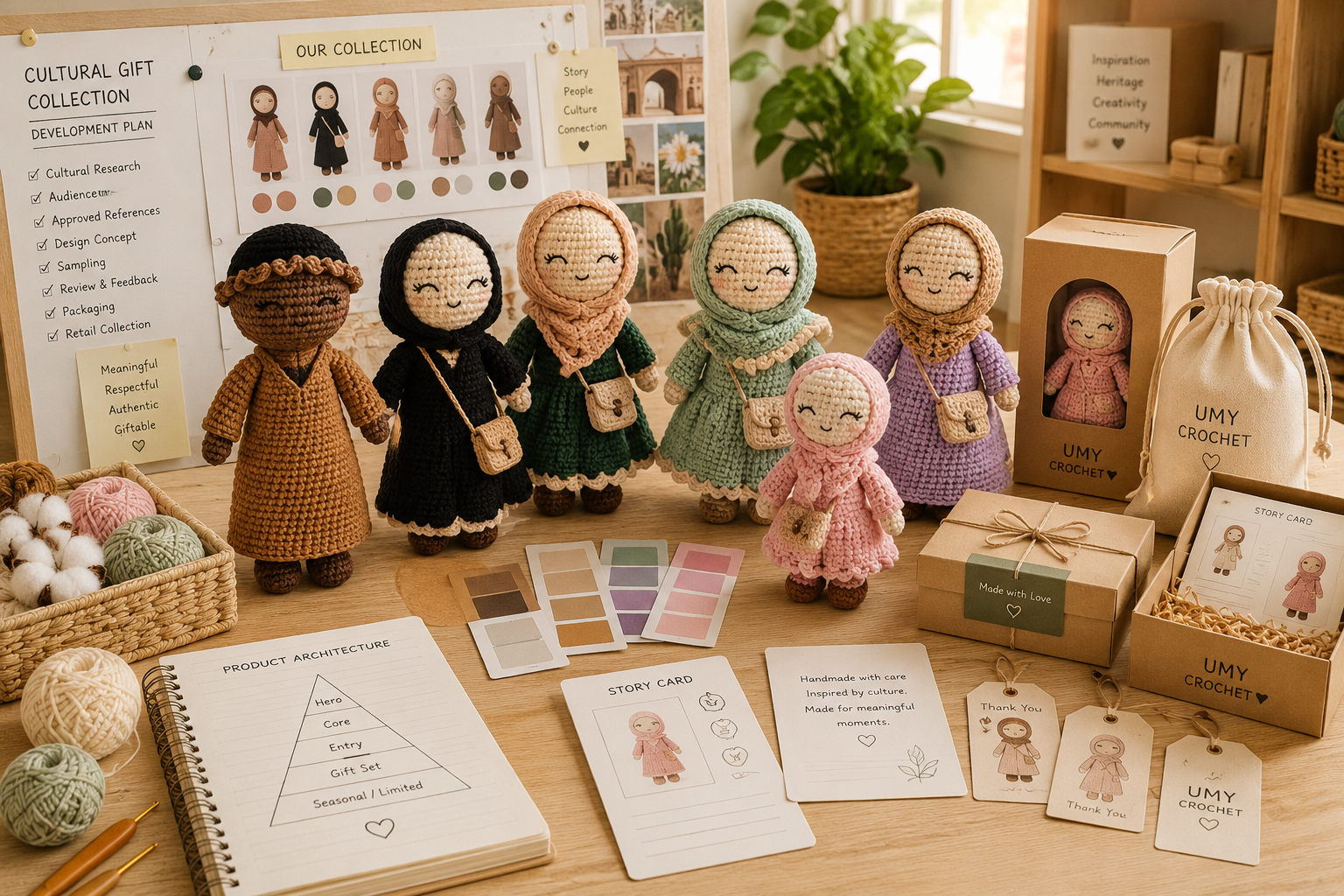
What Is a Culturally Relevant Crochet Gift Collection?
The connection may come from:
- Local flora or fauna
- Regional stories
- Traditional visual references
- Architecture
- Historical themes
- Community identity
- Festivals
- Religious occasions
- Heritage collections
- Destination stories
- Institution-owned artwork
- Authorized characters
- Educational themes
The important word is relevant.
A product should not simply look culturally themed.
There should be a reason the product belongs in that retail environment.
For example:
A generic crochet animal may work as an ordinary gift.
The commercial product remains approachable.
The cultural context gives it additional meaning.
Cultural Relevance Is Different From Decorative Styling
A buyer may begin with ideas such as:
- “Add a traditional pattern.”
- “Use a religious symbol.”
- “Give the doll cultural clothing.”
- “Use colors associated with the region.”
These ideas may be appropriate in some projects.
They may also be inaccurate, oversimplified, sensitive, or inappropriate in others.
A better development process begins with questions.
Ask:
- What is the source of the reference?
- Is the meaning understood?
- Is the element sacred, ceremonial, everyday, historical, or decorative?
- Is it appropriate to reproduce on a commercial product?
- Does the organization own or control the artwork?
- Is community or institutional review required?
- Is the visual reference specific to one group rather than an entire region?
- Could the design create an unintended stereotype?
The factory should not be expected to invent cultural meaning that the buyer has not defined.
For culture-specific projects, the buyer or rights holder should provide reliable direction and approve the interpretation.
Step 1: Build a Cultural Brief Before Building the Product
A strong cultural gift project starts with a structured brief.
The brief may include:
Cultural Context
What place, community, institution, tradition, event, or story does the collection represent?
Target Customer
Who will buy the product?
Examples:
- Local residents
- International tourists
- Families
- Children
- Collectors
- Faith-community customers
- Museum visitors
- Gift buyers
- Diaspora communities
Retail Environment
Where will the product be sold?
- Museum store
- Cultural center
- Tourism shop
- Specialty retailer
- Religious bookstore
- Festival shop
- Online store
- Destination gift store
Approved References
What references can the development team use?
These may include:
- Original artwork
- Historical documents
- Photography
- Architecture
- Institutional collections
- Approved patterns
- Brand guides
- Character artwork
- Cultural consultation notes
Restrictions
What should not be changed, simplified, commercialized, or used?
Clear restrictions can be as valuable as creative references.
Step 2: Separate Core Meaning From Adaptable Design Details
Not every detail has equal cultural importance.
Before adapting a concept into crochet, divide design elements into two groups.
Core Elements
These must remain accurate or recognizable.
Examples may include:
- Character identity
- Key clothing shape
- Specific color relationship
- Authorized emblem
- Historical object silhouette
- Recognizable architectural feature
Adaptable Elements
These can change to improve crochet production or retail use.
Examples may include:
- Secondary decorative details
- Product size
- Simplified textures
- Packaging format
- Minor accessories
- Product configuration
This distinction helps the manufacturer simplify where necessary without accidentally removing what makes the product culturally meaningful.
Step 3: Choose a Product Format That Fits the Story
Not every story should become a doll.
Cultural retail collections can use different crochet formats.
Character Products
Useful when the project includes:
- Original mascots
- Historical figures where appropriate and authorized
- Story characters
- Regional animals
- Institution-owned characters
Crochet Keychains
Useful for:
- Entry-price souvenirs
- Tourism retail
- Small gifts
- Multi-SKU assortments
Flowers and Botanical Products
Potentially suitable when:
- A flower has strong local relevance
- The collection references a garden or botanical institution
- A seasonal celebration uses floral themes
Hanging Ornaments
Useful for:
- Seasonal programs
- Decorative souvenirs
- Festival retail
- Compact gift products
Gift Sets
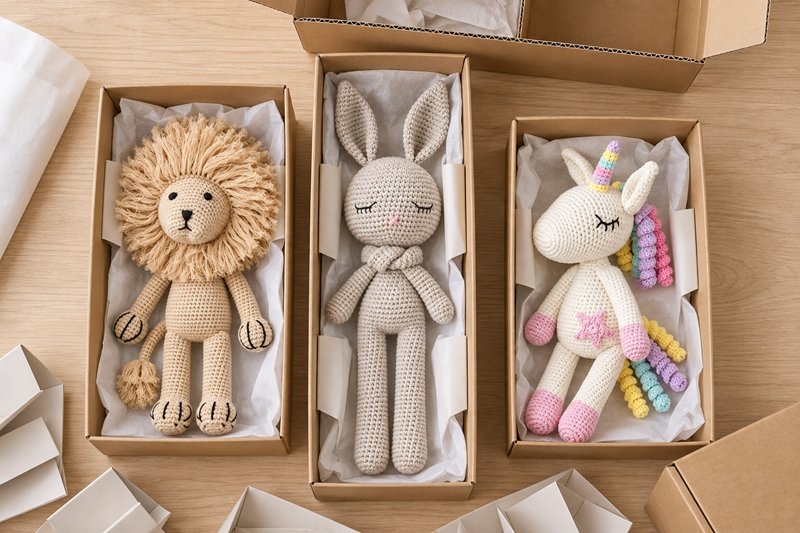
Useful when the buyer wants to combine:
- Crochet product
- Story card
- Postcard
- Small accessory
- Fabric pouch
- Gift box
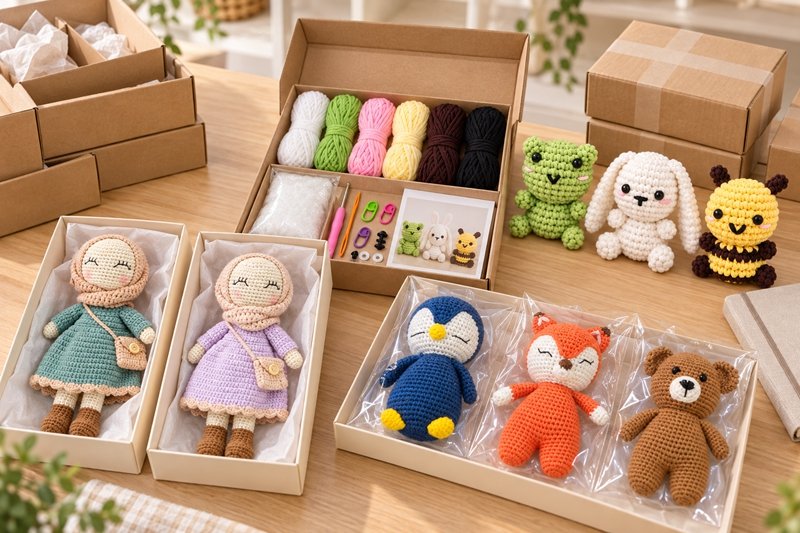
Crochet Kits
Potentially useful when the making experience itself supports education or engagement.
The format should follow the story and retail role.
Do not force every cultural reference into the same product structure.
Step 4: Build a Product Architecture, Not a Random Assortment
A culturally relevant collection should feel like one retail story.
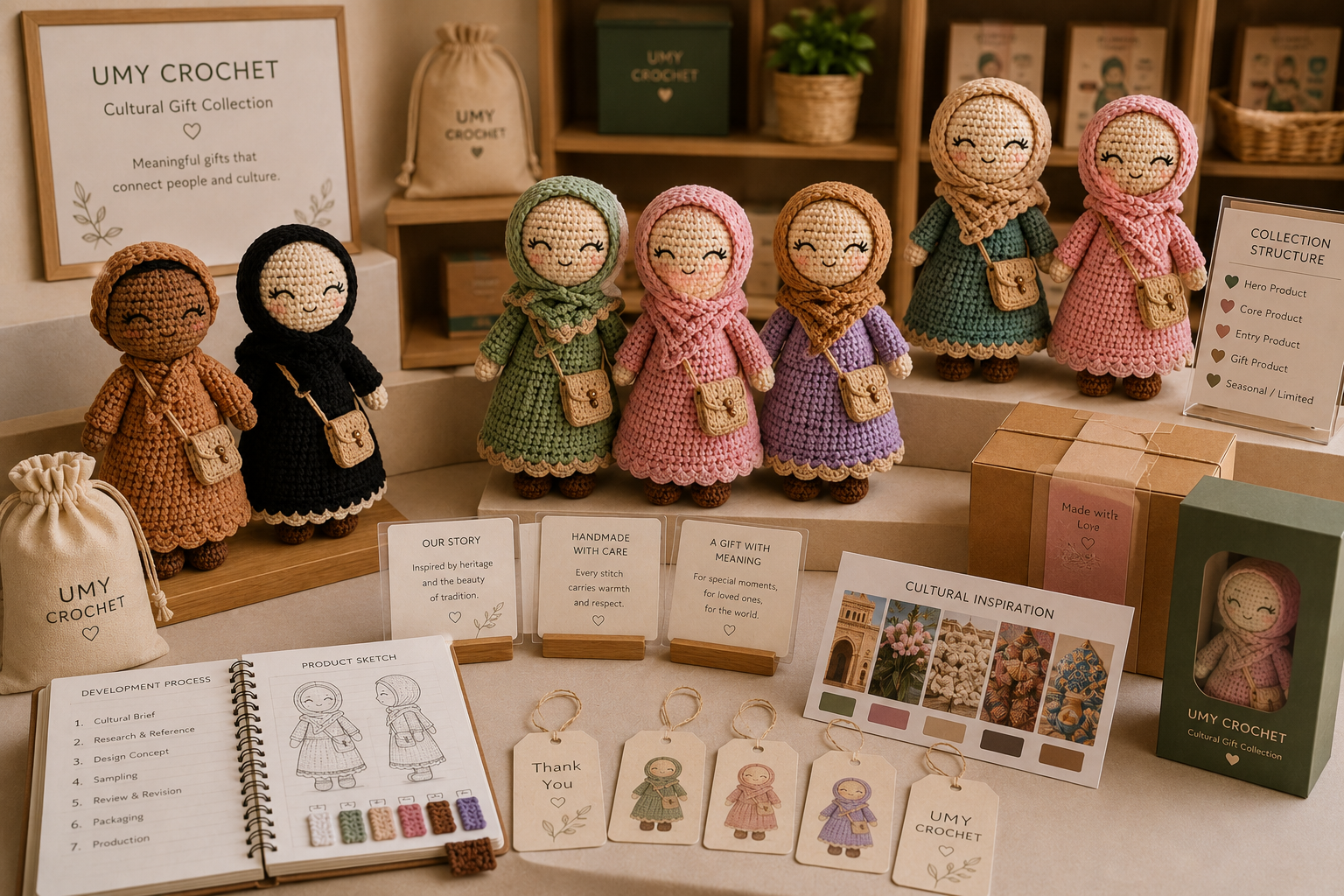
A useful structure may include:
| Product Role | Possible Crochet Format | Commercial Purpose |
|---|---|---|
| Hero | Detailed character | Represents the main story |
| Core | Standard-size product | Main retail item |
| Entry | Keychain or mini product | Accessible purchase |
| Gift | Boxed product or set | Stronger gifting |
| Seasonal | Festival variation | Event-specific retail |
| Collectible | Limited or themed version | Collection expansion |
This gives buyers several price and purchase occasions without creating unrelated products.
Example Collection Architecture
A destination-gift program inspired by local wildlife might include:
Hero Animal
↓
Standard Crochet Character
↓
Mini Keychain
↓
Gift-Box Version
↓
Seasonal Accessory Version
The cultural theme remains consistent while the commercial format changes.
Step 5: Avoid Using Too Many Cultural Signals at Once
A product does not become more authentic simply because more symbolic details are added.
Too many visual references can make a design:
- Confusing
- Stereotypical
- Difficult to manufacture
- Difficult to explain
- Visually crowded
A more disciplined approach is to identify the few elements that carry the strongest meaning.
For example, recognition may come primarily from:
- One silhouette
- One garment
- One approved pattern
- One color combination
- One object
- One story
Those elements should lead the design.
Secondary details can remain restrained.
Step 6: Be Especially Careful With Religious Products
Religious gift development requires additional sensitivity.
A faith-based product may be connected to:
- A holiday
- A family gifting occasion
- A religious education program
- A faith-based retailer
- A community event
But not every religious symbol is appropriate for every product format.
Buyers should determine:
- Whether the symbol may be commercialized
- Whether placement is appropriate
- Whether the item could be treated disrespectfully in normal use
- Whether age positioning matters
- Whether text or wording requires review
- Whether the product needs approval from a qualified internal or community representative
A manufacturer can help translate an approved concept into a physical product.
It should not independently decide theological or cultural meaning.
Practical Rule
When cultural or religious meaning is important, approval should come from someone qualified to approve that meaning.
Step 7: Review Cultural Accuracy Before Sampling
The least expensive error is the one corrected before a sample is made.
Before converting the design into crochet, review:
- Artwork
- Colors
- Clothing
- Accessories
- Symbols
- Text
- Product name
- Story description
Ask:
Is the concept culturally correct before we invest in physical development?
This prevents a common problem:
Design approved visually
↓
Sample produced
↓
Cultural issue discovered
↓
Design must restart
A cultural review checkpoint before sampling can save both time and development cost.
Step 8: Adapt the Design for Crochet Without Losing Meaning
Crochet cannot reproduce every visual reference exactly.
Fine illustration details may need to become:
- Yarn shapes
- Embroidery
- Color blocks
- Simplified accessories
- Structured silhouettes
During this translation, the development team should protect the most recognizable elements first.
For example, if a reference depends on:
- A distinctive hat
- A specific animal silhouette
- A traditional shape
- A signature color arrangement
those elements may deserve more attention than very small decorative details.
The goal is not photographic reproduction.
The goal is a recognizable and respectful crochet interpretation.
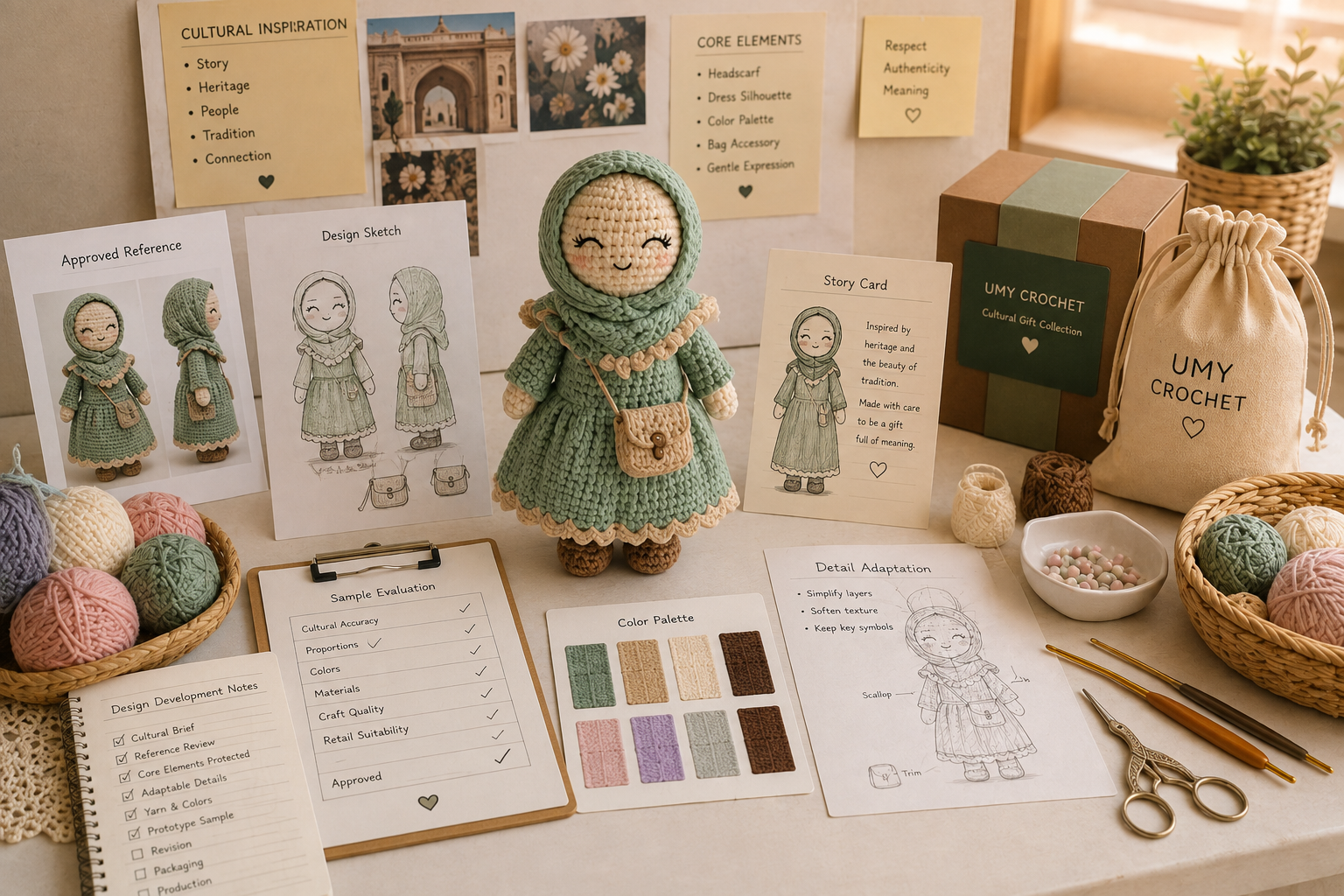
Step 9: Use a Stakeholder Review Process
Culture-specific products may need more than one approval layer.
A practical project can involve:
Buyer / Product Team
Reviews:
- Commercial concept
- Cost
- Size
- Product architecture
Brand or Institution
Reviews:
- Brand consistency
- Story
- Intellectual-property use
Cultural or Community Reviewer
Where appropriate, reviews:
- Meaning
- Symbol usage
- Language
- Cultural context
Manufacturer
Reviews:
- Crochet feasibility
- Materials
- Construction
- Production repeatability
- Packaging feasibility
These groups answer different questions.
A factory may know whether a complicated accessory can be produced consistently.
It may not be the right authority to determine whether the cultural meaning of that accessory is correct.
Step 10: Develop the Sample as a Cultural and Commercial Prototype
The first sample should not only answer:
Does it look good?
It should answer several questions.
Cultural Review
- Are important references preserved?
- Is anything misleading?
- Is anything inappropriate?
- Does the product still communicate the intended story?
Product Review
- Are proportions correct?
- Are colors correct?
- Does the yarn support the design?
- Are accessories workable?
Retail Review
- Is the size suitable?
- Does the product fit the planned price architecture?
- Is it giftable?
- Can customers understand it quickly?
Manufacturing Review
- Can the structure be repeated?
- Are materials practical?
- Are details unnecessarily complex?
- Can quality standards be defined?
The sample is where cultural meaning becomes a physical retail object.
That transition deserves careful review.
Step 11: Develop Packaging That Explains, Not Invents, the Story
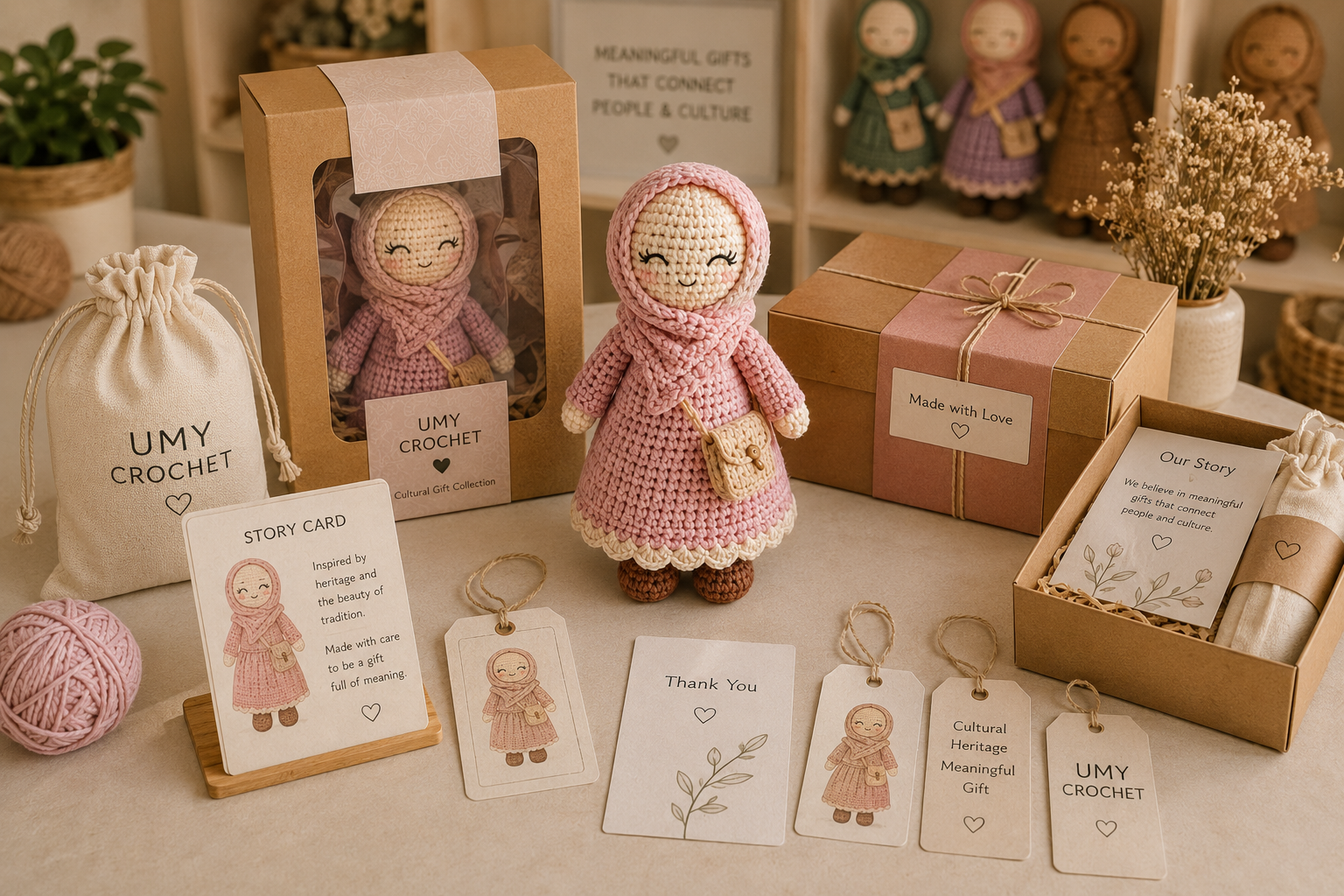
Packaging can be especially valuable for culturally relevant products because the physical product may not communicate the entire context by itself.
Useful packaging elements may include:
- Story card
- Hangtag
- Gift box
- Fabric pouch
- Collection card
- Educational insert
The story card may explain:
- What inspired the product
- What the character represents
- Why a color or detail matters
- How the product relates to a destination or institution
But packaging should not invent historical or cultural claims.
All meaningful statements should come from approved project information.
Product First, Story Second
The customer should be able to appreciate the product immediately.
The packaging then adds a deeper layer of context.
This creates:
Visual Appeal → Curiosity → Story → Emotional Value
Step 12: Design for Customers Who May Not Know the Culture
This is common in:
- Tourism
- Museum retail
- International e-commerce
- Destination gifting
The product should therefore work at two levels.
Level 1: Immediate Understanding
The customer can quickly see:
- What the item is
- Why it is attractive
- Why it is giftable
Level 2: Deeper Meaning
Interested customers can learn:
- What inspired the design
- What the cultural reference means
- Why the collection exists
This helps prevent a product from requiring extensive explanation before it becomes appealing.
Step 13: Plan Several Price Points
Cultural relevance should not exist only in premium products.
A collection can use several price tiers.
For example:
Entry Tier
- Keychain
- Mini ornament
- Small flower
- Simple accessory
Core Tier
- Standard crochet character
- Main souvenir
- Standard gift product
Premium Tier
- Detailed character
- Gift box
- Multi-product set
Collector / Limited Tier
- Special packaging
- Seasonal version
- Exhibition or event edition
This allows buyers to serve customers with different budgets while keeping one consistent story.
Step 14: Keep Product Complexity Connected to Retail Price
Cultural detail can create design complexity.
Complexity may include:
- Multiple yarn colors
- Embroidery
- Clothing layers
- Small accessories
- Separate components
- Special packaging
Every additional detail should have a reason.
Ask:
Does this detail improve cultural recognition or customer value enough to justify the additional complexity?
If not, simplifying the design may produce a stronger commercial product.
A highly detailed product can be appropriate for a premium collector item.
The same level of complexity may not work for an entry-price souvenir.
Step 15: Protect Intellectual Property and Usage Rights
Cultural merchandise may involve intellectual property such as:
- Artwork
- Logos
- Characters
- Institution-owned graphics
- Illustrations
- Contemporary designs
Before manufacturing, the project owner should confirm that it has appropriate permission to use supplied content.
This is especially important when a reference comes from:
- A contemporary artist
- A licensed character
- An exhibition
- An institution's collection
- A commercial brand
Cultural importance does not automatically mean a design is free to reproduce.
Step 16: Build Manufacturing Consistency Without Removing Handmade Character
Once a cultural design is approved, production needs clear references.
Important controlled elements may include:
- Yarn
- Color
- Dimensions
- Stitch structure
- Face
- Clothing
- Accessories
- Symbol placement
- Packaging
Because crochet is handmade, slight variation is natural.
But cultural details that carry meaning may require tighter attention.
For example, if one accessory makes the character recognizable, it should not gradually change across production batches.
The goal is:
Handmade character with controlled commercial consistency.
Step 17: Review Compliance According to the Actual Product
A cultural story does not determine the product's regulatory requirements.
The physical product does.
Applicable requirements may depend on:
- Product category
- Intended age group
- Target market
- Materials
- Construction
- Accessories
- Intended use
For example, a decorative cultural souvenir and a product marketed as a children's toy may involve different considerations.
Do not add regulatory marks or certification statements simply because another souvenir uses them.
[Internal Link Opportunity: What Certifications Do Crochet Toys Need?]
Step 18: Test the Collection as a Retail System
Before expanding into many SKUs, buyers can evaluate a focused assortment.
A practical first collection might contain:
- 1 hero product
- 1 core product
- 1 mini product
- 1 gift format
- Customer response
- Product understanding
- Gift demand
- Price acceptance
- Feedback on the story
- Best-selling format
Step 19: Build Expansion Around Proven Cultural Elements
Once the collection is working, expansion can follow the strongest part of the story.
For example:
Hero Character
↓
Mini Character
↓
Keychain
↓
Gift Set
↓
Seasonal Edition
or:
Local Botanical Theme
↓
Crochet Flower
↓
Mini Ornament
↓
Bouquet
↓
Gift Box
This allows a cultural concept to become a repeatable commercial product family rather than a one-time souvenir.
Cultural Product Development: What Buyers Should Provide
A useful development brief may include:
- Cultural or institutional background
- Intended customer
- Target market
- Approved visual references
- Artwork or sketches
- Meaning of important design elements
- Elements that must remain unchanged
- Elements that may be simplified
- Language requirements
- Approximate size
- Estimated quantity
- Target retail positioning
- Packaging expectations
- Intended product use
- Intended age group
- Required review or approval process
- IP or authorization information where relevant
The clearer this information is, the less the development team needs to make assumptions.
Common Mistakes in Culturally Relevant Gift Development
Mistake 1: Starting With a Symbol Instead of a Story
A symbol without context does not automatically create relevance.
Understand the meaning first.
Mistake 2: Treating One Reference as Representative of an Entire Culture
Cultures are not visually uniform.
Avoid broad generalizations.
Mistake 3: Allowing the Manufacturer to Guess Cultural Meaning
Manufacturers can solve production problems.
The project owner should provide or approve cultural context.
Mistake 4: Adding Too Many Traditional Elements
More symbolism can make a design less clear rather than more meaningful.
Mistake 5: Copying Existing Cultural Merchandise
Use original, owned, public-domain where appropriate, or properly authorized source material rather than copying another seller's interpretation.
Mistake 6: Ignoring Packaging Language
Mistake 7: Focusing Only on Cultural Meaning and Forgetting Retail
The product still needs:
- A commercial size
- Appropriate pricing
- Giftability
- Packaging
- Production consistency
Mistake 8: Focusing Only on Retail and Forgetting Cultural Review
Commercial appeal does not replace responsible interpretation.
How UMY Approaches Culturally Relevant Crochet Development
UMY has been involved in crochet product development and manufacturing since 2013.
For suitable culture-focused projects, development can follow a structured process:
Approved Idea → Reference Review → Crochet Adaptation → Yarn & Color Selection → Sample → Buyer / Stakeholder Review → Revision → Packaging → Production → Retail
Depending on the project, UMY can support development discussions around:
- Character interpretation
- Product size
- Yarn and colors
- Clothing
- Accessories
- Gift sets
- Hangtags
- Story cards
- Gift boxes
- Fabric pouches
- Collection expansion
- Production consistency
UMY's manufacturing role is to help turn an approved idea into a commercially workable product.
For culture-specific meaning, religious interpretation, protected artwork, or third-party intellectual property, the buyer or relevant rights holder should provide and approve the necessary references.
This division of responsibility helps create a more reliable development process.
Buyer Checklist Before Approving a Cultural Crochet Collection
Cultural Meaning
- [ ] The cultural context is clearly defined
- [ ] Important references have reliable sources
- [ ] Sensitive elements have been identified
- [ ] Appropriate reviewers are involved where needed
- [ ] Symbols and wording are used appropriately
Design
- [ ] Core recognizable features are defined
- [ ] Adaptable details are identified
- [ ] Crochet simplification preserves the intended meaning
- [ ] Colors are approved
- [ ] Accessories are appropriate
Commercial Planning
- [ ] Target customer is defined
- [ ] Sales channel is defined
- [ ] Product roles are clear
- [ ] Price architecture is considered
- [ ] SKU count is manageable
- [ ] Packaging supports the story
Rights and Documentation
- [ ] Artwork usage is authorized where required
- [ ] Logos and characters are approved
- [ ] Product text is approved
- [ ] Packaging claims are verified
Production
- [ ] Approved sample exists
- [ ] Materials are confirmed
- [ ] Key cultural details are included in production references
- [ ] Packaging version is controlled
- [ ] Quality expectations are documented
Frequently Asked Questions
What makes a crochet gift culturally relevant?
Cultural relevance comes from a meaningful and accurate connection to a place, community, institution, tradition, event, or story. It should be based on appropriate references and reviewed by the project owner or qualified stakeholders when necessary.
Can a cultural symbol be added to any crochet product?
Not automatically. Some symbols may have specific religious, ceremonial, historical, or community meanings. Buyers should confirm that commercial use, placement, and interpretation are appropriate before incorporating them into a product.
Can museums and cultural institutions develop crochet merchandise?
Yes. Institutions may develop products around their own collections, stories, mascots, authorized artwork, local themes, or educational concepts, subject to appropriate rights and internal approvals.
Can cultural gift collections include several price points?
Yes. One concept may be developed into entry, core, premium, and limited formats such as keychains, standard characters, gift sets, and special editions.
How long does a custom crochet sample take?
At UMY, custom crochet sampling typically takes around 7–15 days, depending on design complexity, materials, accessories, revisions, and current project scheduling.
What is the MOQ for a custom cultural crochet product?
UMY's custom handmade crochet products are normally quoted around 500 pieces per design. Some simple designs that are suitable for production may be evaluated from approximately 300 pieces per design. Packaging and other components may have separate production conditions.
Who should approve cultural accuracy?
The appropriate reviewer depends on the project. It may be the institution, rights holder, brand, community representative, cultural advisor, religious organization, or another qualified stakeholder. The manufacturer should not be expected to independently define sensitive cultural meaning.
Can culturally relevant crochet products use third-party artwork?
Only where the project owner has appropriate rights or authorization. Supplying an image does not automatically establish permission to reproduce it commercially.
Should cultural packaging include a story card?
A story card can be very useful when customers need context to understand the design. It should communicate approved information clearly and avoid unsupported historical, cultural, sustainability, or institutional claims.
Conclusion
The strongest culturally relevant crochet gift collections do not begin with decoration.
They begin with understanding.
Buyers should define:
What the story is
Who the product is for
Which details carry meaning
Who can approve the interpretation
and then translate those decisions into:
Product + Sample + Packaging + Retail Architecture + Production Standard
When cultural meaning and commercial product development are treated as one coordinated process, crochet can become an effective medium for turning stories, places, traditions, institutions, and communities into tactile retail products.
But the objective should never be to reduce a culture to a visual theme.
The objective is to create a product that is:
Relevant enough to belong
Clear enough to understand
Respectful enough to approve
Practical enough to manufacture
and
Compelling enough to sell as a meaningful gift.
 Chinese