
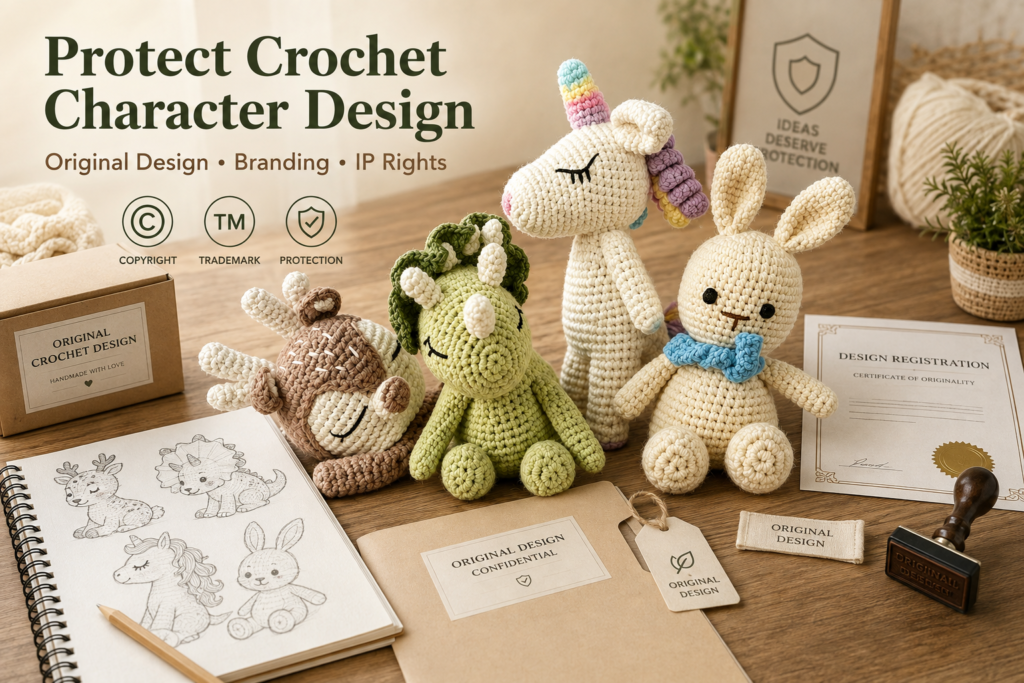
Protecting Creative Ideas in Custom Crochet Manufacturing
For many brands, a crochet product is more than a handmade item.
It may represent:
- A unique character concept
- A brand identity
- A cultural story
- A marketing campaign
- A future product collection
As the demand for custom crochet products continues to grow, more companies are investing in original designs, mascots, collectible characters, and branded merchandise.
However, one important question often appears during product development:
How can brands protect their crochet designs and intellectual property before entering production?
At U-MY Crochet, we have specialized in custom crochet manufacturing since 2013, supporting brands, retailers, museums, and organizations across more than 150 countries and regions.
Through years of developing custom crochet dolls, mascots, gift collections, and character products, we have learned:
A successful crochet product requires not only creative development, but also careful protection of the ideas behind it.
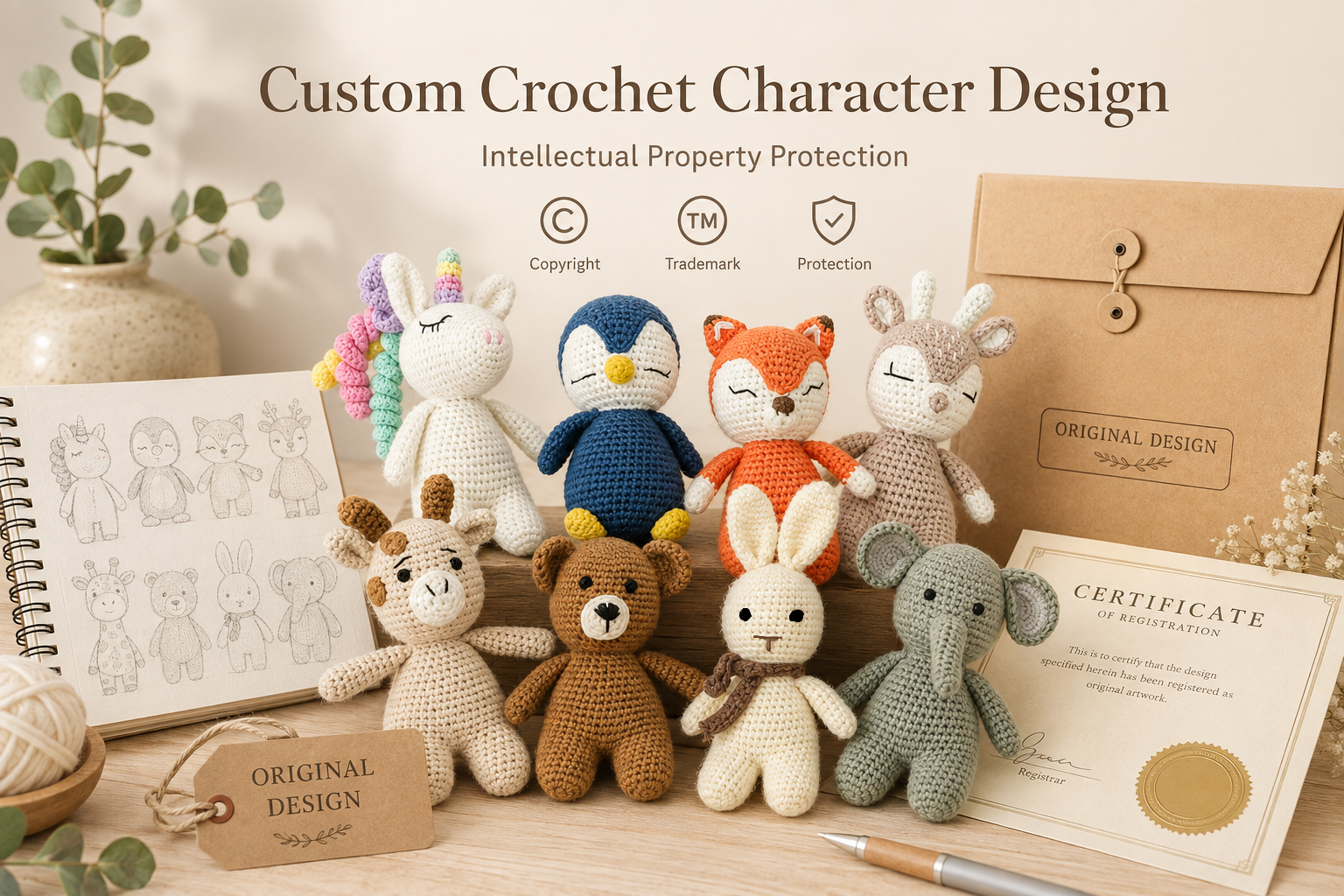
Why Intellectual Property Matters in Crochet Product Development
Many buyers assume that intellectual property protection only applies to large brands or famous characters.
In reality, IP protection is important for any company creating:
- Original characters
- Custom mascots
- Brand merchandise
- Licensed products
- Exclusive collections
A crochet product may involve multiple creative elements:
- Character appearance
- Product design
- Artwork
- Packaging
- Brand name
- Story concept
Without proper protection, valuable creative assets may face risks such as:
- Unauthorized copying
- Design imitation
- Unapproved production
- Market confusion
What Types of Intellectual Property Apply to Crochet Products?
Different parts of a crochet product may be protected in different ways.
1. Character Design Protection
For companies developing original crochet characters, the character itself is often the most valuable asset.
Protection may involve:
- Original drawings
- Character illustrations
- Design documents
- Digital artwork records
These materials help establish ownership of the original concept.
Examples include:
- Brand mascots
- Animal characters
- Story-based dolls
- Collectible figures
2. Trademark Protection
A trademark protects brand identifiers such as:
- Brand names
- Logos
- Character names
- Collection names
For companies building long-term product lines, trademarks help prevent others from using similar branding.
A crochet mascot can become much more valuable when it develops recognition beyond the physical product.
3. Copyright Protection
Copyright may apply to creative works such as:
- Original illustrations
- Character artwork
- Product photography
- Marketing materials
For example, a company that creates a unique mascot illustration may use copyright protection to strengthen ownership of the original artwork.
4. Design Rights and Product Appearance
In some markets, companies may protect the visual appearance of products through design rights.
This can apply to:
- Unique shapes
- Distinctive appearances
- Special product configurations
For brands developing exclusive collections, protecting product appearance can help maintain differentiation.
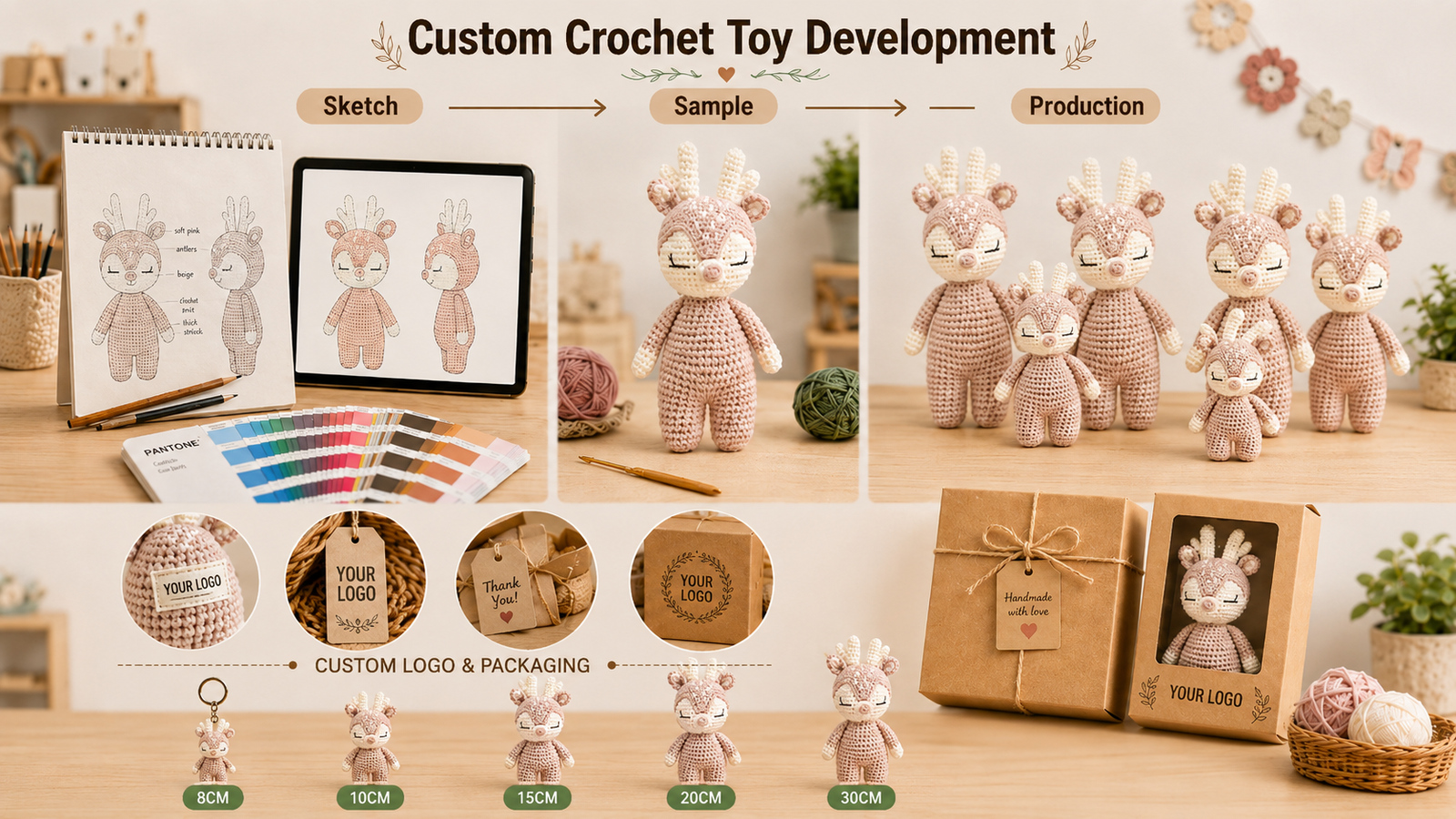
Common IP Risks During Crochet Manufacturing
Even when a brand owns the original concept, several risks can appear during production.
Risk 1: Sharing Designs Without Clear Agreements
Many brands send:
- Sketches
- Reference images
- Character files
- Product ideas
before production begins.
Without proper agreements, it may become difficult to define:
- Who owns the design
- How the design can be used
- Whether samples can be displayed publicly
Risk 2: Using Existing Characters Without Permission
Some companies attempt to develop products inspired by popular characters.
However, using:
- Famous characters
- Licensed images
- Protected logos
without authorization may create legal risks.
Professional manufacturers usually require customers to confirm they have the rights to produce requested designs.
Risk 3: Confusing Similar Products With Original Designs
Crochet products are handmade, and many categories naturally share similarities.
For example:
- Animal dolls
- Flowers
- Seasonal decorations
However, there is an important difference between:
Common product categories
and
Copied creative designs.
Professional development focuses on creating original interpretations while respecting existing intellectual property.
How Brands Can Protect Crochet Designs Before Production
Successful brands usually protect their ideas through several practical steps.
Step 1: Prepare Design Ownership Records
Before production, brands should keep records of:
- Original sketches
- Design dates
- Development files
- Concept documents
These records help demonstrate the creation process.
Step 2: Use Confidentiality Agreements
Before sharing sensitive designs, companies may consider confidentiality agreements such as:
- NDA (Non-Disclosure Agreement)
- Design confidentiality agreements
These agreements help define how information can be used.
Step 3: Clearly Define Ownership Terms
During manufacturing cooperation, companies should clarify:
- Who owns the final design?
- Who owns the pattern?
- Can the manufacturer reuse the design?
- Can the product be shown publicly?
Clear agreements reduce future misunderstandings.
Step 4: Work With Experienced OEM/ODM Partners
A professional crochet manufacturer understands that custom designs are valuable assets.
A reliable partner should have processes for:
- Confidential product development
- Sample management
- Design protection
- Customer-specific projects
How U-MY Protects Customer Designs During Development
At U-MY Crochet, we understand that many customers are not only purchasing products.
They are building brands.
Our customers include:
- Gift companies
- Retailers
- Museum stores
- IP owners
- Marketing agencies
- Corporate buyers
During custom development, we support customers with:
Confidential Product Development
Customer concepts and designs are handled as project-specific information.
Sample Control
Custom samples are developed according to customer requirements and reviewed before production.
OEM/ODM Collaboration
We support different development models:
OEM
Customers provide:
- Character concepts
- Artwork
- Product ideas
We help transform them into physical crochet products.
ODM
We support customers who need:
- Product ideas
- Design suggestions
- Collection development
Production Consistency
For brands creating collections, consistency is critical.
We help maintain:
- Product appearance
- Materials
- Colors
- Manufacturing standards
across different production batches.
Real Project Insight: Protecting a Character From Concept to Collection
One common situation we see is:
A customer starts with a simple character illustration.
The original idea may later expand into:
- Crochet dolls
- Keychains
- Gift sets
- Seasonal products
- Retail collections
During this process, the character becomes more than a single product.
It becomes a brand asset.
One important lesson we have learned:
How Brands Build Long-Term Value From Protected Crochet Designs
A protected crochet character can support many business opportunities.
1. Product Expansion
A successful character can develop into:
- Multiple sizes
- Different styles
- Seasonal editions
- New product categories
2. Licensing Opportunities
Strong characters may support:
- Collaboration projects
- Licensed merchandise
- Brand partnerships
3. Stronger Customer Recognition
Customers often remember:
- Characters
- Stories
- Emotional connections
more than ordinary products.
4. Long-Term Brand Assets
A well-developed crochet character can become:
- A marketing tool
- A collectible product
- A customer loyalty asset
Common Mistakes Brands Make With Crochet IP Protection
Mistake 1: Protecting Ideas Too Late
Many companies think about IP only after products become successful.
However, early protection reduces future risks.
Mistake 2: Sharing Complete Designs Too Early
Before cooperation begins, brands should carefully consider what information needs to be shared.
Mistake 3: Focusing Only on Production Cost
The cheapest supplier may not always provide the safest environment for valuable creative assets.
For custom products, protecting the idea behind the product is equally important.
Mistake 4: Treating Crochet Products as Simple Crafts
Modern crochet products can become:
- Brand characters
- Retail collections
- Cultural products
- Marketing assets
Their value often extends far beyond manufacturing cost.
Frequently Asked Questions
Can a crochet design be protected?
Yes. Depending on the design elements involved, protection may include copyright, trademarks, design rights, and contractual agreements.
Should brands sign an NDA before sharing crochet designs?
For confidential concepts or original characters, many companies choose to establish confidentiality agreements before sharing detailed designs.
Can a crochet factory reuse my custom design?
A professional manufacturer should clearly define design ownership and usage rights before production begins.
Can companies develop crochet products from their own characters?
Yes. Many brands provide original artwork or character concepts that are transformed into physical crochet products.
How can brands protect mascot designs?
Brands should consider protecting the character artwork, brand name, and usage rights while working with experienced manufacturing partners.
Conclusion
A crochet product is not only a handmade item.
For many brands, it represents:
- Creativity
- Identity
- Storytelling
- Future business opportunities
Protecting intellectual property helps companies turn creative ideas into valuable long-term assets.
At U-MY Crochet, we believe great crochet products begin with great ideas.
Our role is to help brands transform those ideas into carefully developed, high-quality products while respecting the creativity behind every design.
 Chinese