
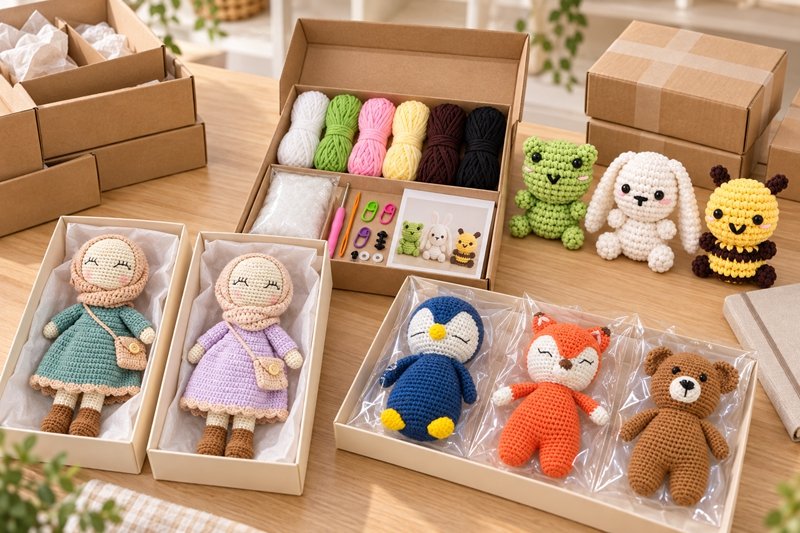
Crochet products for multi-location retail delivery should be prepared against an approved allocation plan that connects each SKU, quantity and packaging configuration to its destination. Buyers and manufacturers should agree carton contents, identification and packing records before packing begins. The final check should reconcile the goods with both the order total and each destination’s receiving requirements.
This guide is for retail chains, distributors, gift businesses and purchasing teams supplying crochet products to several stores or distribution points. It focuses on allocation and packing execution rather than designing retail packaging or selecting a transport service.
Define Where the Products Will Be Received
“Delivery to several stores” can describe different arrangements.
The supplier may prepare:
- One shipment to a central warehouse.
- Store-specific cartons consolidated into one shipment.
- Separate shipments to individual locations.
- Products grouped for later allocation by a distributor.
Each arrangement creates different packing and identification requirements.
Confirm the receiving model before preparing the allocation sheet. A central warehouse that redistributes goods may need different carton contents from a store expecting products ready to put on display.
Record who will arrange each delivery stage and which requirements the packing team must implement.
Build One Controlled Allocation Sheet
The allocation sheet should be the common reference for purchasing, packing and receiving.
Include:
- Order and allocation version.
- Destination identifier.
- SKU and product version.
- Quantity per destination.
- Retail packaging configuration.
- Carton packing requirements.
- Any permitted substitutions.
- Required dispatch grouping.
Use clear identifiers that distinguish similar destinations and product variants.
A store name alone may be insufficient if the business has several branches with similar names. Confirm the destination information through the buyer’s approved records.
| Allocation field | What it establishes | Common issue to prevent |
|---|---|---|
| Destination identifier | Which location receives the goods | Similar store names being confused |
| SKU and variant | The exact product required | Similar colors or sizes being substituted |
| Allocated quantity | Units assigned to that destination | Order totals matching while store quantities differ |
| Packaging version | The required retail configuration | Correct product packed with the wrong insert or box |
| Carton rule | How products should be grouped | Unapproved mixing or partial cartons |
| Handling requirement | Any agreed preparation needed | Receiving teams having to redo supplier-side work |
| Version and approval | Which allocation is current | Packing against an outdated spreadsheet |
Keep unresolved information separate from approved instructions. Do not let packing staff infer an allocation from incomplete notes.
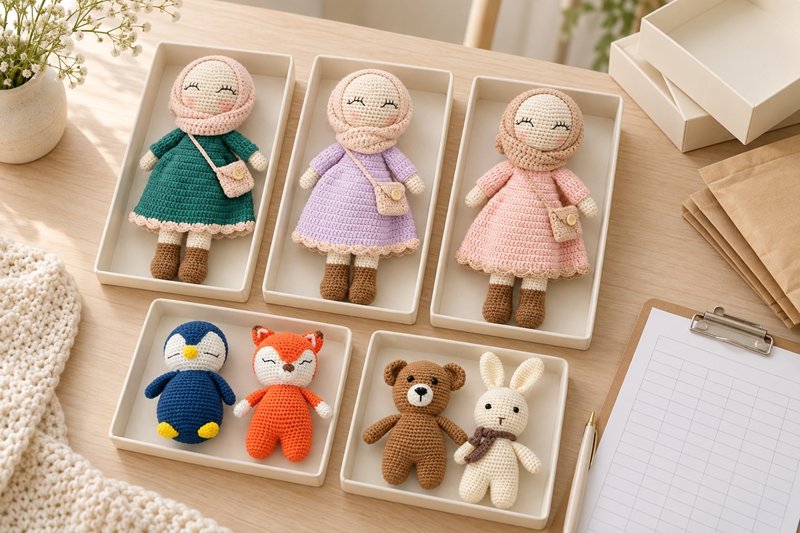
Choose Single-SKU or Mixed-SKU Cartons Deliberately
Single-SKU Cartons
Single-SKU cartons contain one defined product variant.
They may suit a warehouse receiving larger quantities and allocating them later. They can also make product identification straightforward, provided the carton information accurately describes the contents.
However, a store ordering a small assortment may receive more cartons or need to open several to assemble its allocation.
Mixed-SKU Cartons
Mixed-SKU cartons contain a defined assortment.
They may suit store-specific deliveries when each location needs several products. Their contents require a clear packing plan and a matching carton-level record.
Avoid descriptions such as “assorted animals” when the receiving team needs to identify exact designs and quantities.
Partial Cartons
Some destination allocations will not fill a standard carton.
Agree how partial cartons are handled, including:
- Whether different SKUs may share the carton.
- How the contents are separated.
- What internal support is needed.
- How the remaining quantities are recorded.
Do not combine leftover products from different destinations merely to fill a carton.
The appropriate carton approach depends on the buyer’s receiving process, assortment and quantities.
Keep Similar Product Variants Distinguishable
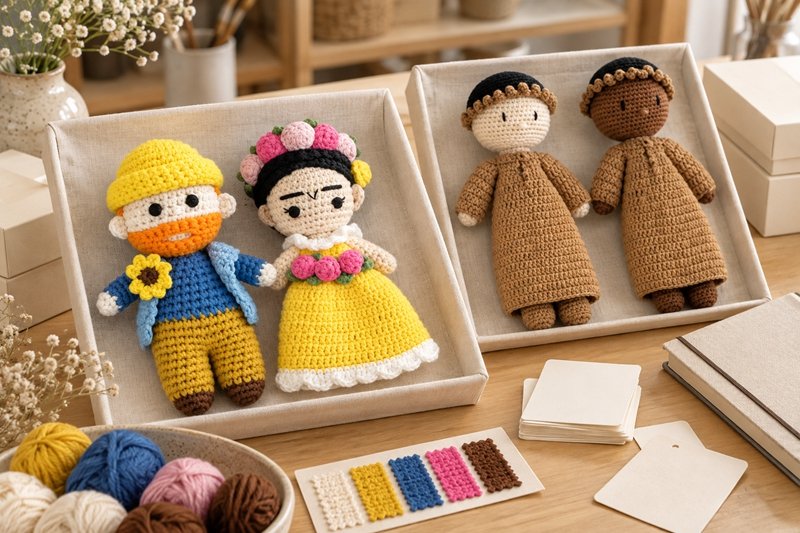
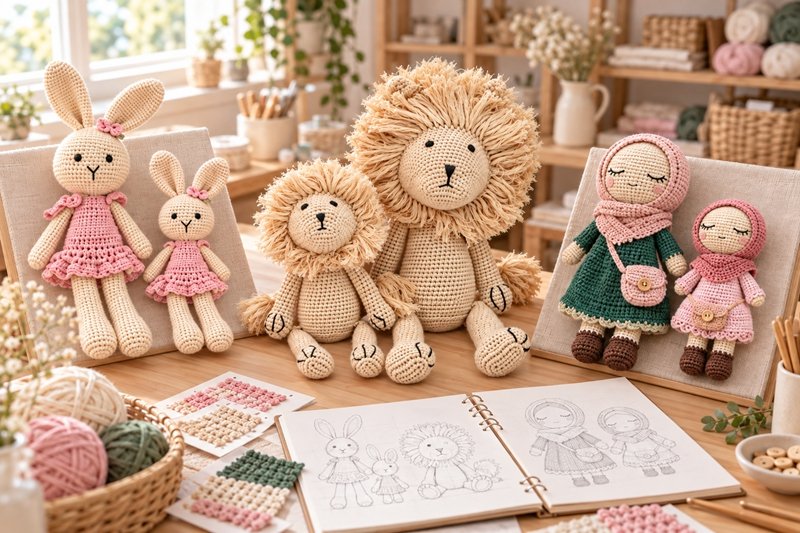
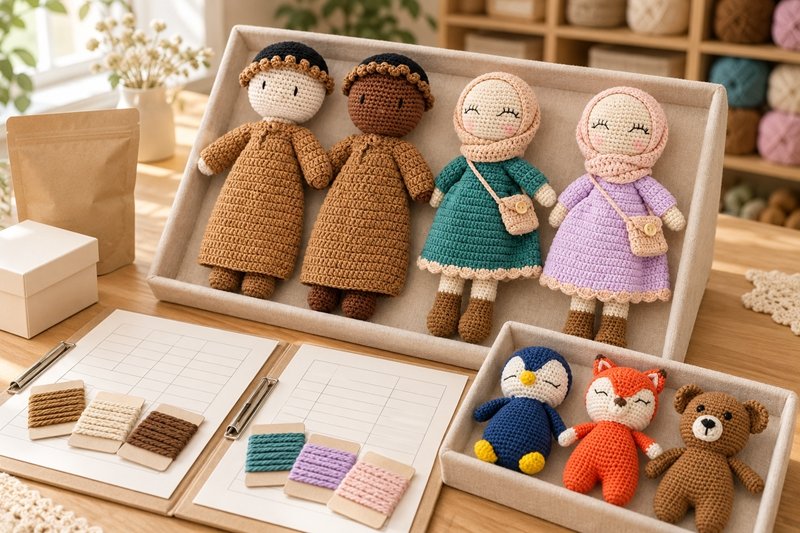
Crochet collections can contain products that are visually similar:
- The same character in different sizes.
- Similar yarn colors.
- Different skin-tone options.
- Clothing or accessory variants.
- The same product in different packaging.
Assign a clear SKU to each ordered configuration.
Use approved product photographs or physical references during packing where they help distinguish variants. Check the relevant features rather than relying only on the overall character shape.
If a product uses a removable accessory, confirm the correct accessory and configuration before it enters the destination group.
A variant should not be substituted because it looks close to another. Any substitution needs buyer approval and an updated allocation record.
Confirm the Retail Packaging Version
The product and its packaging form one receiving configuration.
Check:
- The correct box, pouch or protective wrap.
- Required inserts and story cards.
- The approved language version, where relevant.
- SKU identification.
- Any buyer-specified retail preparation.
- The product’s position and support within the package.
For packaging development before execution, see Private Label Packaging for Crochet Products: What Retail Buyers Should Plan Before Production.
Separate Destination Groups Before Sealing
Create a packing sequence that makes destination boundaries visible.
A practical approach is to:
- Confirm the current allocation version.
- Prepare the products and packaging for one destination group.
- Verify the SKU quantities.
- Pack according to the agreed carton plan.
- Record the actual contents.
- Complete the destination check.
- Seal and move the cartons to the correct dispatch group.
Where several destinations are packed at the same time, keep their products, paperwork and completed cartons clearly separated.
The physical arrangement should support the records. A correct spreadsheet cannot prevent errors if products from different groups are mixed on the packing table.
Protect the Product’s Shape During Packing
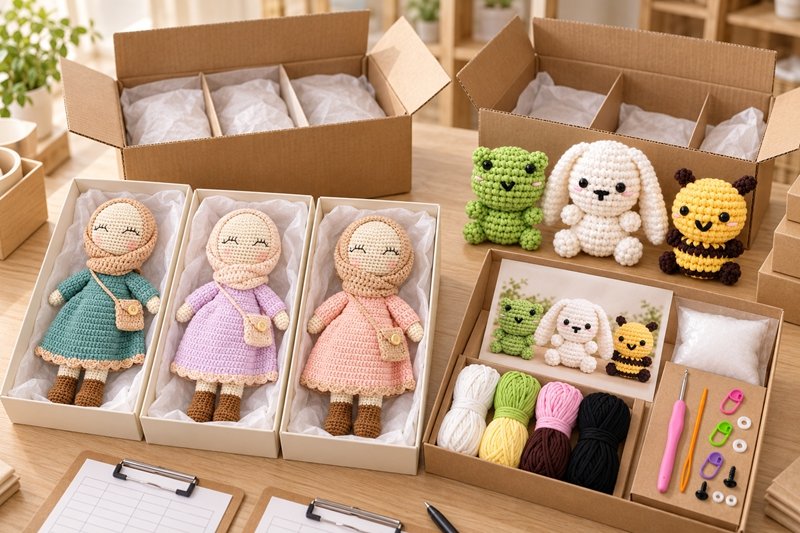
Crochet products may have soft bodies, flexible limbs or decorative features that need appropriate support.
Review whether the packing arrangement:
- Compresses a character’s head or body.
- Bends ears, horns or other extensions.
- Tangles hanging chains or decorative strands.
- Presses accessories against neighboring products.
- Allows movement that damages the retail package.
- Creates avoidable creases or distortion.
Use the approved packaging configuration and assess the packed carton, not only the individual product.
Packing efficiency should not override the appearance requirements agreed for retail delivery.
Any proposed change to the pack quantity or internal arrangement should be reviewed where it could affect protection or presentation.
Create Carton-Level Packing Records
An order-level packing list may show the total quantity without explaining where each SKU is packed.
A carton-level record should connect:
- Carton identifier.
- Destination or dispatch group.
- SKU and variant.
- Quantity of each SKU.
- Relevant packaging configuration.
- Any agreed identification information.
The level of detail should match the buyer’s receiving requirements.
If identifiers are applied to cartons, confirm their format and contents before printing. Use the buyer’s approved information rather than inventing a store code or product reference.
Records and carton identification must describe the actual packed contents.
Reconcile at Three Levels
Before release, reconcile the packing records at three levels.
Product Level
Do the quantities for each SKU match the approved order?
This catches missing or excess variants even when the overall unit count looks correct.
Destination Level
Does each location receive the correct assortment and quantities?
Two stores can receive swapped cartons while the order total remains unchanged.
Carton Level
Do the recorded contents match the physical carton?
This checks that receiving teams can locate and verify the goods using the supplied records.
Investigate discrepancies before shipment release. Do not correct the paperwork to match an unexplained physical count without understanding the cause.
Control Allocation Changes During Packing
Retail allocations can change after preparation begins.
When a change occurs:
- Identify the new approved version.
- Determine which products or cartons are affected.
- Hold the affected groups.
- Repack or relabel where necessary.
- Update the carton-level records.
- Repeat the relevant reconciliation.
- Remove superseded instructions from active use.
Record whether cartons were already sealed or transferred to dispatch.
A message changing one store’s quantity may also change another destination or the remaining stock. Review the full allocation rather than applying the change in isolation.
Consider a Receiving Trial for a New Packing Arrangement
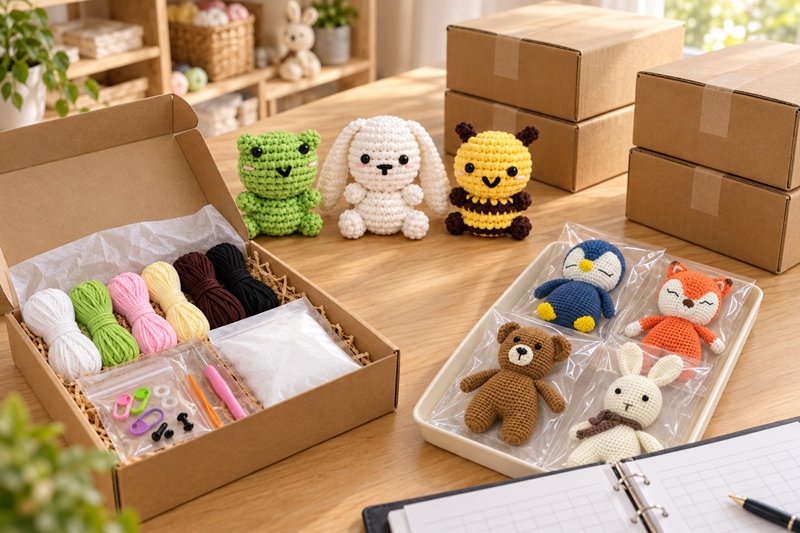
For a new distribution program, review whether a trial carton or documented packing sample would help the receiving team evaluate the arrangement.
The review can check:
- How easily contents can be identified.
- Whether the assortment matches the allocation.
- Whether product protection is suitable.
- Whether carton records are usable.
- Whether the retail packaging arrives in the intended condition.
Agree how any feedback will affect the final packing specification.
A receiving review is useful only if its results are recorded and applied to the relevant configuration.
Discuss Multi-Location Preparation With UMY Crochet
UMY Crochet is a product development and manufacturing partner for crochet, DIY craft kits, knitted toys and creative gifts.
For a retail delivery program, the preparation discussion should connect approved products with packaging, destination allocation and carton requirements.
Share:
- The SKU list and product references.
- Quantity by destination.
- The receiving model.
- Retail packaging requirements.
- Single-SKU or mixed-SKU carton preferences.
- Required packing records.
- Any destination-specific preparation.
The project team should confirm which packing and delivery arrangements can be supported before the order is finalized.
Frequently Asked Questions
Should every store receive a separate carton?
Not necessarily. The arrangement depends on whether goods go directly to stores or through a central warehouse, and on the quantities and assortment required.
Are mixed-SKU cartons suitable for crochet products?
They can be, when contents are clearly defined, products are appropriately protected and carton records identify each SKU and quantity.
Is an order-total packing list enough?
It may not be enough for multiple destinations. Receiving teams may also need destination-level and carton-level details.
Can similar colors or sizes be substituted?
Only with buyer approval. Update the allocation and packing records before applying the substitution.
What happens if allocations change after cartons are sealed?
Hold the affected cartons, assess the changes, update the contents and identification as needed, then repeat the relevant checks.
How should hanging crochet products be packed?
Use an approved arrangement that supports the product and prevents avoidable tangling or distortion. Check the complete packed configuration.
What should buyers provide before requesting multi-location preparation?
Provide the approved SKU list, destination quantities, packaging versions, receiving requirements and desired carton structure.
Request a Retail Allocation and Packing Review
Share your destination allocation sheet, SKU quantities, packaging requirements and receiving process.
Ask UMY Crochet to review the preparation requirements and discuss product grouping, carton packing and verification records for your retail delivery program.
 Chinese