
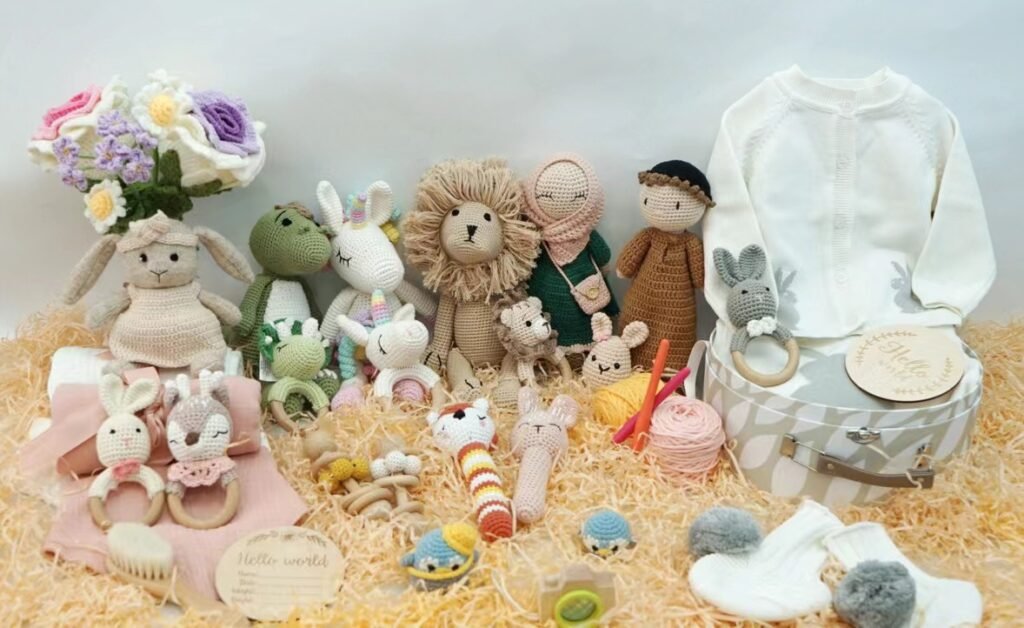
A Practical Guide for Gift Brands, Museum Stores, and Retail Buyers
Launching a new crochet product is exciting—but experienced retailers know that introducing an untested product into the market carries risks.
Will customers like it?
Will the price point work?
Will the packaging stand out?
Will people buy one product or an entire collection?
After more than 12 years of crochet manufacturing experience at UMY Crochet Factory and supporting customers across more than 150 countries and regions, we've noticed that successful retailers rarely place large orders immediately.
Instead, they test.
Whether developing crochet dolls, museum souvenirs, gift sets, keychains, baby products, or seasonal collections, retailers often validate ideas through small-scale market experiments before expanding production.
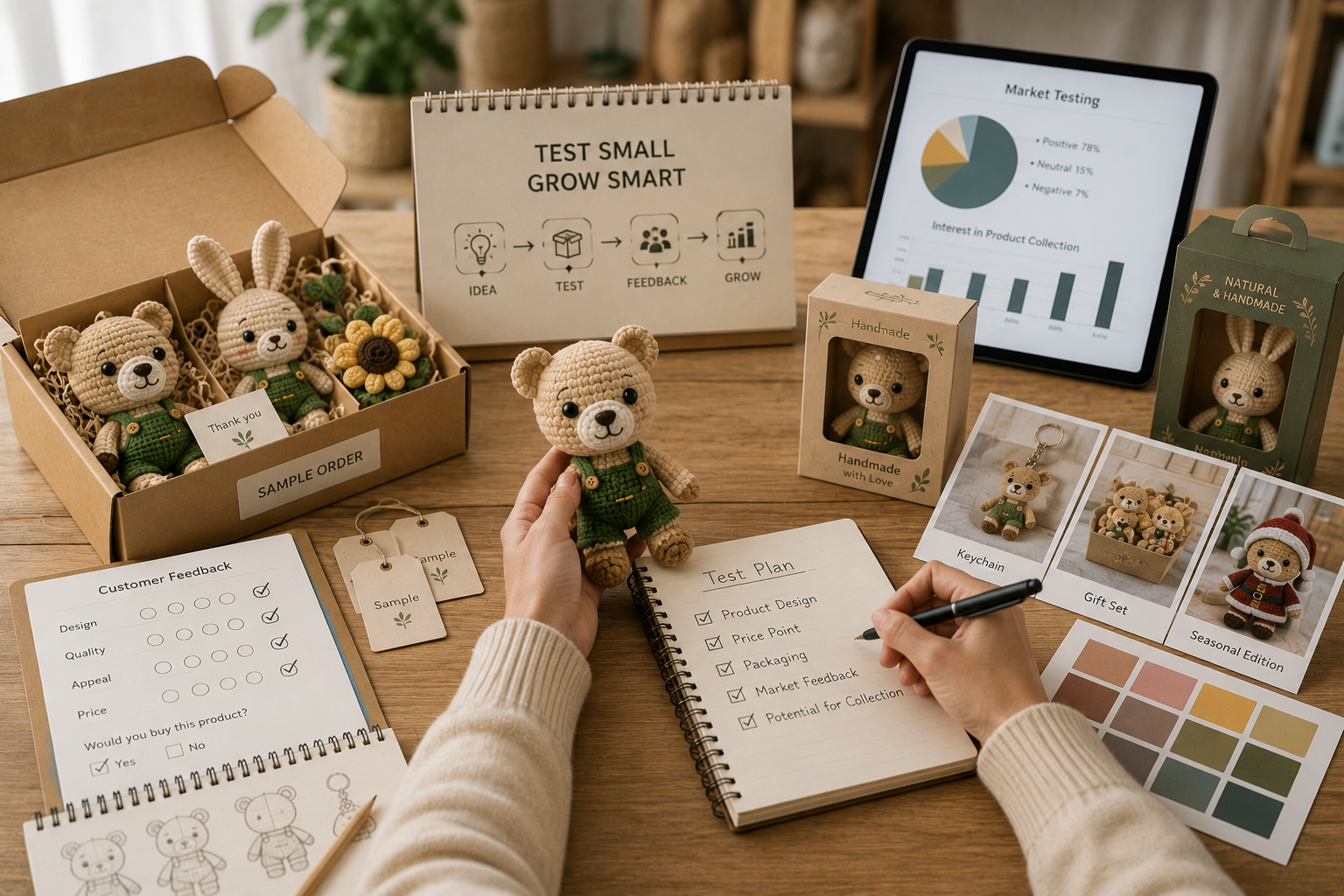
Why Experienced Retailers Test Before Scaling
Many first-time buyers assume that the best product will automatically succeed.
In reality, even beautifully designed products may perform differently across markets, customer groups, and retail environments.
Testing allows retailers to answer important questions:
- Which products attract the most attention?
- What price range works best?
- Which packaging generates stronger sales?
- Do customers prefer individual products or collections?
- Which themes create emotional connections?
One thing we've consistently observed is:
The cost of testing is often much lower than the cost of overstocking.
Successful retailers view product testing as an investment rather than an expense.
Step 1: Start With a Small Product Collection
Instead of launching twenty different products at once, many retailers begin with a focused collection.
Typical test collections may include:
- One hero product
- Two or three supporting items
- Several price points
- Standard packaging
For example:
| Product Type | Role |
|---|---|
| Crochet mascot doll | Hero product |
| Mini keychains | Entry-level product |
| Gift box | Premium option |
| Story card | Brand experience |
Testing a smaller collection makes it easier to understand customer preferences.
Step 2: Launch Limited Quantities
One of the most common strategies retailers use is limited inventory testing.
Rather than placing large production orders immediately, buyers often begin with:
- Small initial quantities
- Pilot programs
- Seasonal launches
- Store-specific tests
This approach helps retailers:
✓ Reduce inventory risk.
✓ Gather customer feedback.
✓ Compare sales performance.
✓ Adjust future production plans.
At UMY Crochet Factory, we've found that many successful product lines begin with cautious, well-planned launches.
Step 3: Test Different Price Points
Price affects customer behavior more than many buyers realize.
Retailers frequently experiment with:
- Budget-friendly items
- Mid-range gifts
- Premium collections
For example:
| Product | Test Price |
|---|---|
| Crochet keychain | $8–$12 |
| Crochet doll | $20–$35 |
| Gift set | $40–$70 |
One lesson we've learned over the years is:
Customers do not always choose the cheapest product—they choose the product that feels most valuable.
Understanding perceived value is often more important than reducing production cost.

Step 4: Compare Packaging Options
Packaging is one of the easiest variables to test.
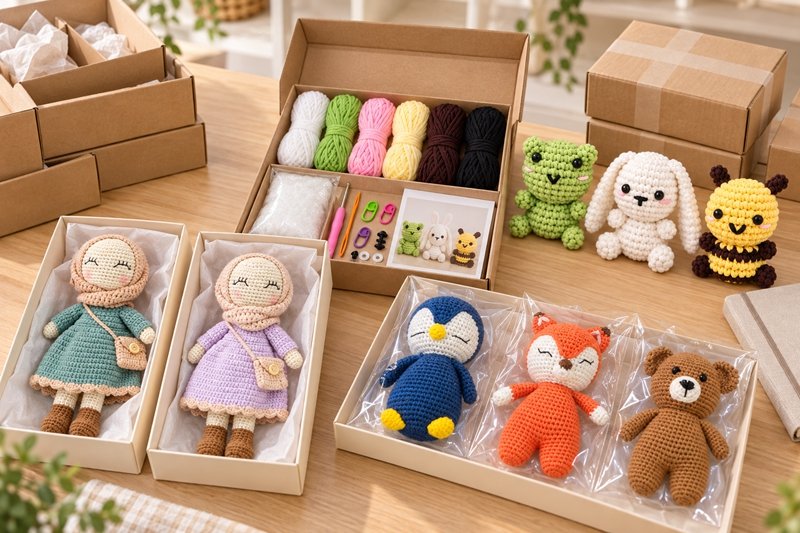
Retailers often compare:
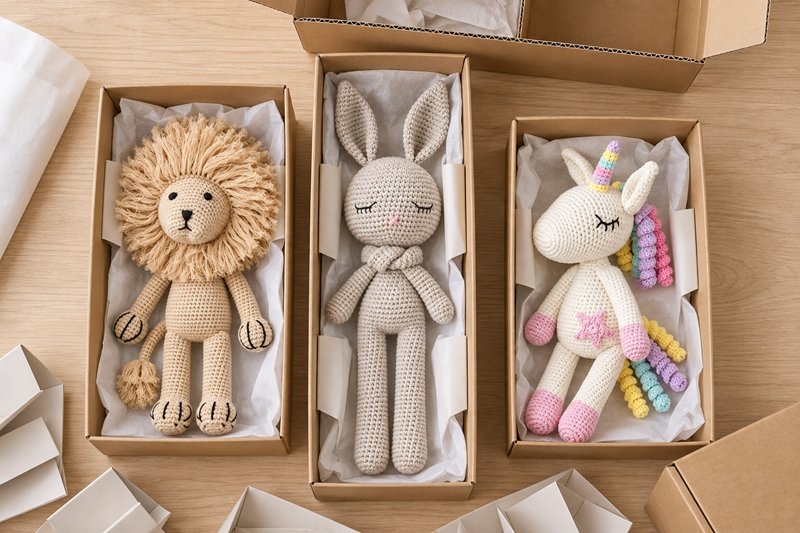
- Kraft boxes
- Window packaging
- Gift-ready presentation
- Story cards
- Branded labels
- Seasonal packaging
Interestingly, small packaging changes can significantly influence:
- Customer attention
- Gift appeal
- Retail presentation
- Average order value
Many successful retailers test packaging alongside the product itself.
Step 5: Observe Customer Behavior
Sales numbers tell only part of the story.
Experienced retailers also pay attention to:
- Which products customers pick up first
- Which displays attract attention
- Which themes generate conversation
- Which products are photographed or shared online
- Which items customers buy together
Sometimes, products that receive the most attention are not necessarily the best sellers.
The goal of testing is not simply to measure sales—it is to understand customer behavior.
Step 6: Gather Feedback Before Expanding
Before committing to larger production volumes, successful retailers collect feedback from:
- Store staff
- Customers
- Distributors
- Sales teams
- Online communities
Useful questions include:
- What do customers like most?
- What could be improved?
- Which products should be expanded?
- Are there missing products in the collection?
Testing transforms assumptions into data.
Real Project Example: Starting Small Before Scaling
One museum customer approached us with a crochet mascot inspired by local culture.
Initially, the buyer considered launching an entire collection of ten products.
Instead, we suggested starting with:
- One mascot doll
- Two keychains
- Gift packaging
- Story cards
The museum introduced the products in a limited retail program.
After observing customer reactions and sales patterns, the collection expanded to include:
- Seasonal editions
- Additional accessories
- Children's products
- Premium gift sets
What began as a small experiment gradually evolved into a long-term souvenir program.
This project reinforced one important lesson:
Successful collections are rarely built through assumptions—they are built through testing.
Common Mistakes Retailers Make When Testing Products
After supporting customers across more than 150 countries and regions, we've noticed several common mistakes.
Testing Too Many Products at Once
Large test collections make it difficult to identify which products are performing well.
Smaller tests usually produce clearer results.
Focusing Only on Sales Numbers
Customer behavior, emotional reactions, and feedback often provide equally valuable insights.
Ignoring Packaging
Retailers sometimes evaluate products without testing packaging options.
However, customers experience both together.
Expanding Too Quickly
Strong early sales do not always guarantee long-term success.
Gradual expansion often reduces risk.
Testing Without Clear Objectives
Successful testing begins with clear questions:
- What are we trying to learn?
- Which assumptions are we testing?
- How will we evaluate success?
Common Mistakes Retailers Make When Testing Products
After supporting customers across more than 150 countries and regions, we've noticed several common mistakes.
Testing Too Many Products at Once
Large test collections make it difficult to identify which products are performing well.
Smaller tests usually produce clearer results.
Focusing Only on Sales Numbers
Customer behavior, emotional reactions, and feedback often provide equally valuable insights.
Ignoring Packaging
Retailers sometimes evaluate products without testing packaging options.
However, customers experience both together.
Expanding Too Quickly
Strong early sales do not always guarantee long-term success.
Gradual expansion often reduces risk.
Testing Without Clear Objectives
Successful testing begins with clear questions:
- What are we trying to learn?
- Which assumptions are we testing?
- How will we evaluate success?
What We Commonly Observe Across Successful Retail Projects
After more than 12 years of crochet manufacturing experience, we've identified several patterns among successful retailers.
They:
✓ Launch small before scaling.
✓ Test multiple price points.
✓ Invest in packaging.
✓ Observe customer behavior carefully.
✓ Expand gradually.
✓ Build collections based on evidence rather than assumptions.
One thing we've consistently observed is:
UMY Crochet Factory at a Glance
Since 2013, UMY has specialized exclusively in crochet manufacturing.
Today, we support:
- Retailers
- Museum stores
- Gift brands
- Startups
- Distributors
- Corporate buyers
across more than 150 countries and regions.
Our capabilities include:
- 12+ years of crochet manufacturing experience
- 2,000+ artisan production network
- OEM and ODM development
- Sample development within approximately 7–15 working days
- Gift-set development
- Packaging customization
- Collection planning
- International quality management systems
Our goal is not only to manufacture crochet products, but also to help customers build product programs that can grow sustainably.
Frequently Asked Questions
How many products should retailers test initially?
Many retailers begin with three to five products to keep testing manageable and reduce inventory risk.
How long should a product test last?
Testing periods vary, but many retailers evaluate performance over several weeks or one seasonal cycle.
Is it better to test individual products or collections?
Collections often provide more useful insights because customers frequently evaluate products together rather than separately.
Should packaging be tested as well?
Yes.
Packaging influences customer perception, gifting potential, and retail presentation.
When should retailers scale production?
Expansion usually makes sense after customer demand, sales patterns, and operational requirements have been validated.
Final Thoughts
Successful crochet products are rarely created through intuition alone.
After supporting customers across more than 150 countries and regions, we've learned that the strongest product programs are built through testing, observation, and gradual improvement.
✓ Reduce inventory risk.
✓ Improve customer understanding.
✓ Optimize pricing and packaging.
✓ Increase product-market fit.
✓ Build stronger collections.
Rather than asking:
"Which product will definitely succeed?"
Experienced retailers ask:
"How can we learn what customers truly want?"
That mindset often leads to better products, stronger collections, and more sustainable growth.
Planning to Test a New Crochet Product?
At UMY Crochet Factory, we help retailers, museum stores, gift brands, and distributors develop crochet products through sampling, packaging optimization, and small-scale product testing.
Whether you're launching your first crochet collection or expanding an existing program, our team is ready to help you turn ideas into products that customers love.
Contact us today to discuss your next project.
 Chinese