
How Handmade Crochet Manufacturing Builds Sustainable Livelihoods While Supporting Global Brands
When people purchase a handmade crochet toy, baby gift, or custom mascot, they often admire its craftsmanship, softness, and unique character.
What many buyers don't see is the story behind every stitch.
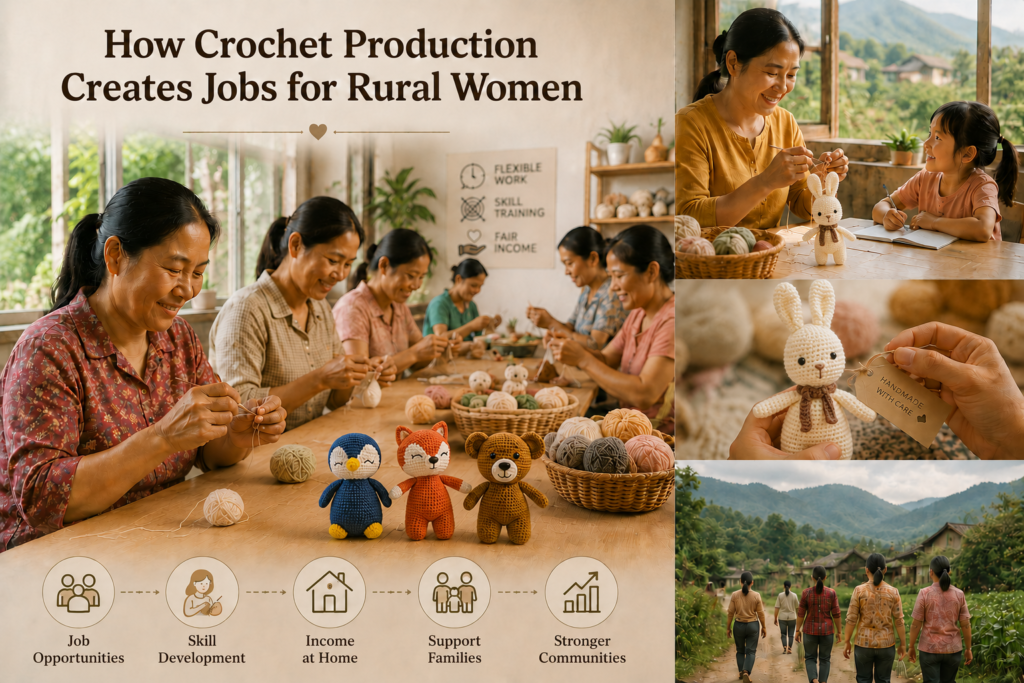
Unlike machine-made products, every handmade crochet item represents hours of skilled craftsmanship. Behind those stitches are thousands of artisans—many of them women living in rural communities—who use crochet as a flexible source of income while caring for their families.
As global consumers pay greater attention to ethical sourcing, ESG initiatives, and social impact, buyers are increasingly asking:
- Who makes our products?
- How are artisans supported?
- Can handmade manufacturing create both commercial value and social value?
After more than 12 years of specializing in handmade crochet manufacturing, U-MY Crochet has worked with retailers, museum stores, gift brands, baby brands, and corporate buyers across more than 150 countries and regions.
Throughout our journey, we have learned one important lesson:
When organized responsibly, crochet manufacturing creates opportunities—not just products.
This article explores how professional crochet production helps create employment opportunities for rural women while maintaining the quality, consistency, and reliability required by international brands.
Why Crochet Is Naturally Suited for Rural Communities
Unlike many manufacturing processes, crochet requires very little equipment.
A skilled artisan typically needs:
- Crochet hooks
- Yarn
- Basic accessories
- Product instructions
- A clean working environment
Because production is highly portable, artisans can work from their local communities without relocating to industrial cities.
This flexibility makes crochet manufacturing particularly suitable for:
- Rural women
- Mothers with young children
- Caregivers
- Older artisans
- Individuals seeking flexible working hours
Rather than replacing traditional family life, crochet often fits naturally alongside it.
Handmade Skills Become Long-Term Opportunities
Crochet is a skill that can be learned, practiced, and improved over time.
Professional manufacturers usually provide:
- Pattern training
- Product standards
- Technical guidance
- Quality requirements
- Ongoing production support
As artisans gain experience, they often become qualified to produce more complex products, including:
- Character mascots
- Museum souvenirs
- Baby collections
- Premium gift products
- Limited-edition collections
This continuous learning helps create stable long-term employment rather than temporary seasonal work.
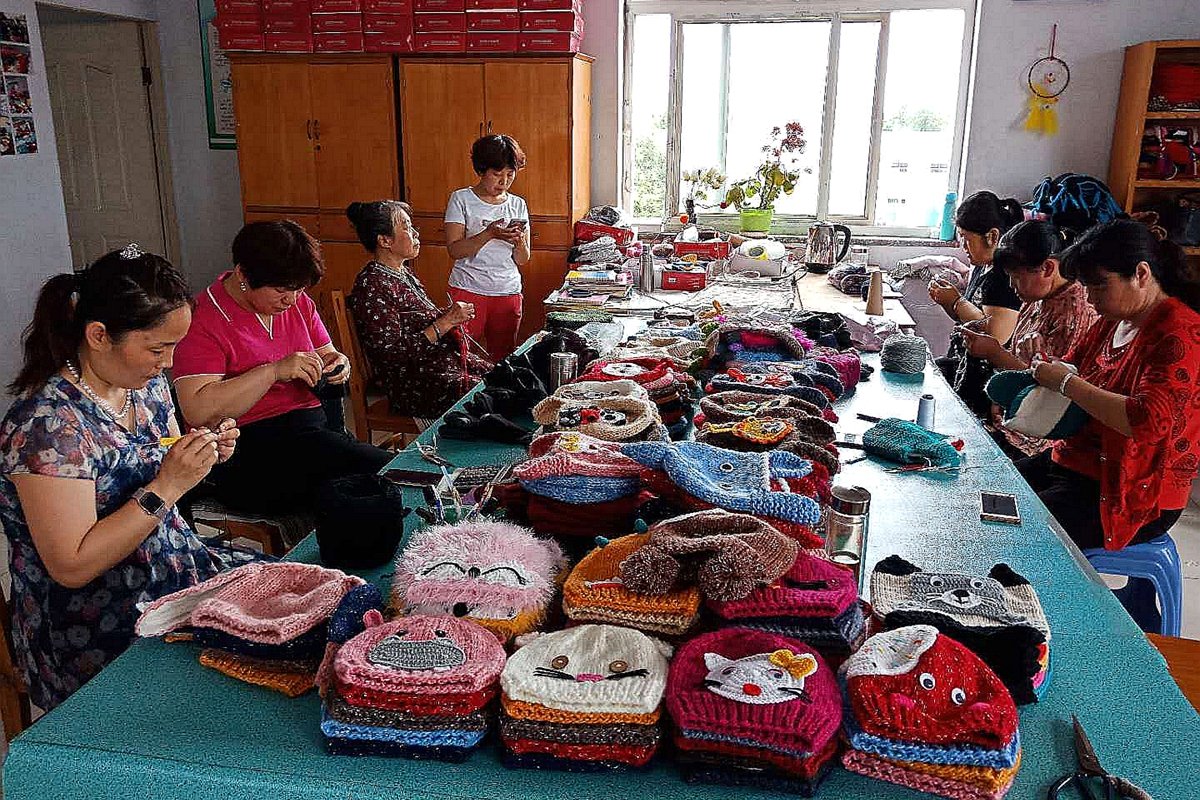
How Professional Crochet Factories Organize Rural Artisan Networks
Many people imagine handmade production as individual artisans working independently.
In reality, professional crochet manufacturing is carefully organized.
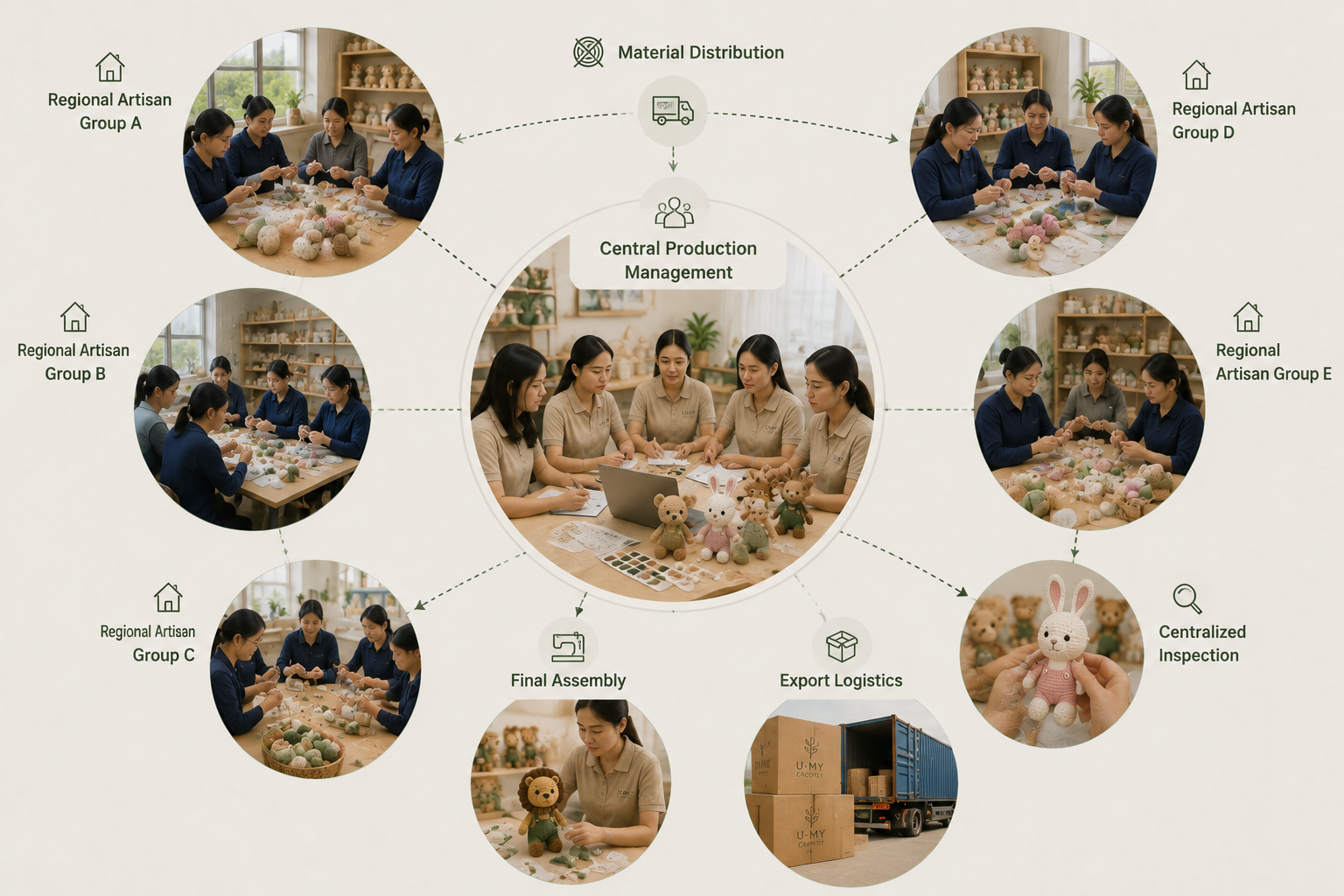
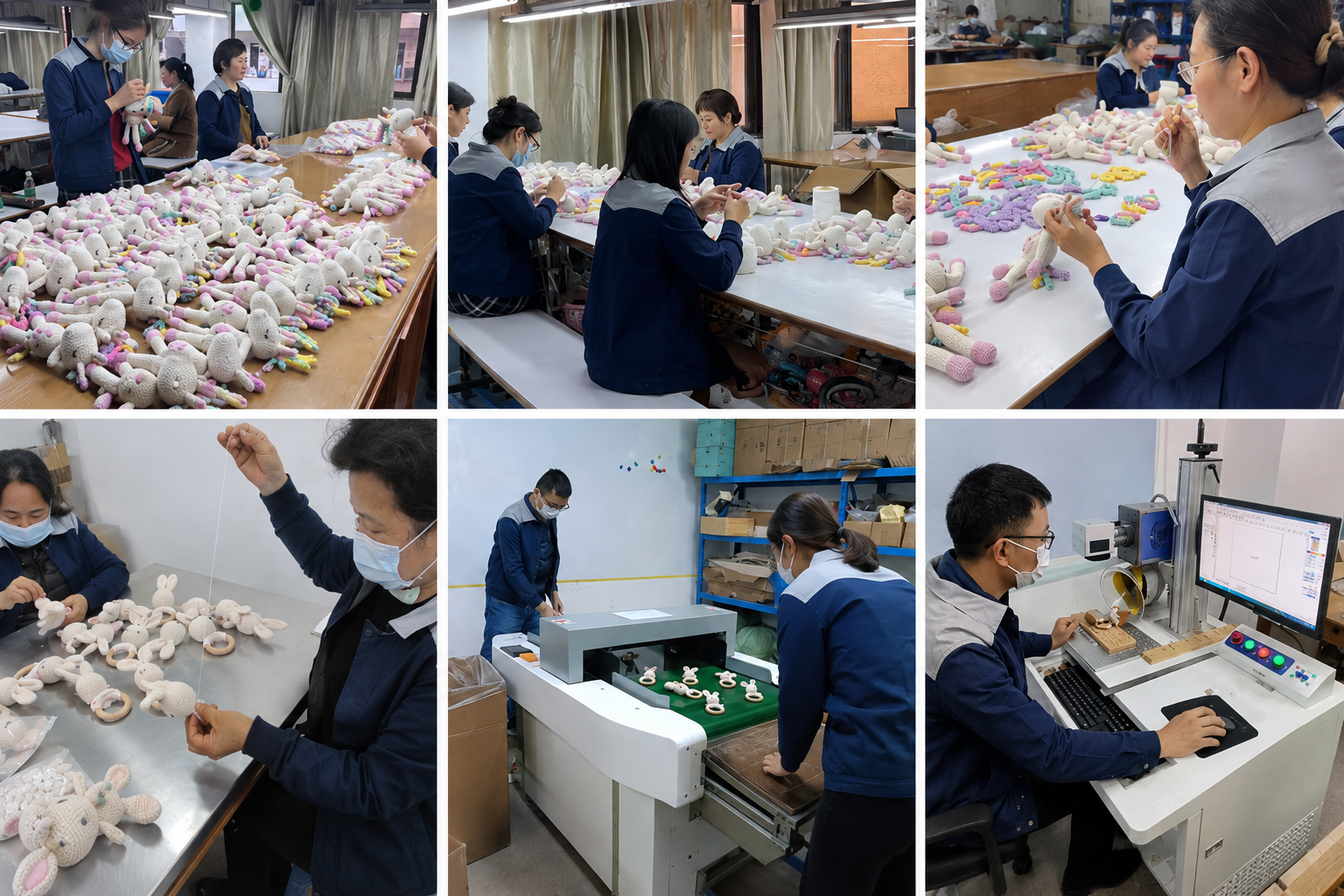
Large crochet factories generally coordinate:
- Central product development
- Standardized patterns
- Material preparation
- Production scheduling
- Quality inspection
- Final assembly
- Packaging
- International shipping
Artisans receive approved materials and production instructions while quality management remains centralized.
This system combines the flexibility of handmade production with the consistency required by global retail brands.
Flexible Work Supports Different Stages of Life
One reason crochet production creates meaningful opportunities is its flexibility.
Unlike fixed factory shifts, many crochet projects allow artisans to work according to planned production schedules.
For many rural women, this means they can balance:
- Family responsibilities
- Childcare
- Community activities
- Seasonal agricultural work
- Income generation
The exact production arrangements vary by manufacturer and region, but flexibility is one reason crochet remains an attractive source of skilled employment.
From Craftsmanship to Professional Manufacturing
Successful handmade production is about much more than individual skill.
Professional factories establish standardized systems that support artisans throughout production.
These systems may include:
Product Development
Creating production-ready crochet patterns.
Material Management
Providing standardized yarn, filling, and accessories.
Technical Support
Helping artisans understand new product requirements.
Quality Management
Inspecting products throughout production.
Centralized Finishing
Final shaping, packaging, and retail preparation.
These systems allow thousands of handmade products to meet consistent quality expectations.
Why International Brands Care About Artisan Stories
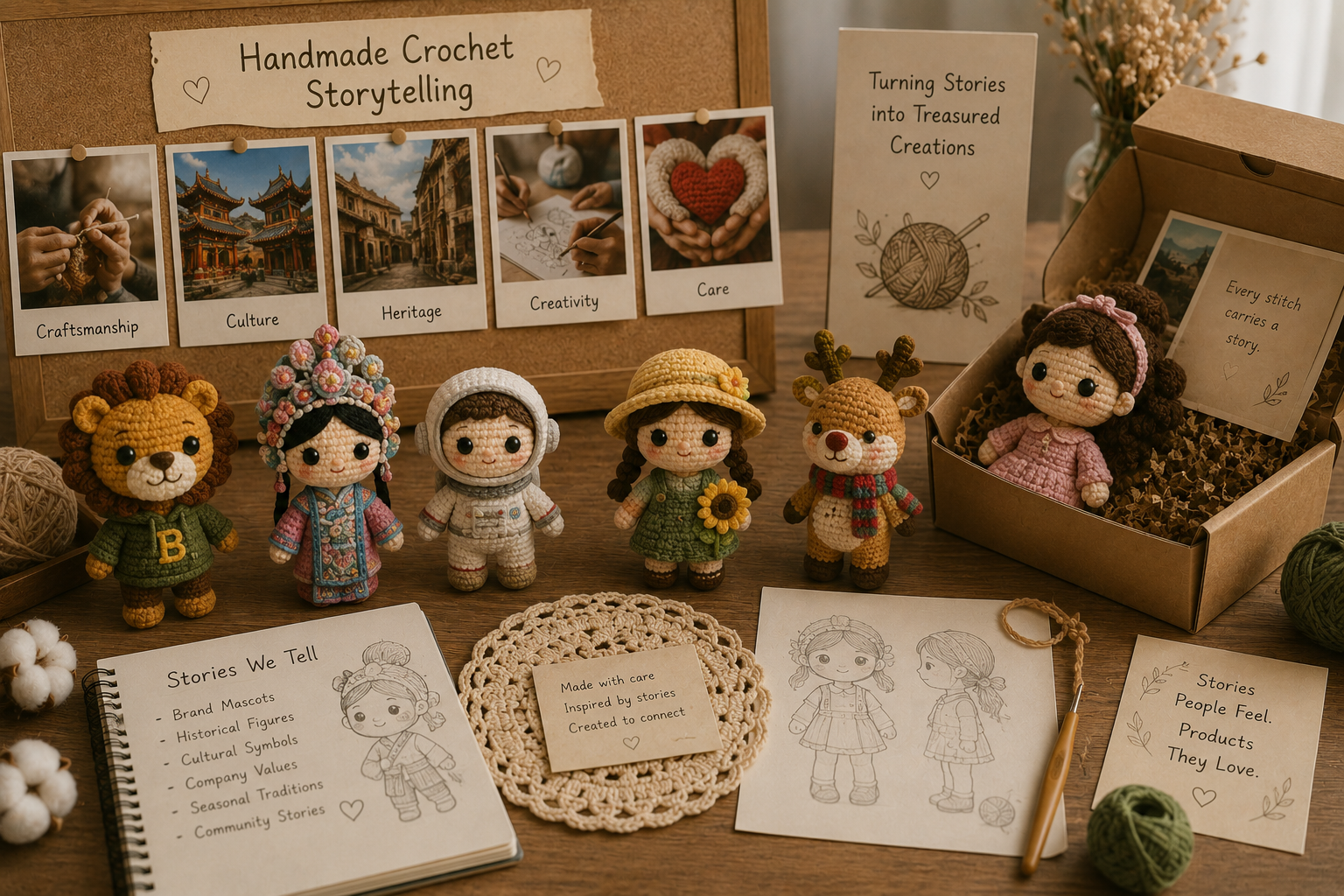
Consumers today increasingly want to know where products come from.
For many brands, handmade crochet products offer more than visual appeal.
They also communicate values such as:
- Craftsmanship
- Authenticity
- Creativity
- Human connection
- Responsible production
When supported by transparent manufacturing systems, these stories become part of the product's overall value.
One thing we have consistently observed is:
Customers remember the story behind a handmade product just as much as the product itself.
Creating Economic Opportunities Through Handmade Production
Crochet manufacturing contributes to local economies in several ways.
Professional production programs often generate demand for:
- Yarn suppliers
- Accessory manufacturers
- Packaging companies
- Logistics providers
- Product designers
- Quality inspectors
- Technical supervisors
As production grows, these supporting industries also benefit.
This creates a broader economic ecosystem beyond individual crochet artisans.
Ethical Production Requires Organization
Many buyers associate handmade products with ethical production.
However, ethical manufacturing requires more than handmade techniques.
Professional manufacturers should establish systems for:
- Clear production standards
- Transparent communication
- Quality management
- Reliable material sourcing
- Long-term cooperation with artisan teams
Rather than relying on informal production alone, organized management helps create sustainable partnerships between factories and artisans.
Real Project Example: Growing Together With a Brand
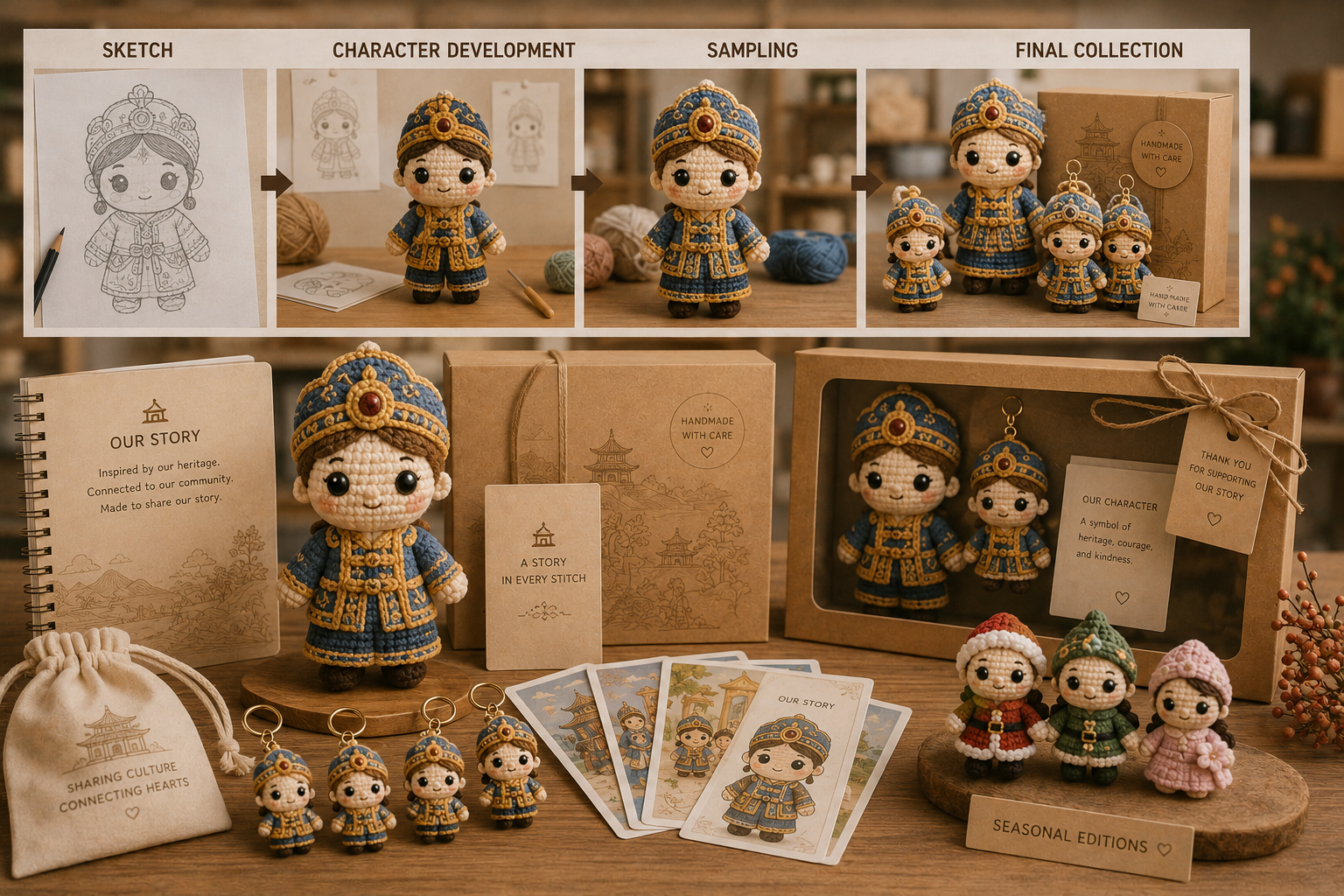
A lifestyle brand approached U-MY Crochet to develop a small collection of custom crochet animals.
The first order included only a few designs.
As the collection gained popularity, the product range expanded to include:
- Seasonal editions
- Gift-box collections
- Keychains
- Promotional products
To support this growth, production gradually expanded across multiple trained artisan groups while maintaining standardized patterns and centralized quality inspection.
The project demonstrated an important principle:
Sustainable business growth can create sustainable employment opportunities when production systems grow responsibly.
The Role of Technology in Handmade Production
Although crochet itself is handmade, technology improves nearly every supporting process.
Professional manufacturers often use digital systems for:
- Sample tracking
- Inventory planning
- Production scheduling
- Order management
- Shipping coordination
- Customer communication
Technology does not replace artisans.
Instead, it helps organize handmade production more efficiently.
How Buyers Can Evaluate Social Responsibility
Rather than relying only on marketing claims, buyers can ask suppliers practical questions such as:
Production
- How is production organized?
- How are artisans supported?
- How do you maintain consistent quality?
Transparency
- Can you explain your production workflow?
- How are materials managed?
- How is product quality inspected?
Long-Term Partnership
- How long have your artisan teams worked with you?
- How do you support new product development?
- How do you manage growing production volumes?
These conversations often provide a better understanding of a supplier's production philosophy.
Common Misconceptions
"Handmade production is disorganized."
Professional crochet factories operate through structured production systems, standardized patterns, and centralized quality management.
"Rural production cannot support large orders."
Organized artisan networks can successfully support international retail programs when managed professionally.
"Crochet is only a hobby."
For many skilled artisans, crochet represents valuable professional craftsmanship and an important source of income.
"Social impact and commercial production cannot coexist."
Well-organized manufacturing systems demonstrate that commercial success and positive community impact can support one another.
What We Have Learned After More Than 12 Years
Working with customers around the world has taught us that buyers increasingly value transparency alongside quality.
The strongest manufacturing partnerships are built on:
✓ Skilled craftsmanship.
✓ Organized production.
✓ Reliable quality.
✓ Respectful collaboration.
✓ Long-term growth.
Every successful crochet product reflects the combined efforts of designers, technicians, quality inspectors, production planners, and skilled artisans.
U-MY Crochet's Commitment
Since 2013, U-MY Crochet has specialized in professional handmade crochet manufacturing.
Over the years, we have built a production network of more than 2,000 skilled artisans, many of whom live in rural communities.
Together, we support customers across more than 150 countries and regions, providing:
- OEM manufacturing
- ODM product development
- Custom mascot creation
- Baby products
- Museum souvenirs
- Gift collections
- Retail-ready packaging
- Sample development within approximately 7–15 working days
Our goal is to combine the warmth of handmade craftsmanship with professional manufacturing systems that create long-term value for customers, artisans, and communities alike.
Frequently Asked Questions
Why is crochet production suitable for rural communities?
Crochet requires relatively simple tools, can be learned through structured training, and offers flexible production arrangements that fit different lifestyles.
Can handmade crochet products still maintain consistent quality?
Yes. Professional manufacturers achieve consistency through standardized patterns, centralized material management, multi-stage quality inspections, and approved production samples.
Does handmade production support large international orders?
Yes. Organized artisan networks coordinated by professional factories can support commercial-scale production while maintaining quality standards.
Why do many brands value handmade crochet?
Handmade products communicate craftsmanship, authenticity, creativity, and human connection—qualities that many consumers appreciate alongside product quality.
How can buyers evaluate a supplier's production responsibility?
Ask about production organization, quality management, material control, communication, and long-term relationships with artisan teams rather than relying solely on marketing claims.
Final Thoughts
Every handmade crochet product begins with a simple stitch.
But behind that stitch is something much larger.
Professional crochet manufacturing creates opportunities for skilled artisans, supports local communities, and helps global brands bring meaningful products to market.
After more than a decade of working with customers worldwide, we believe the future of handmade manufacturing is built on more than craftsmanship alone.
It is built on organization, transparency, continuous improvement, and long-term collaboration.
Because the true value of handmade crochet is not only found in the finished product—
It is also found in the people who make it.
Looking for a Professional Handmade Crochet Manufacturing Partner?
Whether you are developing a custom mascot, launching a museum gift collection, creating an ethical product line, or expanding your retail assortment, U-MY Crochet is ready to help you transform creative ideas into high-quality handmade products supported by organized production systems and experienced artisan networks.
Contact us today to discuss your next crochet manufacturing project.
 Chinese