
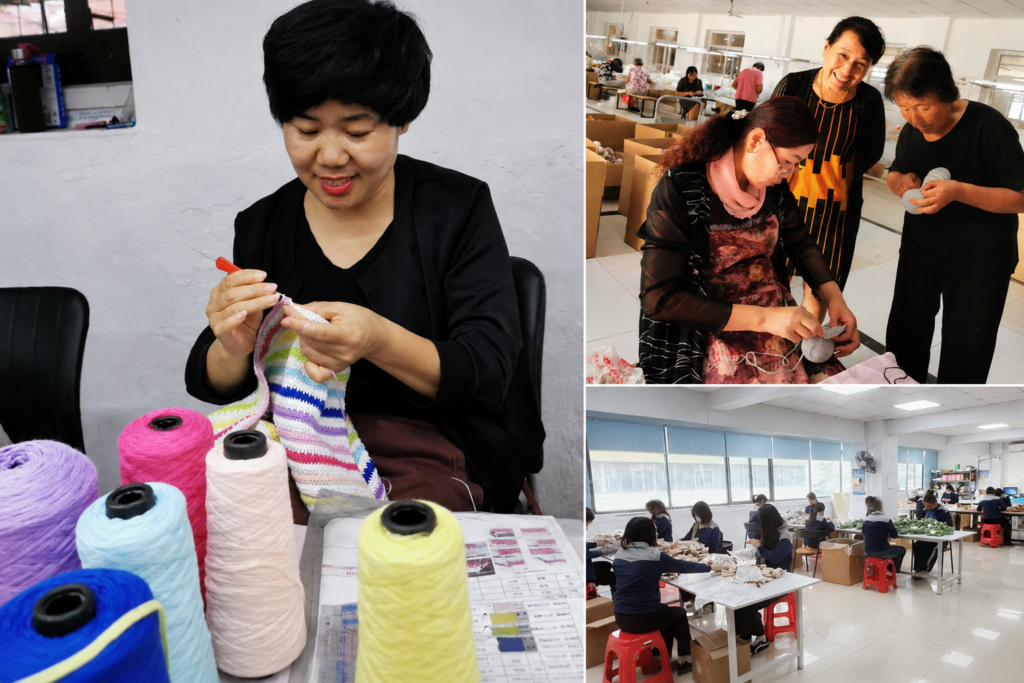
How Skilled Artisans, Professional Production Systems, and Human Craftsmanship Come Together Behind Handmade Crochet Products
A crochet toy may look simple when it reaches a retail shelf.
But behind every finished product are many human decisions: choosing yarn, controlling tension, shaping individual parts, joining pieces, embroidering details, checking proportions, and making final adjustments by hand.
That is what makes crochet manufacturing fundamentally different from many conventional manufacturing processes.
Crochet is not simply a product category. It is a human-intensive manufacturing process built around skilled craftsmanship.
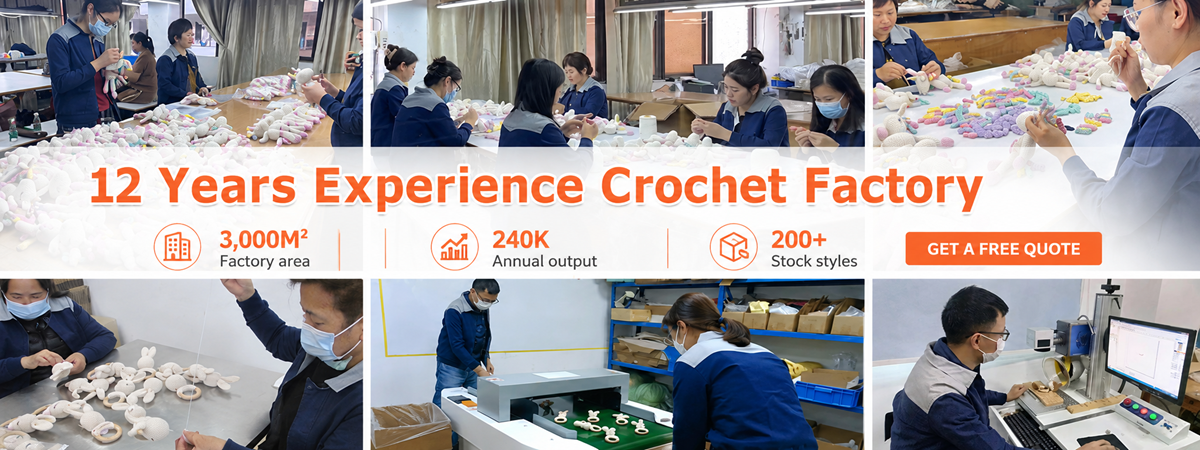
At U-MY Crochet, we have specialized in handmade crochet manufacturing since 2013, supporting retailers, gift companies, museum stores, baby brands, distributors, and product developers across more than 150 countries and regions.
Over the years, one lesson has remained constant:
Behind every stitch is a person, and behind reliable handmade production is a system designed to support that person's craftsmanship.
This article takes buyers behind the scenes to understand the human side of professional crochet manufacturing—and why people, skills, training, quality management, and responsible production matter just as much as the finished product.
Why Is Crochet Manufacturing So Human-Intensive?
Unlike knitted fabric, molded plastic, or many sewn products, traditional crochet cannot simply be placed into a conventional automated production line.
Each stitch is created through a sequence of hand movements.
The artisan must continuously control:
- Yarn tension
- Hook position
- Stitch placement
- Stitch count
- Product shape
- Color changes
- Joining points
- Decorative details
Even when two artisans follow exactly the same pattern, small differences in hand tension can affect the final shape.
That is why professional crochet manufacturing depends on both individual craftsmanship and standardized production management.
The challenge is not to eliminate the human element.
The challenge is to manage it professionally.
A Crochet Product Passes Through More Hands Than Buyers May Realize
When buyers receive a finished crochet sample, they often see only the final result.
Behind that sample may be a much longer process.
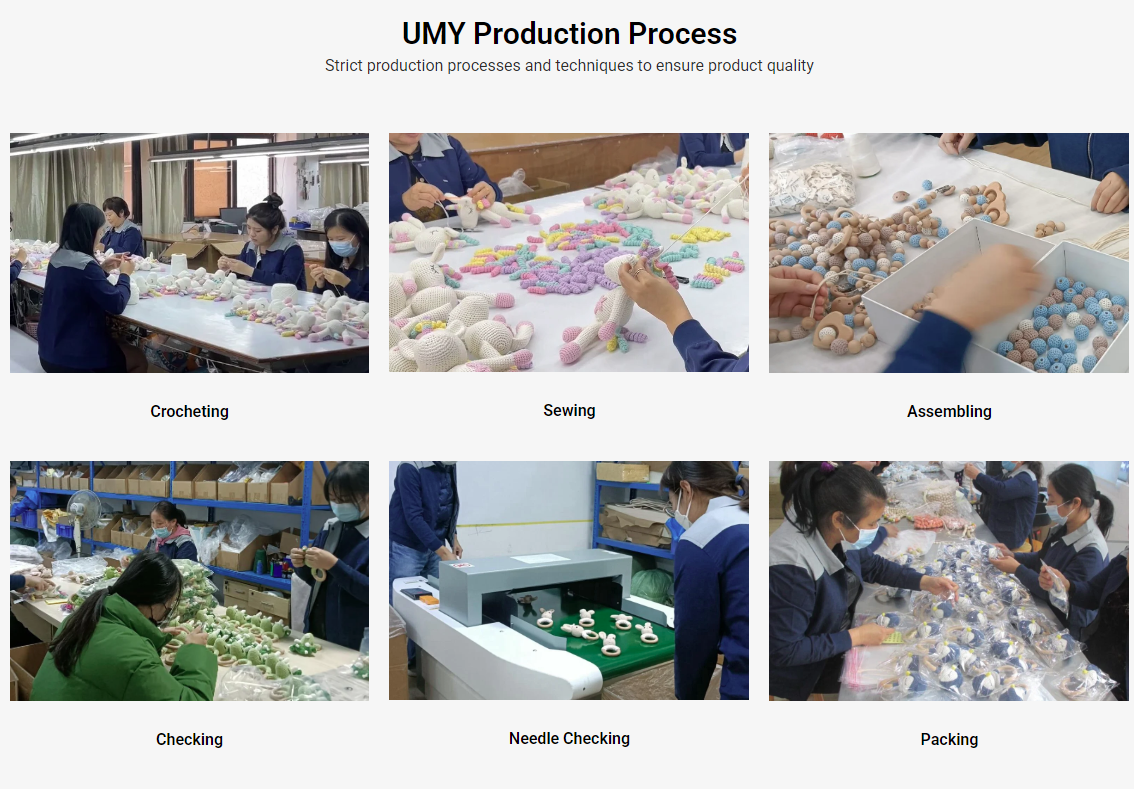
A typical custom crochet product can involve:
- Product concept review
- Pattern development
- Yarn and color selection
- Prototype crochet
- Shape adjustment
- Accessory development
- Embroidery or facial-detail work
- Assembly
- Filling and shaping
- Quality inspection
- Packaging
- Final shipment preparation
Different people may contribute specialized skills at different stages.
For complex products, the artisan who crochets the body may not be the same person responsible for embroidery, assembly, technical development, or final quality inspection.
Professional crochet manufacturing is therefore not simply about finding people who can crochet.
It is about coordinating people with different skills around one approved product standard.
The Artisan Is at the Center of Crochet Manufacturing
Machines can control many variables automatically.
Crochet artisans cannot rely on automation in the same way.
They must interpret the pattern and continuously make small physical adjustments while working.
An experienced artisan develops an understanding of:
- How tightly to hold the yarn
- How much filling a shape requires
- How to maintain symmetrical proportions
- How to position limbs and accessories
- How to create smooth color transitions
- How to maintain consistent stitch density
These skills develop through training and repeated practice.
This is why experienced crochet artisans are not simply production labor.
They are skilled makers whose craftsmanship directly influences the quality of the final product.
What Does a Professional Crochet Artisan Need to Learn?
Being able to crochet at home does not automatically mean someone is ready for commercial production.
Professional production introduces additional requirements.
Artisans may need to learn how to:
- Follow standardized patterns precisely
- Maintain consistent stitch tension
- Match approved dimensions
- Follow standardized yarn specifications
- Position accessories consistently
- Control filling volume
- Reproduce approved facial expressions
- Identify production defects
- Follow product-specific safety requirements
For a single handmade piece, a small variation may be charming.
For a retailer ordering hundreds or thousands of units, uncontrolled variation becomes a quality problem.
That distinction is fundamental to professional crochet manufacturing.
From Individual Craftsmanship to Controlled Consistency
One of the biggest misconceptions about handmade production is that every product must look completely different.
That does not have to be the case.
These systems can include:
- Approved master samples
- Standardized crochet patterns
- Defined yarn specifications
- Color references
- Size tolerances
- Stitch-count requirements
- Assembly instructions
- Filling standards
- Accessory positioning references
- In-process inspections
- Final quality inspections
The goal is not machine-level uniformity.
The goal is controlled handmade consistency.
This distinction is particularly important for retailers, museum stores, gift companies, and brands that need handmade character without unpredictable product quality.
Who Supports the Artisans Behind the Scenes?
The artisan may create the stitches, but professional crochet manufacturing requires a much broader team.
Product Developers
They translate sketches, artwork, reference images, or concepts into manufacturable crochet products.
Pattern Technicians
They determine stitch structures, proportions, shaping methods, and assembly sequences.
Material Teams
They prepare yarn, filling, accessories, labels, and other components according to approved specifications.
Production Coordinators
They distribute production tasks, monitor schedules, and coordinate different artisan groups.
Quality Inspectors
They compare production against approved standards and identify inconsistencies before products reach customers.
Packaging Teams
They prepare finished products for retail presentation and international transportation.
This support system allows individual craftsmanship to become organized commercial production.
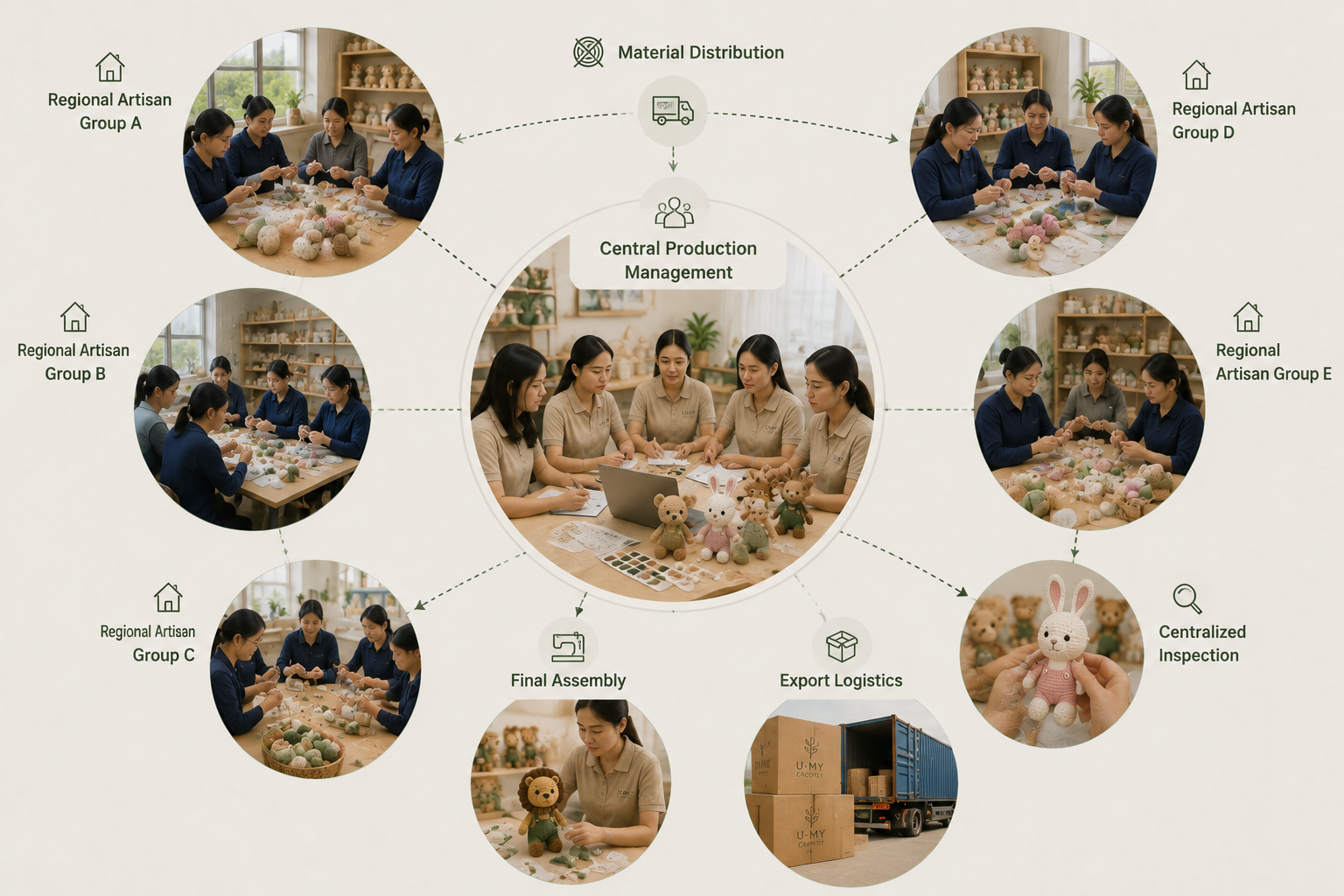
How Can Handmade Crochet Be Produced at Scale?
This is one of the most common questions we hear from international buyers.
If every piece is handmade, how can a factory produce thousands of products?
The answer is not automation.
It is organization.
- Product development
- Training
- Material distribution
- Production planning
- Technical guidance
- Quality control
- Final assembly
- Packaging
- Logistics
At U-MY Crochet, our production network includes more than 2,000 skilled artisans, enabling us to support both product development and commercial production programs.
Scaling handmade production does not mean asking one artisan to work faster.
It means building a production system in which more trained artisans can reproduce the same approved standard.
Why Rural Artisan Networks Matter
One distinctive feature of crochet manufacturing is that much of the work does not require heavy industrial machinery.
This allows some production activities to be organized beyond a conventional centralized factory floor.
Artisans may be able to contribute to commercial projects while remaining closer to their communities.
From a manufacturing perspective, this model can also expand the available pool of skilled craftsmanship.
However, distributed production only works effectively when it is supported by:
- Clear technical standards
- Reliable material management
- Training
- Production coordination
- Quality inspection
- Traceable production procedures
Without these systems, flexibility can quickly become inconsistency.
The Human Side of Quality Control
Quality control in crochet manufacturing is different from simply measuring a machine-produced component.
Inspectors must understand how handmade construction affects the finished product.
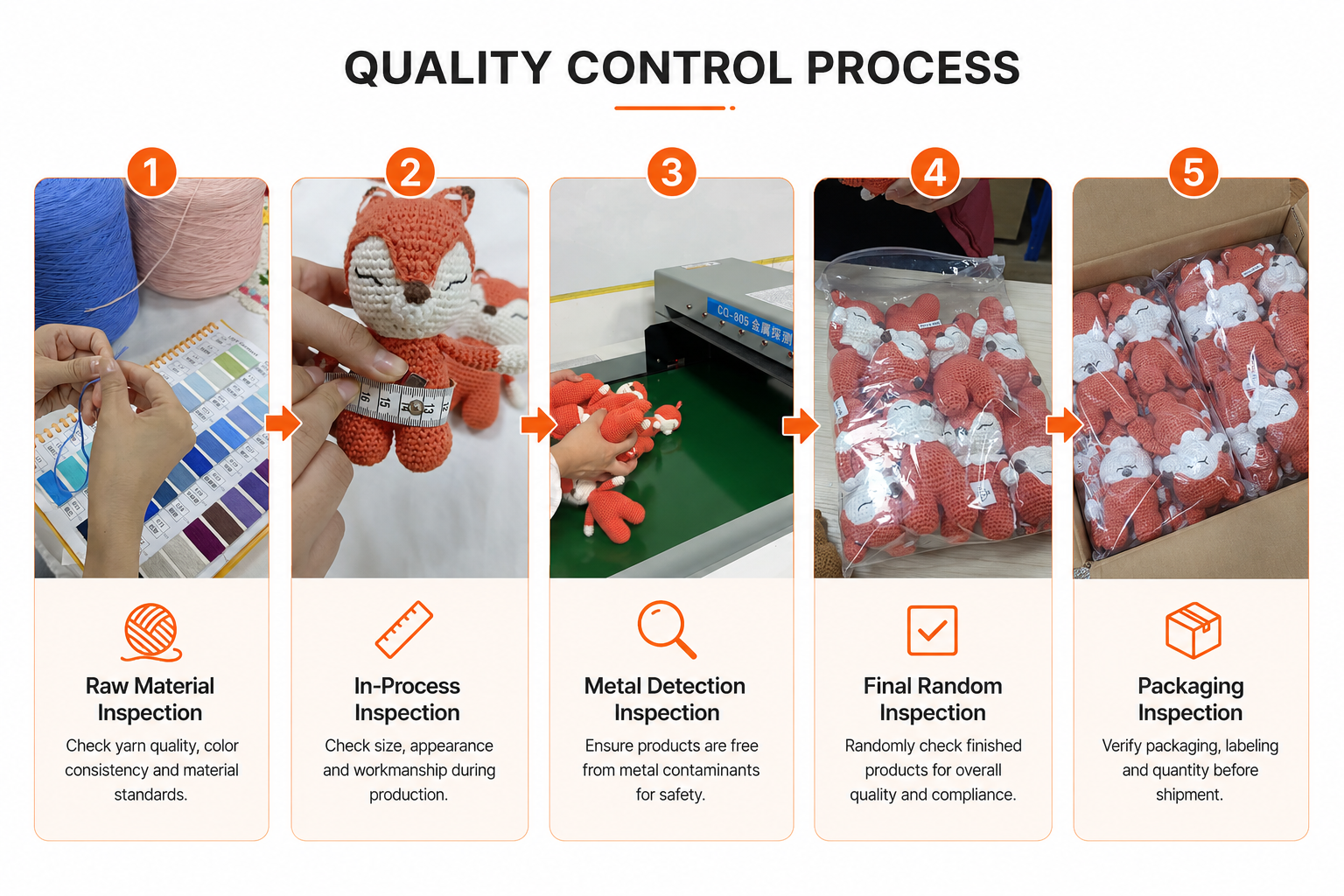
Typical inspection points may include:
- Overall dimensions
- Body proportions
- Stitch consistency
- Yarn color
- Filling volume
- Facial expression
- Limb positioning
- Accessory attachment
- Loose yarn ends
- Embroidery quality
- Labels
- Packaging
For children's products, additional safety-related checks may also be required depending on the product design and destination market.
The quality team is therefore not working against the artisans.
It is supporting them by identifying variation and helping maintain the approved production standard.
Why the Golden Sample Matters
For handmade manufacturing, written instructions alone are rarely enough.
A physical approved sample provides an important visual benchmark.
The golden sample helps production teams compare:
- Size
- Shape
- Expression
- Color
- Proportions
- Accessories
- Filling
- Finishing details
This becomes especially important when multiple artisans are working on the same product.
One lesson we have learned from custom projects is simple:
The clearer the approved standard, the easier it is for artisans to reproduce the intended design consistently.
That is why sample development should never be treated as a minor step before production.
It establishes the reference point for everything that follows.
The People Behind a Custom Crochet Mascot
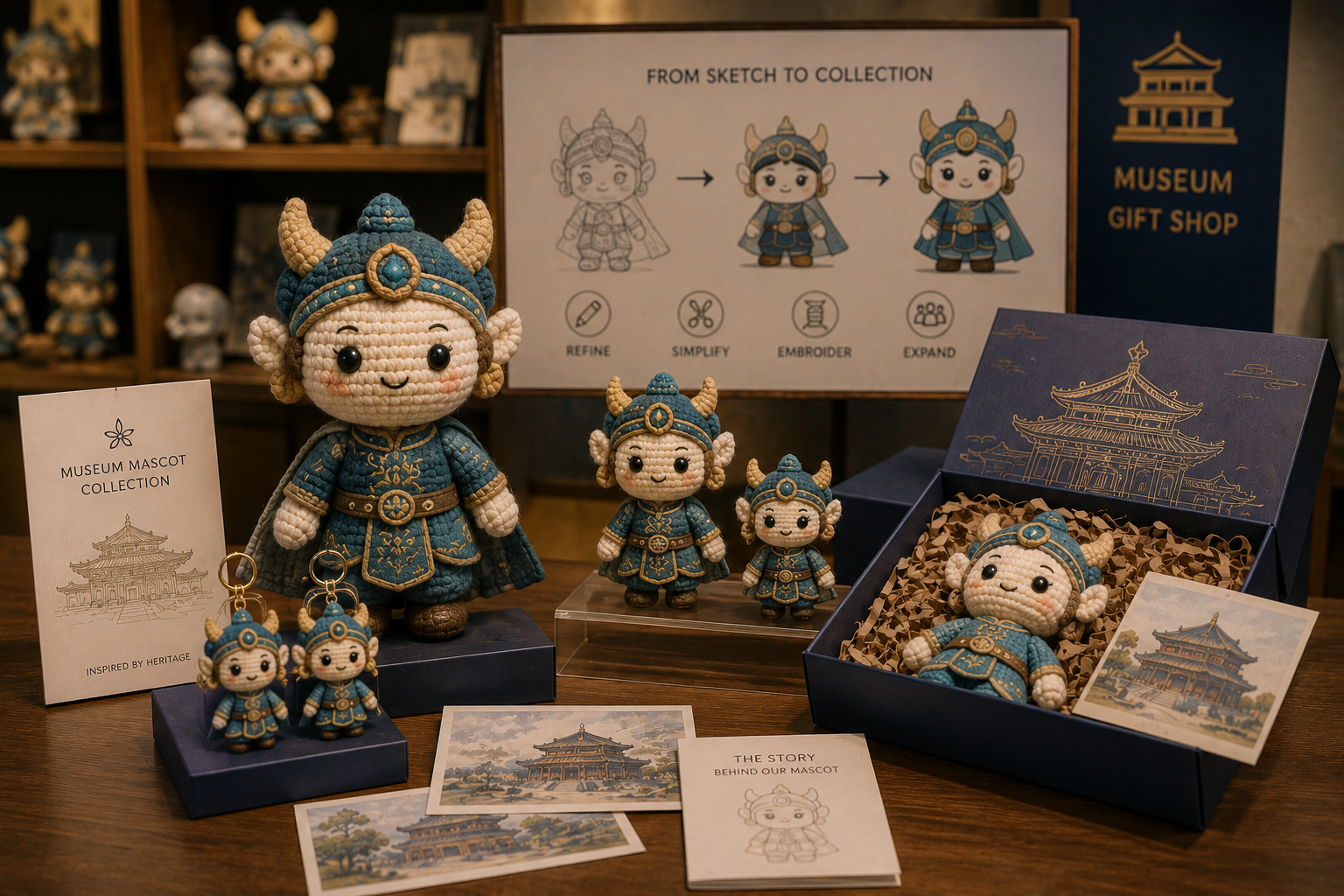
Consider a brand developing a custom crochet mascot from an illustration.
The customer may initially provide only:
- Character artwork
- Brand colors
- Target size
- Logo requirements
Before that artwork becomes a finished product, the manufacturing team must determine:
- Which shapes can be created through crochet
- How proportions should be translated into three dimensions
- Which yarn best matches the artwork
- How facial details should be reproduced
- Which accessories need separate development
- How the character should be assembled
- How the design can remain consistent during bulk production
The final mascot may appear simple.
But its simplicity is often the result of many people solving small technical problems behind the scenes.
Real Project Insight: Why Small Details Can Require More Work Than Expected
During custom development, buyers sometimes assume that a small decorative element will have little impact on production.
In practice, the opposite can be true.
A tiny embroidered logo, layered garment, removable accessory, unusual facial expression, or complicated color change may require significant manual attention.
For example, adding several small accessories to a character can introduce additional steps for:
- Separate crochet production
- Positioning
- Sewing
- Inspection
- Material preparation
This is why crochet pricing is often influenced more by labor complexity than material quantity alone.
Understanding the human work behind the product helps buyers make better design and cost decisions.
Handmade Does Not Mean Unprofessional
There is sometimes an assumption that handmade production is informal or difficult to manage.
That depends entirely on the production system.
Professional handmade manufacturing can include:
- Documented product specifications
- Organized material management
- Production schedules
- Technical supervision
- Quality standards
- Inspection procedures
- Packaging controls
- International compliance support
The product remains handmade.
The management system does not have to be.
That combination—human craftsmanship supported by professional manufacturing systems—is what allows crochet products to serve international retail markets.
Why Human Craftsmanship Creates Commercial Value
For brands, handmade crochet offers something difficult for automated production to replicate:
visible human character.
Customers can see and feel:
- Yarn texture
- Stitch structure
- Hand-shaped forms
- Small handcrafted details
- Soft irregularities that give each piece personality
This tactile quality can help crochet products communicate:
- Warmth
- Authenticity
- Care
- Creativity
- Emotional connection
That is particularly valuable for:
- Gift brands
- Museum stores
- Baby collections
- Cultural products
- Character merchandise
- Emotional-support gifts
- Corporate gifting
- Lifestyle brands
In these categories, customers are often buying more than function.
They are buying meaning.
Why Buyers Should Understand the People Behind Production
Understanding the human side of crochet manufacturing can improve sourcing decisions.
When evaluating a supplier, buyers should look beyond the finished sample and ask questions such as:
- Who develops the crochet patterns?
- How are new artisans trained?
- How are materials distributed?
- How are production standards communicated?
- How is consistency controlled across artisan groups?
- Where does final assembly take place?
- How are finished products inspected?
- How does the supplier handle peak-season capacity?
- How are subcontracting or distributed production arrangements managed?
These questions reveal much more about manufacturing capability than a product catalog alone.
Responsible Sourcing Requires Evidence, Not Just a Story
The human side of manufacturing can be emotionally powerful, but brands should avoid treating social impact purely as marketing language.
Buyers conducting supplier due diligence may request:
- Production-site information
- Artisan-network information
- Social-audit documentation where applicable
- Quality-control procedures
- Subcontracting disclosure
- Material traceability information
- Product test reports
- Production-capacity information
What U-MY Has Learned Since 2013
After more than 12 years in crochet manufacturing, we have learned that successful handmade production depends on balancing two things that may initially seem contradictory:
human flexibility and manufacturing standardization.
Too little standardization creates inconsistency.
Too much pressure for machine-like uniformity can ignore the realities of handmade craftsmanship.
The better approach is to create clear standards while giving trained artisans the technical support needed to meet them.
That principle shapes how we approach:
- Sampling
- Pattern development
- Artisan coordination
- Quality management
- Production scaling
- Custom product development
It is also why we view crochet artisans as a central part of manufacturing capability rather than simply a source of labor.
U-MY Crochet at a Glance
U-MY Crochet has specialized in handmade crochet manufacturing since 2013.
Our manufacturing capabilities support international B2B customers developing:
- Custom crochet dolls
- Crochet mascots
- Baby gifts
- Crochet gift sets
- Museum souvenirs
- DIY crochet kits
- Crochet flowers
- Fashion accessories
- Seasonal collections
- Private-label products
Our broader production network includes more than 2,000 skilled artisans, supported by product development, material management, production coordination, quality control, and packaging systems.
For custom projects, we support both OEM and ODM development, from early concepts and sketches through sampling, production, inspection, and retail-ready packaging.
Frequently Asked Questions
Are crochet products really made by hand?
Traditional crochet is fundamentally a handcraft process. Commercial-scale production is achieved by coordinating trained artisans rather than replacing the core crochet process with conventional automated knitting machinery.
Can handmade crochet products be consistent?
Yes. Professional manufacturers use approved samples, standardized patterns, material specifications, production instructions, and quality inspections to control variation.
How can a crochet factory produce large orders if products are handmade?
Large-scale production relies on organized artisan networks, production planning, standardized materials, training, centralized coordination, and quality management.
Why does crochet production require skilled artisans?
Artisans must control stitch tension, shape, proportions, assembly, filling, and decorative details throughout production. These variables directly influence the finished product.
Does handmade production automatically mean ethical production?
No. Handmade describes the production method, not the working conditions. Buyers should evaluate production transparency, management systems, relevant audits or documentation, and the supplier's actual practices before making ethical sourcing claims.
Why can a small crochet detail increase the price significantly?
Crochet production is labor-intensive. Small embroidered features, layered clothing, multiple color changes, or separate accessories may add several manual production and inspection steps even when they use very little material.
What should buyers ask a crochet manufacturer before placing a large order?
Ask about sampling, artisan training, production organization, quality control, capacity, materials, compliance requirements, packaging, subcontracting, and how the approved sample is translated into bulk production.
Conclusion
A finished crochet product may fit in the palm of your hand.
The production system behind it can involve designers, pattern technicians, material teams, production coordinators, quality inspectors, packaging staff, and many skilled artisans.
That is the human side of crochet manufacturing.
For global buyers, understanding this process matters because the people behind the product directly influence:
- Quality
- Consistency
- Capacity
- Lead time
- Cost
- Product character
- Supply-chain responsibility
At U-MY Crochet, we believe professional crochet manufacturing should preserve what makes handmade products special while building the systems needed for reliable international production.
Because behind every stitch is more than yarn.
There is skill, time, experience, and a human hand that brings the product to life.
Looking for a Professional Handmade Crochet Manufacturing Partner?
If you are developing a custom crochet doll, brand mascot, museum souvenir, gift collection, baby product, or private-label crochet program, U-MY Crochet can support your project from concept and sampling through organized production, quality control, and retail-ready packaging.
Contact our team to discuss your next custom crochet project.
 Chinese