
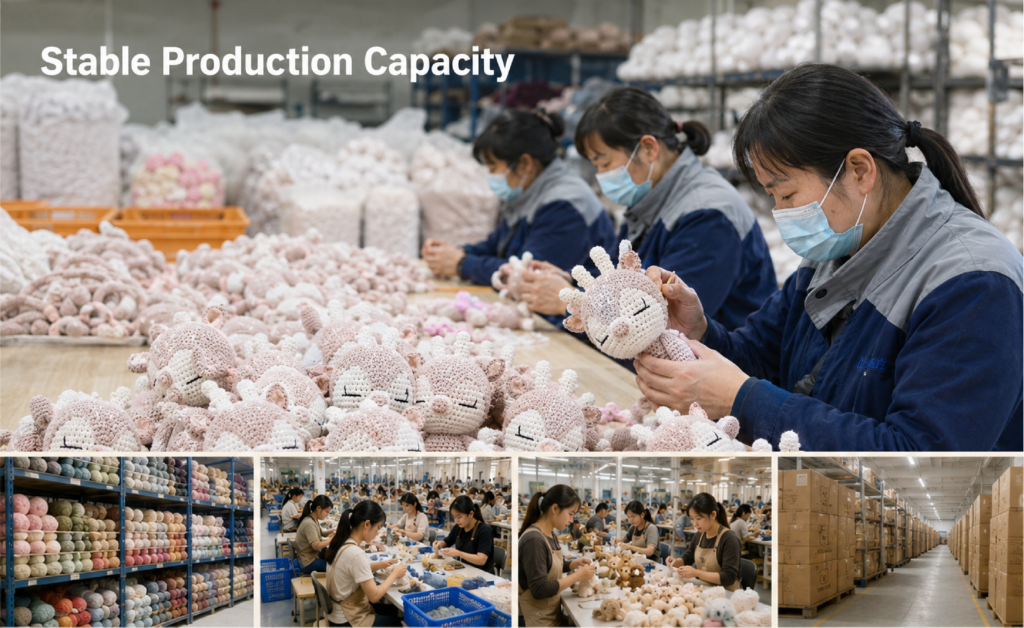
How Responsible Artisan Networks, Professional Systems, and Handmade Craftsmanship Support Global Crochet Production
When buyers think about handmade crochet products, two questions often appear together:
Can handmade production truly be ethical?
And:
Can handmade crochet be scaled for international brands and retailers?
For many years, these two ideas were considered difficult to combine.
Some buyers assume that handmade production means small capacity, inconsistent quality, or limited commercial potential.
Others worry that large-scale production may compromise artisan welfare, craftsmanship, or transparency.
The reality is more complex.
Professional handmade crochet manufacturing can achieve both ethical production and scalable supply when it is supported by responsible sourcing practices, skilled artisan networks, transparent management, and structured quality systems.
At U-MY Crochet, we have specialized in handmade crochet manufacturing since 2013, supporting global brands, retailers, museum stores, gift companies, and product developers across more than 150 countries and regions.
Through years of working with international buyers, we have learned:
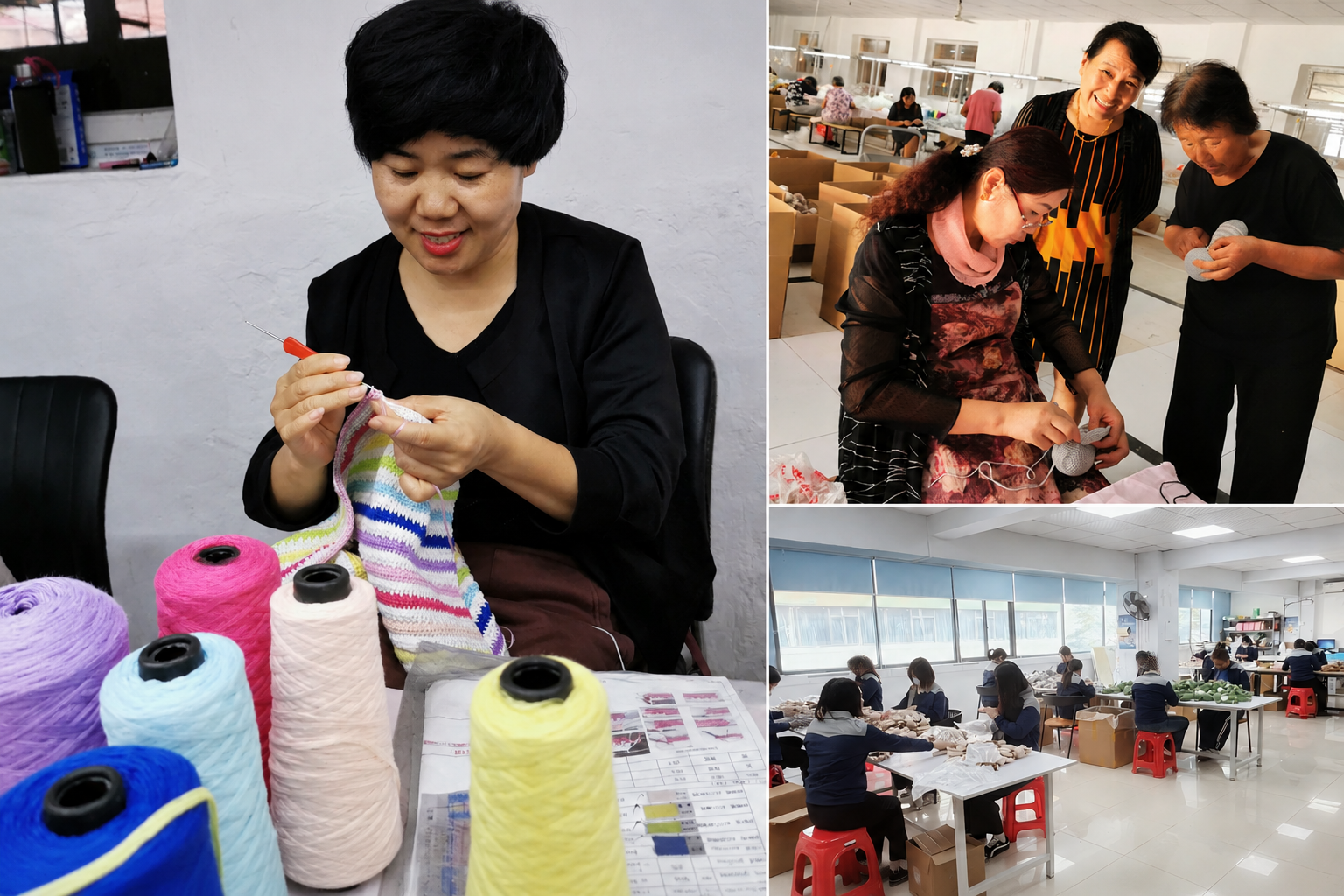
What Does Ethical Crochet Manufacturing Really Mean?
Ethical manufacturing is often misunderstood.
Some people think ethical production simply means using handmade labor.
However, handmade alone does not automatically guarantee responsible production.
Ethical crochet manufacturing requires attention to multiple areas:
- Fair working conditions
- Transparent production relationships
- Responsible artisan management
- Safe working environments
- Appropriate compensation practices
- Sustainable material choices where possible
- Respect for craftsmanship
- Long-term partnerships
For crochet products, ethics are closely connected with the people behind every stitch.
Because crochet is a human-intensive craft, the way artisans are trained, supported, and integrated into production directly affects the quality of both the product and the production experience.
Why Crochet Has Unique Potential for Ethical Production
Unlike many manufacturing categories that depend heavily on automated machinery, crochet relies primarily on skilled handwork.
This creates unique opportunities.
Crochet Skills Can Be Developed Over Time
Crochet is a craft based on learned techniques.
Experienced artisans develop abilities such as:
- Maintaining consistent stitch tension
- Understanding patterns
- Creating three-dimensional shapes
- Managing complex color changes
- Producing detailed embroidery
- Adjusting product proportions
With proper training and guidance, crochet skills can become valuable long-term capabilities.
Crochet Production Can Support Flexible Artisan Participation
Because crochet does not require large industrial equipment at every production stage, certain production activities can be organized through distributed artisan networks.
This model can allow skilled makers to participate in commercial production while staying connected to their local communities.
However, responsible management is essential.
A distributed network requires:
- Clear production standards
- Material support
- Training systems
- Quality control
- Communication channels
- Reliable payment processes
Without these systems, flexibility can become instability.
Can Ethical Crochet Production Scale for Global Brands?
A common misconception is:
Handmade products can only be produced in small quantities.
This is not necessarily true.
The key difference is between:
Unstructured handmade production
and
Professionally managed handmade manufacturing.
A professional crochet manufacturer does not simply assign more orders to more people.
Instead, scaling requires systems.
How Professional Crochet Production Scales Responsibly
1. Standardized Product Development
Every successful production project begins with a clear product standard.
This includes:
- Approved samples
- Crochet patterns
- Material specifications
- Size requirements
- Color references
- Assembly instructions
- Packaging requirements
A clear standard allows multiple artisans to produce the same product direction.
2. Artisan Training and Skill Matching
Not every artisan works best on every product.
Complex crochet characters may require different skills compared with:
- Simple flowers
- Keychains
- Baby products
- Decorative items
Professional production systems match artisan skills with suitable product requirements.
This improves both efficiency and product quality.
3. Organized Material Management
Ethical and scalable production requires reliable material support.
Artisans need access to:
- Approved yarn
- Correct colors
- Required accessories
- Product instructions
- Reference samples
Consistent material preparation reduces unnecessary rework and helps maintain quality.
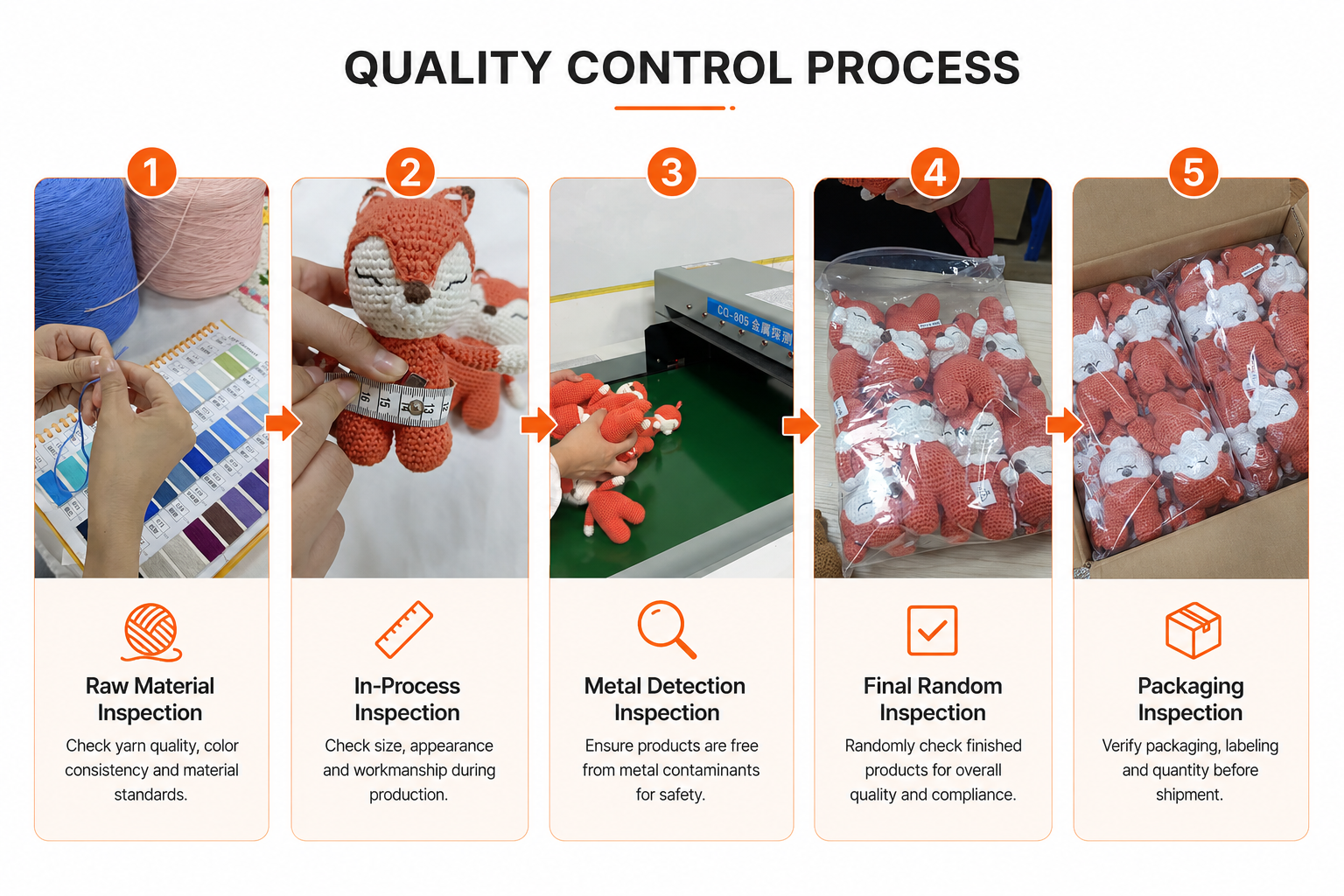
4. Quality Control Systems
Handmade products naturally contain human variation.
The goal is not to remove every handmade characteristic.
The goal is to control important quality standards.
Professional crochet quality systems evaluate:
- Size consistency
- Stitch quality
- Product shape
- Embroidery details
- Accessory attachment
- Filling amount
- Finishing quality
- Safety requirements
This allows brands to enjoy handmade character while maintaining retail expectations.
The Relationship Between Artisan Welfare and Product Quality
One important lesson from handmade manufacturing is:
People and product quality are directly connected.
When artisans receive:
- Clear instructions
- Stable production opportunities
- Skill development
- Proper support
- Respect for their craftsmanship
They are more likely to produce consistent, high-quality work.
Ethical production is not separate from business performance.
In many cases, responsible artisan relationships create stronger long-term manufacturing capability.
Why Brands Are Increasingly Interested in Ethical Handmade Products
Modern consumers increasingly care about the story behind products.
They want to understand:
- Where products come from
- Who made them
- What values the brand represents
- Whether purchases create positive impact
This is especially important for categories such as:
- Gift products
- Baby collections
- Museum souvenirs
- Cultural products
- Lifestyle brands
- Emotional-support products
- Premium handmade collections
A crochet product can communicate more than appearance.
It can communicate:
- Care
- Craftsmanship
- Human connection
- Authenticity
Ethical Production Does Not Mean Lower Commercial Capability
Some buyers worry that ethical production may create:
- Higher costs
- Longer lead times
- Limited capacity
However, the relationship is not that simple.
Professional ethical production can improve:
Long-Term Stability
Strong artisan relationships help maintain production capability.
Product Consistency
Training and systems reduce quality fluctuations.
Product Development Ability
Experienced artisans can support more complex designs.
Brand Storytelling
Transparent production creates additional brand value.
For many brands, ethical manufacturing is not only a social decision.
It is also a business strategy.
Real Project Insight: Scaling a Handmade Collection Responsibly
One challenge we often see is that brands want to move quickly from one successful product to a larger collection.
A typical development path may look like this:
Stage 1: Initial Product Development
A brand starts with one custom crochet character or gift item.
The focus is:
- Design approval
- Sample development
- Market testing
Stage 2: Collection Expansion
After customer feedback, the brand develops:
- Additional characters
- Matching accessories
- Gift sets
- Seasonal variations
Stage 3: Larger Production Program
The manufacturer develops:
- Production planning
- Artisan allocation
- Material preparation
- Quality control procedures
The important lesson is:
Sustainable scaling happens through systems, not simply increasing order volume.
How U-MY Supports Ethical and Scalable Crochet Manufacturing
Since 2013, U-MY Crochet has focused on connecting handmade craftsmanship with professional manufacturing systems.
Our approach combines:
Artisan Capability
A network of more than 2,000 skilled artisans supporting different crochet categories.
Product Development Experience
Support from concept, sketches, and samples to production-ready products.
Quality Management
Standardized processes for:
- Sample approval
- Production monitoring
- Inspection
- Packaging control
International B2B Experience
Supporting customers including:
- Gift brands
- Retailers
- Museum stores
- Cultural organizations
- Corporate buyers
- E-commerce companies
Our goal is not to make handmade products feel industrial.
Our goal is to help handmade products meet the expectations of global markets.
What Should Buyers Ask Before Choosing an Ethical Crochet Manufacturer?
Ethical sourcing requires more than a marketing statement.
Before partnering with a crochet manufacturer, buyers should ask:
About Artisan Networks
-
- Who makes the products?
- Are artisans directly managed or subcontracted?
- How are artisans trained?
About Production Systems
- How are quality standards communicated?
- How are materials controlled?
- How is consistency maintained?
About Transparency
- Can the supplier explain the production process?
- Can they provide factory or workshop information?
- Can they explain capacity planning?
About Product Responsibility
- Are materials documented?
- Are safety requirements considered?
- Are quality inspections performed?
These questions help buyers distinguish between genuine responsible production and simple marketing claims.
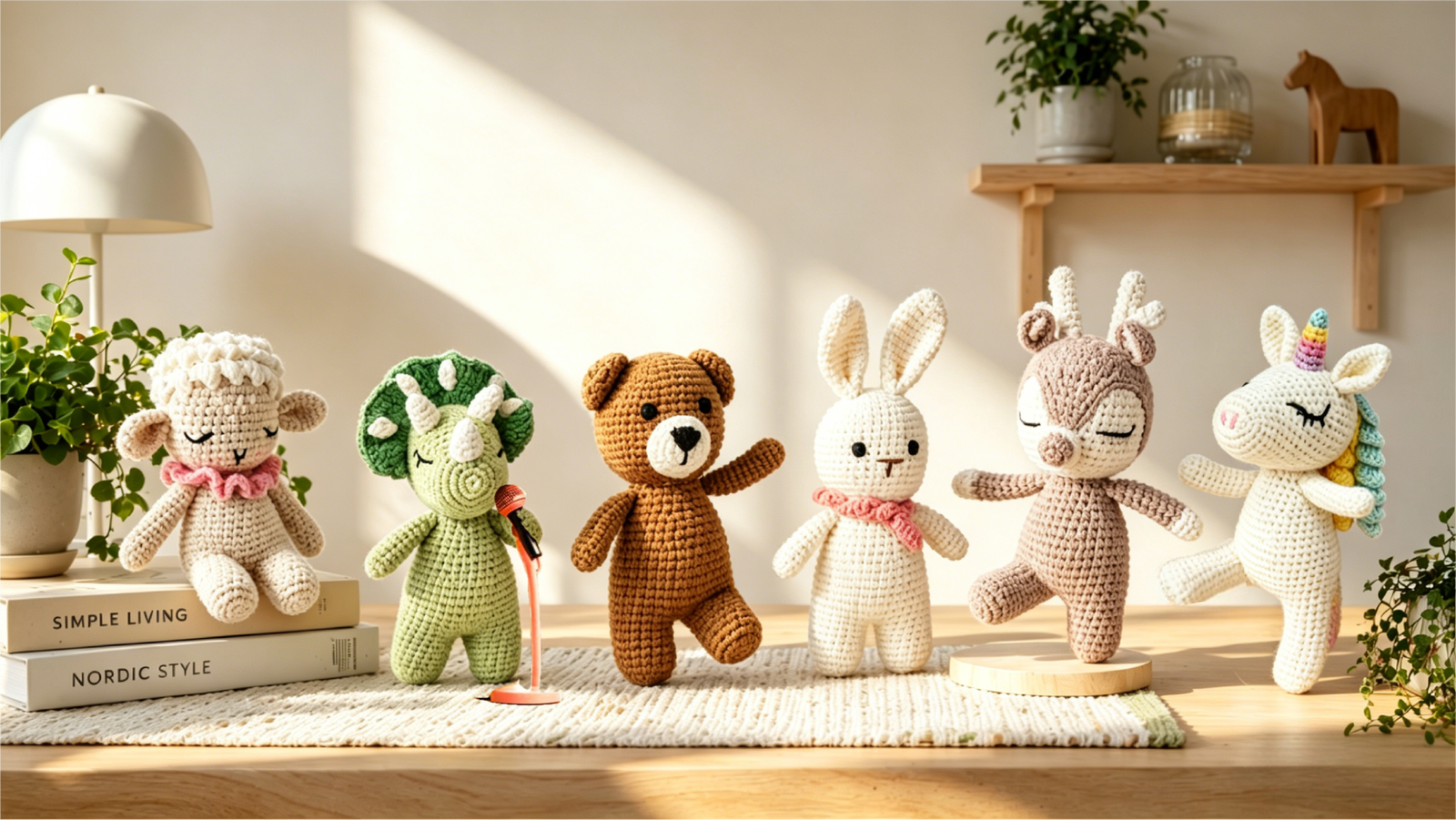
Ethical Crochet Manufacturing and the Future of Handmade Products
The future of crochet manufacturing will not be defined by choosing between:
handmade or scalable
craftsmanship or efficiency
people or business growth
The strongest production models combine both.
Brands increasingly need products that are:
- Meaningful
- Customizable
- Responsibly produced
- Commercially reliable
Handmade crochet has the unique ability to deliver emotional value while supporting skilled human craftsmanship.
With the right systems, it can become both ethical and scalable.
Frequently Asked Questions
Can handmade crochet products really be produced in large quantities?
Does handmade crochet production mean poor consistency?
No. Professional manufacturers use approved samples, technical standards, training, and inspections to maintain consistency while preserving handmade characteristics.
Is handmade crochet automatically ethical?
No. Handmade describes the production method, not the working conditions. Buyers should evaluate supplier transparency, artisan management, and production practices.
Why is crochet suitable for ethical manufacturing?
Crochet relies heavily on skilled craftsmanship rather than automated machinery, creating opportunities for artisan-based production models when managed responsibly.
Can ethical crochet manufacturing support international retailers?
Yes. With professional systems, ethical artisan networks can support retailers, gift brands, museum stores, and global product programs.
Conclusion
Every crochet product carries a human story.
Behind a finished piece are not only yarn and stitches, but also:
- Artisan skills
- Training
- Production support
- Quality systems
- Responsible relationships
The challenge for modern crochet manufacturing is not choosing between ethics and scalability.
The opportunity is building systems where both can exist together.
At U-MY Crochet, we believe the future of handmade manufacturing is not about making craftsmanship disappear.
It is about helping skilled people create meaningful products that can reach customers around the world.
Because truly scalable handmade production begins with respecting the hands behind every stitch.
 Chinese