
How Modern Crochet Factories Transform Handmade Craftsmanship into Scalable Production
One of the most common questions we hear from brands, retailers, distributors, and importers is:
Can handmade crochet products really be produced at scale?
The reality is quite different.
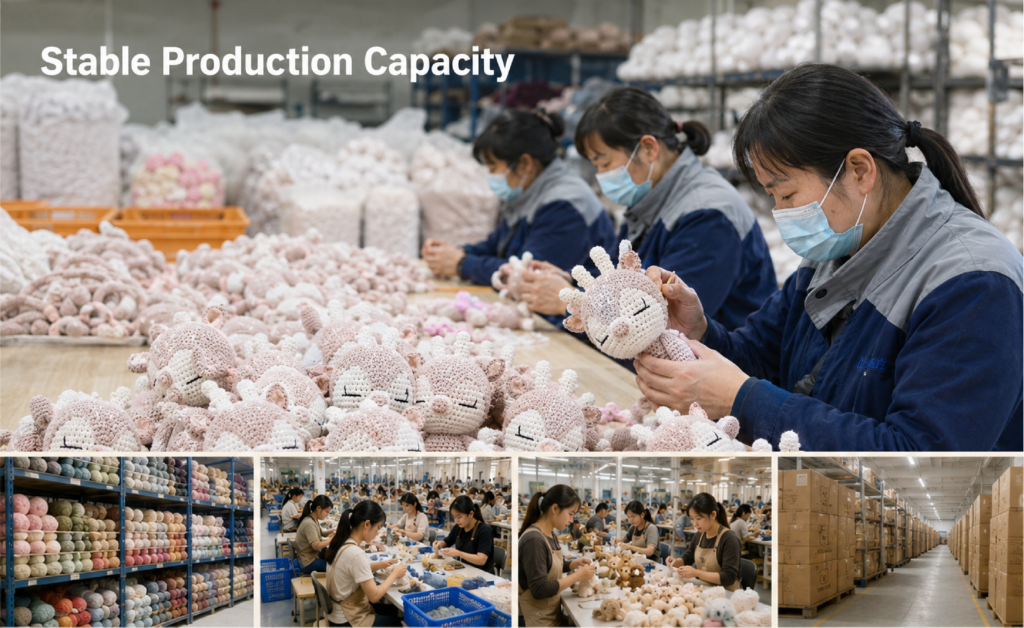
At UMY Crochet Factory, we have specialized in crochet manufacturing since 2013. Over the past 12 years, we have helped customers across more than 150 countries and regions develop and produce crochet dolls, baby products, gift sets, museum souvenirs, promotional items, and private-label collections.
One thing we've learned is that successful large-scale crochet production is not about replacing craftsmanship.
It is about building systems that allow skilled artisans to work consistently, efficiently, and at commercial scale.
In this guide, we'll explain how handmade crochet products can be produced at scale, what challenges manufacturers face, and what buyers should evaluate when selecting a crochet production partner.
Why Do Buyers Question Scalability?
The concern is understandable.
When people hear "handmade crochet," they often imagine:
- Individual artisans working from home
- Small craft businesses
- Limited production capacity
- One-off custom orders
While this may be true for hobby businesses and small workshops, professional crochet manufacturing operates very differently.
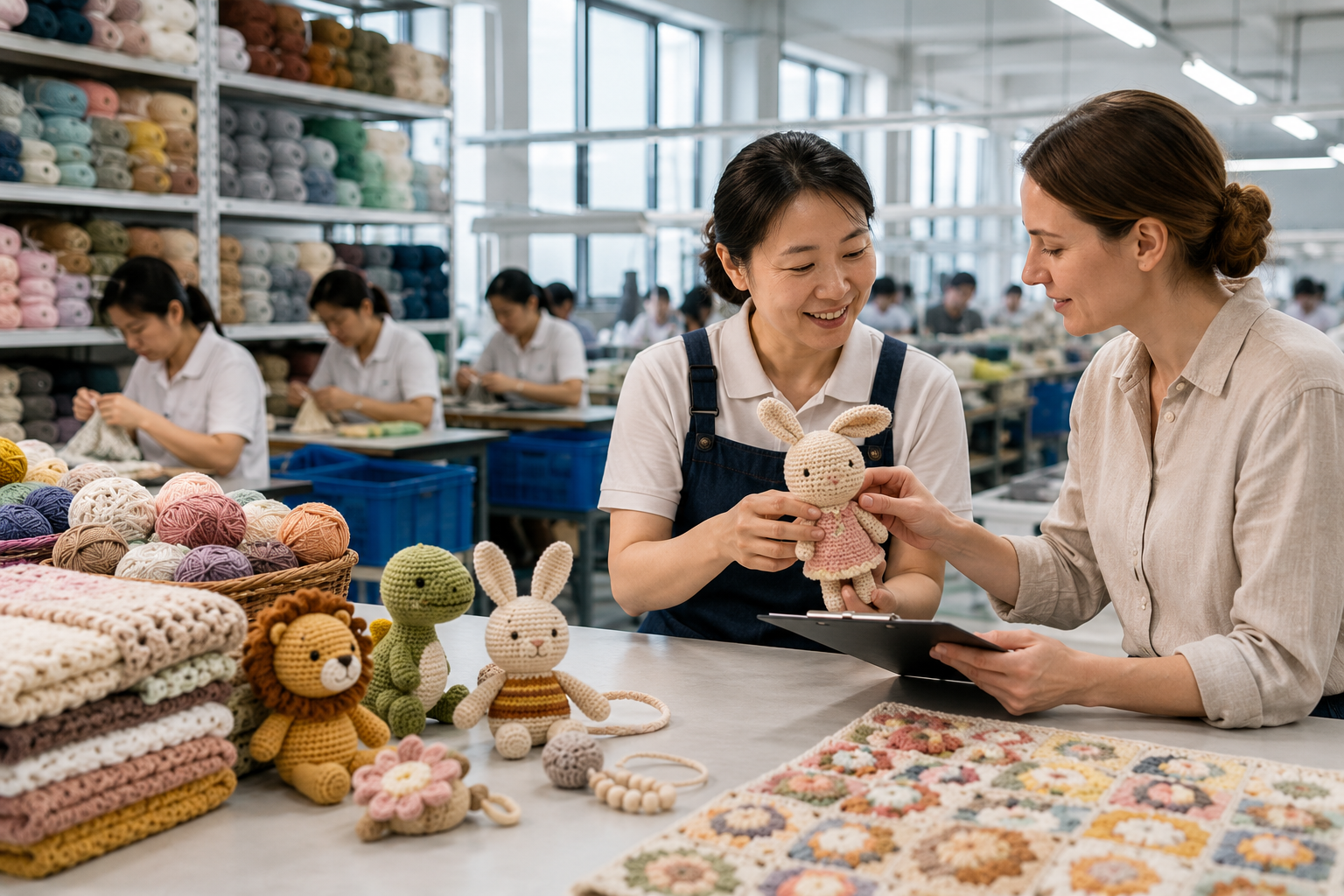
Modern crochet factories combine:
- Skilled artisan networks
- Standardized production systems
- Quality control procedures
- Production planning
- Material management
This allows handmade products to be produced consistently at commercial volumes.
Handmade Does Not Mean Unscalable
One of the biggest misconceptions in the crochet industry is:
Handmade products cannot support large orders.
In reality, crochet products are already being supplied to:
- Retail chains
- Museum stores
- Gift brands
- Subscription box companies
- Corporate gifting programs
- International distributors
The key difference is not whether the product is handmade.
The key difference is whether the manufacturer has the systems required to scale handmade production.
How Crochet Production Scales in Practice
Many buyers assume scaling crochet production simply means hiring more people.
In reality, successful scaling depends on building a complete production ecosystem.
Based on our experience supporting hundreds of projects, large-scale crochet manufacturing relies on five key elements.
1. Standardized Production Processes
One of the biggest myths about handmade production is that every artisan works differently.
Professional crochet factories minimize variation through:
- Detailed production patterns
- Stitch specifications
- Material standards
- Visual reference samples
- Quality guidelines
2. Skilled Artisan Networks
Unlike machine-driven industries, crochet production capacity depends on skilled people.
At UMY, our crochet production network includes more than 2,000 artisans, allowing us to support both small custom developments and large-volume production programs.
Building a reliable artisan network requires:
- Technical training
- Production coordination
- Quality management
- Continuous communication
This infrastructure allows production capacity to expand when customer demand increases.
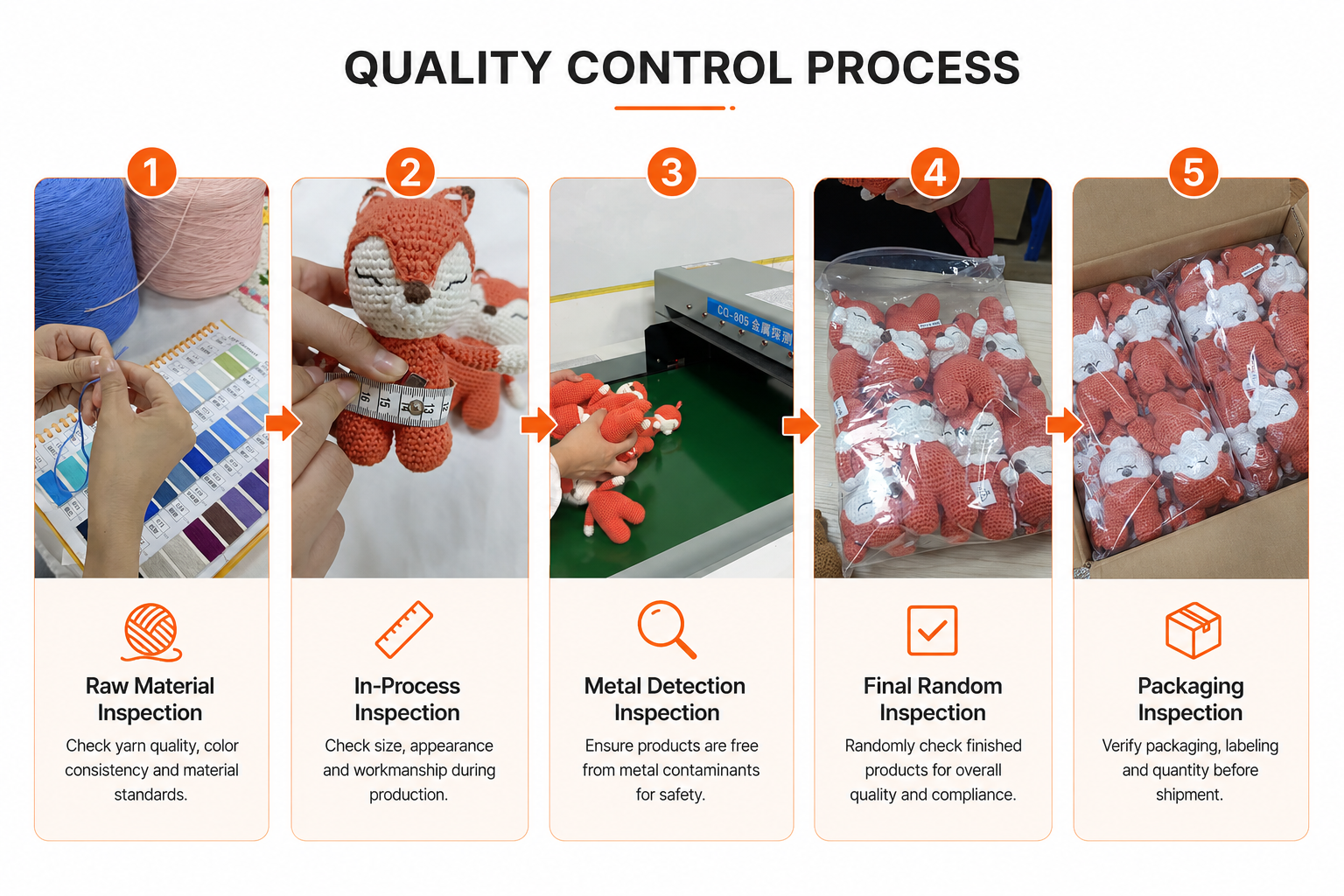
3. Quality Control Systems
As production volume increases, quality management becomes even more important.
One concern buyers frequently have is:
Will quality remain consistent as order quantities grow?
The answer depends entirely on the production system.
Professional crochet manufacturers typically implement:
- Incoming material inspections
- In-process inspections
- Final product inspections
- Needle detection procedures
- Packaging inspections
These systems help maintain consistency across production batches.
4. Production Planning
After supporting custom crochet projects for more than a decade, we've learned that:
Production problems are often planning problems.
Successful scaling requires effective management of:
- Production schedules
- Material purchasing
- Labor allocation
- Shipping deadlines
- Seasonal demand
Factories with strong planning systems often outperform factories that simply try to produce faster.
5. Material Supply Stability
Even the most skilled artisans cannot produce efficiently without reliable materials.
Large-scale crochet production requires stable access to:
- Yarn
- Filling materials
- Safety components
- Labels
- Packaging
Material shortages often create more production delays than labor shortages.
Real Project Example: Museum Souvenir Collection
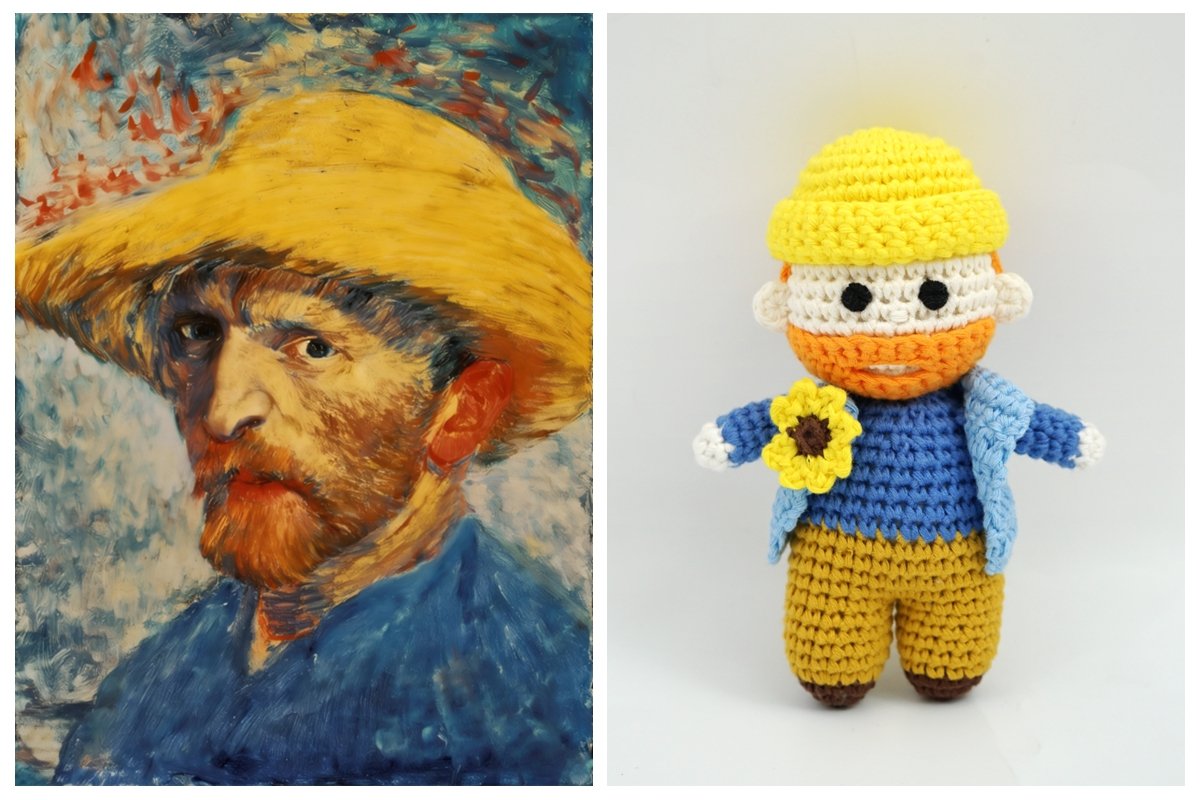
One customer approached us to develop a crochet souvenir collection inspired by a cultural exhibition.
The project initially started as a small development order.
Following a successful launch, demand increased significantly.
To support larger production volumes, we expanded artisan allocation, standardized production procedures, increased inspection frequency, and coordinated material procurement in advance.
Because scalability was considered during development, the project expanded smoothly without major quality issues.
This reinforced an important lesson:
Scalability is built during product development, not after demand increases.
Real Project Example: Seasonal Gift Program
A retailer developed a crochet gift collection for a seasonal promotion.
The challenge was not product complexity.
The challenge was timing.
All products needed to arrive before a holiday sales window.
By coordinating production across multiple artisan groups and implementing phased inspections, the project was completed on schedule.
This project demonstrated that production planning often matters more than production volume itself.
Production Scaling Example
Many projects follow a growth pattern similar to this:
| Order Stage | Quantity |
|---|---|
| Initial Trial Order | 300 pcs |
| Second Order | 2,000 pcs |
| Seasonal Program | 5,000+ pcs |
| Long-Term Retail Program | 10,000+ pcs |
Scaling successfully requires systems that grow alongside customer demand.
Can Handmade Crochet Products Remain Consistent at Scale?
This is one of the most important questions buyers ask.
The answer is:
Yes—but only with proper systems.
Handmade products naturally contain minor variations.
However, experienced manufacturers reduce variation through:
- Training programs
- Standardized procedures
- Reference samples
- Multi-stage inspections
The goal is not machine-level uniformity.
The goal is controlled consistency.
Most successful brands understand that minor handmade variations contribute to the authenticity customers appreciate.
Crochet Production Capacity at UMY
Over the years, UMY has developed a production system designed specifically for scalable handmade manufacturing.
Highlights include:
- 12+ years specializing in crochet manufacturing
- Customers across 150+ countries and regions
- 2,000+ artisan production network
- Support for OEM and ODM projects
- Experience serving retailers, museums, gift brands, and distributors
These resources allow us to support projects ranging from custom sampling to large-scale production programs.
Common Misconceptions About Large-Scale Crochet Production
"Handmade Means Low Volume"
Not necessarily.
"Quality Drops When Quantity Increases"
Quality issues are usually caused by weak systems rather than larger order quantities.
Strong quality control processes help maintain consistency.
"Crochet Cannot Support Commercial Retail Programs"
Crochet products are already being sold successfully through:
- Retail chains
- Museum stores
- Gift shops
- Corporate programs
- Online brands
Large-scale crochet manufacturing is supporting commercial markets worldwide.
What Should Buyers Look for in a Scalable Crochet Manufacturer?
When evaluating suppliers, ask:
How long have they specialized in crochet manufacturing?
How large is their artisan network?
What quality control systems are in place?
Can they provide examples of scaled production projects?
How do they manage seasonal demand?
Manufacturers that can answer these questions clearly are generally better positioned for long-term partnerships.
Frequently Asked Questions
Can crochet products really be produced in large quantities?
Yes.
Will handmade crochet products look exactly identical?
Minor handmade variations are normal.
However, professional systems help maintain consistent quality and appearance.
What limits crochet production capacity?
Production capacity is influenced by artisan availability, material supply, product complexity, and production planning.
Are crochet products suitable for retail chains?
Yes.
Is custom production possible at scale?
Absolutely.
Experienced crochet manufacturers regularly support both custom development and larger-volume production.
Final Thoughts
Handmade crochet production and scalable manufacturing are not mutually exclusive.
Over the past 12 years, we've seen how artisan networks, standardized systems, quality control processes, and production planning can transform handmade craftsmanship into reliable commercial production.
The most successful crochet manufacturers do not replace artisans with machines.
Instead, they build systems that allow craftsmanship to scale while maintaining quality, authenticity, and flexibility.
Whether you're developing crochet dolls, gift sets, baby products, museum souvenirs, or promotional collections, choosing the right production partner can make the difference between a successful program and a challenging one.
Looking for a Crochet Factory That Can Scale With Your Brand?
At UMY Crochet Factory, we help brands, retailers, distributors, museums, and gift companies transform handmade crochet concepts into commercially scalable products.
From custom development and sampling to quality control and large-volume production, our team supports every stage of the process.
Contact us today to discuss your next crochet project.
 Chinese