
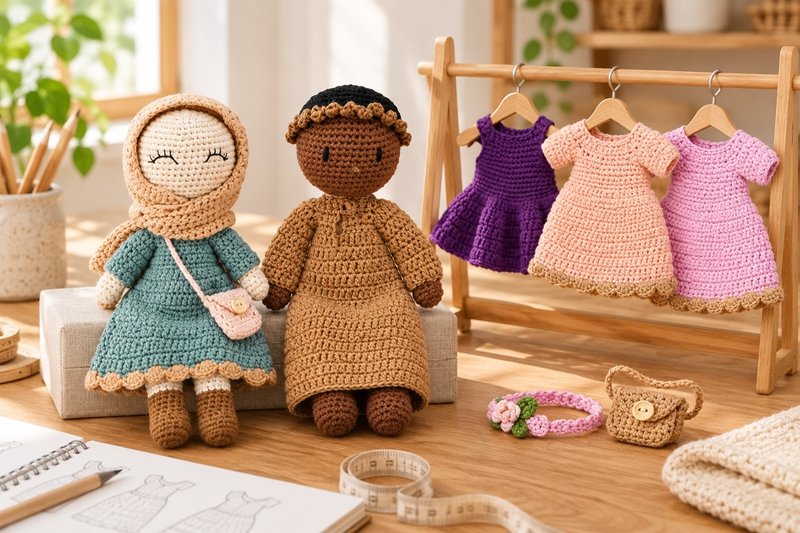
Develop crochet doll clothes around the actual dolls they must fit, using agreed body measurements, dressing requirements and physical reference samples. Validate each outfit on every doll version included in the compatibility claim. Doll height alone cannot establish whether a garment will fit.
This guide is for doll brands, character owners, accessory developers and retailers planning crochet outfits for an existing doll range. It focuses on garment-to-doll fit, including dressing access, finished appearance and repeatable production specifications.
Define the Compatibility Claim First
Start by identifying exactly which dolls the clothing is intended to fit.
“Fits small dolls” leaves the development team without a usable reference. Even dolls of similar height may have different head sizes, shoulder widths, body shapes and limb proportions.
List the relevant:
- Doll brand or project reference.
- Model and body version.
- Nominal size.
- Body material and construction.
- Hair, ears, tails or other projecting features.
- Fixed and movable parts.
- Existing clothing that affects fit.
- Intended dressing and removal method.
Distinguish between a garment designed for one model and an outfit intended to work across several bodies.
If compatibility has only been assessed on one doll, keep the claim limited to that doll until further validation is complete.
Obtain Representative Physical Dolls
Provide physical references wherever possible.
Photographs help explain appearance, but they cannot fully show how a garment moves over the head, hands or feet. A measurement sheet also cannot demonstrate how a soft body compresses during dressing.
For an existing range, identify which physical samples represent the versions customers will receive. If the dolls are still being developed, record which body dimensions and features remain provisional.
Retain the reference dolls used during approval. A later body revision may change fit even when the clothing pattern stays the same.
Where only digital information is available initially, treat the first garment as a development sample and plan a physical fitting before release.
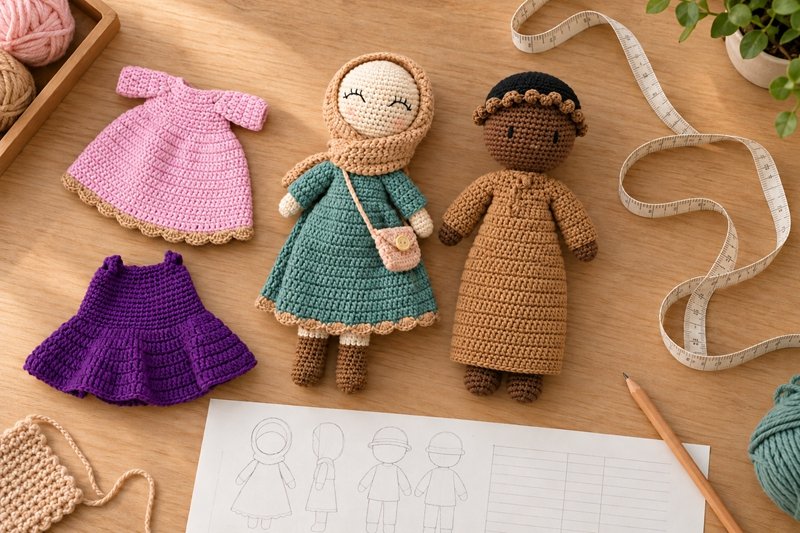
Build a Measurement Sheet Around the Garment
Choose measurements that explain the fit of the intended clothing.
A hat, dress and pair of trousers need different reference points. Record the measurement method as well as the result.
| Garment area | Doll references to consider | Fit question |
|---|---|---|
| Neckline or head opening | Head circumference, neck and projecting features | Can the garment pass over the intended dressing route? |
| Shoulder and upper body | Shoulder width, chest and arm position | Does the garment sit correctly without unwanted pulling? |
| Sleeves | Arm length, upper arm, hands and movement | Can the sleeve be put on and positioned as intended? |
| Waist and seat | Waist, widest body section and seated shape | Does the garment remain correctly positioned? |
| Trousers | Hip area, leg length, feet and stance | Can the legs pass through, and does the garment fit in the intended pose? |
| Hat | Head shape, circumference, hair and ears | Does the hat sit at the intended depth and position? |
Specify whether a soft doll is measured relaxed or under any defined handling condition. Avoid stretching or compressing it differently each time.
Use photographs to show where measurements begin and end.
Decide How the Customer Will Dress the Doll
A garment can look correct once in place but still be difficult to put on.
Define the dressing route before refining the final appearance.
For example:
- Does a dress go over the head or up from the feet?
- Can the arms move through the sleeves?
- Must the opening pass over large hands or fixed shoes?
- Will hair or ears interfere?
- Is an opening or fastening needed?
- Is the garment intended to be removable?
Test the intended route with the actual doll. Record any manipulation required.
Do not rely on stretching the garment aggressively or forcing the doll into a position that is outside the agreed dressing method.
If easy dressing is a project requirement, describe what that means and include it in the sample review.
Define Ease Through Fitting
Ease is the difference between the doll’s dimensions and the garment’s dimensions at relevant points.
The appropriate amount depends on the yarn, stitch structure, garment style, doll shape and intended dressing experience.
Avoid applying one universal allowance across an entire outfit range.
During fitting, assess whether the clothing:
- Sits at the intended position.
- Allows the agreed dressing movement.
- Holds its intended silhouette.
- Avoids unwanted gaps or pulling.
- Covers the required areas.
- Remains positioned during agreed handling.
- Allows any intended doll movement.
A loose cardigan and a close-fitting hat have different fit objectives. Document those objectives rather than describing both simply as “comfortable.”
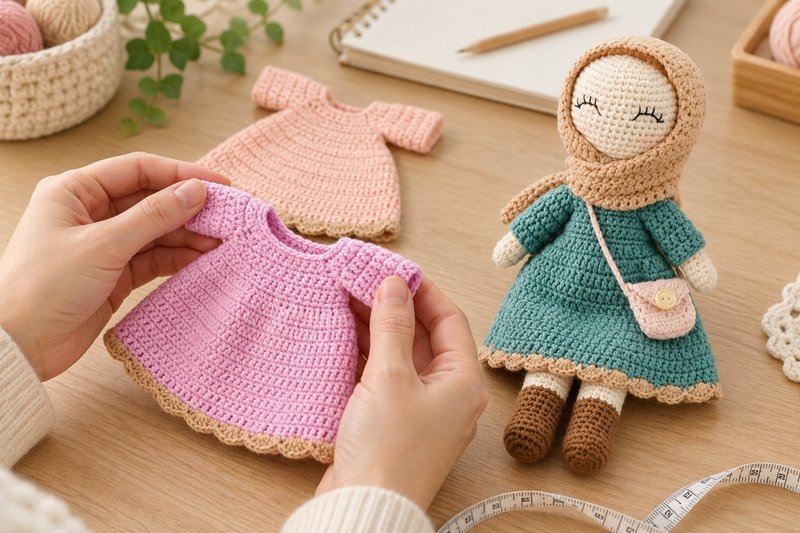
Evaluate the Yarn and Stitch Structure
The material and construction affect how the garment fits and behaves during dressing.
Review the proposed yarn and stitch structure on the physical doll. Observe the opening, edges and areas that are stretched during use.
Questions include:
- Does the garment return to its intended shape after dressing?
- Do edges remain visually consistent?
- Does the stitch structure become noticeably open in stressed areas?
- Does bulk interfere with sleeves, layering or the doll’s pose?
- Does the garment remain positioned after the agreed fitting sequence?
Keep the material specification connected to the approved clothing sample. A replacement yarn should trigger a review of the affected fit and appearance requirements.
See What Should Brands Recheck When Changing Yarn in a Crochet Product? for a broader material-change framework.
Test Every Claimed Doll and Outfit Combination
A shared height label does not establish shared fit.
Build a compatibility matrix listing the dolls and garments included in the project. Review each required combination rather than assuming that one successful fitting covers the range.
| Review item | Record for each required combination |
|---|---|
| Dressing access | Whether the outfit follows the agreed dressing route |
| Final position | Neckline, waistline, hem and accessory placement |
| Silhouette | Intended shape from relevant viewing angles |
| Movement | Any agreed pose or joint movement |
| Removal | Whether the garment can be removed as intended |
| Condition afterward | Garment and doll appearance following the review |
| Decision | Accepted, revision required or outside the compatibility scope |
If a garment fits some models but not others, consider a separate size, a construction adjustment or a narrower compatibility statement.
Do not conceal exceptions behind a general range description.
Review Outfits as Complete Combinations
Individual garments may fit correctly but interfere when worn together.
A cardigan sleeve may become tight over a dress sleeve. A bag strap may displace a neckline. A hat may sit differently when combined with a head accessory.
Test the combinations shown in product photographs or promised in the assortment.
Record which combinations are intended, including any dressing order. If an outfit is sold as a set, assess the full set on the relevant dolls.
For broader collection planning, see How to Develop a Crochet Product Collection Instead of Isolated SKUs.
Turn the Fitting Result Into a Production Specification
An approved appearance sample needs supporting measurements and fitting instructions.
Record:
- Garment and doll reference versions.
- Yarn and relevant construction details.
- Finished garment measurement points.
- How the garment is positioned during measurement.
- Agreed dimensional tolerances.
- Opening and fastening details.
- Dressing route.
- Required compatibility checks.
- Reference photographs.
- Approval conditions.
For shaped or flexible clothing, explain whether dimensions are measured flat, folded or fitted on the doll. Different methods can produce different results.
Use both garment measurements and physical fitting where appropriate. Neither should silently replace the other.
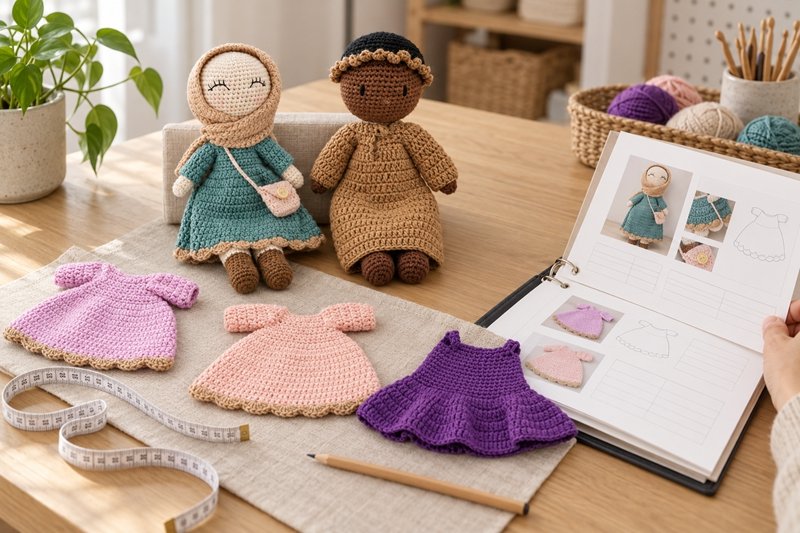
Separate Fit Approval From Other Product Requirements
Fit approval establishes whether the clothing meets the agreed compatibility and appearance requirements.
It does not establish every aspect of product suitability.
Confirm the intended audience, product use, materials and accessory requirements as part of the wider development brief. Identify which additional technical reviews or assessments are needed for the finished product.
Keep the scope of approval explicit. For example, approval of a dress’s fit should not automatically approve a newly added fastening or accessory.
Control Changes to the Doll and the Clothing
Compatibility depends on both sides of the relationship.
Review changes to:
- Doll head or body dimensions.
- Limb shape and position.
- Hair, ears or other projections.
- Garment yarn or stitch structure.
- Openings, edges and fastenings.
- Garment measurements.
- Layering combinations.
Identify which combinations need another fitting.
If the clothing remains unchanged but the doll body changes, the previous fitting record may no longer describe the current product.
Developing Doll Clothing With UMY Crochet
For a doll-clothing project, provide the reference dolls, outfit concepts, intended compatibility range and dressing requirements.
The development discussion should establish the sample scope, measurement references, material options and fitting checks needed for each outfit. Agree which body versions will be used for approval and how later changes will be managed.
For the information needed to start a project, see What Should Brands Include in a Custom Crochet Product Development Brief?.
Frequently Asked Questions
Is doll height enough to develop clothing?
No. Head size, body proportions, hands, feet and dressing access can affect fit. Use measurements relevant to the garment and representative physical dolls.
Can one crochet outfit fit several doll models?
It may, but assess every model included in the intended compatibility claim. Similar height alone is insufficient.
Should the garment be measured flat or on the doll?
Define the method for each measurement. Flat dimensions and fitted appearance provide different information and may both be needed.
Can an approved outfit use a different yarn?
Assess the replacement before approval. It may change dimensions, stretch, bulk, dressing access and appearance.
Should layered clothing be fitted together?
Yes, where the combination is intended for sale or shown as compatible. Individually acceptable garments may interact differently when layered.
When should compatibility be checked again?
Review changes to either the clothing or the doll that could affect fit, dressing access, appearance or intended movement.
Request a Doll Clothing Fit Review
Send UMY Crochet your doll model references, physical sample availability, outfit drawings and intended compatibility list.
Request a project-specific review of measurement points, dressing requirements, material selection and the sample combinations needed before approval.
 Chinese