
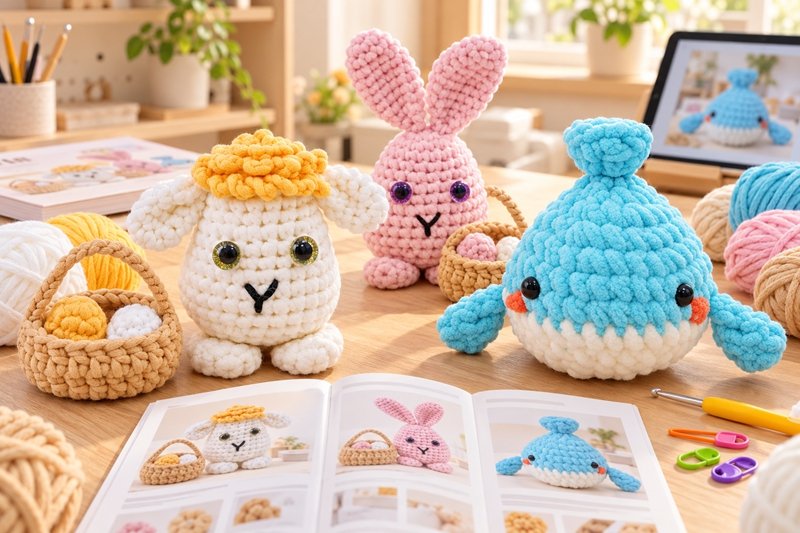
Localize crochet kit instructions by adapting the language, stitch terminology, measurements and learning resources to the intended audience while preserving the approved pattern. Review the printed guide, diagrams, video and access links as one connected instruction system. A translated booklet is ready for release only when it matches the materials inside the kit and the steps demonstrated in its supporting resources.
This guide is for crochet kit brands, craft retailers, importers and private-label product teams preparing an existing kit for another language or market. It focuses on adapting an approved design, rather than creating a new pattern or changing its skill level.
Define the Instruction Version Before Translation Begins
A destination country alone does not fully define an instruction brief.
Specify the language, crochet terminology convention, intended skill level and formats the customer will receive. An English-language kit, for example, still needs to identify whether its pattern uses US or UK crochet terminology.
Prepare a localization brief covering:
| Decision | What to specify | Why it matters |
|---|---|---|
| Audience | Language, reading needs and intended crochet experience | Determines the explanation and navigation required |
| Terminology | Chosen stitch names, abbreviations and special techniques | Prevents conflicting interpretations |
| Measurements | Units, precision and presentation | Keeps instructions consistent across formats |
| Printed resources | Booklet, quick-start card and component list | Defines the translation and layout scope |
| Digital resources | Video, subtitles, downloadable guide and access page | Identifies every resource that must correspond |
| Physical kit | Product version, yarn colors, tools and accessories | Connects instructions to the supplied materials |
| Approval | Technical reviewer, language reviewer and final approver | Establishes responsibility for release |
Agree these decisions before requesting a translation quotation. Otherwise, different contributors may work from different assumptions about what “English instructions” or “multilingual support” includes.
Lock the Master Pattern and Its Supporting Materials
Start from one approved source version.
Identify the master pattern, component list, photographs, diagrams and video. Record unresolved issues before adaptation begins.
The localization team should know:
- Which files are approved for use.
- Which product and material versions they describe.
- Whether the source video follows the same sequence as the booklet.
- Which corrections are already pending.
- Who can authorize a technical change.
If the source pattern changes during translation, assess the effect on every language version. A revised stitch count, assembly position or color sequence can affect several pages and video references.
Keep language edits separate from changes to the underlying design. Both may be necessary, but they require different review decisions.
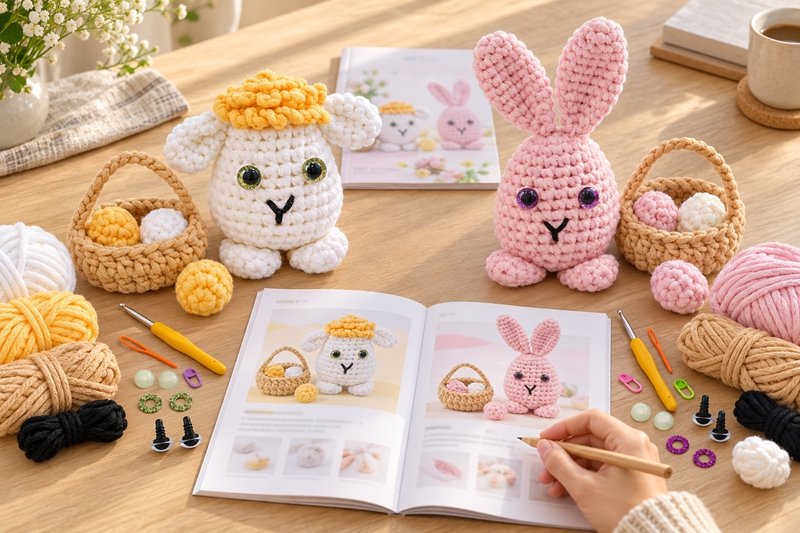
Establish a Crochet Glossary
Create a project glossary before translating the full instruction set.
Include stitch names, abbreviations, technique names, component names and repeated actions. Add project-specific explanations where an abbreviation alone would be unclear.
State the US or UK Terminology Convention
US and UK crochet terms can use different names for the same stitch.
For example:
| US terminology | UK terminology |
|---|---|
| Single crochet | Double crochet |
| Half double crochet | Half treble crochet |
| Double crochet | Treble crochet |
State the convention near the beginning of the guide. If the printed guide uses one convention and a video uses another, resolve the mismatch before release.
Do not assume that every customer in a particular country follows the same convention. Choose the system for the intended audience and label it clearly.
Define Special Instructions Within the Project
A glossary should also explain how the pattern uses terms such as:
- Increase and decrease.
- Invisible decrease.
- Front loop and back loop.
- Working in continuous rounds.
- Joining a round.
- Fastening off.
- Leaving a tail for assembly.
Where a technique has a particular method in the approved pattern, explain or demonstrate that method. A familiar term does not guarantee that every reader will perform the same action.
Automated translation can support drafting, but a crochet-competent reviewer should check the technical meaning.
Preserve the Pattern’s Numerical Logic
Review the instructions as a pattern, not only as prose.
Check round and row numbers, stitch counts, repeat groups, brackets, color changes and assembly references against the approved master.
Pay particular attention to instructions where punctuation defines the operation. A misplaced bracket can change which stitches are repeated even if every translated word is correct.
A technical review should confirm:
- The starting count for each relevant step.
- The action and repeat sequence.
- The resulting count.
- The transition to the next step.
- The corresponding diagram or photograph.
If testing reveals that the master pattern needs improvement, record that correction and assess all affected versions.
Make Materials Easy to Identify Across Languages
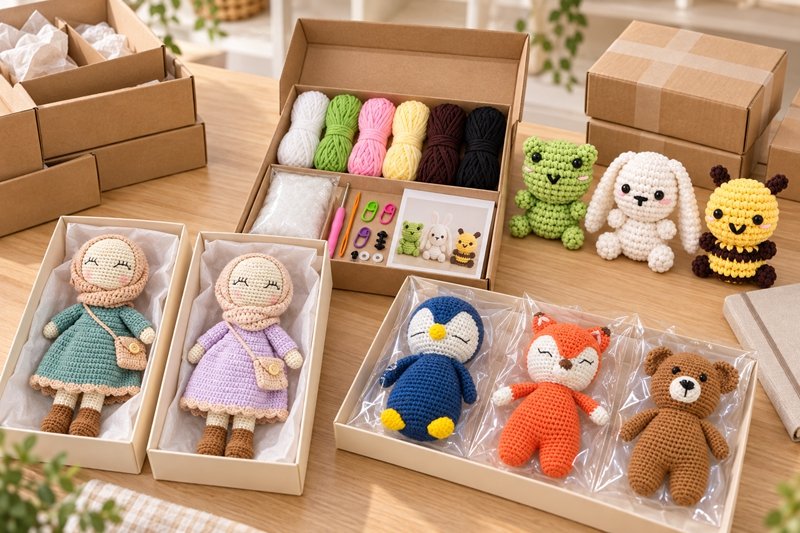
The customer should be able to connect each instruction to the correct item in the box.
Color names alone may be insufficient when several similar shades are supplied. Establish a consistent identification system using agreed names, codes or clearly matched illustrations.
Check that the component list, pattern, yarn identification and video use corresponding references.
For example, if the pattern calls a yarn “Color B,” the booklet should show which supplied yarn is Color B. A video that refers only to “the lighter yarn” may become unclear when a kit has several pale colors.
Also distinguish between:
- Items included in the kit.
- Items the customer must provide.
- Optional tools or alternatives.
Translation should preserve these distinctions. It should not imply that an item is included when it is only shown in a demonstration.
Review Diagrams, Photographs and Assembly References
Visual resources need localization review even when they contain little text.
Check:
- Diagram legends and stitch symbols.
- Arrows and numbered steps.
- Labels embedded inside photographs.
- References such as “see the next image.”
- Assembly marks and orientation.
- Color references.
- Any left-handed or right-handed guidance provided.
Keep the underlying visual sequence consistent unless a change has been deliberately reviewed.
Do not mirror a technical image simply to suit a page layout. Mirroring may alter the demonstrated direction or the relationship between components.
When page numbers change, update every cross-reference. The correct translated instruction can still lead the reader to the wrong photograph.
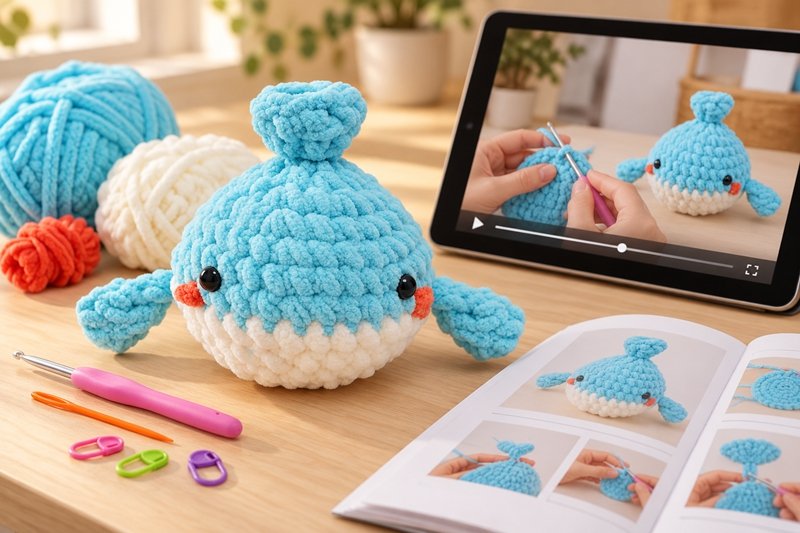
Align Video, Subtitles and Printed Instructions
Supporting video should teach the same approved construction as the printed pattern.
Create a simple correspondence record linking booklet sections to video chapters or relevant segments.
Check whether:
- Stitch terminology matches.
- Yarn colors and component names correspond.
- Round numbers and assembly steps agree.
- Subtitles describe the action shown.
- Important information appears long enough to read.
- The video includes corrections absent from the booklet.
- The booklet refers to resources that actually exist.
A translated subtitle cannot correct a video that demonstrates an outdated assembly method. That requires a content decision: revise the video, provide an adequately reviewed replacement segment or update the supporting resource.
Agree the scope before promising a fully localized video experience. Translated subtitles, translated narration and a newly recorded demonstration are different deliverables.
Test Access From the Final Printed Sample
A working link in a document file does not establish that the printed access method works.
Scan the code from a physical print sample using ordinary customer devices. Confirm that it opens the intended kit and language version.
Review the complete access path:
- Scan the printed code.
- Open the destination page.
- Find or select the language.
- Identify the correct product tutorial.
- Start the resource.
- Locate the relevant step.
Check any account requirements or access restrictions against what the packaging promises.
Assign responsibility for maintaining the destination page and resources. If an online guide is corrected later, retain a record connecting the correction to the printed versions already in circulation.
Recheck Layout After Translation
Translated text can occupy a different amount of space from the source.
Inspect the final layout for readability and navigation:
- Are instructions separated from their corresponding images?
- Have captions or stitch counts been cut off?
- Are abbreviations split awkwardly across lines?
- Is the glossary easy to find?
- Are diagrams still large enough to interpret?
- Do page numbers and cross-references match?
- Is each language clearly identified?
Review the actual print size. A booklet that looks readable when enlarged on screen may be difficult to use beside a crochet project.
For multilingual booklets, consider whether language sections are easy to navigate during repeated use.
Validate With the Intended Reader
Language review and crochet technical review serve different purposes.
A fluent reader can assess whether instructions sound natural. A crochet reviewer can assess whether they describe the intended technique. A representative user can reveal where the combined instruction system becomes difficult to follow.
Give the participant the proposed retail materials and localized resources. Record any help provided rather than treating an assisted completion as an independent result.
Classify issues before revising them:
| Issue type | Example | Review responsibility |
|---|---|---|
| Language | An action is worded ambiguously | Language reviewer |
| Terminology | The guide switches between US and UK stitch names | Crochet technical reviewer |
| Pattern logic | A repeat does not produce the stated count | Pattern reviewer |
| Visual reference | An assembly instruction points to the wrong image | Technical and layout reviewers |
| Access | The printed code opens the wrong language | Digital resource owner |
| Version mismatch | The video uses an earlier construction | Project approver |
For a broader testing framework, see How to Validate Crochet Kit Instructions Before a Retail Launch.
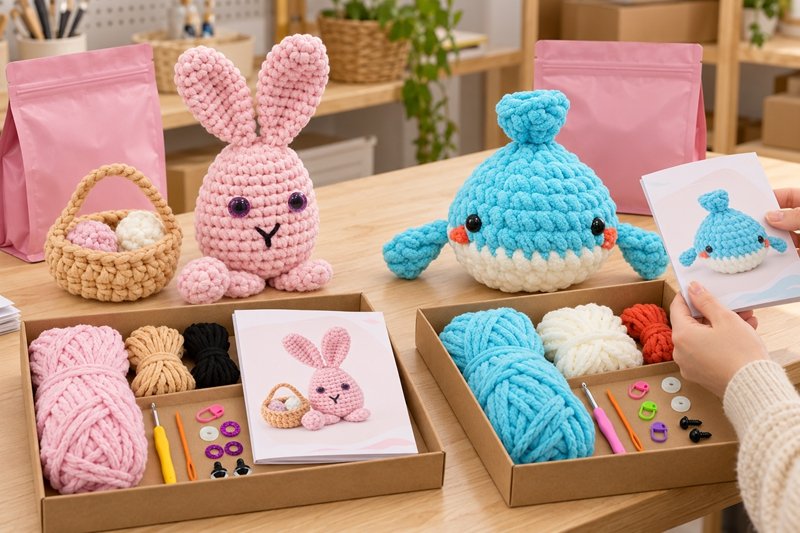
Release a Matched Instruction Set
Approve the localized resources as a connected set.
The release record should identify the physical kit specification, language, terminology convention, booklet artwork, diagrams, video resources and access destination.
Before packing, check that the correct booklet is assigned to the correct SKU or market version. Multilingual stock needs clear identification so that a technically correct guide is not packed into the wrong kit.
This step connects localization to component checking before retail packing.
Planning a Localization Project With UMY Crochet
When discussing a localized kit project, provide the target markets, intended customer, approved pattern, physical kit specification and existing printed or digital resources.
Agree which party supplies translation, crochet technical review, artwork, video adaptation and user validation. Confirm the language capabilities and deliverables required for the specific project.
A clear responsibility plan helps connect product development, instruction preparation and packing without assuming that every service is included in the manufacturing quotation.
Frequently Asked Questions
Is translating the booklet enough to localize a crochet kit?
Review every resource the customer is expected to use, including component identification, diagrams, video, subtitles and access pages. The required scope depends on the kit’s instruction system.
Should an English guide state whether it uses US or UK crochet terms?
Yes. State the convention clearly because some stitch names have different meanings between the two systems.
Can the same video support several languages?
It may, provided the demonstrated construction matches every supported version and the language support is suitable for the intended audience. Review the complete experience before release.
Does each market need a different physical kit?
Not necessarily. Markets may share physical components while using different instruction versions. Record the relationship between each kit specification and its resources.
Who should approve a translated crochet pattern?
Assign both language and crochet technical review, followed by a named final approver. One person may cover several roles only when they have the relevant capabilities.
When should a localized guide be checked again?
Assess changes to the pattern, yarn, tools, components, diagrams, video or access destination. Determine which language versions and printed stock are affected.
Discuss Your Crochet Kit Localization Requirements
Send UMY Crochet your existing kit references, target languages, terminology preferences and current instruction resources.
Request a project-specific discussion of the localization scope, review responsibilities, sample requirements and version controls needed before retail packing.
 Chinese