
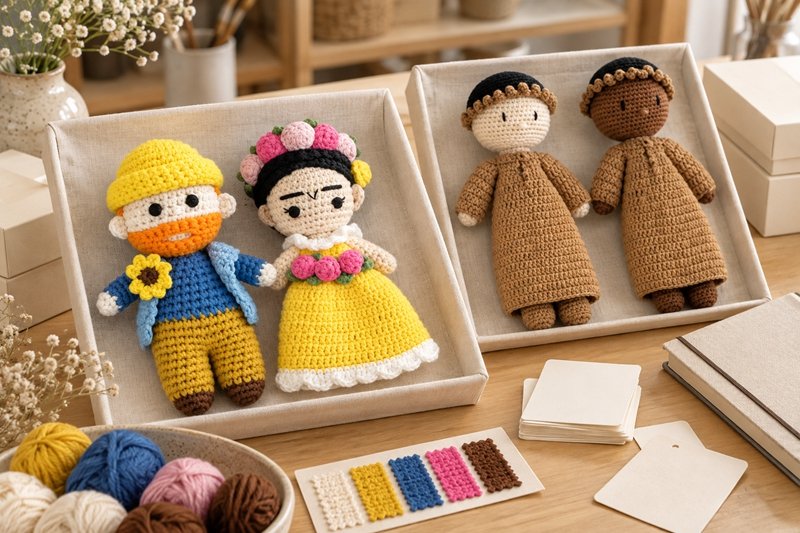
A limited-edition crochet collection should begin with a clear definition of what is limited: the design, colorway, production quantity, release period or another specific feature. Museum buyers should establish the edition boundary, product specifications and quantity allocation before approving packaging or production. Numbering and edition statements must reflect the agreed release accurately.
This guide is for museum shops, galleries, cultural institutions and merchandise development teams planning a defined crochet release. It focuses on edition planning and execution rather than exhibition concept development or setting a target retail price.
Define What “Limited Edition” Means for the Project
A limited edition needs a boundary that the project team can explain and manage.
Possible approaches include:
- A fixed production quantity for one design.
- A specific colorway available only in the defined release.
- A particular combination of product and packaging.
- A release restricted to a stated period.
- A version associated with one exhibition or cultural program.
These approaches are different. A time-limited release does not automatically have a fixed quantity, and a special package does not automatically make the underlying product exclusive.
Record exactly what the edition statement covers.
If the product remains available elsewhere in another form, the wording should distinguish the limited version from the broader product range.
Establish the Cultural Reference and Approval Boundary
Confirm which cultural references the collection will use and who can approve their interpretation.
The project brief should identify:
- The collection object, artwork, character or theme.
- Approved visual references.
- Required identifying features.
- Permitted adaptations.
- Product and packaging approval responsibilities.
- Any relevant restrictions on names, imagery or distribution.
Keep cultural interpretation, product construction and commercial edition decisions connected, but assign responsibility for each.
Do not assume that permission to use a reference in one context extends to every product or release. The museum’s responsible team should confirm the project’s permissions before production.
For the broader translation of cultural references into products, see How Museums Turn Cultural Stories Into Retail-Ready Crochet Products.
Write an Edition Definition Before Sampling
An edition definition gives the buyer, manufacturer and retail team a common reference.
| Decision | What to document | What ambiguity can cause |
|---|---|---|
| Edition boundary | The specific design, colorway, package or release period | Customers and teams may interpret “limited” differently |
| Quantity basis | Whether the count covers saleable units or another defined total | Samples and replacement stock may be counted inconsistently |
| SKU structure | Quantity and specification for each design or variant | One variant may be overproduced or incorrectly identified |
| Numbering | Whether numbers are used and where they appear | Duplicate or mismatched identifiers |
| Samples | How development and display samples are identified | Samples may be mistaken for retail edition units |
| Replacement stock | How it is allocated within the agreed boundary | Additional units may unintentionally extend the edition |
| Distribution | Channels and locations receiving the release | Allocation may conflict with the intended retail program |
| Future versions | What may be changed or released later | A later product may contradict the original edition statement |
The document should be specific enough to guide production and retail communication.
Avoid writing final packaging claims before these decisions are settled.
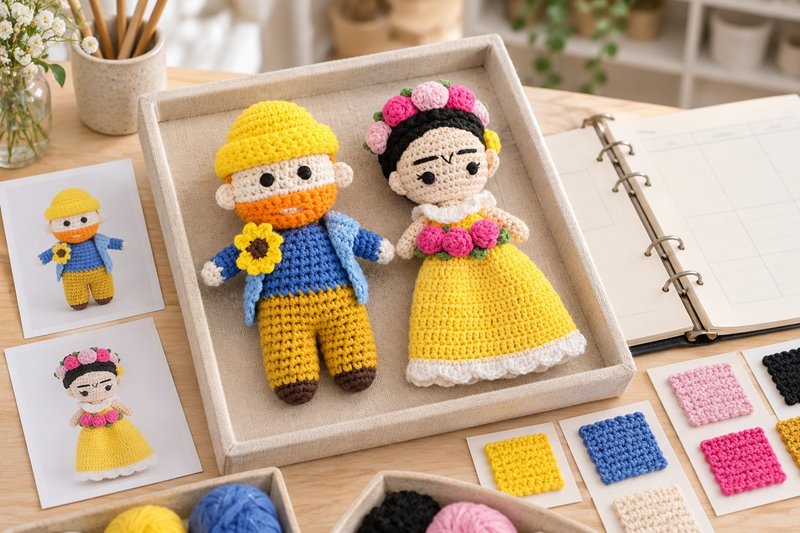
Choose a Manageable Product and Variant Structure
An edition can contain one product or several coordinated SKUs.
For each SKU, define its role in the release:
- The main collectible product.
- A smaller companion item.
- A distinct colorway.
- A gift-set configuration.
- A format with different packaging requirements.
Then assign a clear quantity to each version.
A total collection quantity alone may not explain how many units of each design are available. If numbering is planned, decide whether numbers belong to individual SKUs or to the collection as a whole.
Keep the product structure manageable for the intended release. Every additional variant needs its own material references, approval, identification and packing control.
For a broader assortment framework, see How to Develop a Crochet Product Collection Instead of Isolated SKUs.
Separate Development Samples From Retail Edition Units
Sampling creates physical products before the retail release is approved.
Decide how to identify:
- Initial development samples.
- Revised samples.
- Approved production references.
- Photography samples.
- Museum display samples.
- Saleable edition units.
A development sample should not receive a retail edition number automatically. Its construction or appearance may differ from the approved product.
If display or photography units are included in the stated edition quantity, record that treatment. If they are outside it, distinguish them clearly in the project records.
The purpose is to keep the edition statement understandable and the physical inventory traceable.
Plan Replacement Stock Within the Edition Boundary
A limited release still needs a plan for damaged, missing or nonconforming products.
Decide whether any replacement stock will be reserved from the agreed quantity and how it will be held.
For a fixed-quantity release, distinguish:
- Units manufactured.
- Units accepted for sale.
- Units allocated to retail channels.
- Units held for replacement.
- Units rejected or otherwise excluded under the agreed definition.
These counts may differ. The project team should specify which count supports the public edition statement.
Where a numbered unit is replaced, define what happens to its identifier and the original item. Avoid creating two saleable products carrying the same edition number.
Do not assume that later production can be added without revisiting the edition boundary.
Decide Whether Numbering Adds Useful Value
Numbering is optional.
It may suit a collection whose buyers value individual identification, but it introduces additional production and packing requirements.
Possible locations include:
- A story or edition card.
- A hangtag.
- A packaging insert.
- An agreed product label.
Select a method that suits the product and intended presentation. Do not compromise the crochet construction merely to add a number.
If numbering is used, define:
- The numbering sequence.
- The SKU or edition to which it applies.
- The link between the number and the physical unit.
- The verification step before packing.
- The handling of spoiled printed materials.
- The treatment of replacement units.
- The records retained by the project team.
A numbered card is not evidence of quality or provenance by itself. Any accompanying claim needs its own factual basis.
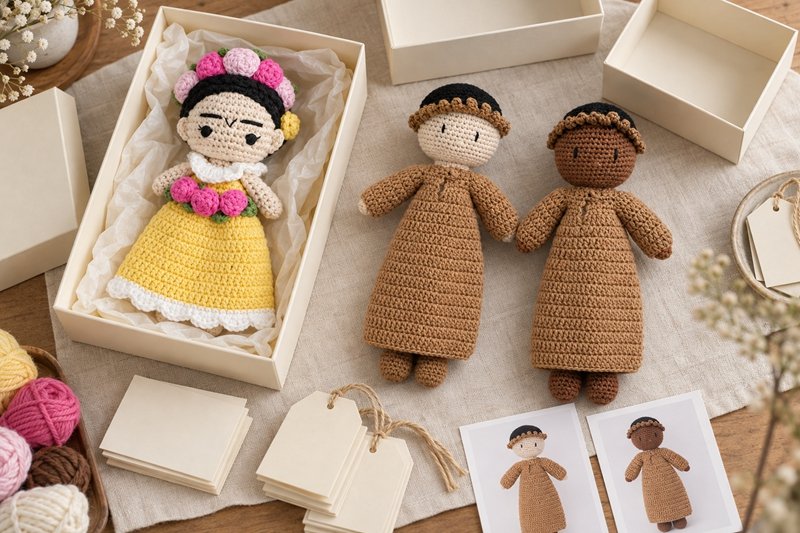
Approve Product and Packaging as One Configuration
A limited version may depend on a specific combination of product, color and packaging.
Approve the complete configuration, including:
- Product appearance and dimensions.
- Yarn and color references.
- Accessories.
- Packaging structure.
- Story-card content.
- Edition wording.
- Numbering placement, where used.
- SKU identification.
- The packed presentation.
Check that the packaging fits without distorting the product or hiding important cultural features.
For packaging development considerations, see Private Label Packaging for Crochet Products: What Retail Buyers Should Plan Before Production.
Allocate Quantities Across Retail Channels
A museum may distribute a release through its main shop, exhibition shop, online store or other approved locations.
Prepare a quantity allocation by SKU and destination.
Clarify:
- Which units are reserved for each location.
- Whether inventory can be transferred.
- Where replacement stock is held.
- How numbered units are recorded, if applicable.
- Who can approve allocation changes.
- How the remaining quantity is reconciled.
Avoid promising separate quantities to different teams without checking the total.
The allocation plan should remain consistent with the edition definition and the accepted production quantity.
Define the Boundary for Future Releases
Discuss future versions before the first release is marketed.
Questions to resolve include:
- Can the same character appear in another size?
- Can a different colorway be developed?
- Can the product return with different packaging?
- Can another exhibition use the same underlying construction?
- Which features distinguish a later version from this edition?
The answer depends on the original edition commitment and the project’s permissions.
A future version should not make the original wording misleading. Document the distinguishing features and use accurate retail language.
This is a project planning decision, not an assumption the manufacturer should make independently.
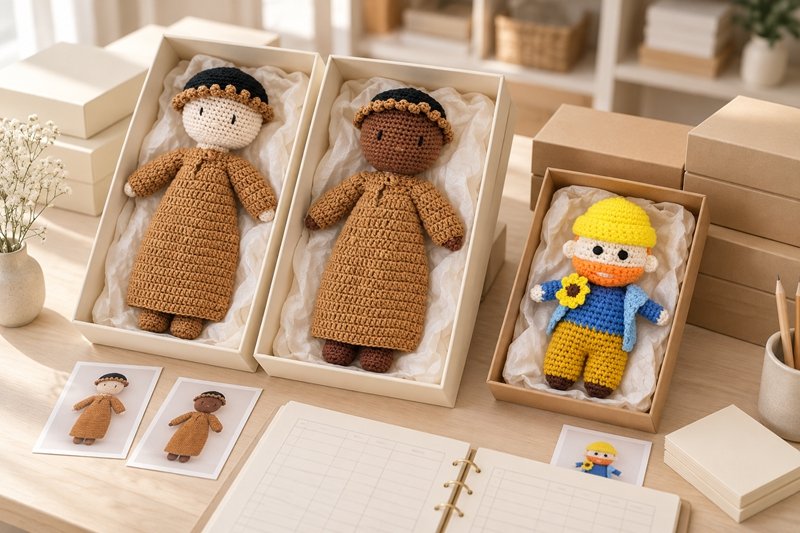
Discuss a Limited-Edition Project With UMY Crochet
For a museum release, a useful development discussion connects the cultural reference with the product specification, edition boundary and retail configuration.
A practical sequence is:
- Confirm the approved cultural references.
- Define what makes the release limited.
- Establish the SKU and quantity structure.
- Agree how samples and replacement stock are treated.
- Develop and approve the products.
- Confirm packaging and edition identification.
- Prepare allocation and packing requirements.
The museum team should approve cultural content and public edition statements. The manufacturing discussion should establish how the agreed requirements will be implemented and recorded.
Frequently Asked Questions
Must a limited edition have a fixed quantity?
Not always. A release may be limited by time or another defined feature. State the actual boundary clearly.
Does every unit need an individual number?
No. Numbering is optional and should serve the collection’s presentation and inventory requirements.
Can development samples be sold as edition units?
Only under an explicitly approved arrangement that accounts for their specification and edition status. Do not treat them as retail units automatically.
Should replacement stock be included in the edition count?
Define this before production. The treatment must remain consistent with the public edition statement.
Can a museum reorder a fixed-quantity edition?
Any additional production needs review against the original commitment. Do not assume it can be added to the same edition.
Can the same character be released later in another color?
Possibly, if the original edition boundary and relevant permissions allow it. Clearly distinguish the later version.
What should a museum provide before requesting development?
Provide the cultural references, proposed products, edition definition, quantity by SKU, packaging requirements, approval responsibilities and intended distribution.
Request a Limited-Edition Crochet Collection Assessment
Share your approved cultural references, proposed edition boundary, SKU quantities and retail presentation requirements.
Ask UMY Crochet to assess the product development inputs and discuss sampling, packaging, identification and production requirements for the defined release.
 Chinese