
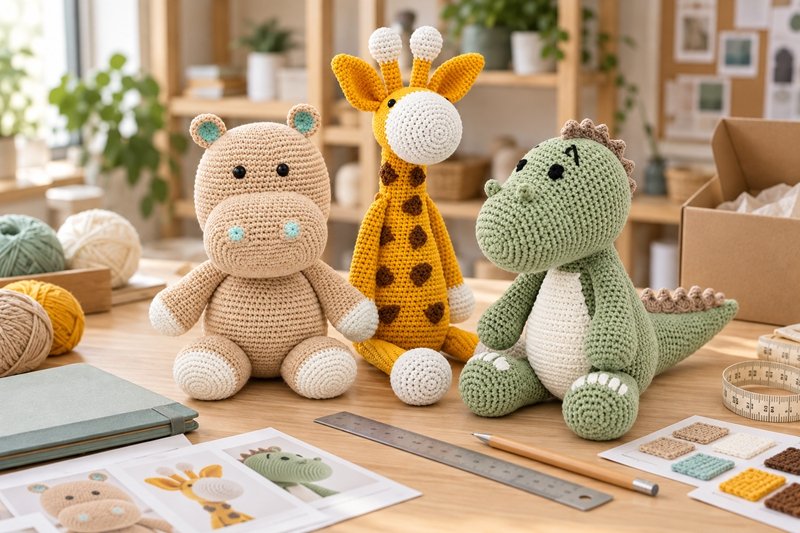
Buyers should approve a crochet pre-production sample against a documented specification covering appearance, materials, dimensions, construction, accessories and any packaging included in the approval scope. The approval should identify the exact sample version, record unresolved issues and state which parts of the order are authorized to proceed.
An attractive sample is useful, but production needs a clear reference. A photograph or a message saying “looks good” may leave important requirements open to interpretation.
What Is a Crochet Pre-Production Sample?
A crochet pre-production sample is a physical reference reviewed before bulk production begins. Its purpose is to confirm how the agreed design and specifications will be interpreted in production.
Suppliers may use different names for development samples, revised samples and pre-production samples. Buyers should therefore confirm what a sample represents rather than relying on its label.
Ask:
- Does it use the intended production yarn and components?
- Does it reflect all approved design revisions?
- Was it made using the proposed production construction?
- Does its approval cover the product only, or packaging as well?
- Are any materials or details still provisional?
This guide is for brands, retailers, gift companies, IP owners and purchasing teams approaching production approval. It focuses on establishing the production reference, rather than writing the initial development brief or conducting a finished-order inspection.
1. Establish the Approval Scope Before Reviewing the Sample
Separate the areas being approved.
A buyer may approve the character’s appearance while packaging artwork remains unfinished. That does not automatically authorize the supplier to complete retail packing.
Use a scope table to make the decision explicit:
| Approval area | What the buyer should confirm | Evidence to retain |
|---|---|---|
| Appearance | Shape, proportions, colors and character details | Physical sample and reference photographs |
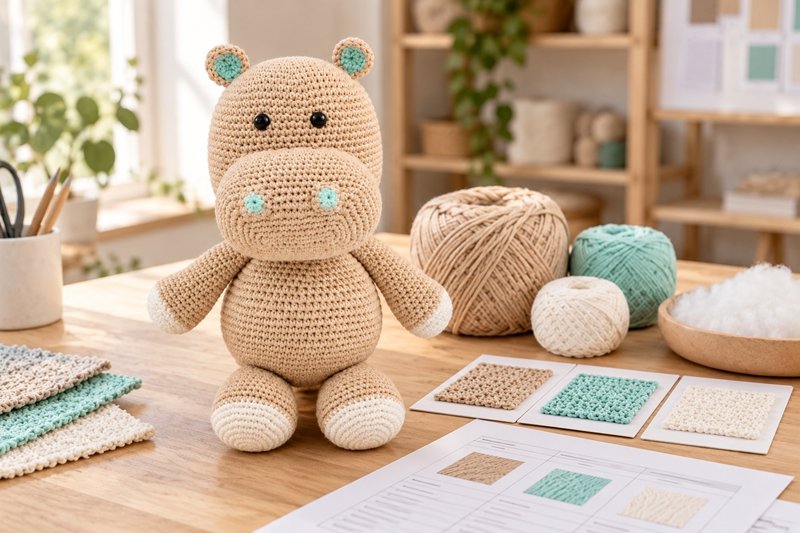
| Materials | Yarn specification, filling and components | Material list and agreed references |
| Dimensions | Measurement method and acceptable variation | Dimension sheet |
| Construction | Stitch appearance, shaping, assembly and finishing | Sample, detail photographs and construction notes |
| Accessories | Type, position, attachment and intended function | Component references and review notes |
| Branding | Label, logo or embroidery execution | Approved artwork and sample details |
| Retail packaging | Fit, presentation, contents and artwork | Packaging sample and artwork version |
| Outstanding requirements | Remaining checks and responsibility | Written action list |
Items outside the scope should remain visibly pending.
For example, approving a doll’s appearance should not imply approval of an unreviewed hangtag, substitute yarn or new accessory.
2. Confirm That the Sample Reflects the Intended Materials
A development sample may use available yarn while the intended production material is still being sourced. That can support an early design discussion, but the difference needs to be disclosed before production approval.
Review:
- Yarn type and construction.
- Agreed composition information.
- Color reference.
- Surface texture and stitch visibility.
- Filling type and its effect on firmness.
- Embroidery thread and decorative materials.
- Purchased accessories and attachment components.
Different yarns can change the same design’s dimensions, shape, handle and appearance. A similar color alone does not establish that two materials are interchangeable.
If the sample contains a temporary material, record it as an exception. Agree whether a replacement sample or a focused material review is required before the affected production step begins.
3. Review Appearance From More Than One Angle
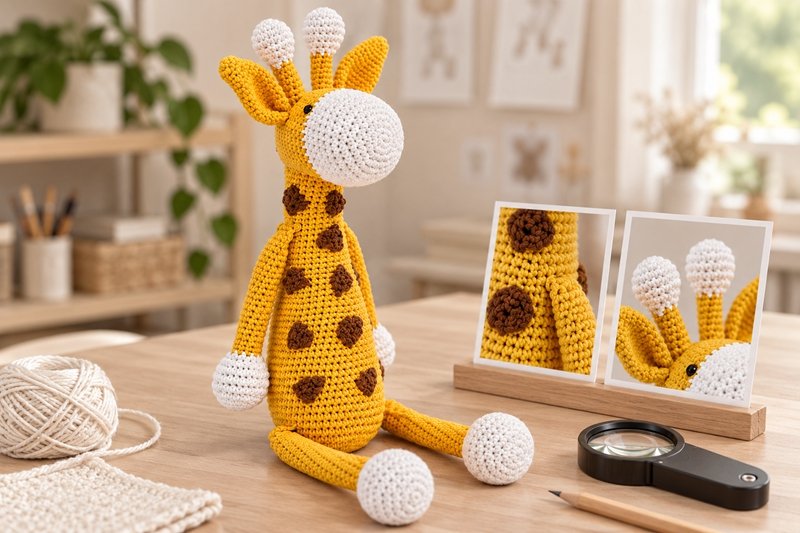
A front photograph can hide issues with profile, balance, seam placement or accessories.
Review the physical sample where possible, supported by:
- Front and back views.
- Both side views.
- A three-quarter view.
- Close-ups of defining features.
- Photographs showing any movable or removable parts.
For character products, identify the features that carry recognition. These may include muzzle shape, ear placement, hairstyle, clothing, facial expression or a distinctive accessory.
Define What Must Stay Consistent
Handmade crochet can show variation. Buyers and manufacturers still need to agree which variations are acceptable and which change the design.
A useful distinction is:
- Essential features: details that must follow the approved reference.
- Controlled characteristics: dimensions, placement or shape assessed against agreed criteria.
- Acceptable handmade variation: differences that do not materially alter appearance or function.
Avoid using “same as sample” as the only requirement when a feature needs a more specific definition.
For example, “place the eyes symmetrically at the agreed position shown in the detail reference” is more useful than “make the face cute.”
4. Agree How Dimensions Will Be Measured
Soft crochet products can produce different measurements depending on their position and how firmly they are handled.
Define the measurement method before agreeing acceptable variation.
For each important dimension, specify:
- The product position: standing, seated or laid flat.
- The start and end points.
- Whether ears, horns, hair or accessories are included.
- Whether the product is measured without compression.
- The target dimension and agreed acceptable variation.
For a long-eared rabbit, “height” might mean the seated body height, the overall height with ears raised or the full length when laid flat. Those measurements answer different questions.
Use the dimensions that matter to the project, such as retail presentation, packaging fit or compatibility with another item.
There is no single tolerance suitable for every handmade crochet product. Agree criteria based on the design, material, intended use and production evaluation.
5. Check Construction and Finishing
Appearance approval should include the construction details that support it.
Review the sample for:
- Stitch density and visible gaps.
- Shape and stuffing distribution.
- Placement and alignment of attached pieces.
- Seams and transitions between colors.
- Embroidered features.
- Secured yarn ends.
- Cleanliness and finishing.
- The product’s ability to sit or stand, if that is an agreed requirement.
A photograph can show a seam’s appearance, but it cannot establish every aspect of attachment performance.
Agree which construction checks require physical examination or a separate test method. Do not treat an informal visual review as proof that the product meets every performance or safety requirement.
6. Review Accessories and Branding as Part of the Product
Accessories should be identified precisely.
A wooden ring, clip, keychain fitting, embroidered logo or removable garment may affect the product’s appearance, function, packing method and intended use.
Confirm:
- Which component is approved.
- Its material, color and size reference.
- Its position and orientation.
- How it is attached.
- Whether it is fixed or removable.
- Any agreed functional checks.
- Whether the sample uses the intended production component.
For branding, compare the physical execution with the approved artwork. Check placement, scale, legibility and how the branding behaves on the curved or textured crochet surface.
If a component changes after approval, assess the affected requirements again. A replacement that looks similar may still differ in dimensions, fit or attachment method.
7. Approve Packaging Separately When Necessary
If retail packaging is included in the sample review, examine the product and packaging together.
Check whether:
- The product fits without unwanted compression.
- Important features remain visible.
- Accessories stay in their intended positions.
- The agreed contents are present.
- Labels and artwork use the correct versions.
- The presentation matches the buyer’s retail requirements.
When final packaging is unavailable, record packaging approval as pending. Agree which production activities can proceed and which must wait.
For broader packaging development, see How to Design Retail-Ready Packaging for Crochet Products.
8. Give One Consolidated Set of Revision Instructions
Conflicting comments can make an approval round difficult to execute.
Before sending feedback, combine input from design, purchasing, quality, merchandising and any authorized character reviewer.
Use a revision log:
| Item | Observation | Required action | Approval status |
|---|---|---|---|
| Facial placement | Position differs from the agreed reference | Adjust to the marked reference photograph | Revision required |
| Yarn | Intended production yarn is confirmed | Retain the agreed specification | Approved |
| Product dimensions | Measurement method is unclear | Confirm position and measurement points | Pending |
| Hangtag | Final artwork is not available | Submit the final artwork version | Pending |
| Packaging fit | Product is held in the intended position | Retain the reviewed arrangement | Approved |
These are illustrative entries, not results from a specific UMY project.
Distinguish required changes from optional suggestions. Annotated photographs should point to the relevant feature and explain the intended result.
After a revision, check whether the change affects other areas. Altering head size, for example, may also affect proportions, accessory placement and packaging fit.
9. Record a Clear Production Decision
Use a decision that tells the manufacturer what may happen next.
Approved
The reviewed sample and the requirements within its stated scope are accepted. Record the reference version and authorized next step.
Revision Required
The sample does not yet meet the agreed requirements. List the changes and identify what must be submitted for another review.
Limited Approval
Only specified areas or activities are approved. List the remaining conditions and the activities that must wait.
State whether the buyer needs to review a revised physical sample, detail photographs, artwork or another form of evidence. The appropriate method depends on the change.
10. Retain a Traceable Production Reference
The approved reference should be usable by both the buyer and the manufacturer.
Keep together:
- Product name and SKU.
- Sample version identifier.
- Approved physical sample or agreed reference arrangement.
- Photographs of the approved version.
- Material and component specifications.
- Dimension sheet and measurement method.
- Approved artwork and packaging versions.
- Revision history.
- Remaining conditions, if any.
- Approval date and responsible reviewers.
What Sample Approval Does—and Does Not—Establish
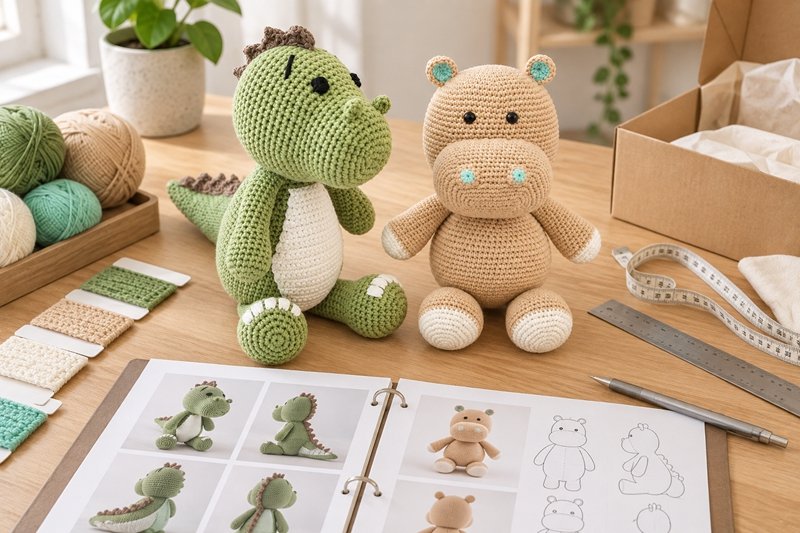
Sample approval establishes the agreed reference and authorizes the next step within a defined scope.
It does not establish that every item in a future production order will match the reference. Production checks and finished-order inspection remain separate activities.
It also does not replace any testing, documentation or market-specific assessment required for the intended product.
The buyer and manufacturer should connect sample approval to the production control plan: what will be checked, against which reference, and how departures from that reference will be handled.
For the later challenge of maintaining the product across repeat orders, see How to Keep Handmade Crochet Products Consistent Across Repeat Orders.
How to Structure a Sample Review With UMY Crochet
For a custom project, buyers can use the sample review to align the design requirements with the practical production reference.
A useful review agenda is:
- Confirm the sample version and intended approval scope.
- Compare the product with the design and material requirements.
- Consolidate appearance, dimension and construction feedback.
- Identify provisional components and outstanding packaging decisions.
- Agree the evidence needed for any revised approval.
- Record the authorized next production step.
The exact review scope should be agreed for the project. This is particularly important when several teams approve different parts of the product or packaging.
Frequently Asked Questions
Is a development sample the same as a pre-production sample?
Not necessarily. Confirm whether it uses the intended production materials, reflects the final revisions and is suitable to serve as the production reference.
Can buyers approve a sample using photographs?
Photographs can support appearance review. Material feel, firmness, fit and some construction or functional characteristics may require physical examination or separate checks.
Should every dimension have the same tolerance?
No. Agree acceptable variation for the dimensions that matter, using a defined measurement method and considering the design and material.
Can production start while packaging is still pending?
Only within an explicitly agreed scope. Record which activities are authorized and which depend on final packaging approval.
What happens if yarn changes after sample approval?
Review the effect on appearance, dimensions, handling and construction. Agree what needs to be resubmitted before accepting the change.
Who should approve the sample?
Name the responsible reviewers for the project. Their roles may cover design, purchasing, quality, packaging and authorized character approval.
Does sample approval replace bulk inspection?
No. The approved sample provides a reference for production and inspection; it does not verify the completed order.
Request a Crochet Sample Approval Review
Share your design reference, proposed specifications, sample feedback, packaging requirements and unresolved decisions with UMY Crochet.
Request a project review to define the production reference, consolidate required revisions and agree what must be approved before the next production stage.
 Chinese