
A Complete Guide to Minimum Order Quantities for Crochet Manufacturing
One of the first questions buyers ask when developing a custom crochet product is:
What is the MOQ for custom crochet products?
The answer is:
MOQ depends on the product, customization requirements, packaging, materials, and production complexity.
Many buyers assume that crochet products always require large order quantities.
In reality, MOQ varies significantly from project to project.
At UMY Crochet Factory, we have specialized in crochet manufacturing since 2013, helping retailers, museum stores, gift brands, distributors, and corporate buyers across more than 150 countries and regions develop custom crochet products.
Over the years, we've learned that MOQ is often misunderstood.
Many buyers focus on the MOQ number itself.
Experienced buyers focus on understanding what creates MOQ and how it can be optimized.
In this guide, we'll explain how MOQ works, what factors influence it, and how buyers can successfully launch custom crochet products while managing inventory risk and development costs.
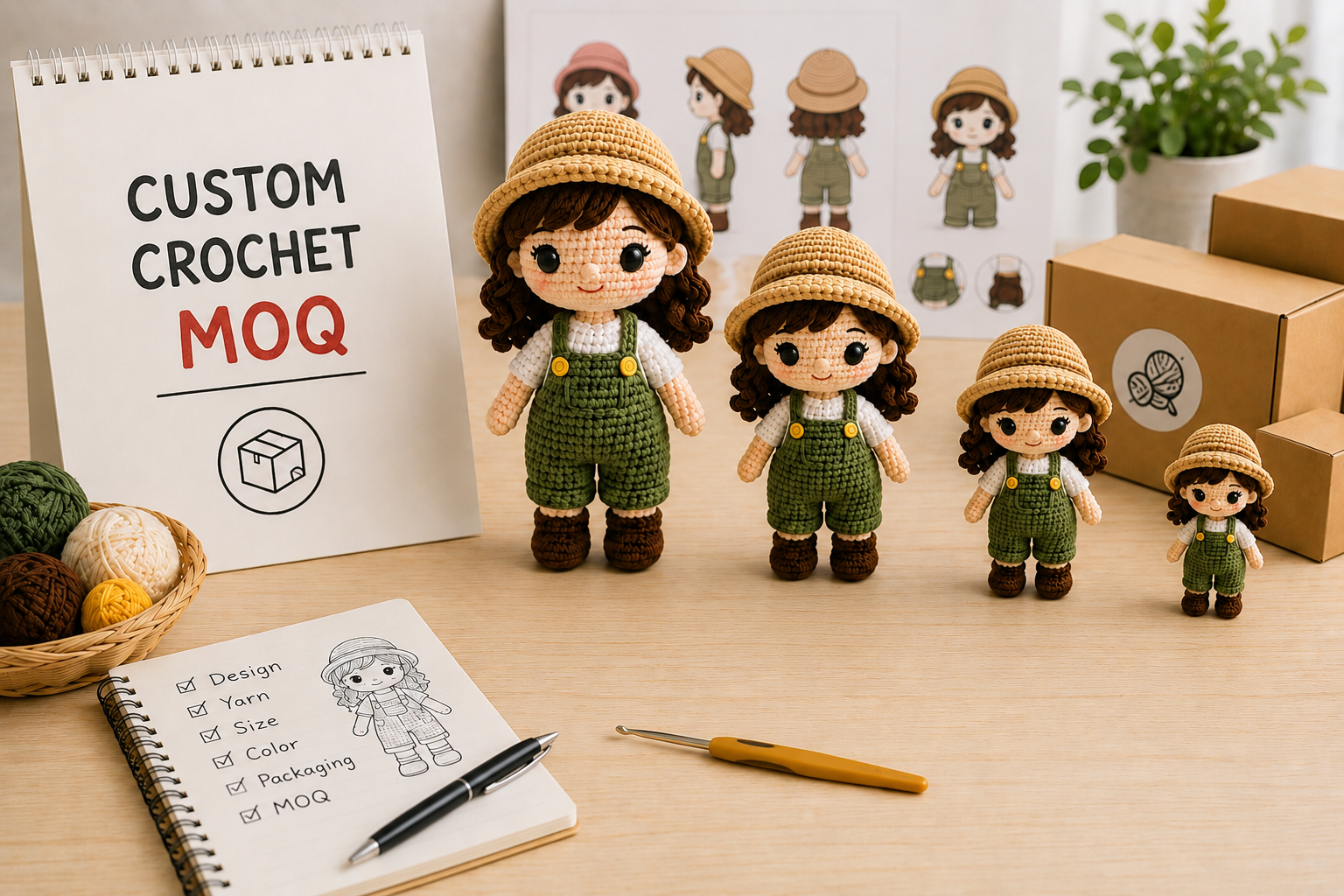
What Does MOQ Mean?
MOQ stands for:
Minimum Order Quantity
It is the smallest quantity a manufacturer is willing to produce for a specific product or project.
MOQ exists because every project contains fixed costs regardless of order quantity.
These costs may include:
- Product development
- Pattern creation
- Material sourcing
- Production planning
- Packaging setup
- Quality inspections
- Administrative processing
Whether a customer orders 100 pieces or 10,000 pieces, many of these costs remain the same.
Why Do Crochet Factories Require MOQ?
Unlike injection-molded products, crochet products are handmade.
Every project requires preparation before production begins.
This may include:
- Yarn preparation
- Pattern development
- Artisan training
- Production scheduling
- Packaging preparation
- Quality control planning
One lesson we've learned from supporting custom projects is:
MOQ is often determined by production efficiency rather than material consumption.
Even a small crochet doll may require significant preparation before the first unit is produced.
The Five Main Factors That Affect MOQ
1. Product Complexity
The more complex the product, the higher the MOQ is likely to be.
Examples of lower-complexity products:
- Crochet keychains
- Simple flowers
- Basic crochet animals
Examples of higher-complexity products:
- Licensed characters
- Multi-piece gift sets
- Custom mascot dolls
- Detailed clothing collections
Complex products typically require additional development and training resources.
2. Customization Requirements
Customization often increases project setup costs.
Examples include:
- Custom colors
- Custom characters
- Brand-specific designs
- Personalized accessories
- Unique product structures
The more customized a product becomes, the more production resources are required.
3. Material Requirements
Materials can significantly affect MOQ.
Examples include:
- Custom-dyed yarn
- Organic cotton
- Specialty fibers
- Imported materials
Sometimes suppliers themselves require minimum purchasing quantities.
This can directly affect production MOQ.
4. Packaging Requirements
Many buyers underestimate the impact of packaging.
In practice, packaging frequently determines MOQ more than the product itself.
Examples include:
- Custom gift boxes
- Story cards
- Printed inserts
- Branded hang tags
- Retail-ready packaging
One thing we've consistently observed is:
Packaging suppliers often have their own minimum order requirements that exceed product MOQ.
5. Production Efficiency
Crochet production depends heavily on labor planning.
Factories must organize:
- Materials
- Artisans
- Quality inspections
- Production schedules
A project that fits existing production systems may support lower MOQs than a highly specialized project.
Typical MOQ Ranges for Crochet Products
The following examples represent common industry ranges.
Actual requirements vary by project.
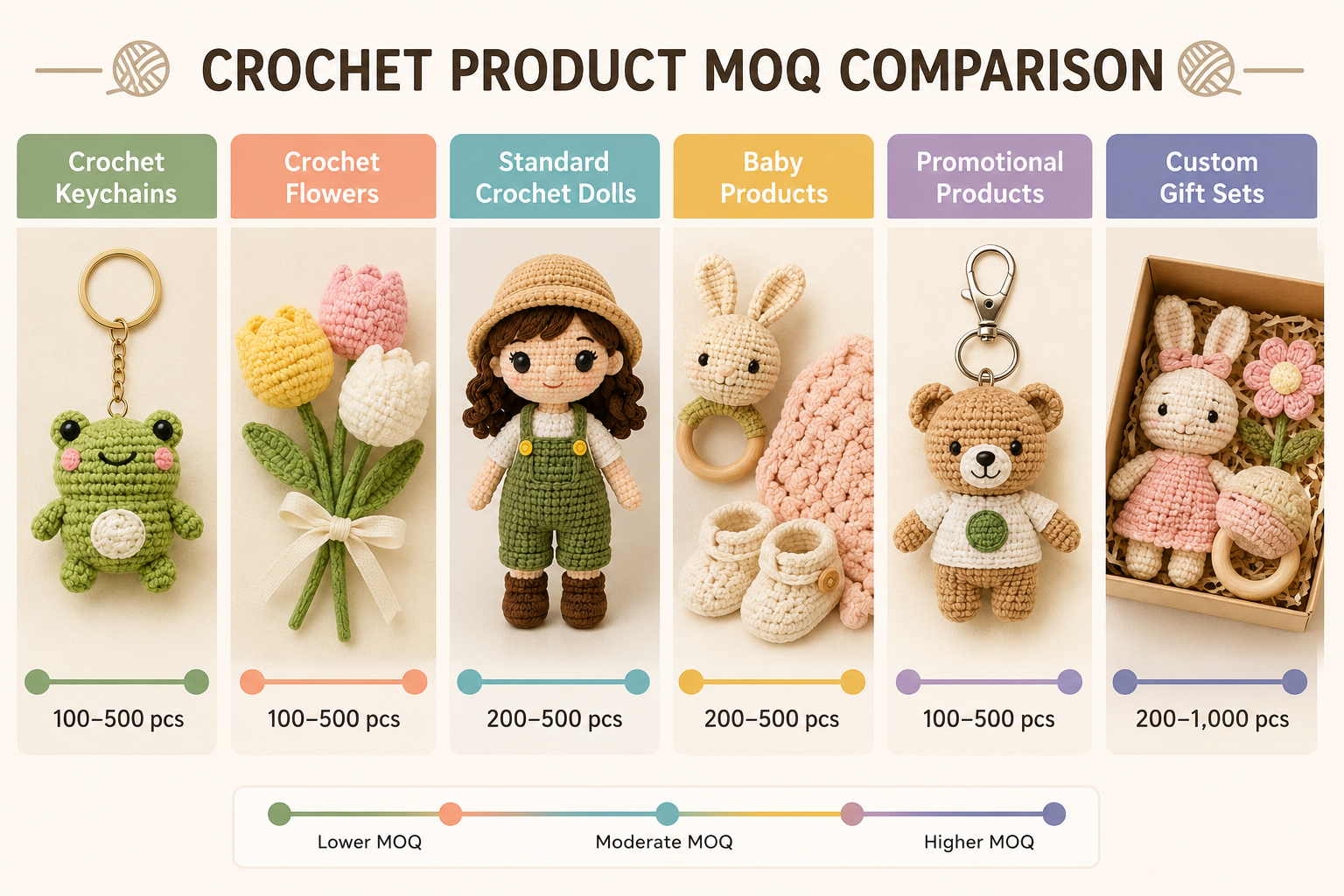
| Product Type | Typical MOQ Range |
|---|---|
| Crochet Keychains | 100–500 pcs |
| Crochet Flowers | 100–500 pcs |
| Standard Crochet Dolls | 200–500 pcs |
| Baby Products | 200–500 pcs |
| Promotional Products | 100–500 pcs |
| Custom Gift Sets | 200–1,000 pcs |
| Licensed Characters | Project Specific |
The most accurate MOQ can only be determined after reviewing the actual product requirements.
Real MOQ Optimization Example
A startup brand approached us with a custom crochet mascot concept.
Their original plan required:
- Custom packaging
- Custom labels
- Custom accessories
However, their initial target quantity was only 50 pieces.
After reviewing the project, we recommended:
- Using a standard gift box
- Sharing materials across products
- Simplifying accessory development
This reduced development costs and allowed the customer to launch with a more practical MOQ while maintaining the overall product concept.
The collection later expanded after market validation.
This project reinforced an important lesson:
Successful product launches often start with manageable MOQs rather than maximum customization.
Can Buyers Start with Low MOQ Orders?
In many cases, yes.
- Test new concepts
- Validate demand
- Reduce inventory risk
- Gather customer feedback
before committing to larger production quantities.
This approach is especially common among:
- Startups
- Museum stores
- Independent brands
- E-commerce sellers
- Corporate gift buyers
A phased launch strategy often creates better long-term results.
What We Commonly See Across Projects
Based on projects developed for customers in more than 150 countries and regions, several patterns appear consistently:
- Buyers often overestimate initial order quantities.
- Packaging frequently drives MOQ more than the product itself.
- Lower-risk launches often lead to stronger long-term growth.
- Successful collections usually expand after market validation.
- Product simplicity often improves commercial performance.
These observations remain remarkably consistent across different industries and markets.
How Buyers Reduce MOQ Challenges
Experienced buyers rarely focus only on lowering MOQ.
Instead, they focus on improving project efficiency.
Strategies include:
Simplifying Packaging
Standard packaging options often reduce setup costs.
Sharing Materials Across Collections
Using common yarns and accessories improves production flexibility.
Launching Core Products First
Starting with a smaller product range reduces inventory exposure.
Using Existing Construction Methods
Proven production techniques often support lower-risk launches.
Planning Collection Expansion
Many successful collections begin with one product and grow over time.
Why MOQ Is Not Always the Most Important Question
Many buyers focus heavily on MOQ.
However, experienced sourcing professionals often focus on:
- Total project cost
- Product quality
- Delivery reliability
- Inventory strategy
- Long-term scalability
One thing we've consistently observed is:
Successful sourcing is about balancing flexibility, quality, and long-term growth.
UMY Crochet Factory at a Glance
Over the past 12 years, UMY has focused exclusively on crochet manufacturing.
Highlights include:
- 12+ years of crochet manufacturing experience
- Customers in 150+ countries and regions
- 2,000+ artisan production network
- OEM and ODM capabilities
- Experience supporting retailers, museum stores, gift brands, distributors, and corporate buyers
- Support for both low-MOQ launches and large-scale production programs
Frequently Asked Questions
What is the MOQ for custom crochet dolls?
Most custom crochet doll projects typically start between 100 and 500 pieces depending on complexity and customization requirements.
Can I order below the standard MOQ?
Sometimes.
MOQ flexibility depends on product complexity, materials, packaging, and production scheduling.
Does custom packaging increase MOQ?
Yes.
Custom packaging often introduces separate minimum quantity requirements.
Why do factories require MOQ?
MOQ helps offset development, setup, sourcing, and production planning costs.
Is lower MOQ always better?
Not necessarily.
The best MOQ balances flexibility, pricing, quality, and long-term business goals.
Final Thoughts
MOQ is one of the most important considerations when developing custom crochet products.
After supporting customers across more than 150 countries and regions, we've found that successful buyers focus on more than just the minimum quantity.
They evaluate:
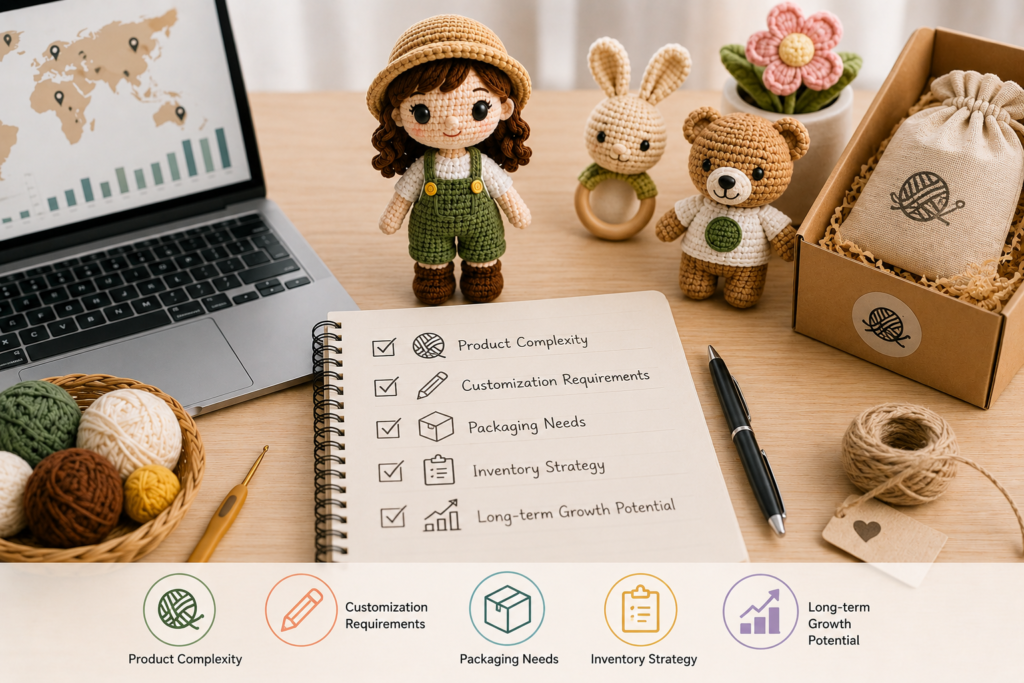
✓ Product complexity
✓ Customization requirements
✓ Packaging needs
✓ Inventory strategy
✓ Long-term growth potential
The right MOQ should support both commercial viability and future scalability.
Looking for a Low-MOQ Crochet Manufacturing Partner?
At UMY Crochet Factory, we help startups, retailers, museum stores, gift brands, distributors, and corporate buyers develop custom crochet products with practical MOQ solutions.
From product development and sampling to packaging design and large-scale production, our team supports every stage of the process.
Contact us today to discuss your custom crochet project.
 Chinese