
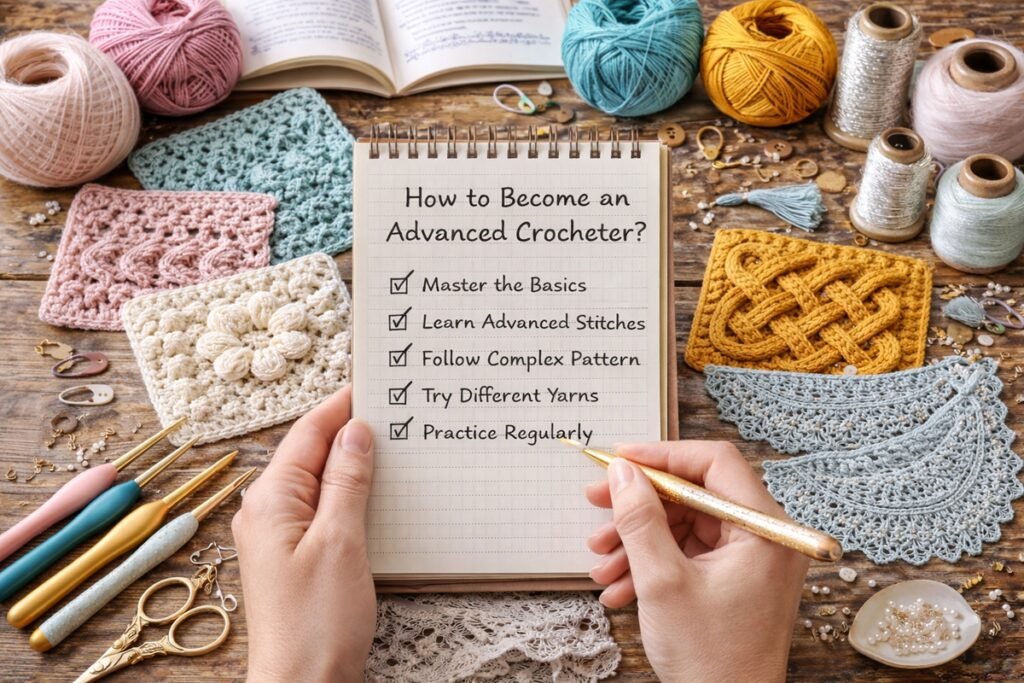
You’ve finished beginner projects, but your work still looks uneven or simple. That gap between “good” and “expert” can feel frustrating when you don’t know what skills truly matter.
An advanced crocheter shows consistent stitch tension, confidently uses complex stitch combinations, manages seamless color changes, and works with fine or specialty yarns. Mastery comes from technical control, pattern understanding, and the ability to execute intricate designs neatly and efficiently.
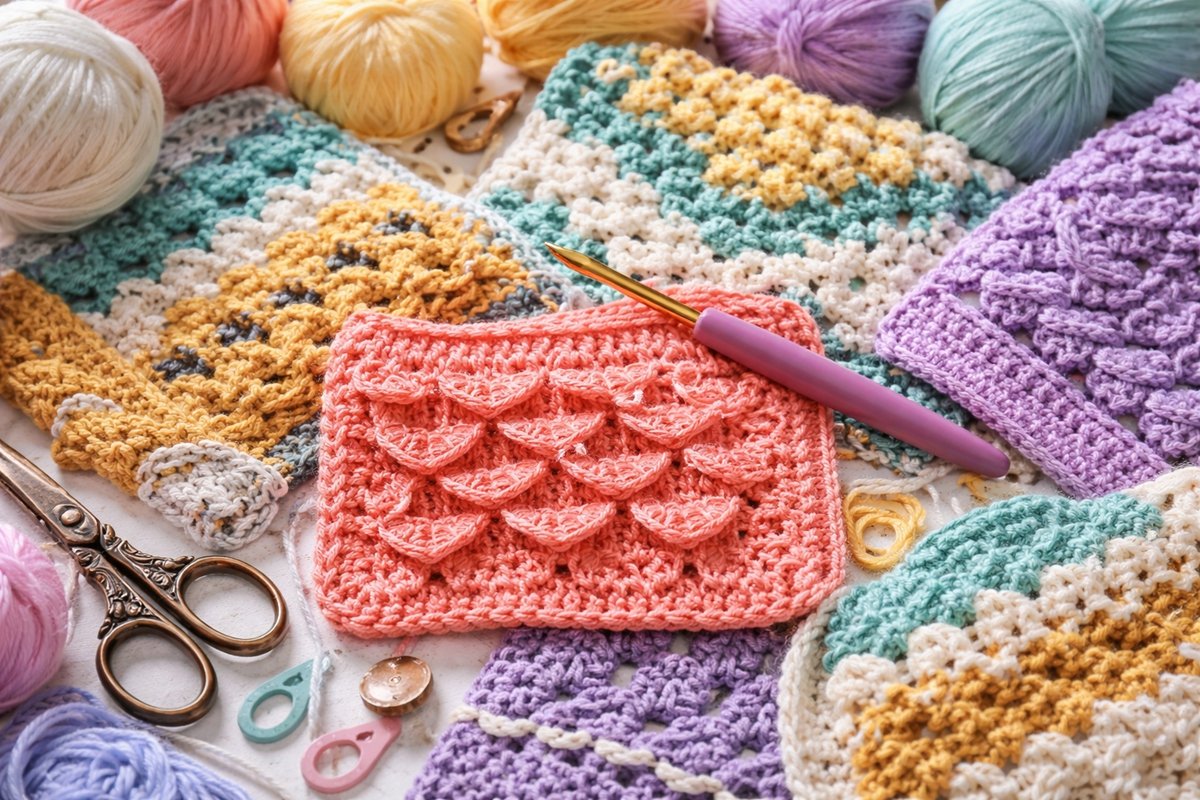
The difference between intermediate and advanced crochet isn’t just harder patterns — it’s precision, consistency, and control. Let’s break down the skills that truly elevate your craftsmanship.
What Skills Separate Intermediate and Advanced Crocheters?
Many crocheters finish large projects but still struggle with polish. Advanced skill shows in the details, not just the difficulty level of the pattern.
Advanced crocheters maintain even tension, read complex patterns easily, combine multiple stitch types smoothly, and fix mistakes without unraveling entire sections. They also adapt patterns and understand how yarn choice affects structure and drape.
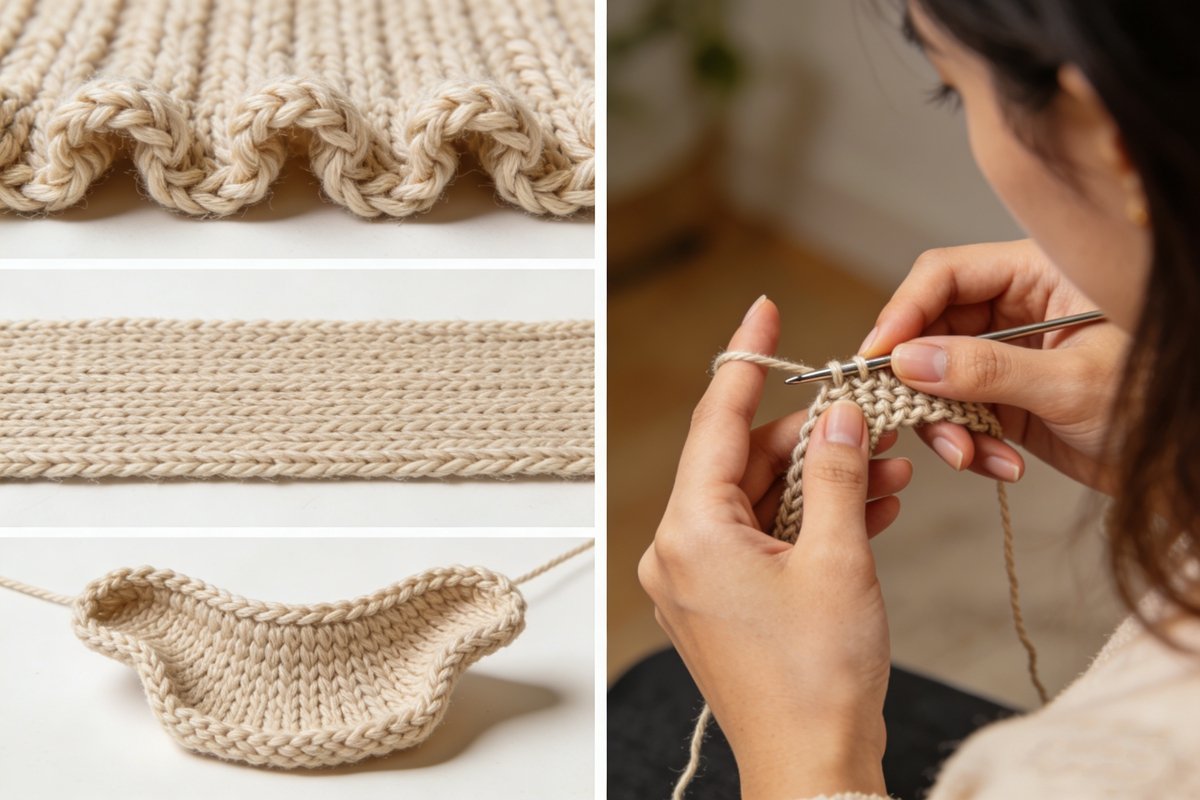
Technical Control Is the Real Upgrade
Mastery comes from consistency, not speed
| Skill Area | Beginner Focus | Advanced Level |
|---|---|---|
| Tension | Trying to stay even | Naturally consistent across projects |
| Stitch Knowledge | Basic stitches | Textured, layered, and structural stitches |
| Pattern Reading | Step-by-step following | Quick interpretation of charts and repeats |
| Mistake Fixing | Frog and restart | Spot-fix without unraveling large areas |
When these foundations become automatic, crocheters gain freedom to focus on design and creativity instead of mechanics.
Which Techniques Mark the “Advanced” Level?
It’s not about making bigger items — it’s about handling complexity with confidence and clean execution.
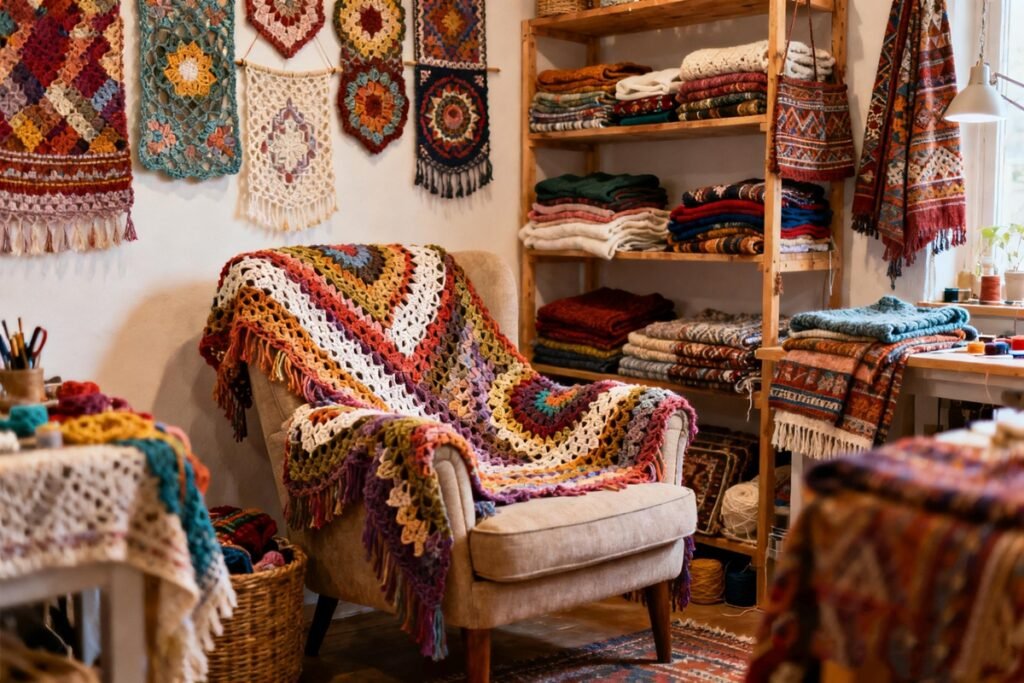
Advanced techniques include bobbles, puff stitches, popcorn stitches, post stitches, intricate lacework, advanced shaping, and multi-color techniques like tapestry crochet or intarsia. Precision in joining methods and invisible finishing also defines high-level work.
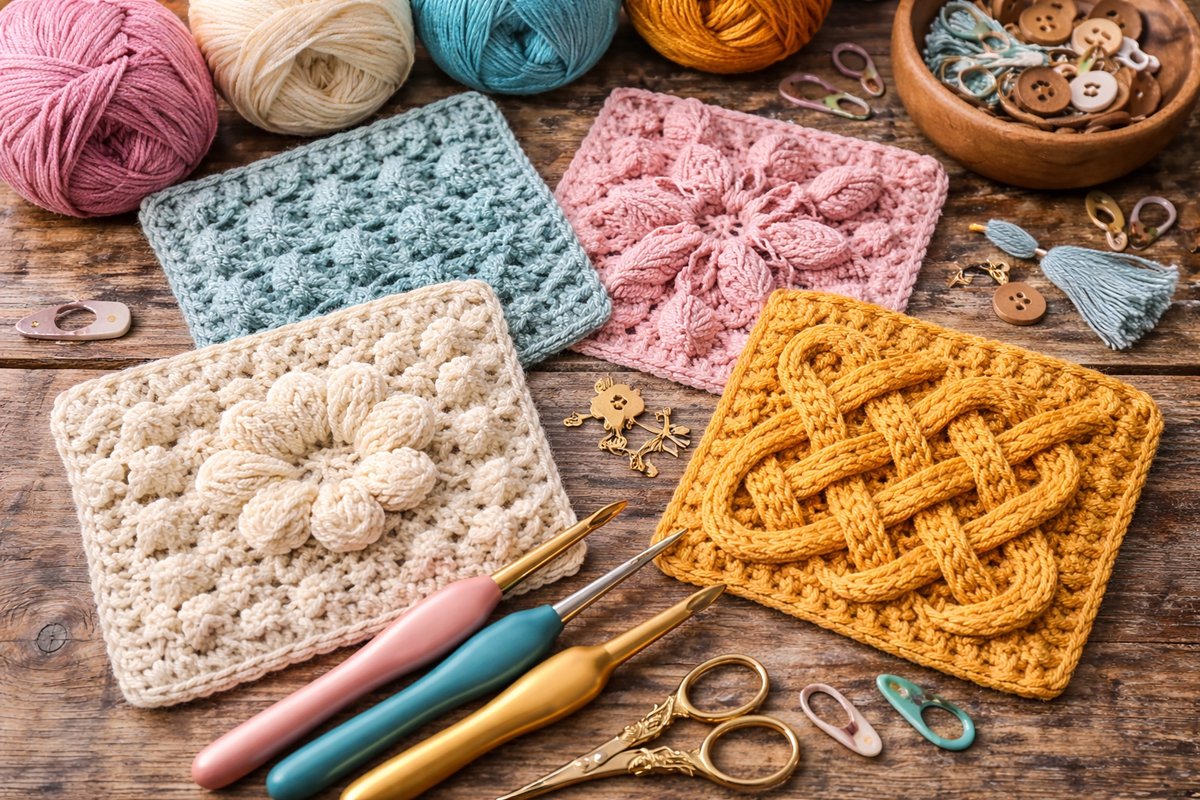
Complexity + Control = Advanced Craft
These techniques require both planning and precision
| Technique Type | Why It’s Challenging | What It Shows |
|---|---|---|
| Textured stitches | Yarn control & spacing | Depth and structure mastery |
| Lace patterns | Counting accuracy | Fine tension control |
| Colorwork | Yarn management | Visual planning and neatness |
| Shaping | Increase/decrease placement | 3D construction understanding |
Advanced crocheters don’t just complete these techniques — they execute them cleanly and consistently.
How Do Materials Change at the Advanced Level?
Working with basic yarn is one thing. Advanced crocheters can handle delicate threads and unconventional materials without losing stitch definition.
Fine cotton, lace-weight yarn, metallic threads, and textured fibers demand precise tension and hook control. These materials highlight every inconsistency, making them a true test of skill.
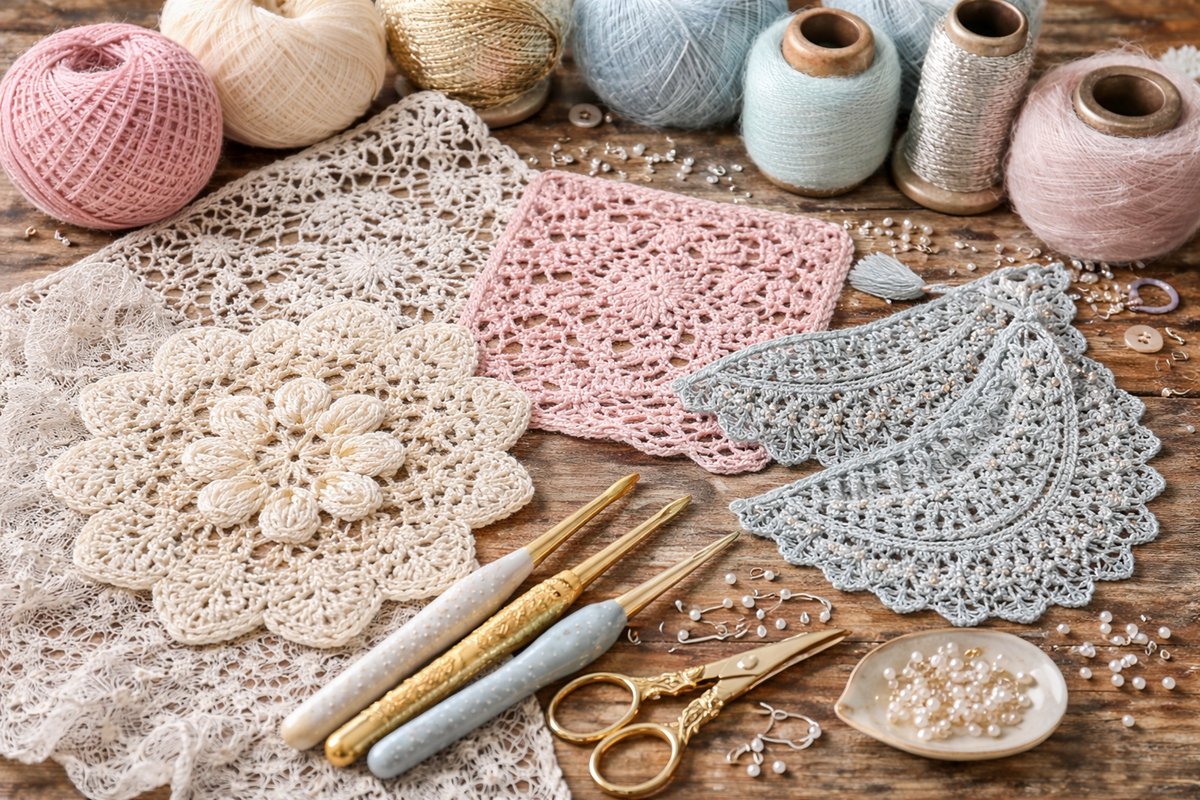
Material Mastery Shows Technical Confidence
Finer yarns reveal real skill
| Material Type | Difficulty | Skill Developed |
|---|---|---|
| Lace-weight yarn | Easy to split | Precision hook placement |
| Cotton thread | Less stretch | Tension consistency |
| Metallic yarn | Stiff and slippery | Controlled stitch formation |
| Textured fibers | Hard to see stitches | Pattern memory and feel-based work |
Mastering these materials allows crocheters to produce refined, professional-looking results suitable for high-end or detailed designs.
Conclusion
Becoming an advanced crocheter means moving from “following patterns” to truly controlling your craft. With precision, technique mastery, and material confidence, your crochet reaches a professional, polished level.

 Chinese