
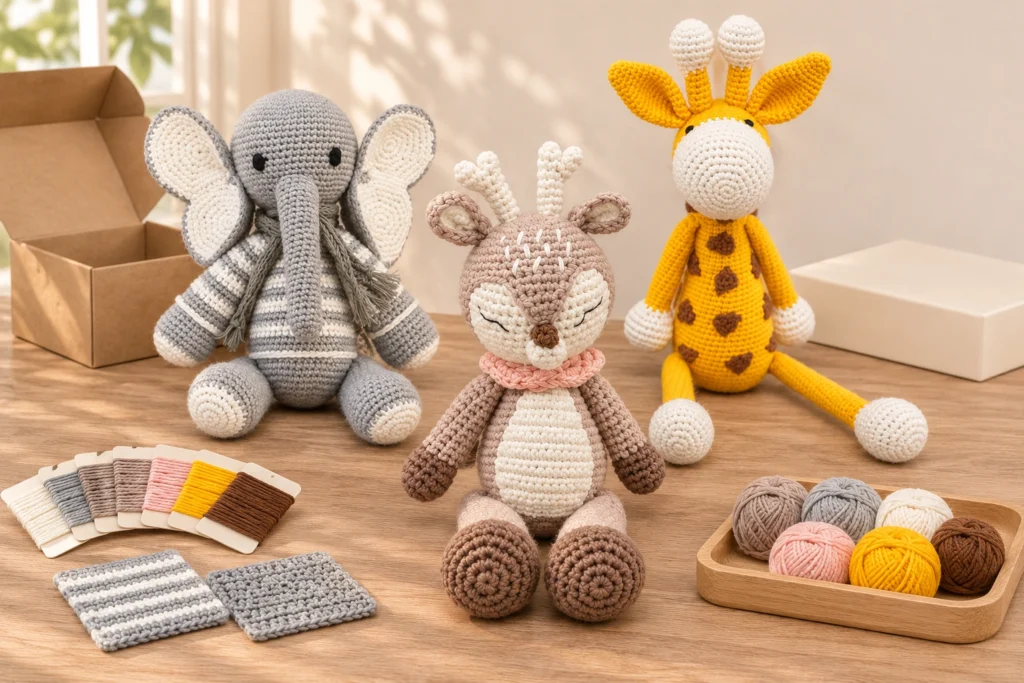
To reduce custom crochet product costs, first identify the design features that must remain recognizable, then ask the manufacturer to assess specific changes to construction, detail, materials and packaging. Compare revised samples and quotations against the same requirements before choosing an option.
A useful cost review connects each proposed saving to a visible or operational trade-off. The aim is to reach a workable purchasing cost while retaining the features that give the product its purpose.
When Should Buyers Start a Cost Optimization Review?
A cost optimization review is useful when a proposed crochet product exceeds its purchasing budget and the buyer still has room to adjust the specification.
It works best before bulk production is authorized. At that stage, the team can compare alternatives without having to decide what to do with completed products or work in progress.
This guide is for brands, gift companies, retailers and character merchandise teams reviewing one product concept after an initial feasibility assessment or quotation.
Before changing the design, confirm that the quotation covers the intended product, quantities, packaging and delivery scope. A price difference caused by missing packaging needs clarification rather than design simplification.
For checking quotation scope, see What Should Buyers Compare in Two Custom Crochet Quotations?.
Which Design Features Must Be Protected?
Create a short list of features that define the product.
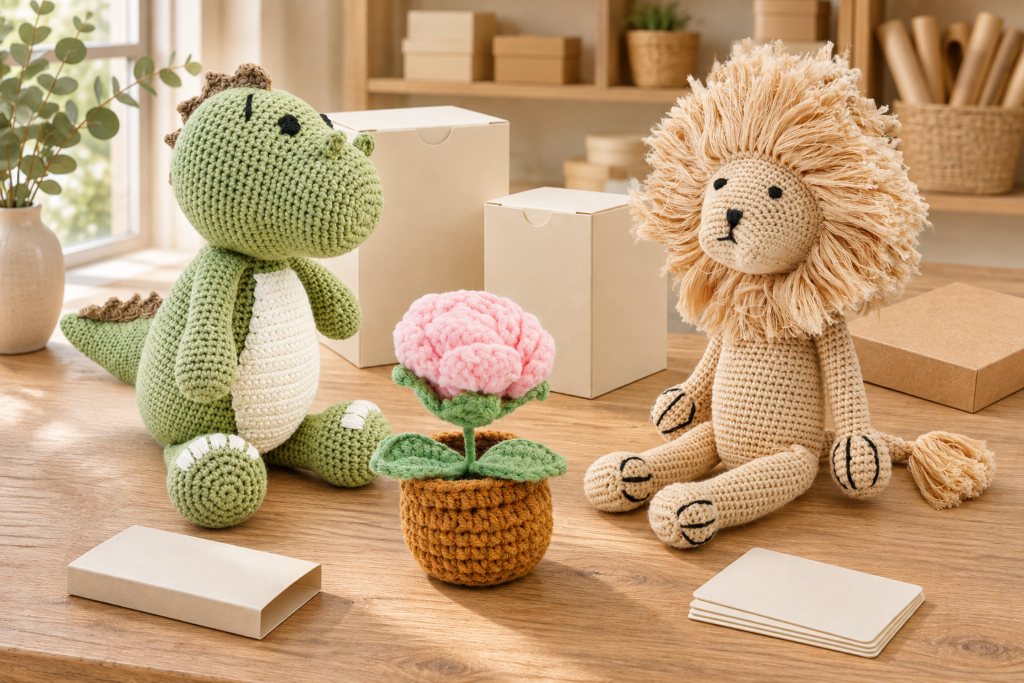
For a character, these might include the silhouette, facial expression, ear shape, mane, clothing outline or a distinctive color relationship. For a crochet flower, the flower-head shape, petal arrangement and balance between the flower and stem may be central.
Separate requirements into three categories:
- Essential features: must remain within the agreed design brief.
- Flexible features: may change if a sample demonstrates an acceptable result.
- Optional features: can be removed if they do not support the intended product or selling proposition.
Be specific. “Keep it cute” gives a manufacturer little direction. “Retain the rounded head, closed-eye expression and contrasting belly” provides a clearer basis for reviewing alternatives.
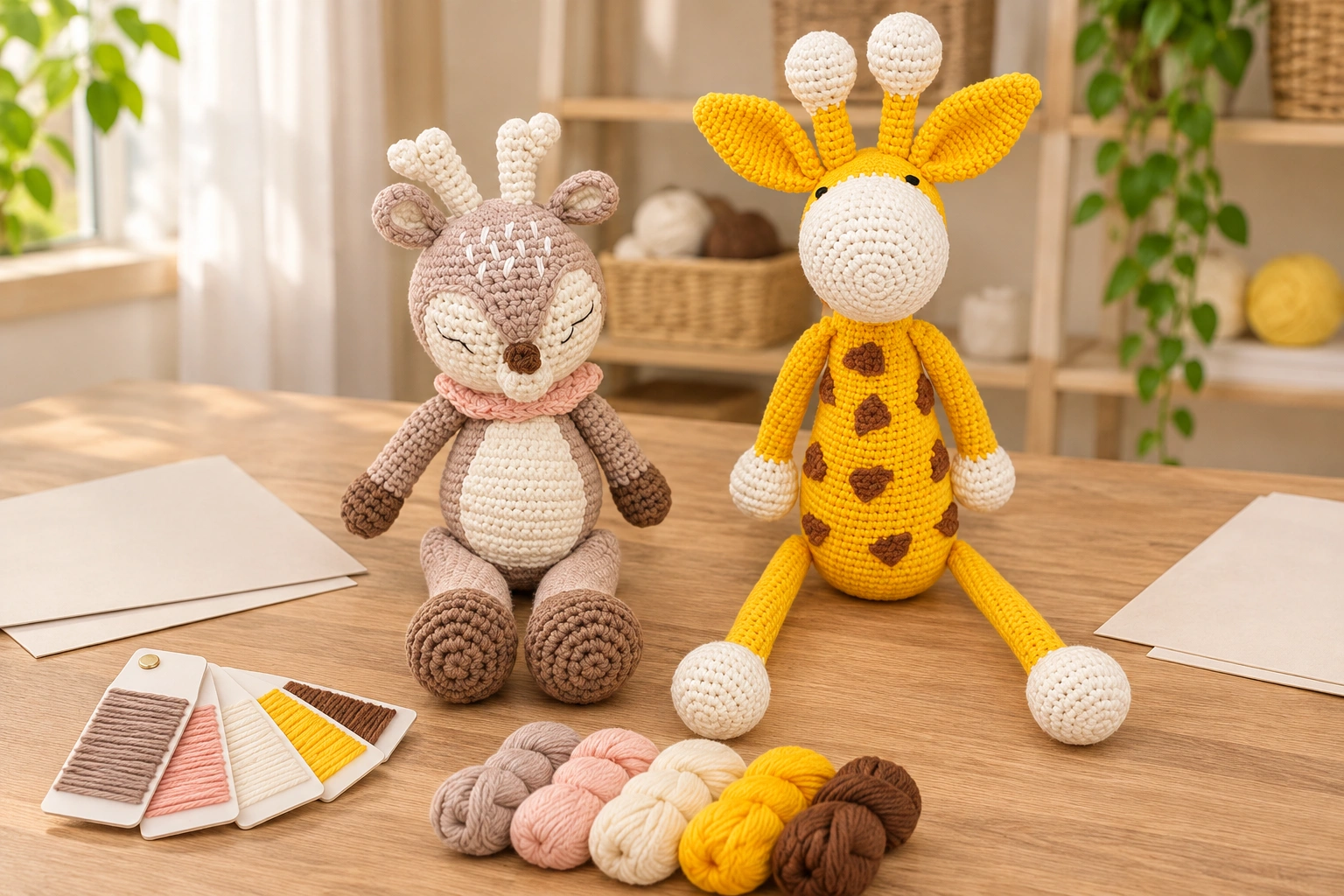
Where Should Buyers Look for Work That Can Be Simplified?
Ask the development team to identify which operations contribute to the quoted cost and which can realistically be changed.
A small decorative element can involve several steps: making a separate piece, finishing its ends, positioning it, attaching it and checking its appearance. Its physical size alone does not indicate its production effort.
The following table provides a discussion framework. It does not establish savings for a particular design.
| Area to review | Possible development option | What must be checked? |
|---|---|---|
| Separate decorative pieces | Reduce their number or integrate a detail into the main construction | Recognition, appearance and construction |
| Repeated embellishments | Simplify placement or reduce repetition | Visual balance and consistency |
| Color changes | Consolidate selected areas into a defined palette | Character identity and material suitability |
| Clothing and accessories | Simplify layers or retain only essential elements | Silhouette, fit and intended use |
| Product dimensions | Develop an alternative size | Proportions, detail resolution and packaging |
| Yarn specification | Assess a suitable alternative | Texture, shape, dimensions and relevant requirements |
| Packaging | Review structure, inserts and assembly | Protection, presentation and handling |
| Collection architecture | Share suitable components across designs | Fit, appearance and meaningful differentiation |
Each option needs a defined scope. “Simplify accessories” should become an assessable proposal, such as removing one decorative layer while retaining the accessory’s outline.
Why Is Making the Product Smaller Not Always Enough?
A smaller product may use less material, but the amount of handwork does not necessarily decrease in the same proportion.
Small facial details may still require careful positioning. Tiny accessories can remain separate components. A reduced size may also require a revised pattern or a different way to express recognizable features.
Ask for an alternative-size assessment rather than applying a percentage reduction to the original quotation.
Review the smaller version as its own product. Check whether the customer can still recognize the character, understand the details and use it as intended.
For developing size alternatives, see How to Develop a Crochet Character in Multiple Sizes Without Losing Recognition.
How Should Buyers Compare Construction Options?
Request a limited number of purposeful alternatives.
Each proposal should identify:
- What changes.
- What stays fixed.
- Which operations or materials may be affected.
- What sample work is needed.
- Which consequences require review.
Avoid changing size, yarn, decoration and packaging simultaneously unless the purpose is to evaluate a complete alternative concept. Otherwise, it becomes difficult to understand which change produced the commercial difference.
For example, a proposed animal gift might retain its face, body proportions and distinctive ears while the team evaluates a simpler accessory construction. The revised sample should demonstrate that specific option.
This is an illustrative development approach, not a claim that the change will produce a particular saving.
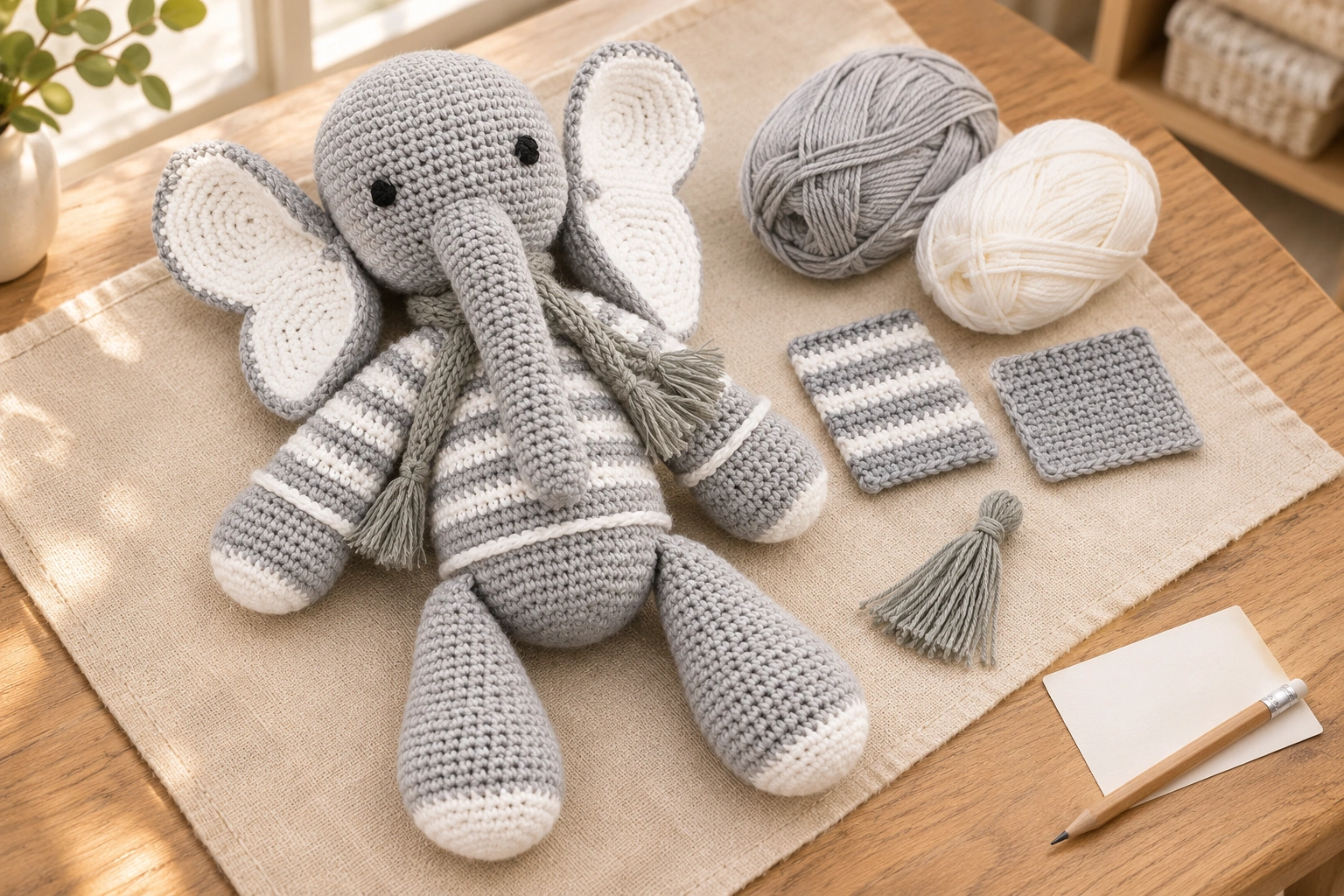
Can a Different Yarn Reduce Costs?
A yarn alternative needs a complete product review.
Material price is one input. The alternative may also affect handling, stitch definition, finishing, consumption, shape and the appearance of attached components.
Request a sample made with the proposed material. Compare it with the agreed reference under consistent viewing and measurement conditions. Confirm which supporting specifications or documents need updating.
For the material-change checklist, see What Should Brands Recheck When Changing Yarn in a Crochet Product?.
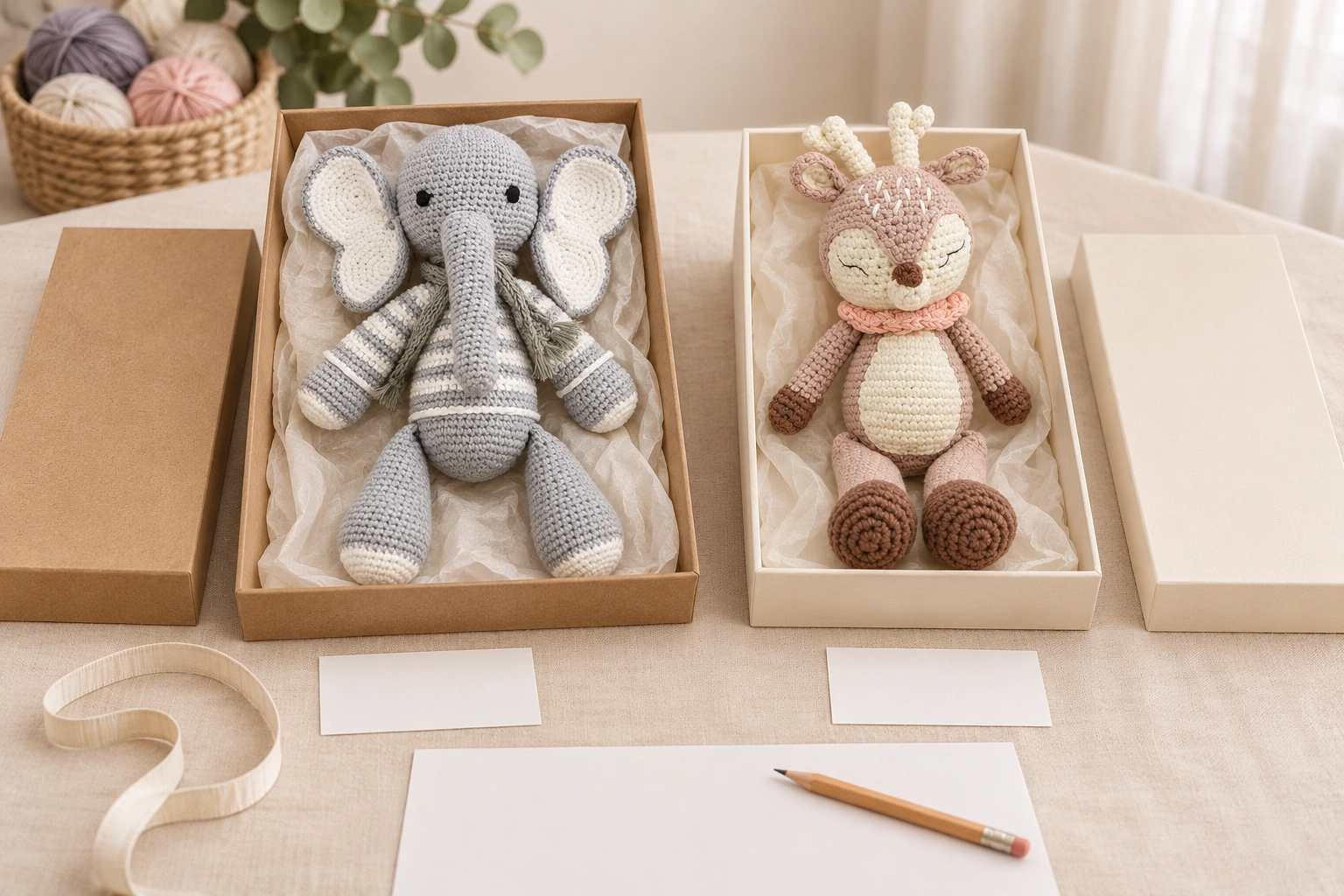
What Can Packaging Contribute to the Review?
Potential questions include:
- Does the box contain space that serves no practical purpose?
- Can the product remain visible with a simpler presentation?
- Are multiple inserts performing overlapping functions?
- Can the packing sequence be made easier to repeat?
- Does a decorative element add assembly work without supporting the buyer’s brief?
Review the actual packed product before accepting a change.
A smaller box may compress a mane, bend a flower or increase the work required to restore the product after unpacking. Any commercial benefit should be considered alongside protection and arrival presentation.
Do not assume that a packaging concept has passed validation because it looks suitable in a photograph.
How Should Savings Be Evaluated?
Compare the original and proposed configurations using consistent commercial assumptions.
Record the quantity by SKU, materials, dimensions, packaging, inspection scope and delivery basis. Identify development or sample costs separately from recurring unit costs.
A simple decision measure is:
This is an evaluation aid. Use confirmed quotation inputs and include other material costs, such as replacing packaging artwork or reviewing revised samples.
If a proposal changes several assumptions, state them explicitly rather than presenting the result as a direct saving on an unchanged product.
What Should Be Approved Before Production?
Approve the selected product version together with its quotation and supporting specifications.
The approval record should identify:
- Retained essential features.
- Accepted design and material changes.
- The revised physical sample.
- Updated dimensions and construction details.
- Packaging and packing references.
- Any outstanding conditions.
- The quotation version associated with the configuration.
A cost target does not replace product approval. Likewise, approving the appearance of a sample does not confirm that every commercial or operational requirement has been resolved.
If production has already started, first assess the affected work and authorization requirements before implementing a revision.
How Can UMY Crochet Support a Cost Review?
UMY Crochet is a product development and manufacturing partner for crochet, DIY craft kits, knitted toys and creative gifts.
A focused cost review can begin with the current design, the quoted configuration, the target purchasing cost and a clear list of features that must remain.
The development discussion can then assess construction options, suitable material alternatives, packaging requirements and the sample work needed to compare them.
This gives buyers a practical basis for selecting a configuration and confirming its commercial scope before production.
Frequently Asked Questions
Can a crochet product cost less without changing its appearance?
Potentially, if the team identifies a workable change to production, sourcing or packing that preserves the approved result. Any saving requires assessment against the actual specification.
Should we remove the smallest details first?
Not automatically. Ask which details involve meaningful production work and which are essential to recognition. A small feature may be visually important.
Does using fewer colors always reduce cost?
No. The effect depends on construction, material sourcing and production operations. Request an assessment of the specific palette change.
Will a smaller version be proportionally cheaper?
That should not be assumed. Material consumption and handwork do not necessarily change at the same rate, and smaller details may require redevelopment.
Can we compare several alternatives using photographs?
Photographs can support an initial review. Physical samples may still be needed to judge texture, dimensions, construction, handling and packaging fit.
Should cost optimization happen before sample approval?
Preferably, review feasible options before final production approval. If an approved specification changes, update the sample and associated records as required.
Request a Crochet Product Cost Review
Send UMY Crochet your design or current sample reference, quantities by variant, target purchasing cost and packaging requirements.
Identify the features that must remain and the areas you are willing to reconsider. Request a review of defined alternatives covering development needs, product trade-offs and quotation scope.
<!--[googlesitekit-end-of-content]-->
 Chinese