
Lessons From Real Retail Projects: Turning a Single Bestseller Into a Long-Term Crochet Program
Many retailers begin their crochet journey with a single product.
It might be a small mascot, a seasonal decoration, a keychain, or a gift item that catches customers' attention. However, after more than 12 years of crochet manufacturing experience at UMY Crochet Factory, we have learned that the most successful retailers rarely stop at one product.
Instead, they build collections.
Over the years, we have supported retailers, museum stores, gift brands, and distributors across more than 150 countries and regions. One pattern appears repeatedly:
The retailers that achieve the strongest long-term growth are not necessarily the ones with the most products—they are the ones that expand strategically.
This article explores how one retailer transformed a single crochet product into a complete collection and the lessons other brands can learn from the process.
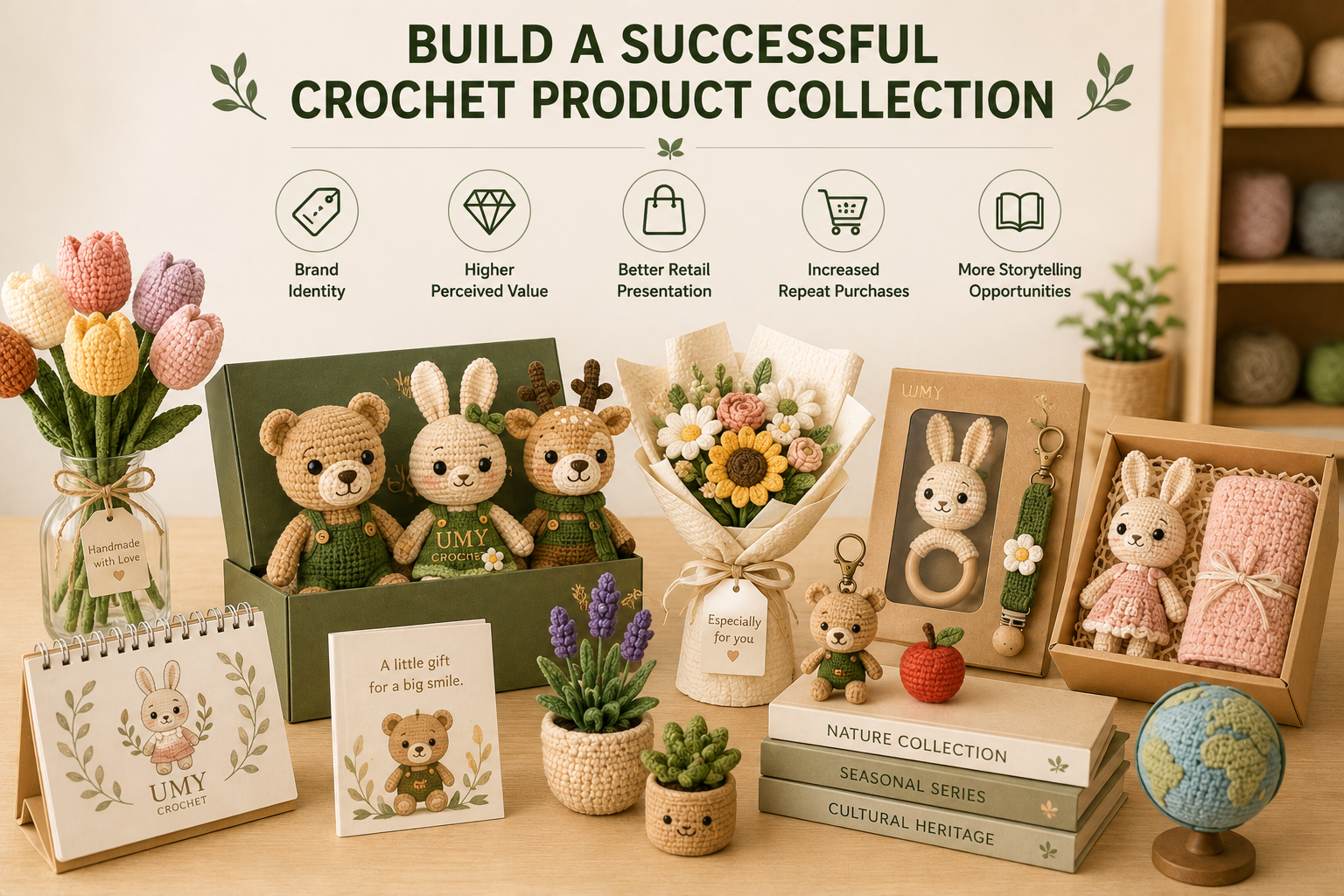
The Starting Point: One Successful Crochet Product
The retailer first approached UMY with a relatively simple request.
They wanted to launch a handmade crochet mascot as part of a seasonal gift program.
At the beginning, the project consisted of:
- One crochet character
- One size
- One color scheme
- Basic packaging
- A limited retail launch
The goal was straightforward:
To test customer interest without taking on excessive inventory risk.
Like many retailers, they had several concerns:
- Would customers respond to handmade crochet products?
- Was the price acceptable?
- Could crochet products compete with mass-produced alternatives?
- Would one product generate repeat purchases?
Rather than committing to a large collection immediately, the retailer chose to start small.
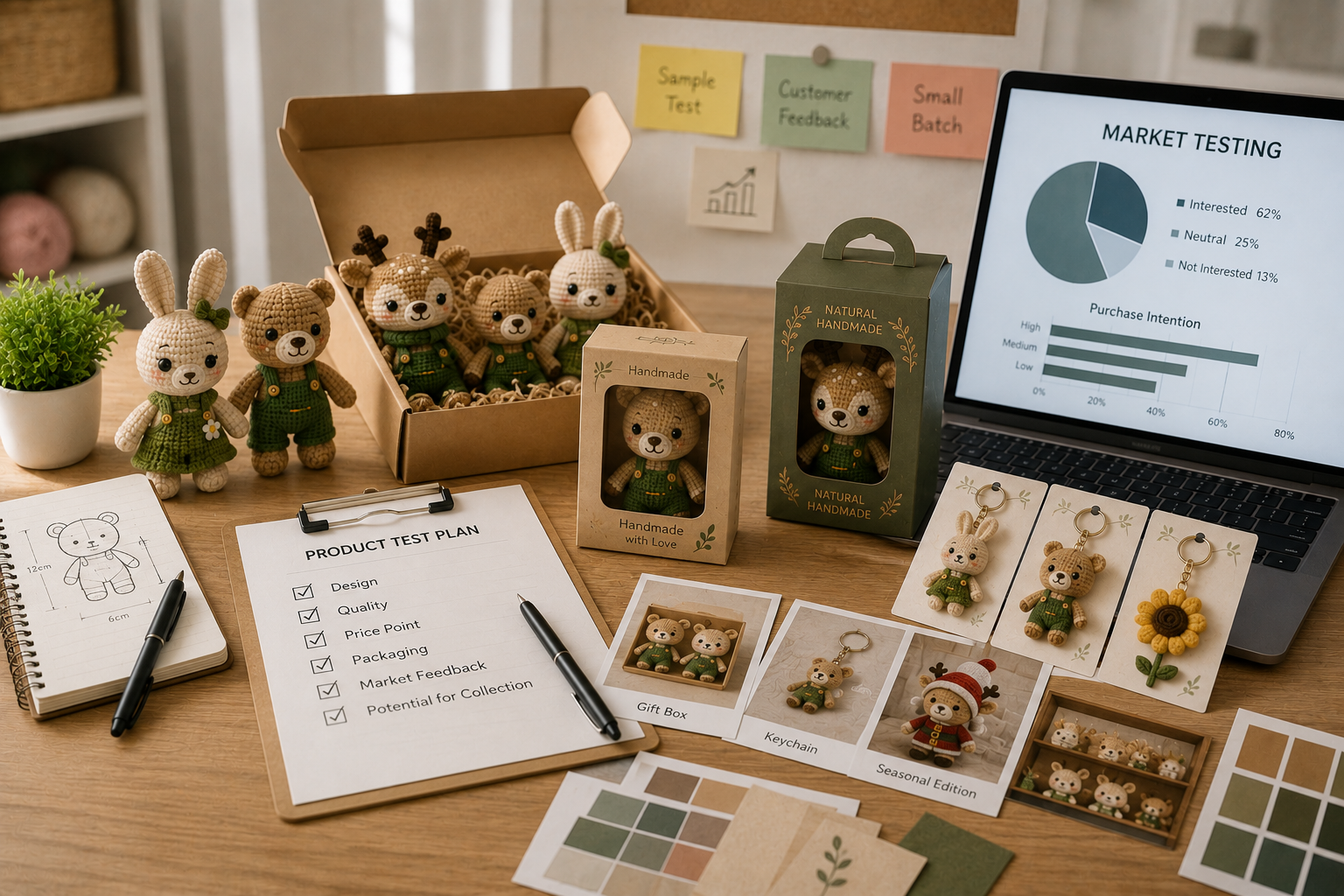
Step 1: Testing the Market Before Expanding
The retailer launched the first crochet product in selected stores and online channels.
Instead of focusing only on sales numbers, the team monitored:
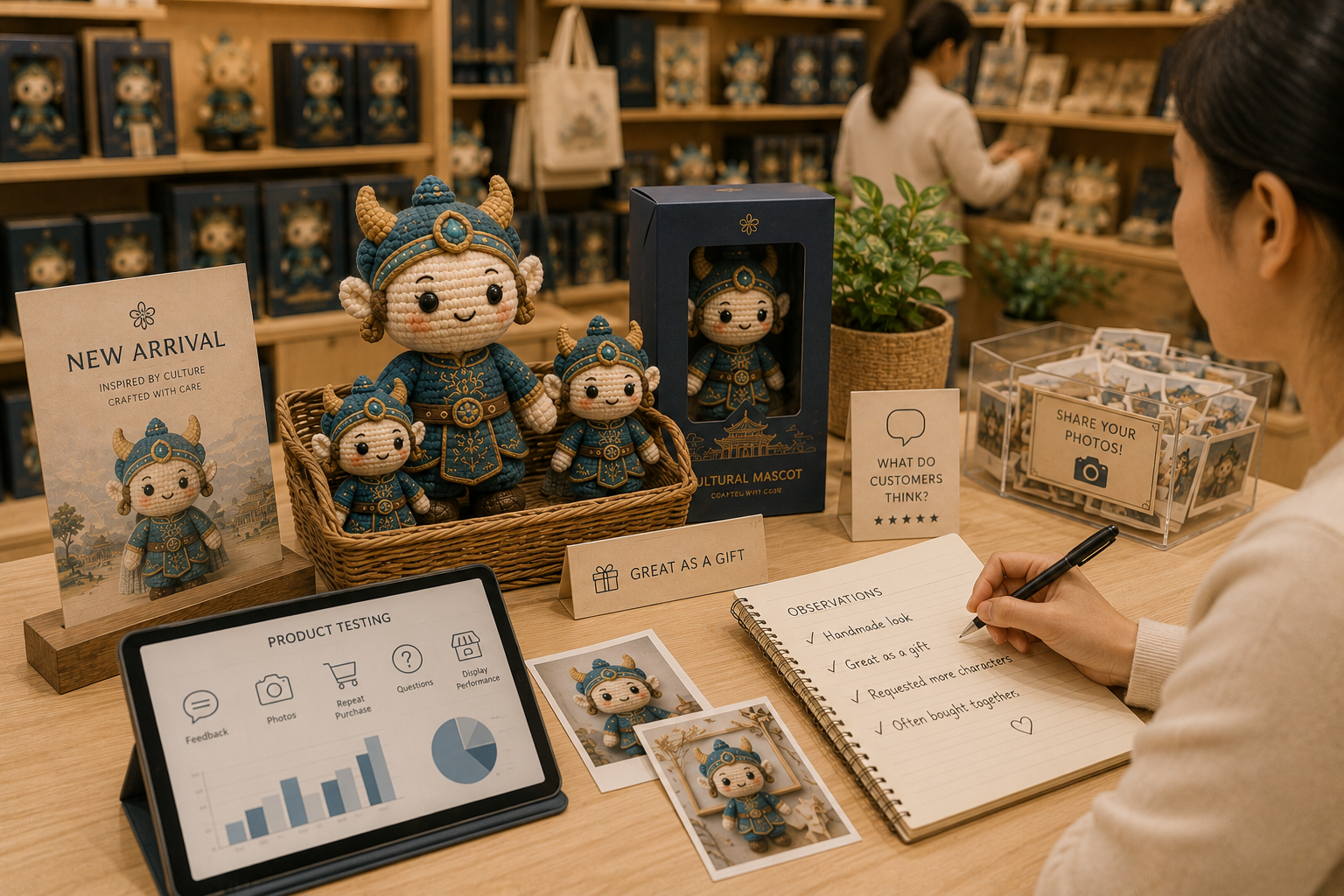
- Customer feedback
- Product photography and social sharing
- Repeat purchases
- Questions from customers
- Retail display performance
One lesson we have consistently observed across retail projects is:
The first product is not meant to maximize revenue—it is meant to generate insight.
During the first few months, several patterns emerged:
✓ Customers enjoyed the handmade appearance.
✓ The product performed particularly well as a gift.
✓ Visitors frequently asked whether additional characters were available.
✓ Customers often purchased multiple products together.
These observations laid the foundation for future expansion.
Step 2: Expanding Around a Core Character
After validating the original product, the retailer faced an important decision:
Should they create completely new products, or build around the existing mascot?
Based on our experience, we recommended the second option.
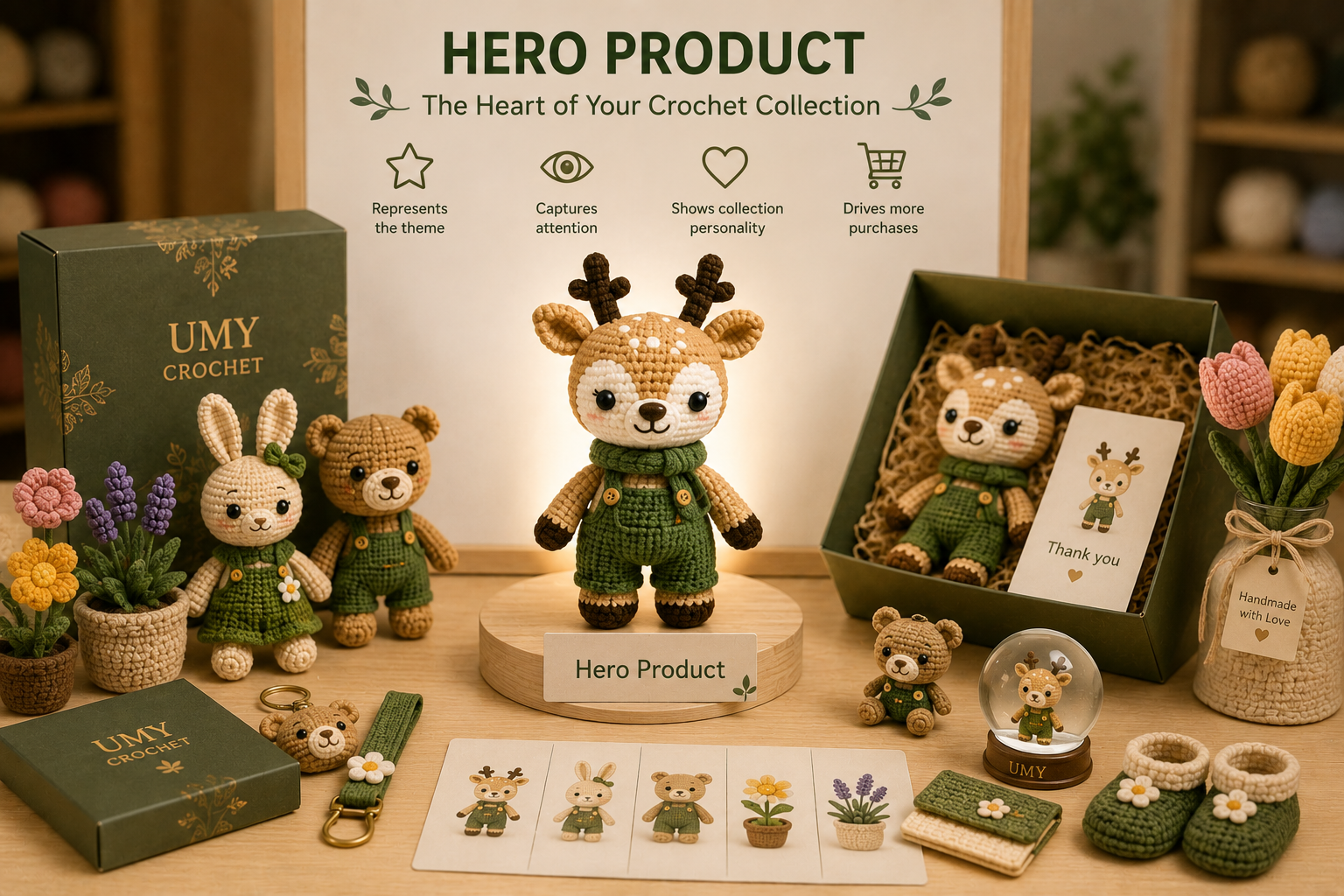
The retailer gradually expanded the collection by introducing:
- Mini keychains
- Different sizes
- Seasonal variations
- Limited-edition colors
- Gift-box versions
The strategy was simple:
Keep the recognizable identity of the original character while increasing customer choice.
This approach offered several advantages:
- Lower design costs
- Stronger brand consistency
- Easier storytelling
- Greater retail flexibility
Over the years, we have found that successful collections often evolve from a strong hero product rather than unrelated individual items.
Step 3: Creating Multiple Price Levels
One challenge many retailers face is that customers have different budgets.
A collection built around a single price point limits growth opportunities.
To solve this, the retailer introduced multiple purchasing options.
| Product Type | Retail Position |
|---|---|
| Crochet keychain | Entry-level gift |
| Standard mascot | Core product |
| Gift-box edition | Premium option |
| Seasonal set | Collector's item |
This structure allowed the retailer to serve:
- Casual shoppers
- Families
- Collectors
- Tourists
- Corporate buyers
One thing we have learned from supporting retailers across more than 150 countries and regions is:
Customers rarely think in terms of production cost—they think in terms of perceived value.
Step 4: Building a Story Around the Collection
As the product line expanded, the retailer realized that customers were becoming attached to the characters themselves.
The project shifted from product development to brand building.
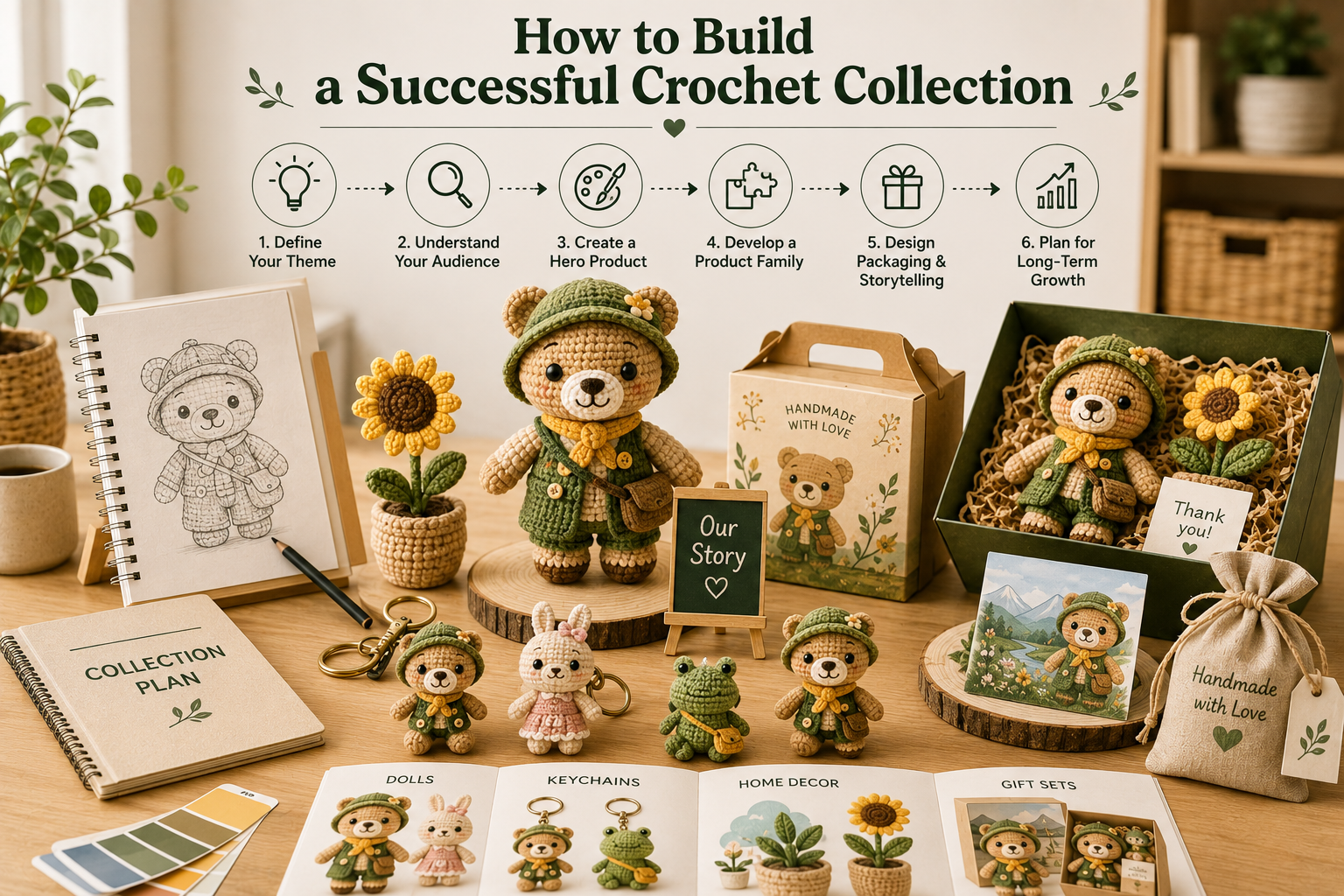
The retailer introduced:
- Character names
- Story cards
- Packaging narratives
- Seasonal themes
- Social media content
Suddenly, customers were not just buying crochet products.
They were collecting characters and participating in an evolving story.
One lesson we have consistently observed is:
Collections grow faster when customers feel emotionally connected to the products.
Step 5: Using Seasonal Launches to Sustain Interest
Rather than releasing all products at once, the retailer adopted a seasonal strategy.
New products appeared throughout the year:
- Valentine's Day editions
- Summer collections
- Halloween products
- Christmas gift sets
- Limited seasonal accessories
This approach created:
✓ Regular customer engagement.
✓ Repeat purchases.
✓ New marketing opportunities.
✓ Reduced inventory pressure.
Over time, the collection became something customers anticipated rather than simply purchased.
Real Project Example: From Mascot to Retail Program
One retailer initially launched a single crochet mascot inspired by a local theme.
The original product sold steadily, but customer behavior revealed something unexpected:
Visitors repeatedly asked for:
- Smaller versions
- Matching accessories
- Seasonal editions
- Gift packaging
Instead of introducing unrelated products, the retailer expanded the existing character into a broader collection.
Within the following stages, the product line evolved into:
- One hero mascot
- Three keychains
- Two seasonal editions
- One premium gift set
- Multiple packaging options
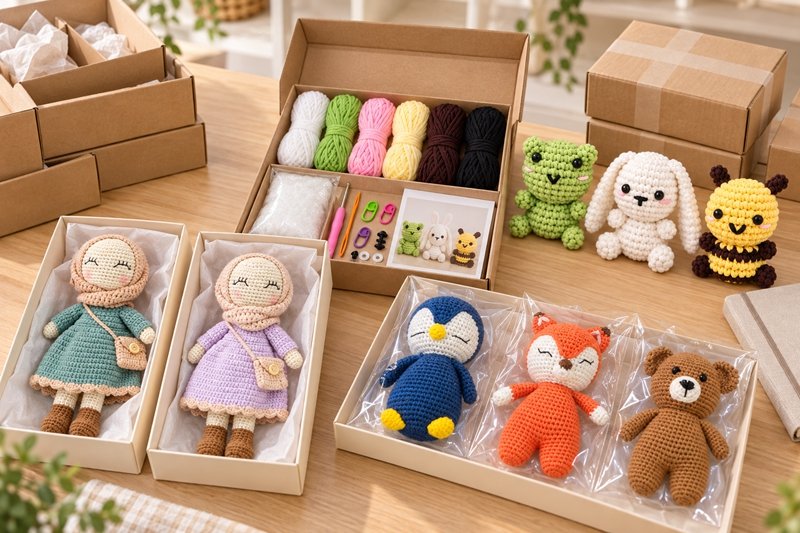
What began as a simple crochet toy gradually became a recognizable retail program.
This project reinforced an important lesson:
Strong collections are built through customer feedback, not assumptions.
Why Collections Often Outperform Individual Products
After supporting retail projects for more than a decade, we have identified several reasons why collections tend to outperform standalone products.
Collections Increase Perceived Value
Customers often perceive coordinated products as more valuable than individual items.
Collections Encourage Repeat Purchases
A customer who buys one character today may return later for another.
Collections Improve Retail Displays
Multiple products create stronger visual impact and attract attention.
Collections Create Storytelling Opportunities
Characters, packaging, and themes work together to build emotional connections.
Collections Reduce Marketing Costs
Expanding around an existing product is often more efficient than launching completely new concepts.
Common Mistakes Retailers Make When Expanding Collections
Not every expansion strategy succeeds.
Over the years, we have observed several common mistakes.
Launching Too Many Products Too Quickly
Large collections increase inventory risk and make demand forecasting more difficult.
Adding Products Without a Clear Theme
Collections perform best when products share a consistent identity.
Ignoring Customer Feedback
Retailers sometimes expand based on internal preferences rather than customer behavior.
Focusing Only on Product Variety
Successful collections combine:
- Products
- Packaging
- Storytelling
- Merchandising
- Marketing
Treating Expansion as a One-Time Event
The strongest collections evolve gradually over time.
What We Have Learned From Retail Collection Projects
After working with retailers across more than 150 countries and regions, several patterns have become clear.
Successful retailers:
✓ Start with one strong product.
✓ Test before scaling.
✓ Build around recognizable characters.
✓ Create multiple price levels.
✓ Use storytelling to strengthen emotional connections.
✓ Expand gradually through seasonal launches.
One thing we have consistently observed is:
The goal is not to sell more products—the goal is to build a collection customers want to return to.
UMY Crochet Factory at a Glance
Founded in 2013, UMY specializes exclusively in crochet manufacturing.
Today, we support:
- Retailers
- Museum stores
- Gift brands
- Corporate buyers
- Distributors
- Cultural institutions
across more than 150 countries and regions.
Our capabilities include:
- More than 12 years of crochet manufacturing experience
- A network of more than 2,000 artisans
- OEM and ODM development
- Sample development within approximately 7–15 working days
- Collection planning and expansion
- Packaging customization
- International quality management systems
- Seasonal product development
Our goal is not simply to manufacture crochet products, but to help customers build collections with long-term retail potential.
Frequently Asked Questions
Should retailers launch an entire crochet collection at once?
Not necessarily. Many successful collections begin with one hero product and expand gradually based on customer feedback.
How many products are needed for a collection?
A small collection often starts with three to five products and grows over time.
Are seasonal products important?
Yes. Seasonal launches create new reasons for customers to revisit the collection.
What products work well alongside crochet mascots?
Popular additions include:
- Keychains
- Gift sets
- Mini versions
- Accessories
- Limited editions
Why do collections often perform better than standalone products?
Collections improve storytelling, increase perceived value, and encourage repeat purchases.
Final Thoughts
Many successful crochet collections begin with a single product.
What separates thriving retail programs from short-term trends is not the number of products launched on day one—it is the ability to learn, adapt, and expand strategically.
After more than 12 years of supporting retailers around the world, we have found that the strongest collections share several qualities:
✓ A recognizable identity.
✓ Emotional appeal.
✓ Thoughtful expansion.
✓ Seasonal momentum.
✓ Long-term vision.
Because in the end, customers do not simply buy crochet products.
They buy experiences, stories, and connections.
Looking to Build Your Own Crochet Collection?
At UMY Crochet Factory, we help retailers, museum stores, and gift brands transform individual products into complete crochet collections.
Whether you are launching your first mascot or planning your next expansion, our team is ready to help bring your ideas to life.
Contact us today to discuss your next project.
 Chinese