
How Retailers and Gift Brands Turn Holiday Ideas Into Successful Crochet Collections
For many retailers, the busiest sales periods of the year are not ordinary weeks—they are seasons.
Christmas, Valentine's Day, Easter, Halloween, Mother's Day, and other celebrations create unique opportunities for brands to connect with customers through gifts. But behind every successful seasonal product launch lies months of planning, testing, and development.
Over the past 12 years, UMY Crochet Factory has worked with retailers, museum stores, gift brands, and distributors across more than 150 countries and regions to create seasonal crochet collections. From Christmas ornaments and Valentine's gifts to limited-edition mascot series, we have seen firsthand how seasonal programs evolve from initial ideas into products displayed on retail shelves.
One thing we have consistently observed is:
Successful seasonal programs are rarely built in a few weeks—they are carefully developed months in advance.
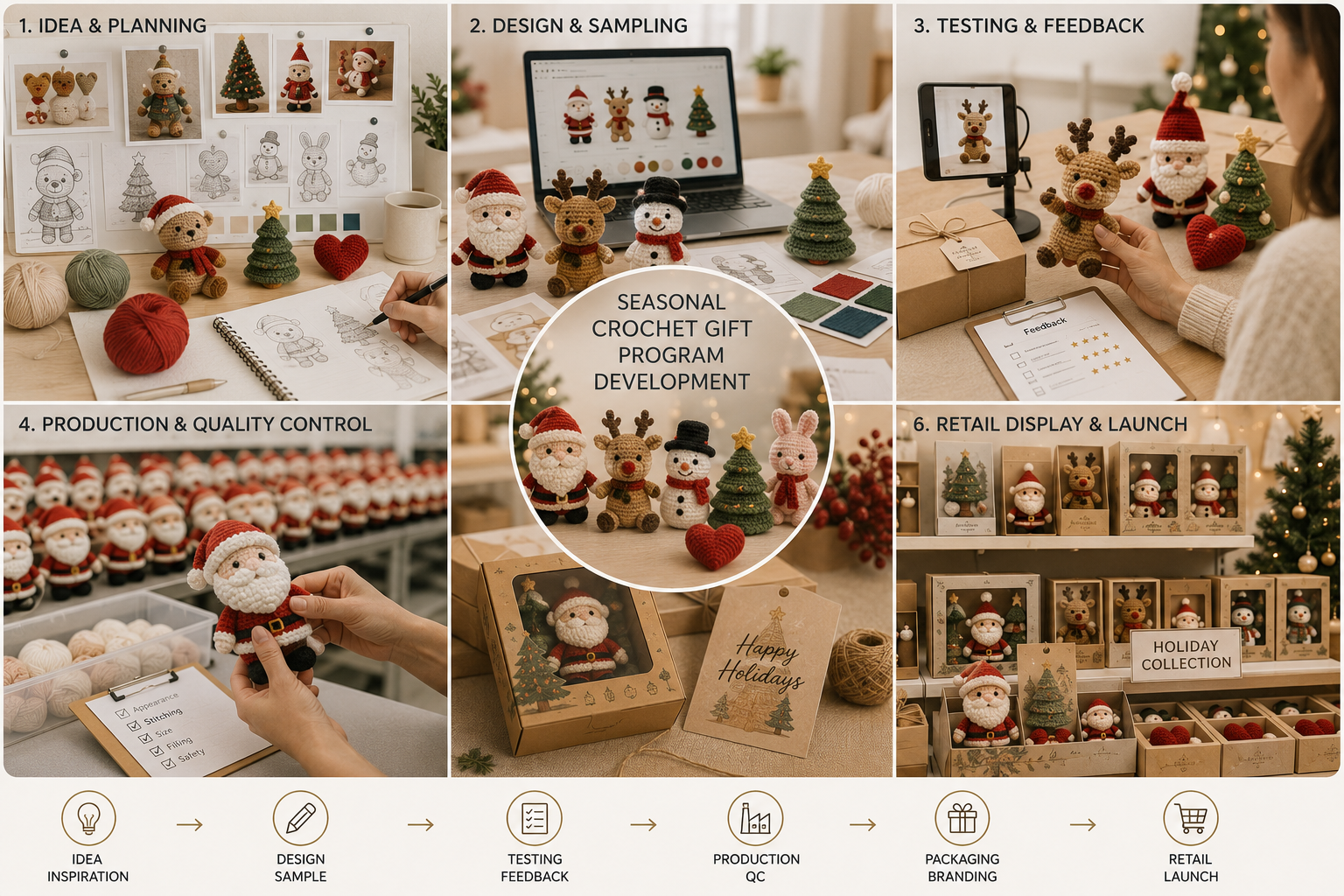
This article takes you behind the scenes of how a seasonal crochet gift program comes to life.
Why Seasonal Products Matter to Retailers
Seasonal products do more than increase short-term sales.
They help brands:
- Create excitement and urgency
- Encourage repeat purchases
- Introduce limited editions
- Strengthen emotional connections
- Refresh retail displays
- Attract returning customers
Unlike evergreen products, seasonal collections benefit from a natural sense of scarcity.
Customers understand that holiday products will not always be available.
As a result, seasonal launches often generate stronger engagement and gift purchases.
For retailers, the challenge is not whether to create seasonal products—but how to develop them effectively.
Step 1: Planning Begins Months Before the Season
One of the biggest misconceptions about seasonal products is timing.
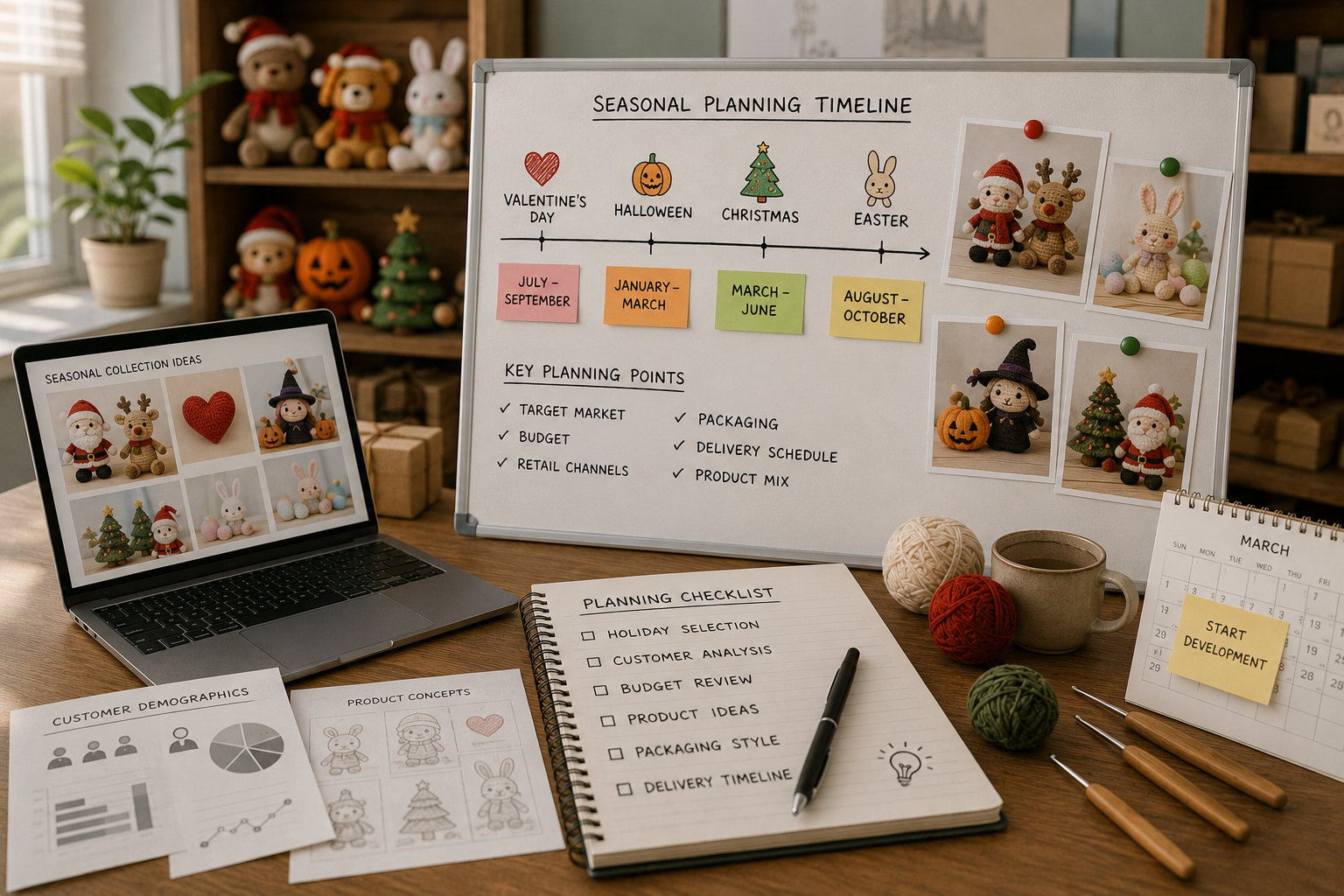
Customers may see Christmas products in November, but development often begins six to nine months earlier.
At the planning stage, retailers typically discuss:
- Which holiday to target
- Customer demographics
- Budget expectations
- Retail channels
- Packaging requirements
- Delivery schedules
For example:
| Holiday Season | Typical Development Window |
|---|---|
| Valentine's Day | July–September |
| Halloween | January–March |
| Christmas | March–June |
| Easter | August–October |
One lesson we have learned is:
In seasonal retail, timing is often as important as design.
Step 2: Choosing the Theme
Every successful seasonal collection starts with a theme.
The strongest programs go beyond generic holiday symbols and create a consistent story.
Popular crochet themes include:
Christmas Collections
- Snowmen
- Reindeer
- Santa Claus
- Christmas trees
- Gift ornaments
Valentine's Day Collections
- Hearts
- Flowers
- Couples
- Love-themed mascots
Halloween Collections
- Pumpkins
- Ghosts
- Witches
- Black cats
Spring and Easter Collections
- Rabbits
- Chicks
- Eggs
- Floral decorations
Many brands also combine seasonal themes with their existing mascots or brand identities.
This approach strengthens recognition while keeping products fresh.
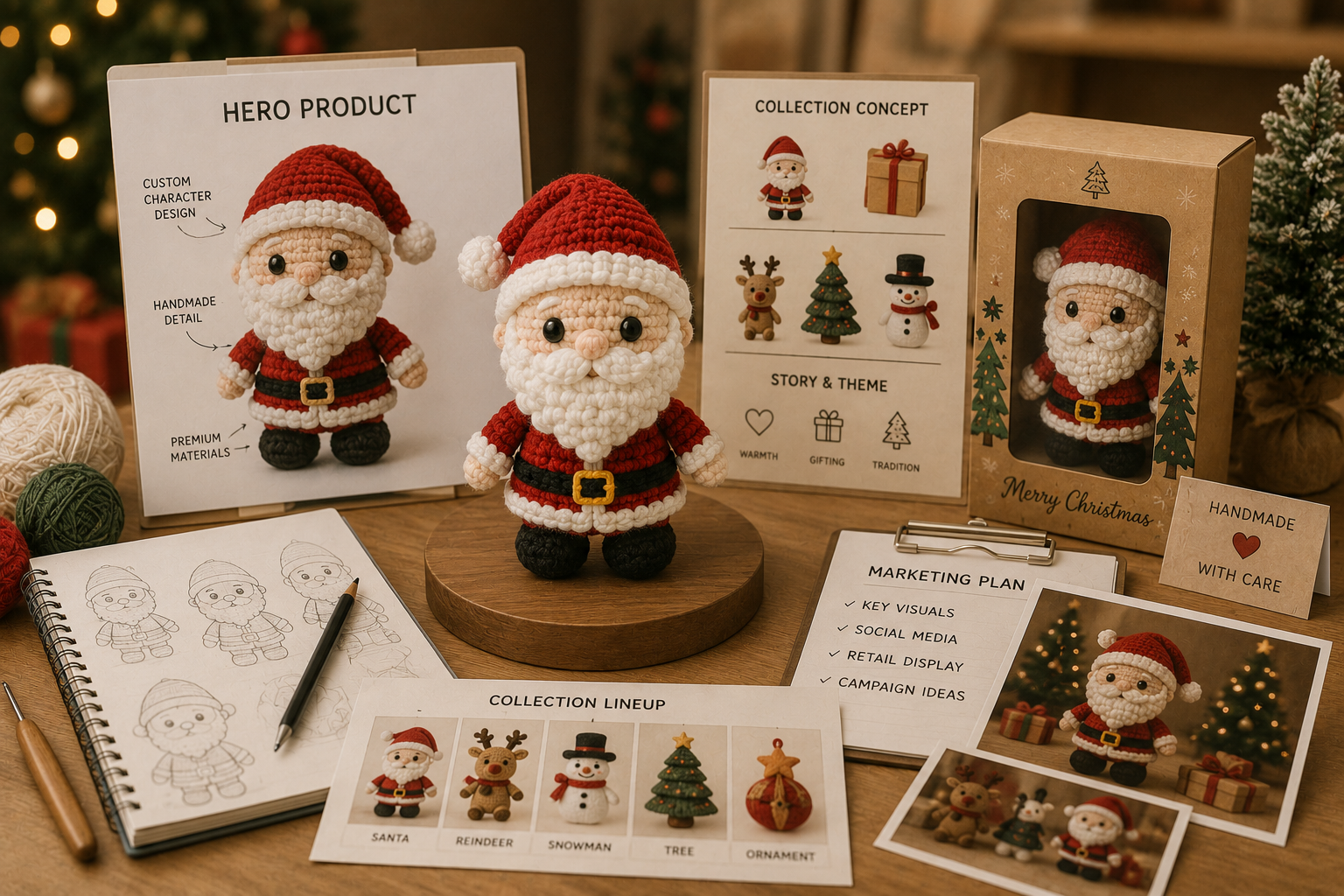
Step 3: Developing the Hero Product
Most seasonal programs revolve around a central product.
This hero item serves as the foundation for the entire collection.
Examples include:
- A Christmas mascot
- A crochet gift set
- A seasonal ornament
- A limited-edition character
The hero product influences:
- Packaging design
- Supporting products
- Marketing materials
- Retail displays
One thing we consistently observe is:
Customers often discover the collection through one memorable product.
Step 4: Expanding Into a Collection
Once the hero product is finalized, retailers begin building a broader assortment.
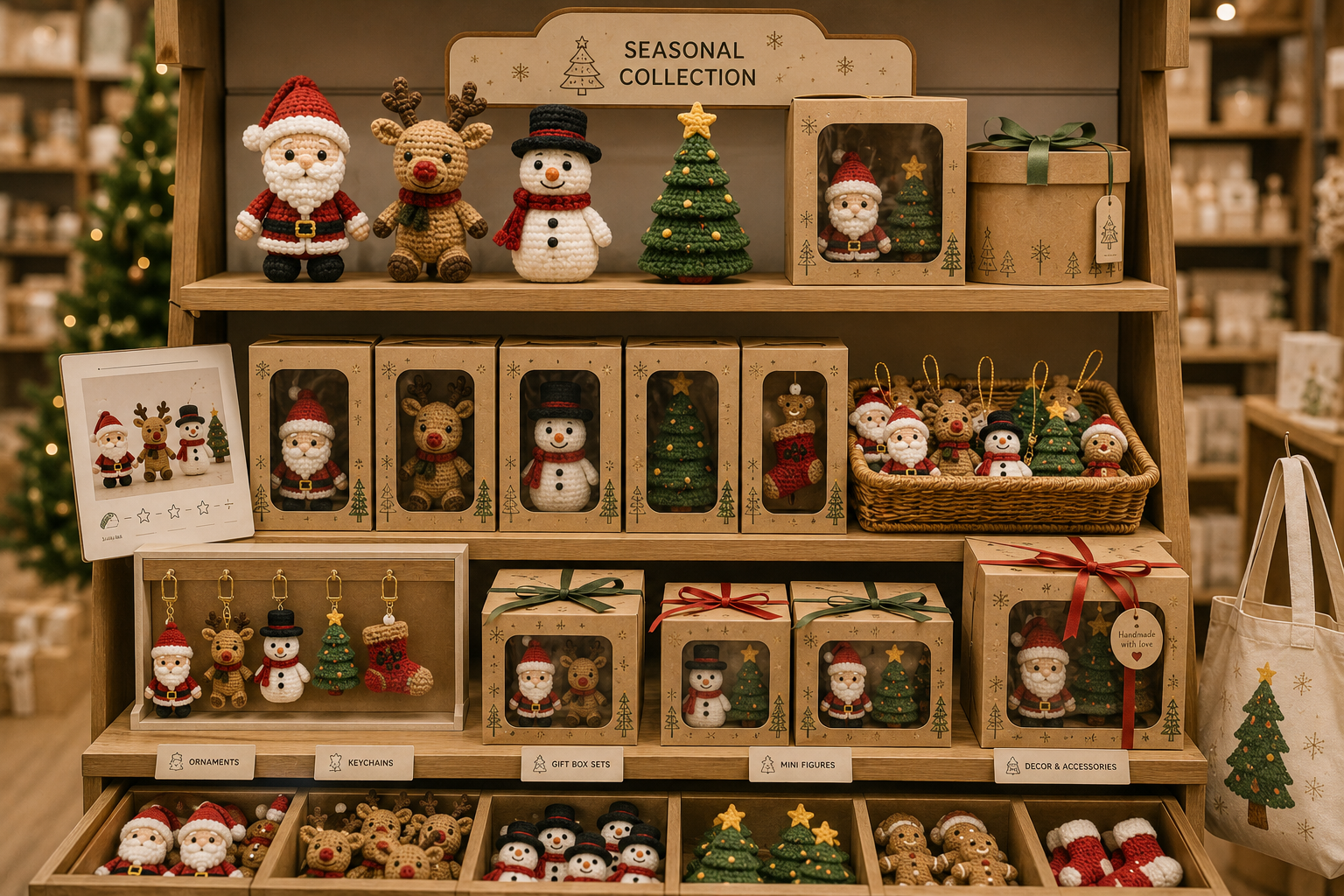
A seasonal collection may include:
| Product Type | Role |
|---|---|
| Hero mascot | Main attraction |
| Keychains | Entry-level gift |
| Ornaments | Seasonal decoration |
| Gift sets | Premium offering |
| Accessories | Additional purchases |
The goal is to create multiple price points and purchasing opportunities.
This strategy allows retailers to appeal to:
- Families
- Collectors
- Tourists
- Corporate buyers
- Gift shoppers
Over the years, we have found that collections generally outperform individual products because they encourage repeat purchases.
Step 5: Sampling and Refinement
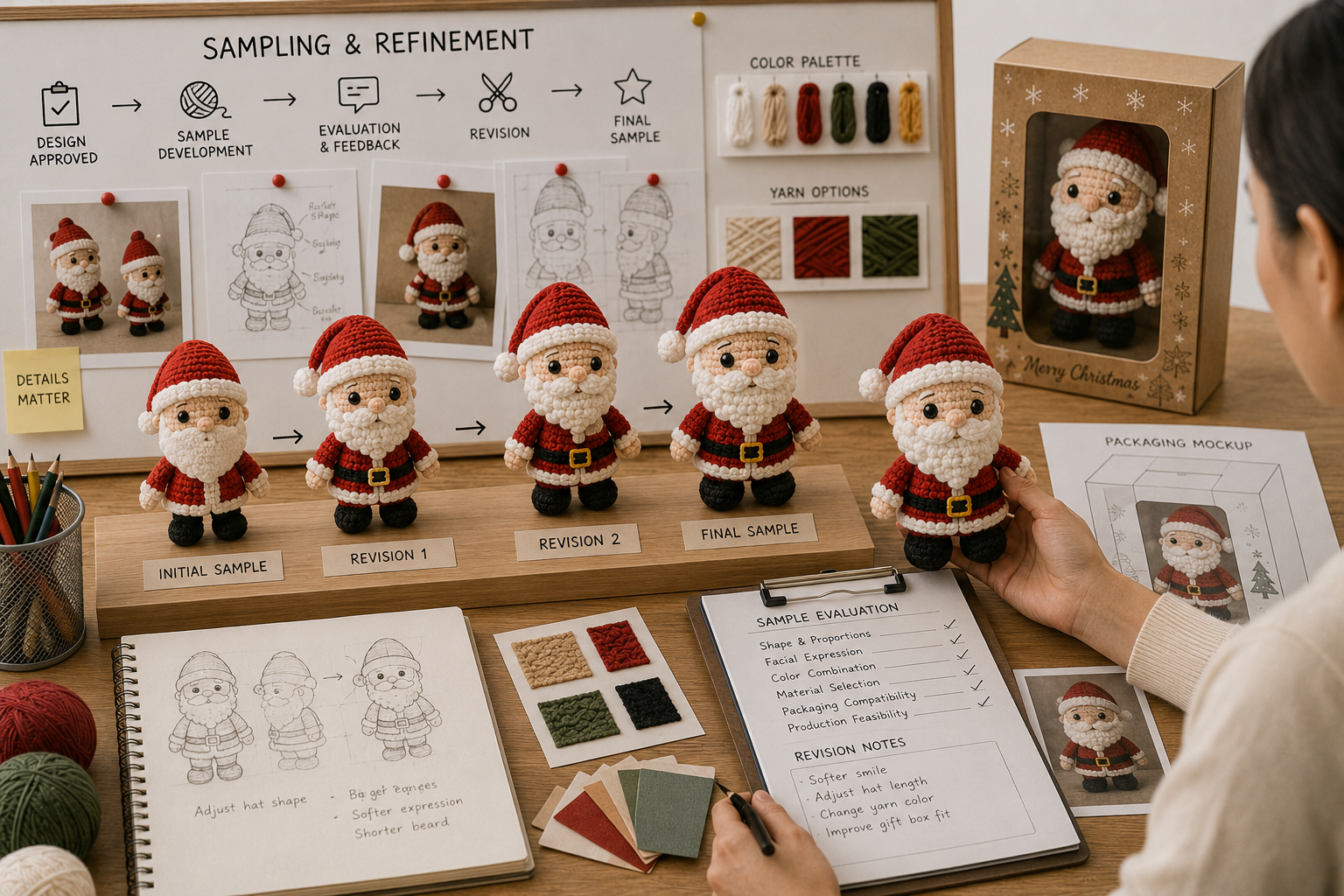
At UMY Crochet Factory, seasonal development enters the sampling stage once designs are approved.
Depending on complexity, samples are typically completed within approximately 7–15 working days
During sampling, retailers evaluate:
- Shape and proportions
- Color combinations
- Material selection
- Packaging compatibility
- Production feasibility
Revisions often involve:
- Adjusting facial expressions
- Simplifying accessories
- Changing yarn colors
- Improving gift presentation
One lesson we have learned from hundreds of seasonal projects is:
Sampling is not about making the first version perfect—it is about improving the final version.
Step 6: Designing the Packaging Experience
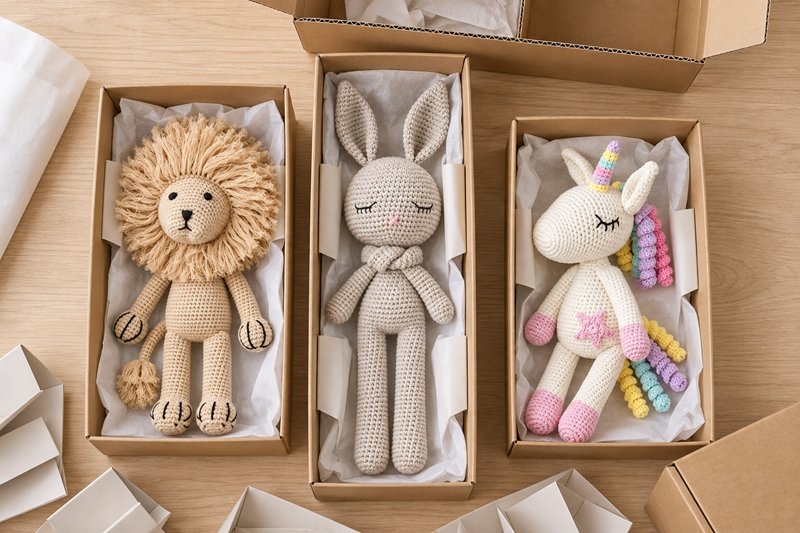
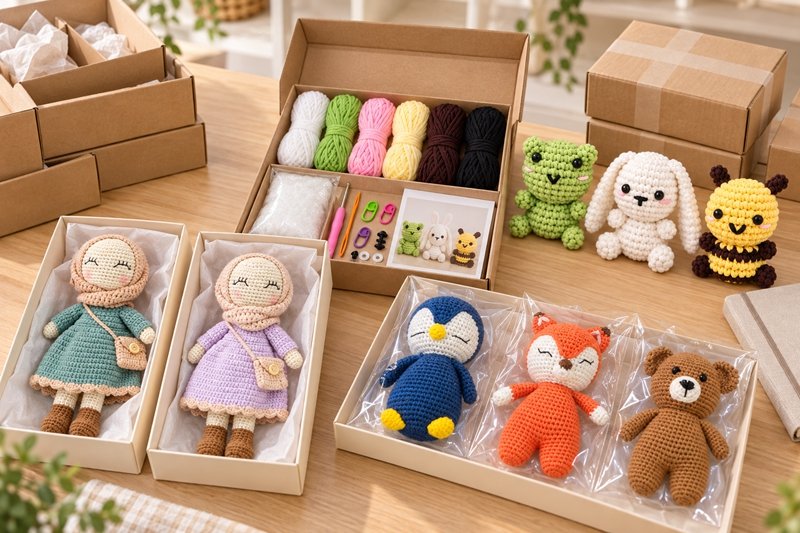
For seasonal products, packaging plays an especially important role.
Customers are often buying gifts, not simply products.
Retailers frequently develop:
- Gift boxes
- Holiday tags
- Greeting cards
- Branded packaging
- Seasonal inserts
The packaging must answer several questions:
- Does it feel festive?
- Is it suitable for gifting?
- Does it communicate the story?
- Does it stand out on retail shelves?
Many successful retailers invest as much attention in packaging as they do in the crochet products themselves.
Step 7: Testing Before the Full Launch
Experienced retailers rarely move directly from sampling to large-scale production.
Instead, they test.
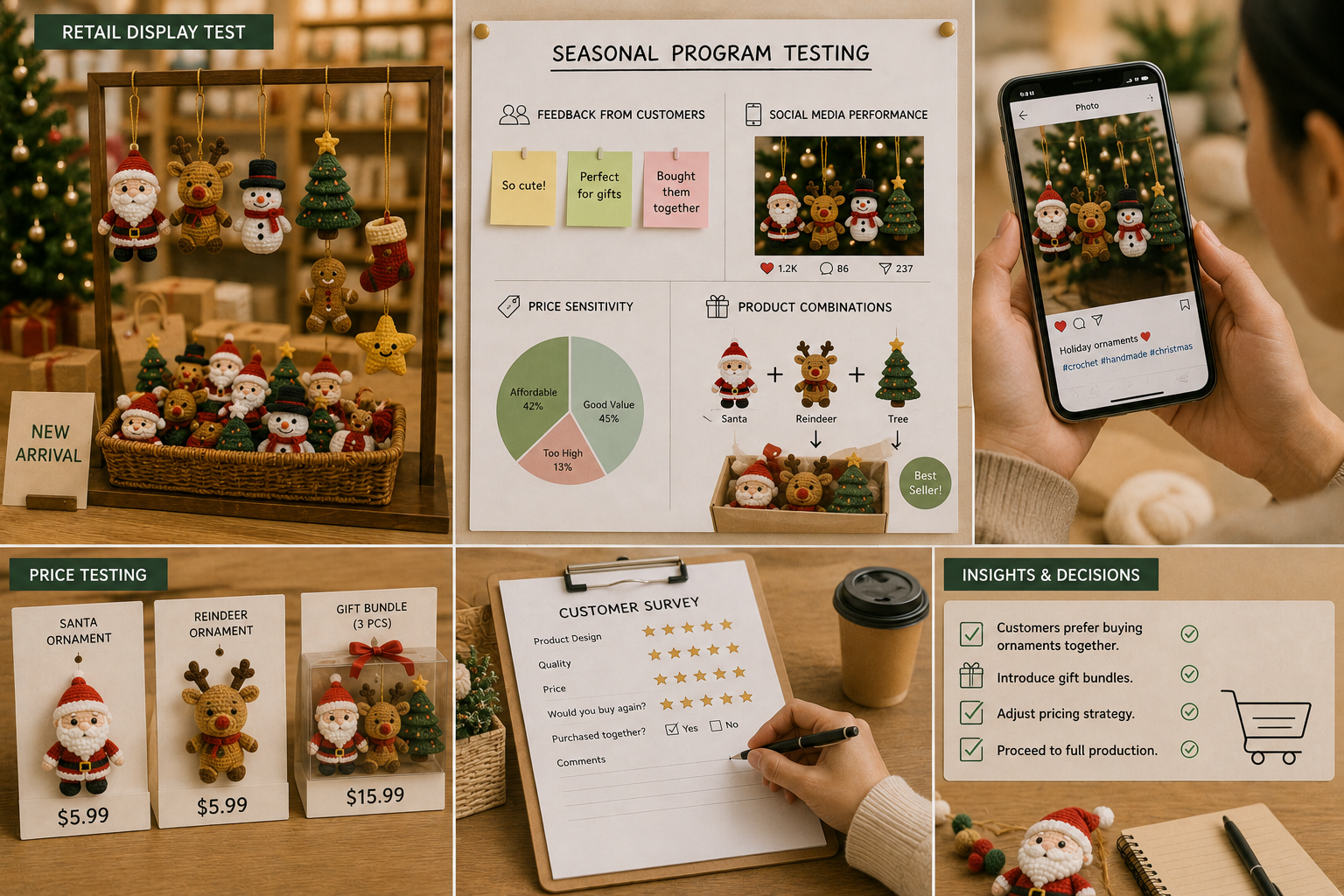
Typical evaluations include:
- Retail display tests
- Customer feedback
- Social media performance
- Price sensitivity
- Product combinations
During one holiday project, a retailer discovered that customers frequently purchased ornaments together rather than individually.
As a result, the retailer introduced gift bundles that significantly increased average order value.
This experience reinforced an important lesson:
Seasonal programs succeed when retailers observe customer behavior rather than relying solely on assumptions.
Step 8: Coordinating Production and Delivery
Unlike evergreen products, seasonal collections operate within strict deadlines.
Production planning typically includes:
- Yarn procurement
- Artisan scheduling
- Packaging preparation
- Quality inspections
- Shipping coordination
Missing a seasonal window can significantly reduce a product's commercial value.
For this reason, retailers often prioritize:
✓ Stable production capacity.
✓ Reliable lead times.
✓ Quality consistency.
✓ Early planning.
At UMY, we have found that the success of seasonal projects depends as much on logistics as on creativity.
Real Project Example: Building a Christmas Crochet Collection
One retailer approached us with the idea of developing a Christmas crochet mascot.
Initially, the project involved only one snowman design.
However, after discussing the product strategy, the retailer expanded the concept into a complete holiday collection that included:
- A snowman mascot
- A reindeer ornament
- A Christmas tree decoration
- Gift-ready packaging
- Seasonal greeting cards
The products were first tested in selected retail locations.
Customer feedback revealed that shoppers preferred purchasing multiple items together.
In response, the retailer introduced bundled gift sets, which quickly became one of the collection's best-performing products.
What began as a single holiday decoration eventually evolved into an annual Christmas program.
Common Mistakes Brands Make With Seasonal Products
After supporting seasonal launches across more than 150 countries and regions, we have identified several recurring challenges.
Starting Too Late
Many retailers underestimate how much time sampling, packaging, and production require.
Launching Too Many Products
Large collections increase inventory risk and complicate forecasting.
Ignoring Packaging
Seasonal products are often purchased as gifts, making packaging a critical factor.
Focusing Only on Trends
The strongest collections balance current trends with long-term brand identity.
Treating Seasonal Products as One-Time Projects
Many successful holiday programs return every year with new variations.
What We Have Learned From Seasonal Crochet Projects
Over the past 12 years, several patterns have emerged across successful seasonal launches.
The strongest programs:
✓ Begin planning early.
✓ Build around a hero product.
✓ Offer multiple price points.
✓ Invest in packaging.
✓ Test before scaling.
✓ Leave room for future expansion.
One thing we have consistently observed is:
Great seasonal collections do not simply celebrate holidays—they create traditions that customers look forward to every year.
UMY Crochet Factory at a Glance
Founded in 2013, UMY specializes exclusively in crochet manufacturing.
Today, we support:
- Retailers
- Gift brands
- Museum stores
- Corporate buyers
- Distributors
- Cultural institutions
across more than 150 countries and regions.
Our capabilities include:
- More than 12 years of crochet manufacturing experience
- A network of more than 2,000 artisans
- OEM and ODM development
- Seasonal product planning
- Sample development within approximately 7–15 working days
- Packaging customization
- Gift-set development
- International quality management systems
From concept development to holiday launches, our goal is to help customers create seasonal collections that customers remember.
Frequently Asked Questions
How early should retailers begin developing seasonal crochet products?
Most seasonal programs begin six to nine months before the target holiday.
What products work best in seasonal crochet collections?
Popular products include:
- Mascots
- Ornaments
- Keychains
- Gift sets
- Decorations
How important is packaging?
Packaging is especially important because seasonal products are often purchased as gifts.
Should retailers test products before placing large orders?
Yes. Small-scale testing helps reduce risk and improve product-market fit.
Can seasonal collections return every year?
Absolutely.
Many successful retailers refresh existing collections with new characters, packaging, and limited editions each season.
Final Thoughts
Developing a seasonal crochet gift program involves far more than creating holiday-themed products.
It requires careful planning, storytelling, packaging, testing, and production management.
After supporting retailers across more than 150 countries and regions, we have learned that the strongest seasonal programs share several qualities:
✓ Clear themes.
✓ Strong hero products.
✓ Gift-ready presentation.
✓ Strategic planning.
✓ Long-term vision.
Because in the end, customers rarely remember exactly when they bought a seasonal gift.
They remember the feeling it created.
Planning Your Next Seasonal Crochet Collection?
At UMY Crochet Factory, we help retailers, museum stores, and gift brands transform seasonal ideas into market-ready crochet collections.
Whether you are preparing for Christmas, Valentine's Day, Halloween, or another special occasion, our team is ready to help bring your ideas to life.
Contact us today to start your next seasonal project.
 Chinese