
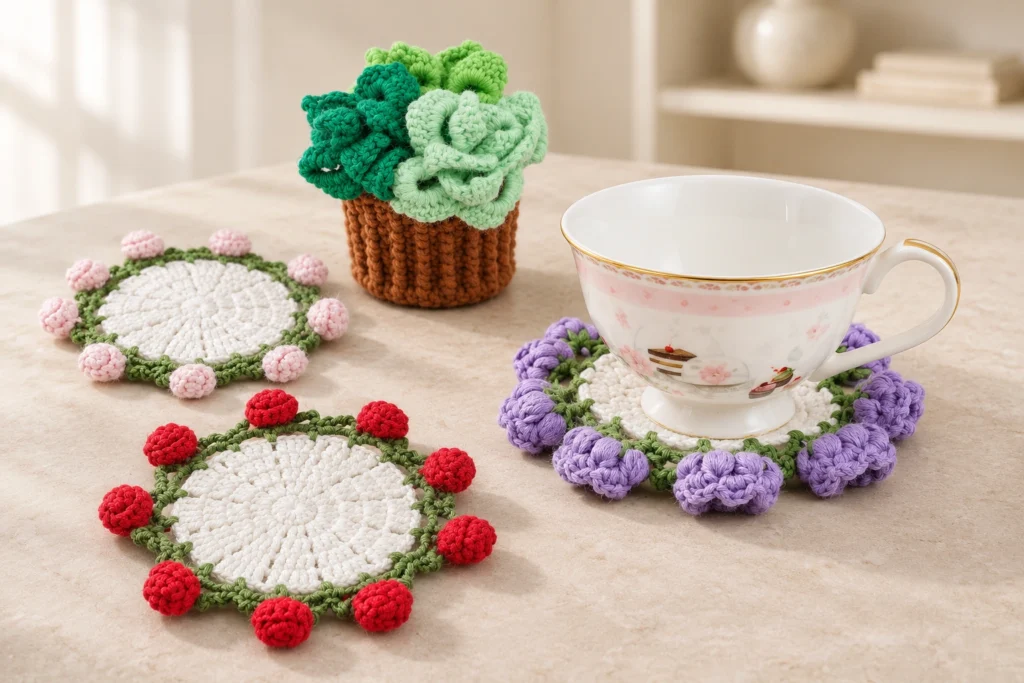
When developing crochet coasters, buyers should check the usable cup-support area, flatness, edge details and interaction with the intended drinkware and table surface. Review the actual sample in its proposed use, then assess its condition after handling, cleaning and storage under agreed conditions.
For homeware brands, gift retailers and cultural merchandise teams, an attractive design is only one part of the brief. The coaster must also provide a clearly defined place for the cup and a practical experience when the cup is placed, lifted and moved.
This guide covers crochet coasters for drinkware. Suitability for hot cookware, surface protection, absorbency or other performance claims requires separate evaluation.
Define the Drinkware and Intended Use
Start with the cups or glasses the product is intended to accommodate.
A small footed teacup, a broad ceramic mug and a narrow drinking glass have different contact areas. Their overall width does not necessarily describe the part that rests on the coaster.
Provide representative drinkware or record:
- The base shape and contact dimensions.
- The intended filled condition.
- Whether the vessel has a foot ring or an irregular underside.
- The table surfaces included in the review.
- The expected use setting.
- Any proposed product claims.
Avoid describing a coaster as suitable for “all cups” without defining and evaluating that scope.
Also distinguish a decorative tabletop item from a product intended for regular drink use. That decision affects the review plan and the information needed on the packaging.
Separate Overall Size From Usable Support Area
Define the dimensions that matter to the intended design.
| Measurement | What it describes | Why buyers need it |
|---|---|---|
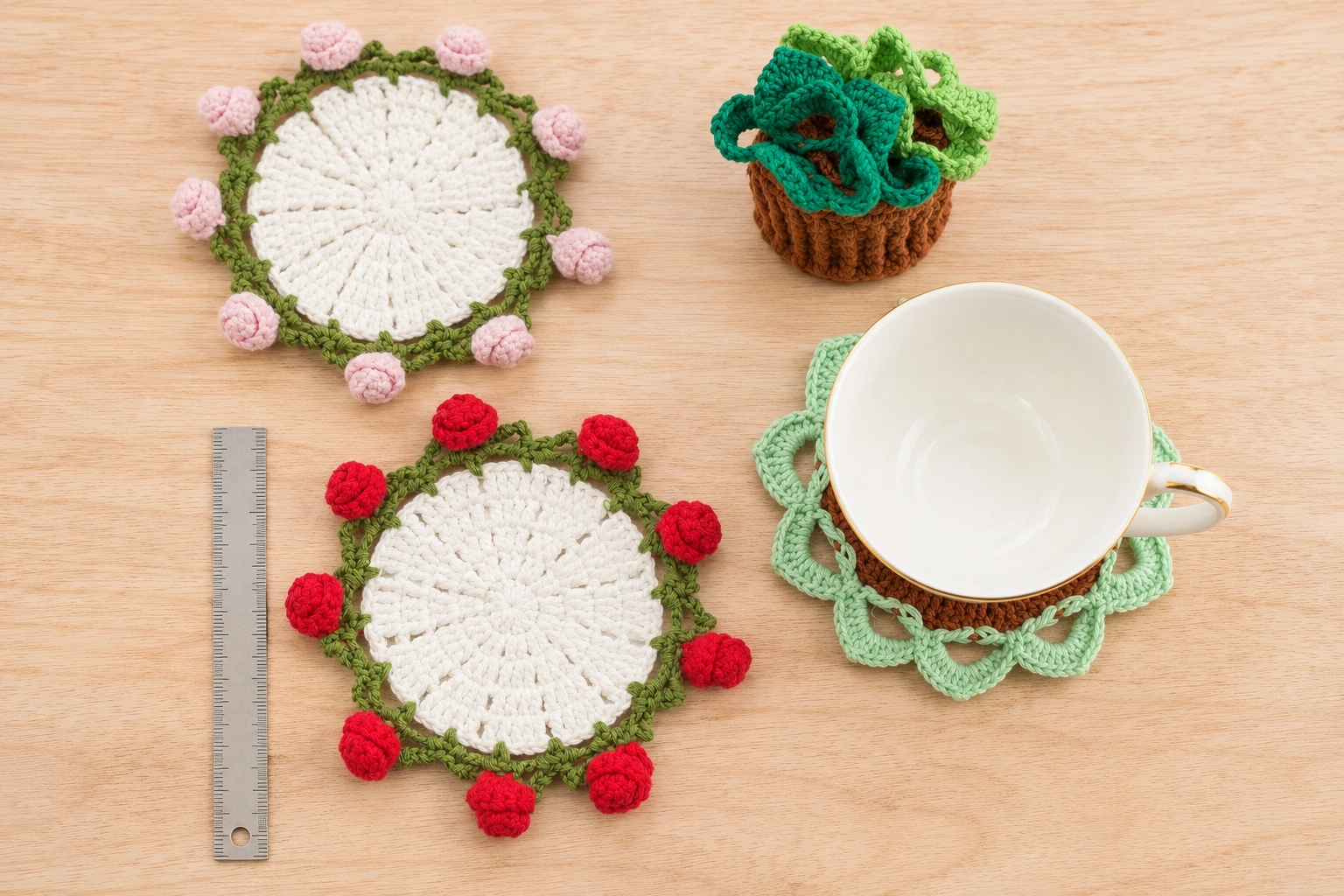
| Overall dimensions | The complete outline, including petals or other decoration | Supports packaging, display and visual review |
| Usable central area | The area intended to support the vessel base | Helps assess drinkware compatibility |
| Central thickness | The thickness beneath the cup | Supports consistency and contact review |
| Edge profile | Raised flowers, leaves, scallops or other features | Identifies possible interference with placement and handling |
| Stored dimensions | The product in its intended folded, stacked or gathered form | Supports storage and packaging assessment |
Agree on the measurement method and sample condition. A soft crochet item can be stretched or compressed during measurement, so specify how it should rest and whether any adjustment is permitted.
For a coordinated set, review each design. Similar overall dimensions do not establish an identical usable area.
Check Flatness in the Intended Presentation
Place the coaster on a level reference surface without pulling it into shape.
Observe whether the center rests naturally and whether the edges lift, curl or gather. Record any permitted preparation, such as an agreed shaping step, before judging the result.
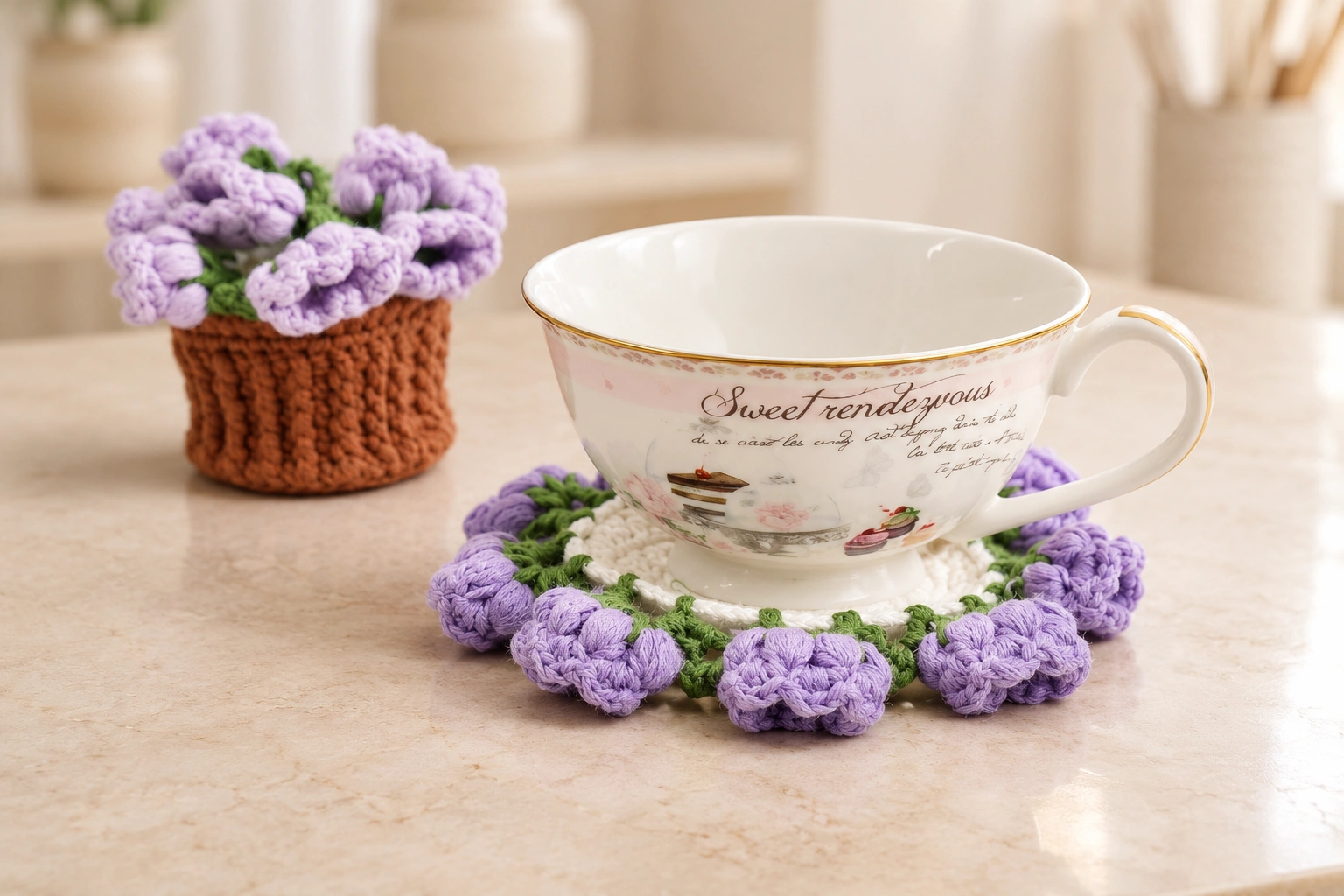
Then place the representative vessel on the intended central area.
Check:
- Whether the vessel rests evenly.
- Whether raised details enter its contact area.
- Whether the coaster gathers beneath the base.
- Whether the cup sits as intended without being held in position.
- Whether the result changes when the coaster is rotated.
If the product requires adjustment after unpacking, define that process and evaluate whether it is reasonable for the intended customer.
Review the Cup, Coaster and Table Together
The practical unit of review is the complete arrangement: drinkware, coaster and supporting surface.
Use representative vessels under agreed conditions. A review with an empty cup may not reveal the same behavior as the intended filled condition.
Observe placement, lifting and repositioning.
Placing the Cup
Check whether the central area is easy to identify and whether the vessel can be placed without catching decorative features.
For an irregular outline, review whether the visual design helps customers understand where the cup belongs.
Lifting the Cup
Observe whether the coaster stays on the table, moves with the vessel or catches around its base.
Record the conditions under which any movement occurs. Do not infer a general result from one vessel or one surface.
Repositioning the Arrangement
Assess normal handling without using excessive force or deliberately damaging the sample. Keep the review method consistent across candidate versions.
A design that works on one tabletop may behave differently on another. Limit compatibility statements to the evaluated scope.
Keep Decorative Edges Outside the Required Contact Area
Raised roses, petals, leaves and other details can give a crochet coaster its identity. They should be developed in relation to the intended cup base.
Review whether decoration:
- Extends into the support area.
- Sits beneath a handle during normal placement.
- Catches the cup during lifting.
- Makes the center difficult to identify.
- Changes the way the coaster lies on the table.
- Requires repeated adjustment.
If a design needs revision, identify the feature that causes the issue before changing the entire product.
A smaller decorative element, a different location or an adjusted central area may be considered during development. Review each proposed change through a new sample rather than assuming it resolves the problem.
Evaluate Material Choices Against the Intended Claims
Decide which claims the product is intended to make, then agree on the evidence needed to support them.
Examples include:
- Absorbency.
- Resistance to color transfer.
- Cleaning suitability.
- Retention of shape after cleaning.
- Protection of specified surfaces under defined conditions.
Keep observations separate from claims. A coaster feeling dry after a brief demonstration does not establish an absorbency specification. Likewise, a photograph of a hot drink does not establish heat resistance or protection of the table beneath it.
Confirm material information with the supplier and arrange appropriate evaluation before publishing performance statements.
Review Cleaning and Drying Before Writing Care Instructions
Define the proposed care method and assess the complete product under that method.
Record the sample condition before and after review, including:
- Overall dimensions.
- Flatness of the central area.
- Shape of the decorative edge.
- Color appearance.
- Attachment condition.
- Surface texture.
- Any adjustment needed after drying.
Evaluate different colors and constructions where they may affect the result. Do not automatically apply one sample’s care outcome to every design in a collection.
Care instructions should reflect the evaluated product and process.
Include Storage and Repeated Setup
For a product with more than one presentation, review each intended state and the transition between them.
Ask:
- Can the coaster be returned to its usable shape?
- Does storage leave folds or curled areas beneath the cup?
- Can decorative parts be arranged without pulling on their attachments?
- Are separate pieces easy to identify and keep together?
- Does the packaging explain the setup clearly?
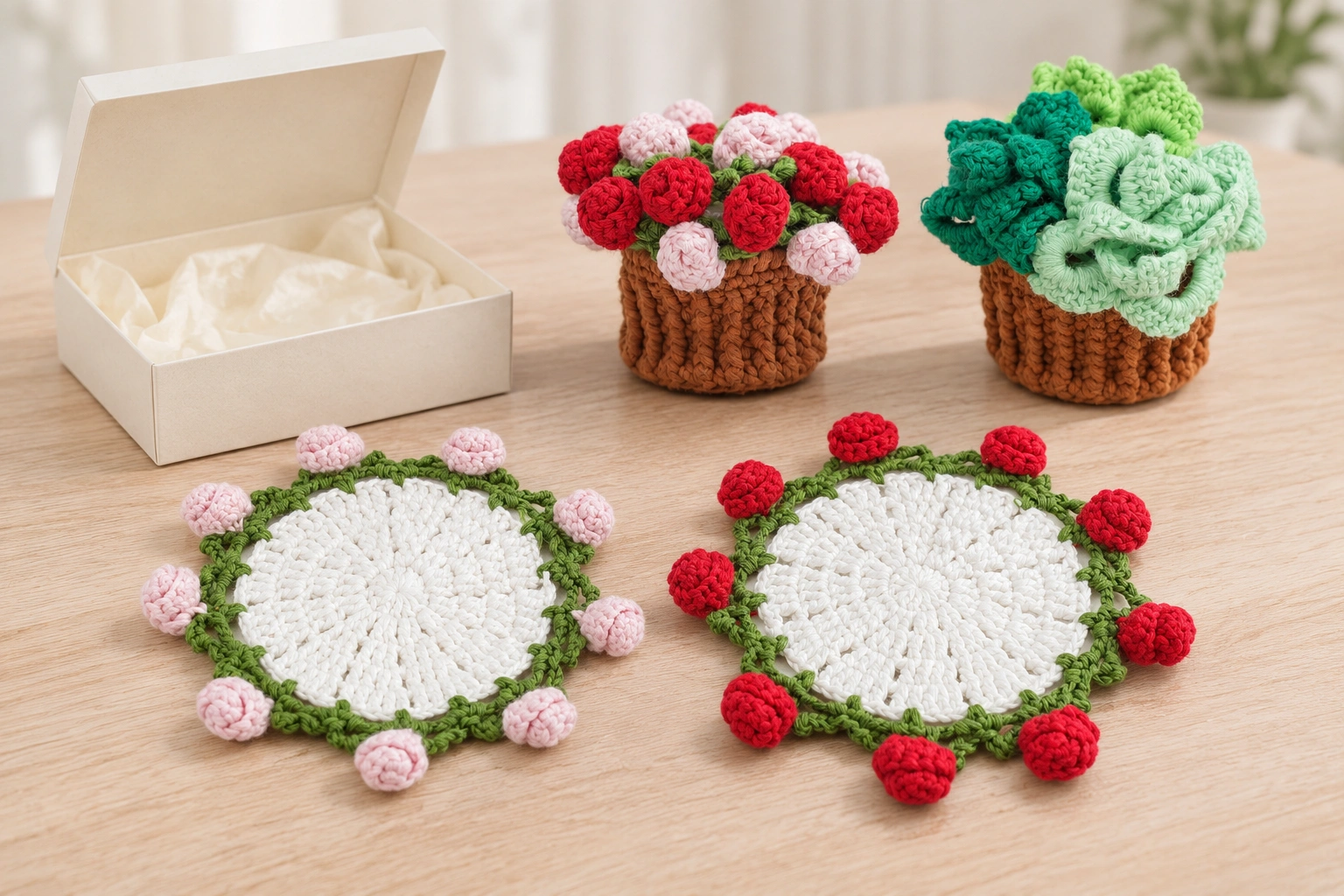
For a flower-pot-style presentation, distinguish the storage arrangement from the drink-use configuration. Do not assume that a compact decorative form proves the coaster will lie flat after opening.
Use the actual approved product when reviewing these transitions.
Establish Acceptance Criteria for the Collection
Translate review observations into requirements that can be used during sampling and production.
A useful specification should identify:
- Approved design and material references.
- Intended drinkware scope.
- Overall dimensions and usable central area.
- Measurement conditions and agreed tolerances.
- Flatness and appearance requirements.
- Decorative feature positions.
- Agreed handling and care review methods.
- Storage and unpacking instructions.
- Packaging configuration.
- Supporting evidence for product claims.
Use photographs to clarify appearance requirements, but keep the written criteria connected to the physical reference sample.
For the broader approach to dimensional and visual differences, see How to Define Acceptable Handmade Variation in Crochet Products.
Developing Crochet Coasters With UMY Crochet
UMY Crochet is a product development and manufacturing partner for crochet, DIY craft kits, knitted toys and creative gifts.
A practical coaster development brief combines the visual reference with representative drinkware, intended use, material preferences and retail requirements. These inputs provide a basis for discussing the central support area, decorative construction, sampling scope and packaging.
For a collection, assess shared requirements and design-specific details separately. A coordinated appearance should be supported by clear specifications for every version.
Before production approval, document which aspects of the sample have been accepted and which evaluations remain outstanding. See What Should Buyers Approve in a Crochet Pre-Production Sample? for a broader approval framework.
Frequently Asked Questions
Is the overall diameter enough to specify a crochet coaster?
No. Record the usable central area as well as the complete decorative outline. The cup base needs an appropriate support area.
Can a decorative flower coaster work with different cups?
Possibly, but compatibility should be reviewed with representative vessels. Different base shapes can interact differently with the center and raised edges.
Does yarn composition prove absorbency or surface protection?
No. Material information helps define the product, while finished-product claims require suitable supporting evaluation.
Should the sample be reviewed with an empty or filled cup?
Define conditions that represent the intended use. Record the vessel and filled condition so the review can be repeated consistently.
Can a coaster stored as a flower or plant return to a flat shape?
That should be checked on the actual sample through the intended storage and setup process. Do not assume the result from its decorative appearance.
Can the same care instructions be used across the collection?
Only where the material, construction and evaluation support that scope. Review differences that may affect cleaning, drying or shape.
Request a Crochet Coaster Development Review
Send UMY Crochet your design references, intended drinkware, preferred materials and proposed flat or decorative storage format.
Include the usable support area you need, sales channel, packaging concept and any intended performance claims. Request a review of construction, sample evaluation and evidence requirements before finalizing the product specification.
<!--[googlesitekit-end-of-content]-->
 Chinese