
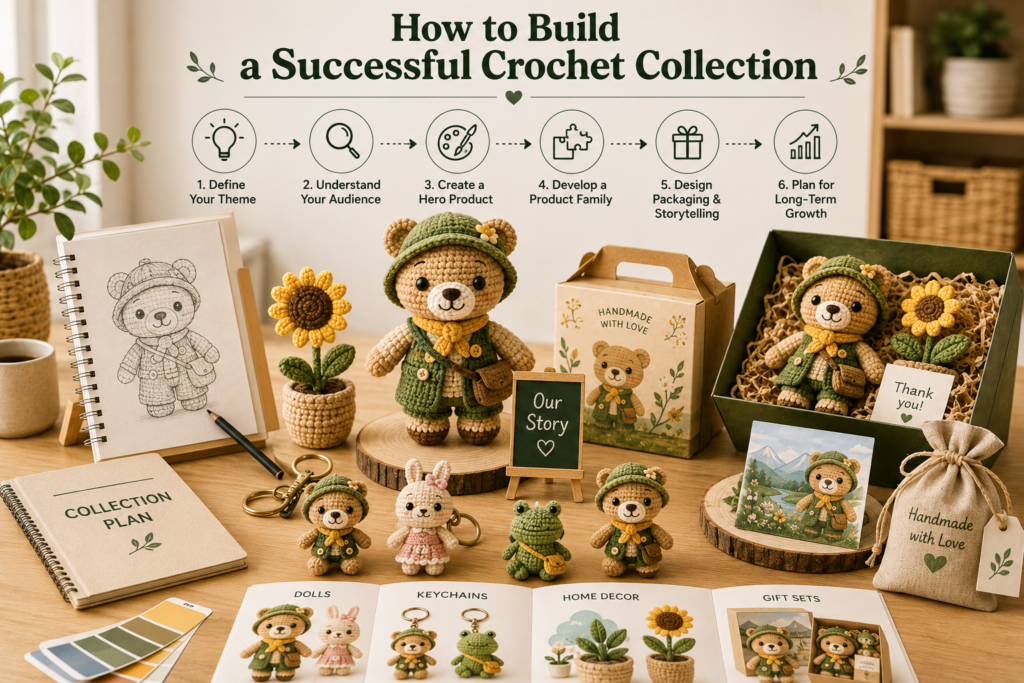
A Practical Guide for Brands, Retailers, Museum Stores, and Gift Companies
Many buyers begin their crochet journey with a single product idea.
It may be a crochet doll, a gift box, a flower bouquet, or a souvenir inspired by local culture.
However, after more than 12 years of crochet manufacturing experience at UMY Crochet Factory and supporting customers across more than 150 countries and regions, we've learned that the most successful businesses rarely rely on a single product.
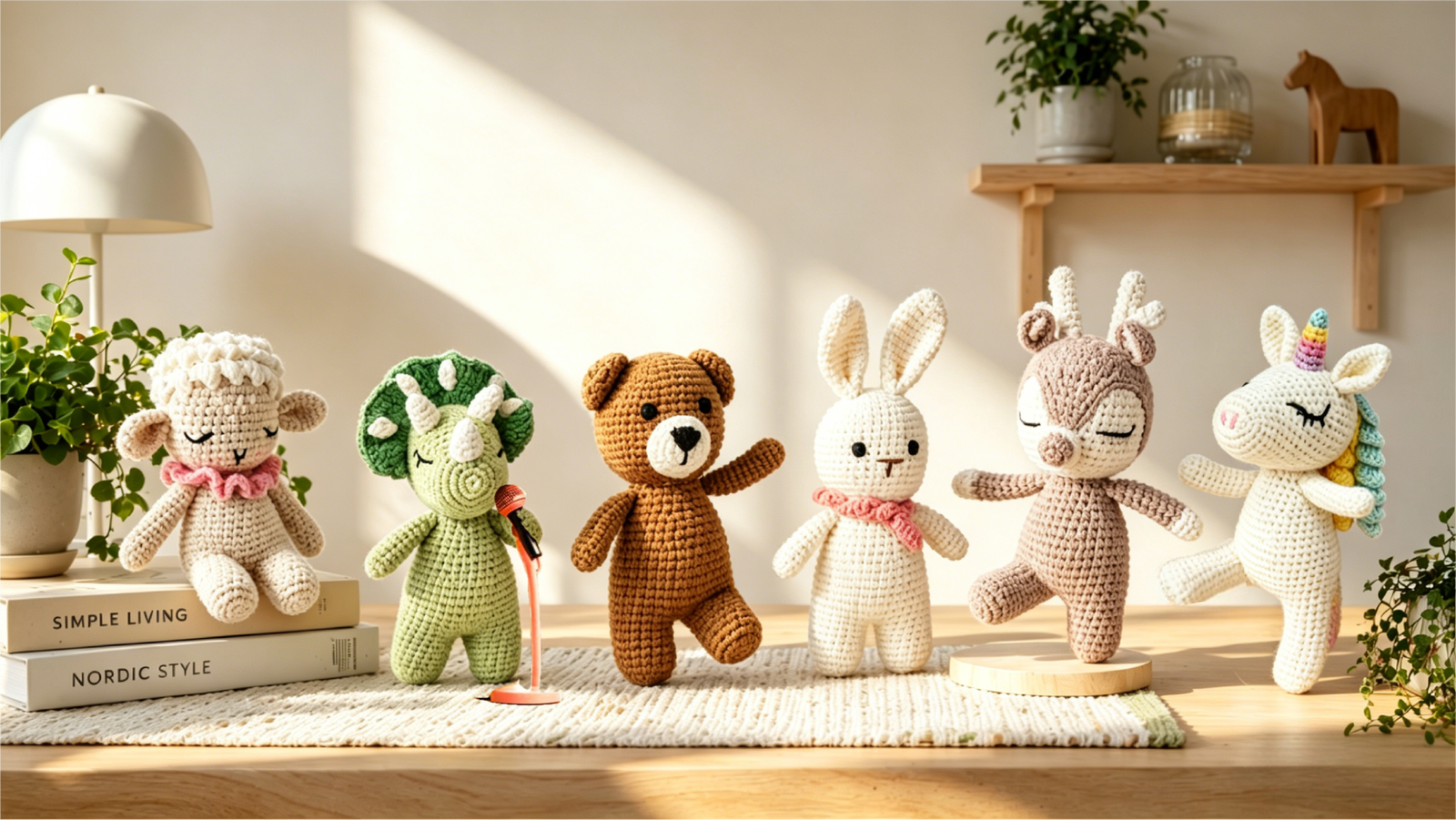
Instead, they build collections.
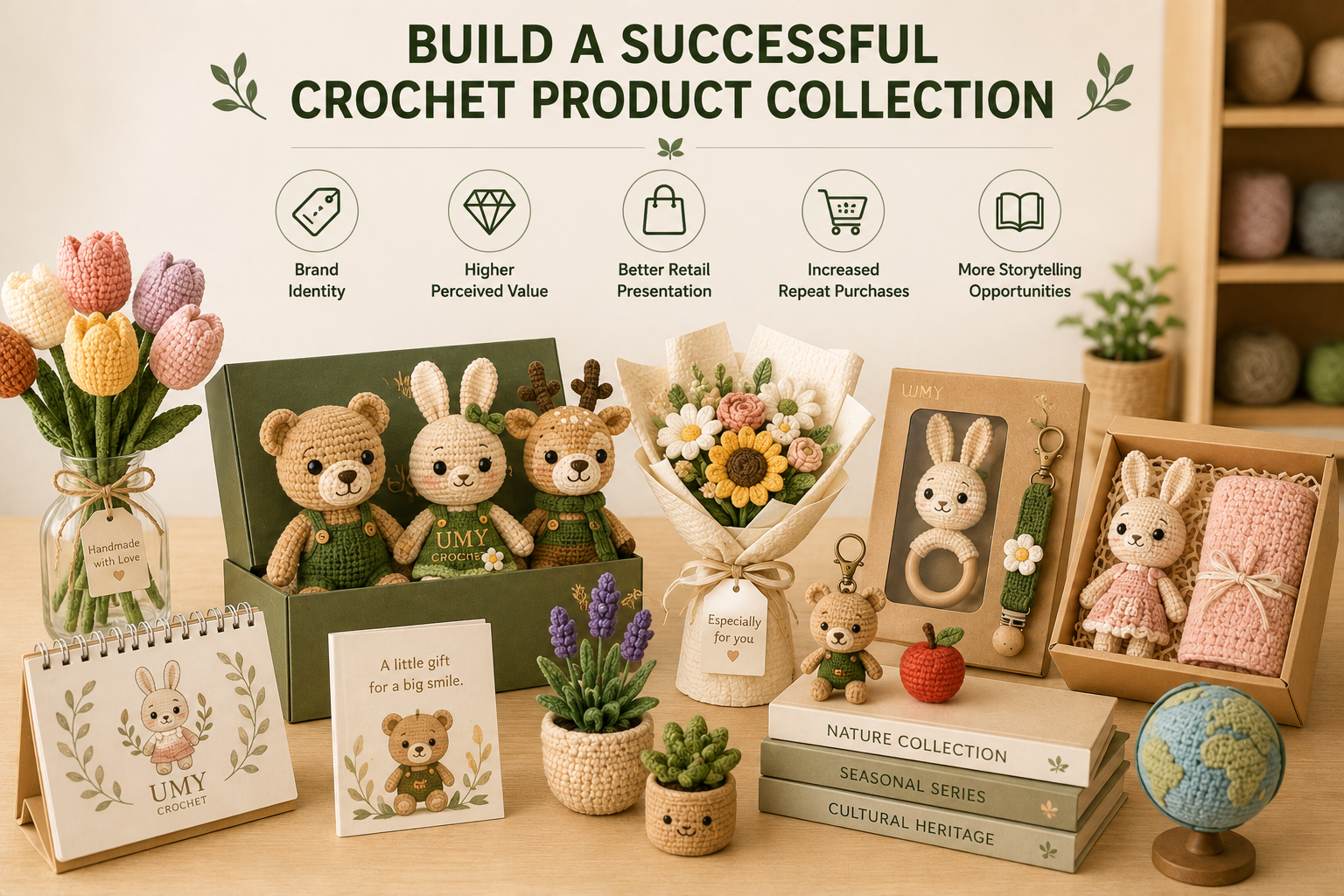
A strong crochet collection creates more than additional products. It creates:
- A recognizable brand identity
- Higher perceived value
- Better retail presentation
- Increased repeat purchases
- More opportunities for storytelling
Whether you are a retailer, museum buyer, gift brand, startup, or distributor, understanding how to build a successful crochet collection can transform individual products into long-term business assets.
Why Collections Perform Better Than Individual Products
Many first-time buyers focus on developing one product at a time.
Experienced brands think differently.
A well-designed collection helps customers:
- Understand your brand more quickly
- Discover related products
- Build emotional attachment
- Increase purchase frequency
- Create a sense of exclusivity
One thing we've consistently observed across retail projects is:
Customers often remember the collection long after they forget the individual product.
For businesses, [collections also improve:
- Shelf presentation
- Marketing campaigns
- Seasonal promotions
- Inventory planning
- Average order value](https://cmr.berkeley.edu/2021/06/leveraging-the-physical-store-to-boost-customer-value/)
Step 1: Define the Purpose of the Collection
Before developing products, start by asking one question:
Why does this collection exist?
Different collections serve different goals.
Examples include:
| Collection Type | Main Goal |
|---|---|
| Museum souvenirs | Cultural storytelling |
| Baby gift sets | Emotional gifting |
| DIY crochet kits | Creative experiences |
| Seasonal collections | Holiday sales |
| Corporate gifts | Brand promotion |
| Retail accessories | Everyday purchases |
A clear purpose guides every decision that follows.
Without a defined objective, collections often become inconsistent and difficult to expand.
Step 2: Build Around a Strong Theme
Successful collections are built around a central idea.
Themes create coherence between products and help customers understand the story behind them.
Popular crochet themes include:
Cultural Collections
- Traditional costumes
- Historical characters
- Regional landmarks
- Museum-inspired designs
Nature Collections
- Forest animals
- Ocean creatures
- Flowers and plants
- Seasonal landscapes
Emotional Collections
- Positive messages
- Emotional support characters
- Friendship gifts
- Wellness products
Children's Collections
- Educational characters
- Storybook themes
- Learning toys
- Nursery decorations
At UMY Crochet Factory, we've found that collections with strong themes are easier to expand over time.
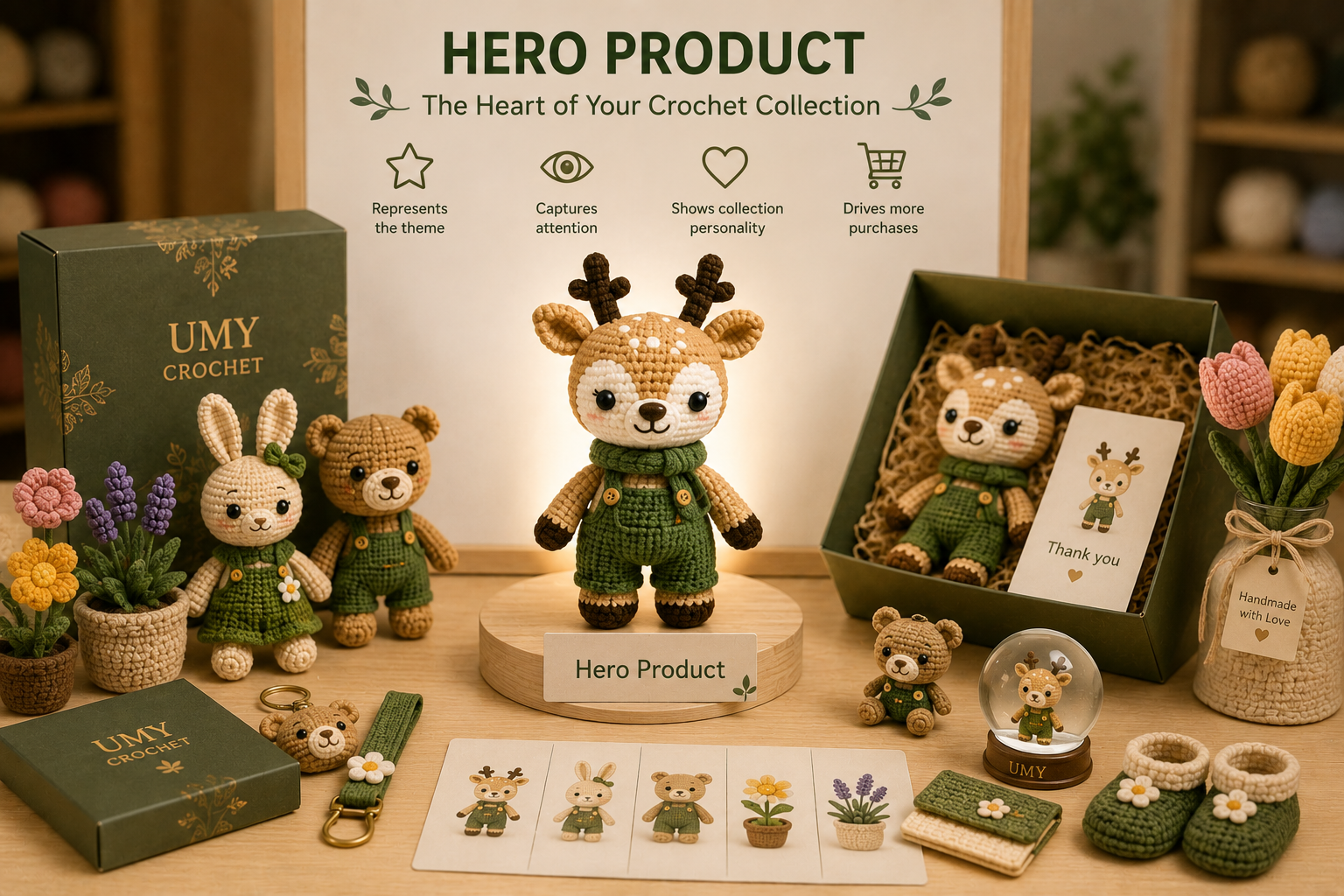
Step 3: Create a Hero Product
Every successful collection needs a centerpiece.
This "hero product" becomes the item that customers remember first.
Examples include:
- A signature crochet doll
- A museum mascot
- A holiday character
- A premium gift set
- A collectible centerpiece
The hero product should:
✓ Represent the overall theme.
✓ Capture attention immediately.
✓ Communicate the collection's personality.
✓ Encourage customers to explore additional products.
One lesson we've learned is:
Customers are often attracted by one product but purchase because of the complete collection.
Step 4: Add Supporting Products
Once the hero product is established, supporting products help create depth.
These products should complement—not compete with—the centerpiece.
Common supporting items include:
- Mini crochet keychains
- Accessories
- Gift cards
- Packaging inserts
- Small decorative pieces
- Seasonal variations
A balanced collection often includes:
| Product Role | Example |
|---|---|
| Hero item | Crochet doll |
| Mid-tier products | Keychains, flowers |
| Entry-level products | Small gifts |
| Premium products | Gift boxes |
This structure allows customers with different budgets to participate.
Step 5: Think About Retail Display Early
Many buyers focus exclusively on product design and postpone discussions about display.
However, display strategy often determines commercial success.
Questions to consider include:
- How will products appear together?
- Can customers understand the theme immediately?
- Does the packaging reinforce the story?
- Are the products visually balanced?
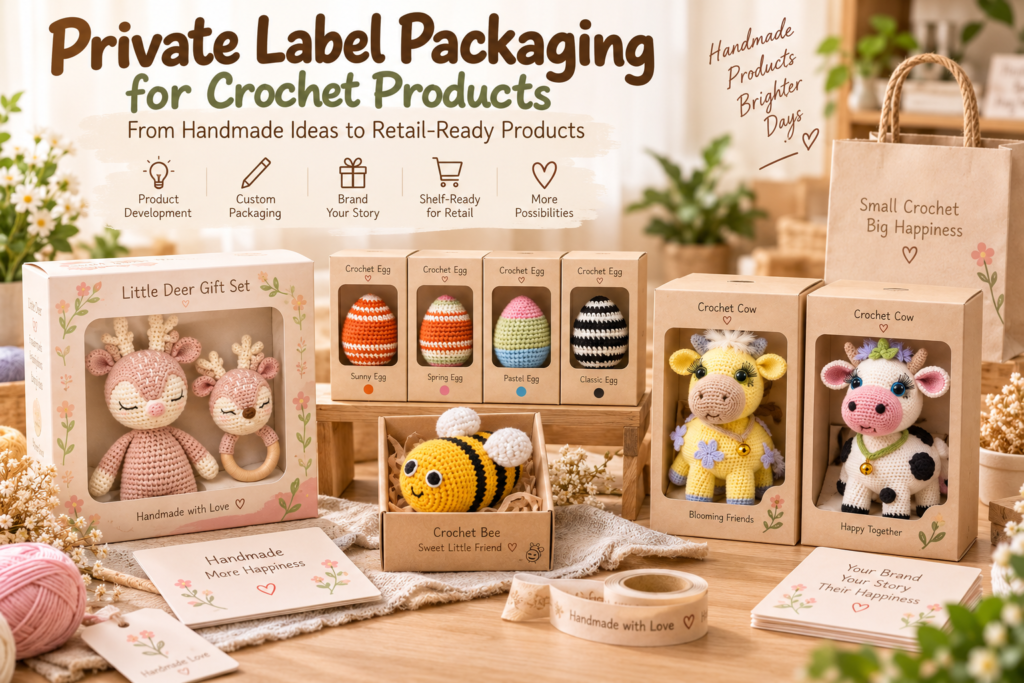
Packaging can significantly increase perceived value.
Simple improvements such as:
- Consistent colors
- Branded labels
- Story cards
- Unified packaging
can transform unrelated products into a recognizable collection.
Step 6: Design for Expansion
One of the biggest mistakes buyers make is designing collections that cannot grow.
Successful collections leave room for future additions.
Ask yourself:
- Can new characters be added?
- Can seasonal editions be created?
- Can packaging remain consistent?
- Can the story continue?
Collections built with flexibility often generate stronger long-term returns.
Over the years, we've seen customers expand from:
- Three products to ten products
- Seasonal promotions to permanent programs
- Small gift lines to full retail collections
Growth becomes easier when expansion is considered from the beginning.
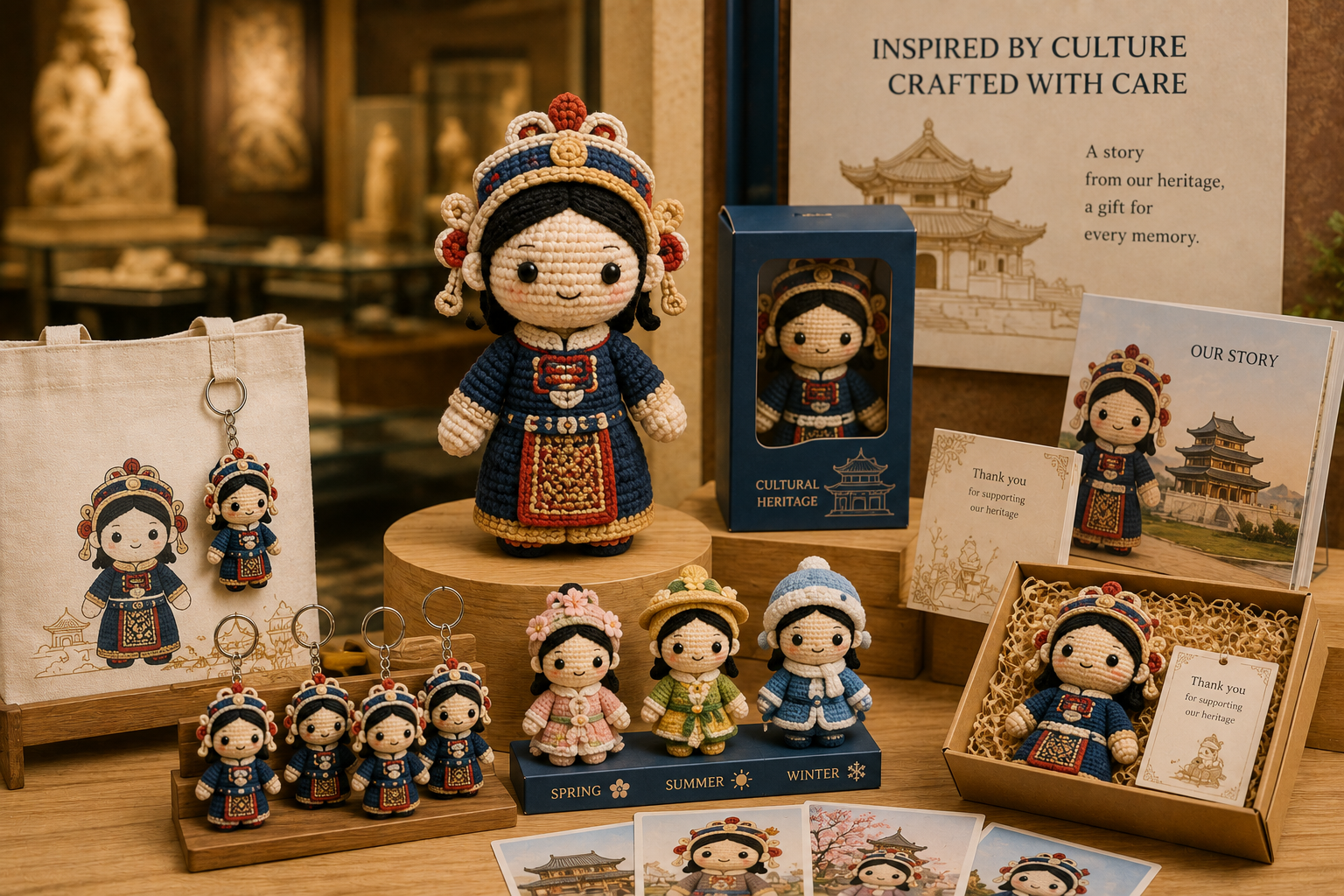
Real Project Example: From Museum Souvenir to Product Family
One museum customer initially approached us with a single mascot concept inspired by local culture.
The original plan involved producing only one crochet souvenir.
During development, we suggested expanding the idea into a broader collection that included:
- A large mascot doll
- Mini keychains
- Seasonal editions
- Gift-ready packaging
- Story cards explaining the cultural background
The result was not simply a new product.
It became a complete souvenir collection that offered visitors multiple price points and stronger emotional engagement.
This project reinforced an important lesson:
Successful collections are built around experiences, not individual products.
Common Mistakes Buyers Make When Building Collections
After supporting customers across more than 150 countries and regions, we've noticed several recurring mistakes.
Creating Too Many Products at Once
Large collections may appear impressive, but they often increase:
- Inventory pressure
- Development costs
- Production complexity
Starting with a focused collection is usually more effective.
Ignoring Product Relationships
Products should work together visually and emotionally.
Customers should immediately understand why items belong to the same collection.
Overcomplicating the Theme
Strong collections are often built around simple ideas.
Complex concepts can make marketing and product expansion more difficult.
Forgetting About Packaging
Customers do not experience products separately from packaging.
Packaging is part of the collection itself.
Prioritizing Variety Over Consistency
Adding more products does not always create more value.
Consistency is often more important than quantity.
What We Commonly Observe Across Successful Retail Projects
After more than 12 years of crochet manufacturing experience, we've identified several patterns among successful collections.
The strongest collections:
✓ Tell a clear story.
✓ Include multiple price points.
✓ Leave room for expansion.
✓ Use consistent packaging.
✓ Balance emotional appeal with commercial practicality.
✓ Focus on customer experience rather than product quantity.
One thing we've consistently observed is:
Collections succeed when every product supports the same story.
UMY Crochet Factory at a Glance
Since 2013, UMY has specialized exclusively in crochet manufacturing.
Today, we support:
- Retailers
- Museum stores
- Gift brands
- Distributors
- Startups
- Corporate buyers
across more than 150 countries and regions.
Our capabilities include:
- 12+ years of crochet manufacturing experience
- 2,000+ artisan production network
- OEM and ODM development
- Product collection planning
- Sample development within approximately 7–15 working days
- Packaging customization
- Gift-set development
- International quality management systems
Our goal is not simply to manufacture crochet products, but to help customers build collections that create long-term commercial value.
Frequently Asked Questions
How many products should a crochet collection include?
There is no fixed number.
Many successful collections begin with three to five products and expand over time.
What makes a crochet collection successful?
Strong collections usually combine:
- A clear theme
- Consistent design
- Multiple price points
- Effective packaging
- Long-term expansion potential
Should every collection have a hero product?
In most cases, yes.
A hero product helps customers recognize and remember the collection.
Can small brands build collections?
Absolutely.
Many successful brands begin with a small, focused collection before expanding into larger programs.
How long does it take to develop a crochet collection?
Depending on complexity, most collections require:
- Product design
- Sampling
- Packaging development
- Revisions
A complete collection often takes several weeks or months to develop.
Final Thoughts
Building a successful crochet collection involves much more than adding products together.
After supporting customers across more than 150 countries and regions, we've learned that the strongest collections are built around stories, emotions, and long-term thinking.
A thoughtful collection helps brands:
✓ Increase perceived value.
✓ Improve retail presentation.
✓ Encourage repeat purchases.
✓ Create stronger customer connections.
✓ Build long-term commercial opportunities.
Rather than asking:
"What products should we make?"
Successful brands ask:
"What experience do we want customers to remember?"
That shift in perspective often turns individual products into lasting collections.
Planning Your Own Crochet Collection?
At UMY Crochet Factory, we help retailers, museum stores, gift brands, and distributors transform ideas into complete crochet collections—from concept development and sampling to packaging and production.
Whether you're launching your first product family or expanding an existing line, our team is ready to help you build a collection with long-term commercial value.
Contact us today to discuss your next crochet project.

 Chinese