
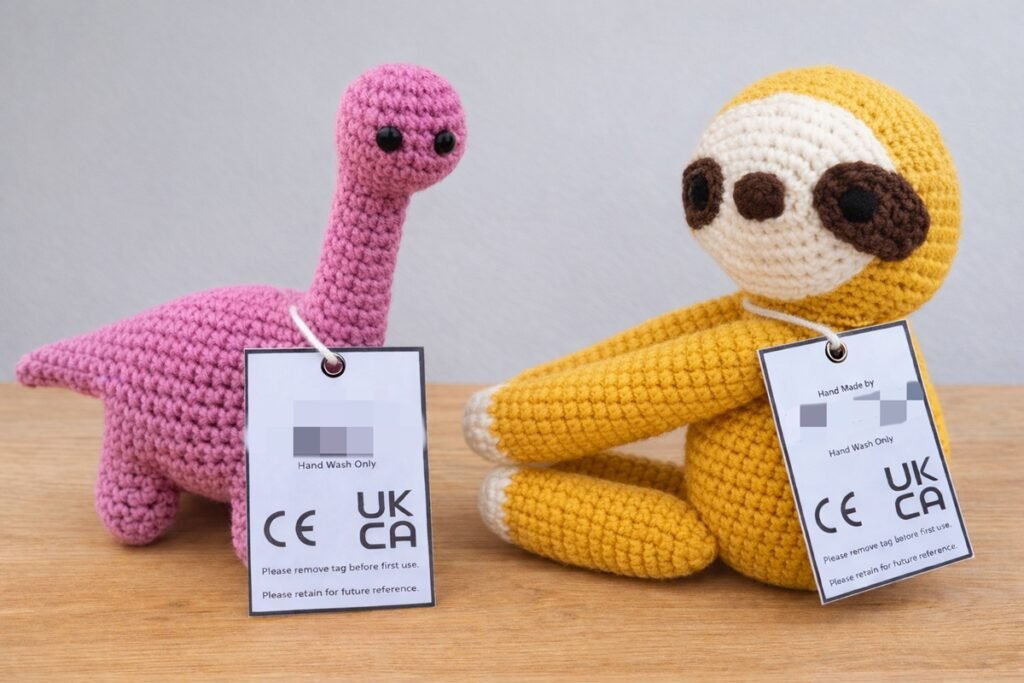
A Complete Guide for Brands, Importers, Retailers, and Gift Companies
One of the most common questions we receive from customers is:
What certifications do crochet toys actually need?
The answer depends on where you plan to sell them.
Over the past 12 years, UMY Crochet Factory has helped customers develop and export crochet toys, baby products, gift sets, and custom crochet collections to more than 150 countries and regions, including the United States, Canada, Europe, the United Kingdom, Australia, and the Middle East.
One lesson we've learned is that many buyers focus heavily on product design, pricing, packaging, and marketing—but overlook compliance requirements until the final stages of development.
Unfortunately, certification mistakes can result in:
- Delayed shipments
- Failed inspections
- Customs clearance issues
- Product recalls
- Marketplace restrictions
- Unexpected testing costs
The good news is that most compliance issues can be avoided when certification planning begins early.
In this guide, we'll explain the most common crochet toy certifications, how requirements vary by market, and what buyers should know before launching a product internationally.
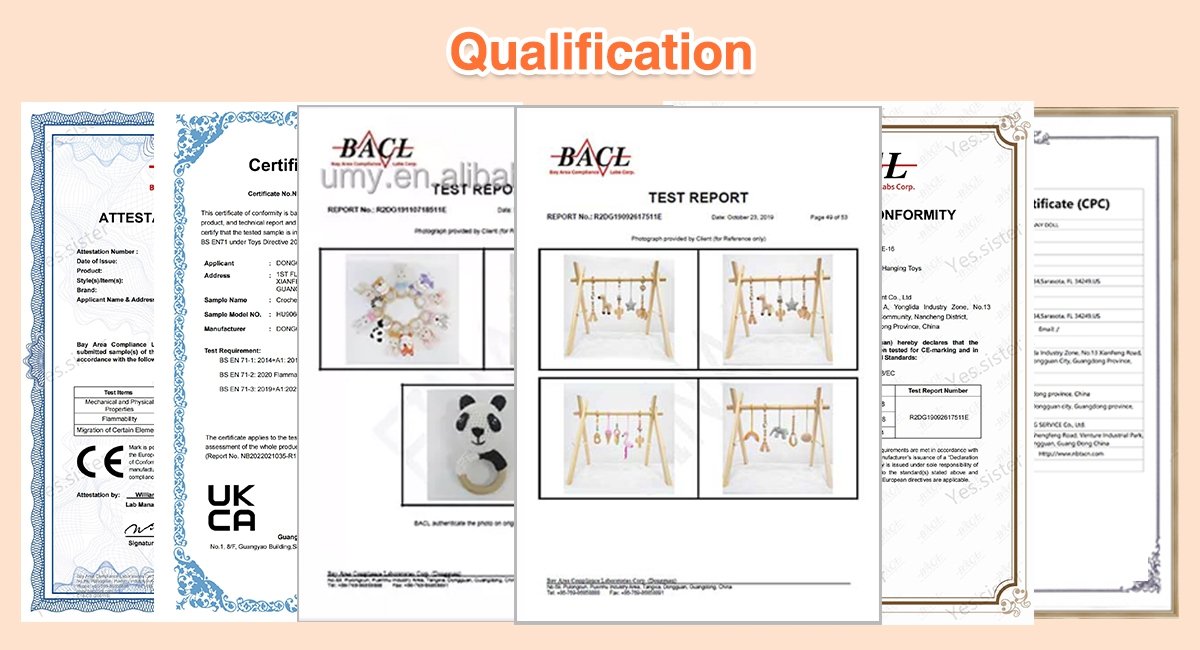
Why Do Crochet Toys Need Certifications?
Many first-time buyers assume handmade crochet toys are exempt from toy safety regulations.
This is one of the most common misconceptions we encounter.
In reality, most toy regulations focus on:
How the product is used—not how it is manufactured.
Certification requirements typically address:
- Mechanical safety
- Physical safety
- Flammability
- Chemical content
- Product labeling
- Traceability requirements
For brands and retailers, compliance is more than a legal requirement.
It is also a critical part of protecting consumers, reducing business risk, and building customer trust.
The First Question: Is It a Toy or a Decorative Product?
Before discussing certifications, the first question should always be:
Is the product a toy or a decorative item?
This distinction significantly affects compliance requirements.
Children's Toys
Examples include:
- Crochet dolls
- Crochet animals
- Baby rattles
- Crochet comfort toys
- Plush-style crochet toys
These products are generally subject to toy safety regulations.
Decorative Products
Examples include:
- Crochet flowers
- Home décor
- Adult collectibles
- Decorative ornaments
These products may follow different compliance requirements depending on market regulations.
Certifications Required for the United States
The United States maintains some of the world's most comprehensive toy safety requirements.
For crochet toys intended for children, the following requirements are commonly involved.
CPC (Children's Product Certificate)
The Children's Product Certificate (CPC) is required for children's products sold in the United States.
The certificate confirms that the product complies with applicable safety regulations and is supported by testing from a CPSC-accepted laboratory.
ASTM F963
ASTM F963 is the primary toy safety standard for children's toys in the United States.
Testing may include:
- Small parts evaluation
- Sharp points
- Sharp edges
- Construction safety
- Flammability
- Labeling requirements
For crochet toys, special attention is often given to:
- Safety eyes
- Attached accessories
- Decorative components
- Seams and construction integrity
CPSIA Requirements
Additional compliance requirements may include:
- Lead content limits
- Phthalate restrictions
- Tracking label requirements
Many first-time importers are surprised to learn that tracking labels are often mandatory for children's products sold in the US market.
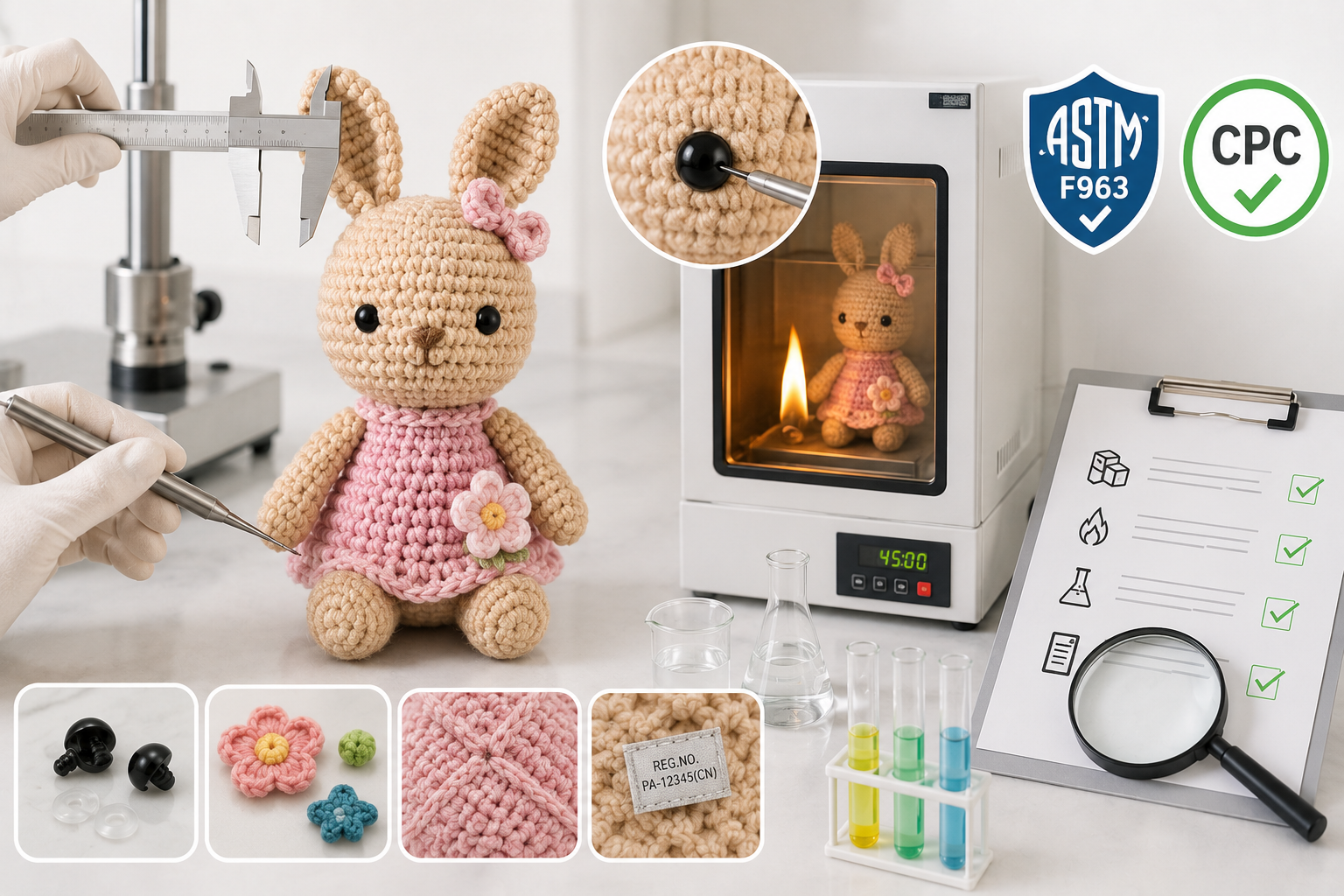
Certifications Required for Europe
For products entering Europe, compliance requirements differ from those in North America.
The most common requirements include:
CE Marking
CE marking demonstrates conformity with applicable European toy safety regulations.
For most children's toys, CE marking is mandatory.
EN71 Testing
EN71 is the primary toy safety standard in Europe.
It typically includes:
EN71-1
Mechanical and physical properties.
EN71-2
Flammability requirements.
EN71-3
Migration of certain chemical elements.
Depending on the product, additional sections of EN71 may also apply.
Technical Documentation
Manufacturers and importers are generally expected to maintain:
- Product specifications
- Test reports
- Risk assessments
- Compliance declarations
- Labeling information
Proper documentation is an important part of European compliance.
Certifications Required for the United Kingdom
Following Brexit, the United Kingdom introduced the UKCA marking system.
UKCA
UKCA (UK Conformity Assessed) marking is generally required for products entering Great Britain.
For crochet toys, UKCA requirements often mirror many CE-related compliance principles.
Many customers preparing products for both Europe and the UK address these requirements simultaneously during testing.
Certifications Required for Australia and New Zealand
Australia and New Zealand maintain their own toy safety framework.
Common standards may include:
- AS/NZS ISO 8124
- Product safety regulations
- Labeling requirements
Because regulations can evolve, importers should always verify current requirements before production begins.
Special Considerations for Baby Crochet Products
Baby products often face stricter safety expectations.
Examples include:
- Crochet rattles
- Teethers
- Comfort toys
- Baby gift sets
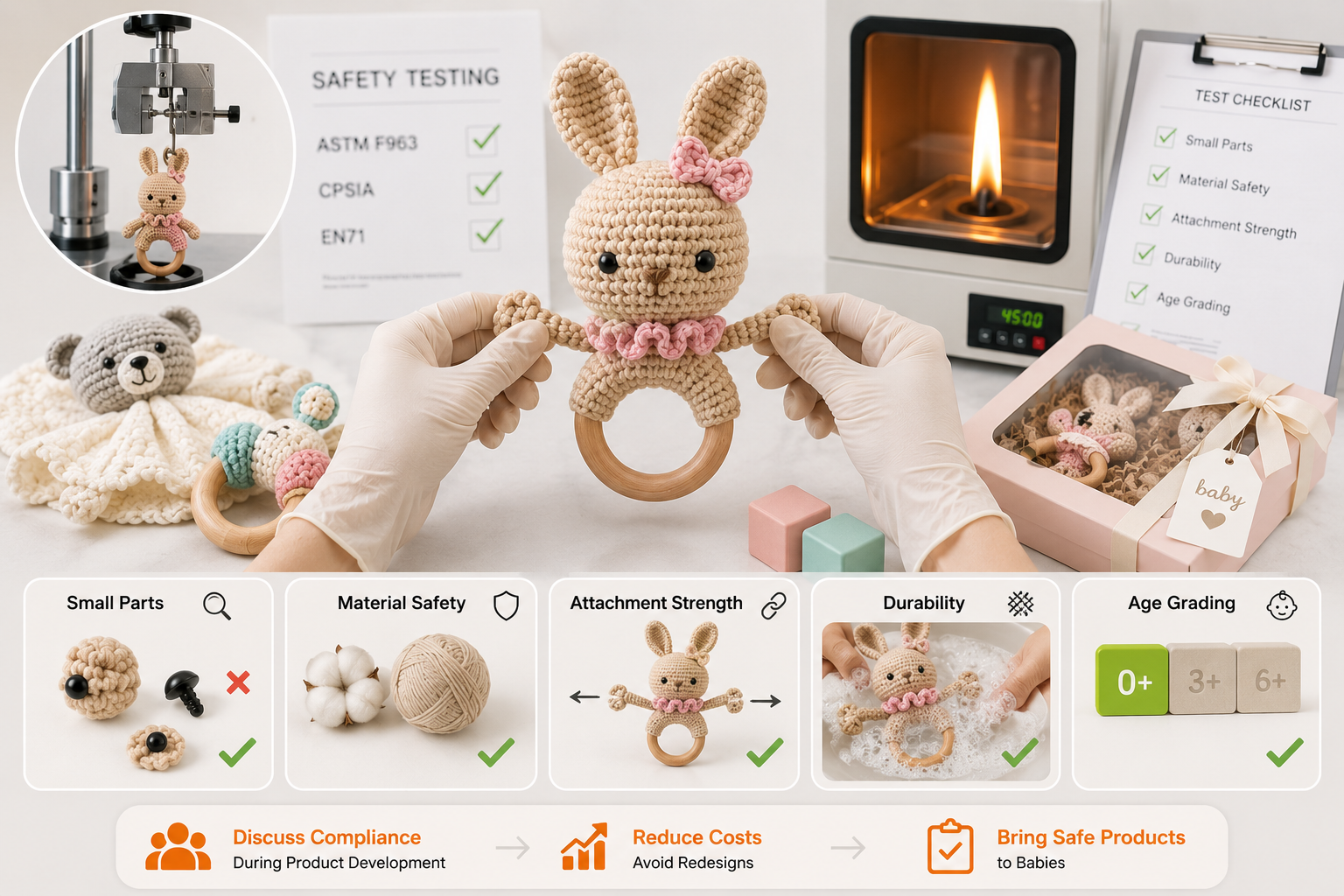
Special attention is usually given to:
- Small parts
- Material safety
- Attachment strength
- Durability
- Age grading
At UMY, many customers begin compliance discussions during product development rather than after samples are completed.
This often reduces costs and helps avoid redesigns later.
Real Compliance Example
One customer approached us with plans to launch a crochet baby rattle collection for the US market.
During our initial compliance review, we identified that the selected wooden ring and decorative accessories could affect ASTM F963 testing requirements.
Before sampling was finalized, we recommended adjustments to the product structure and attachment methods.
As a result:
- Product redesign costs were avoided
- Testing preparation became more efficient
- Compliance risks were reduced
- Production moved forward more smoothly
This project reinforced an important lesson:
Compliance planning is most effective when it begins during product development—not after production is completed.
Common Compliance Mistakes Buyers Make
Over the years, we've seen several recurring mistakes.
Assuming Handmade Products Don't Need Testing
Handmade products are not automatically exempt from toy regulations.
If marketed as toys for children, they generally remain subject to applicable requirements.
Waiting Until Production Is Finished
Compliance planning should begin before production starts.
Late-stage changes are usually more expensive.
Using Unverified Components
Items such as:
- Safety eyes
- Rattles
- Wooden rings
- Labels
- Packaging accessories
may all affect compliance outcomes.
Assuming One Certification Covers Every Market
A product approved for one country may require additional testing or documentation for another.
Global compliance is rarely one-size-fits-all.
Why Work With a Manufacturer That Understands Compliance?
One advantage of working with an experienced crochet manufacturer is that compliance can be considered during product development rather than after production.
At UMY Crochet Factory, we support customers developing products for markets including:
- United States
- Canada
- Europe
- United Kingdom
- Australia
- Middle East
Our team assists with:
- Product structure evaluation
- Material recommendations
- Compliance planning
- Testing preparation
- Documentation support
We regularly work with projects involving:
- CPC
- ASTM F963
- CE
- EN71
- UKCA
Frequently Asked Questions
Do all crochet toys need certifications?
Not necessarily.
Requirements depend on product classification, intended age group, and target market.
Are handmade crochet toys exempt from testing?
Generally no.
If marketed as children's toys, applicable regulations usually still apply.
What certifications are required for crochet toys sold in the United States?
Most children's crochet toys require ASTM F963 testing and CPC documentation.
What certifications are required for Europe?
Most children's crochet toys require CE marking and EN71 compliance.
When should compliance planning begin?
Ideally during product development, before samples are finalized and before production begins.
Final Thoughts
Certification requirements can seem complex, especially for first-time importers.
However, the most successful product launches often begin with compliance planning—not after production, but at the very beginning of product development.
After supporting crochet toy projects for more than 12 years, we've learned that early compliance planning consistently reduces risk, improves efficiency, and helps products reach market faster.
Whether you're developing crochet dolls, baby rattles, gift sets, educational toys, or private-label collections, understanding certification requirements is a critical step toward creating safe, compliant, and successful products.
Need Help Understanding Crochet Toy Compliance?
At UMY Crochet Factory, we help brands, retailers, distributors, and importers navigate product development, testing preparation, and compliance planning for international markets.
Contact our team today to discuss your crochet toy project and certification requirements.

 Chinese