
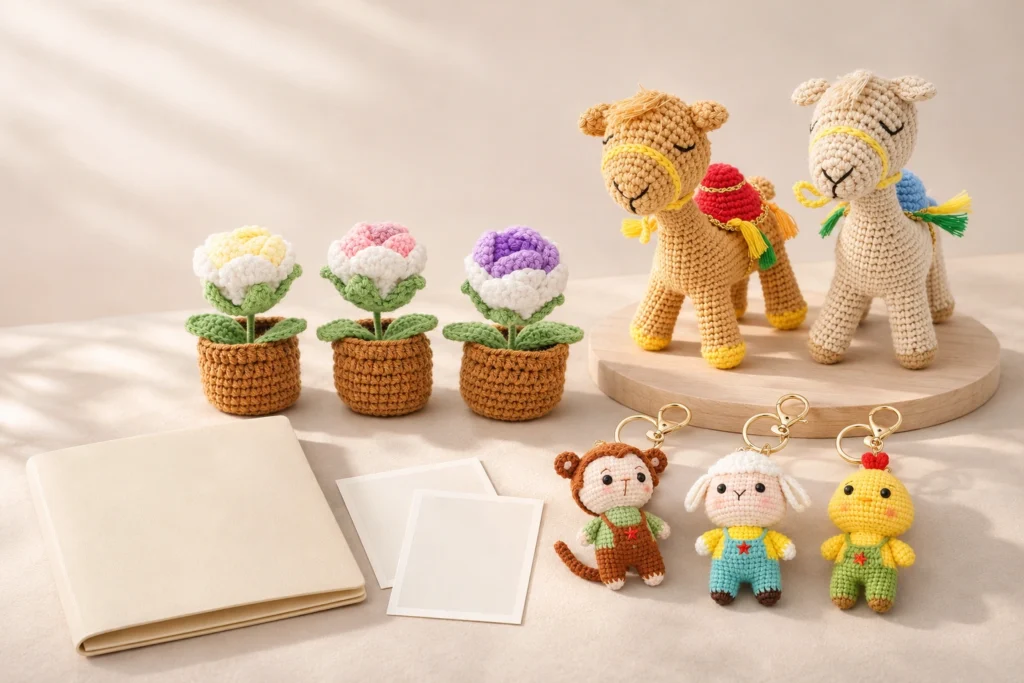
A custom crochet reorder is easier to assess when the buyer can identify the exact product previously approved and clearly state what should change in the new order. Keep the approved sample reference, current specification, material and color references, packaging details, and a record of later revisions together before requesting a new quotation.
This guide is for brand buyers and supply-chain teams preparing a repeat order. It focuses on the information the buyer should retain and send to the manufacturing partner; it does not assume that materials, capacity, prices, or lead times from the first order remain available.
Identify the Product and Its Approved Version
A familiar product name is rarely enough. A character may have been sampled in several sizes, a flower may have changed yarn color, or the packaging may have been revised after the first shipment.
Start the reorder brief with:
- Product name and internal SKU
- Previous purchase order reference, if available
- Approved sample or specification version
- Date of the last approved change
- Photographs of the approved product
- The quantity and destination proposed for the new order
If the buyer has several samples, identify which one controls the reorder. Mark an older sample as superseded rather than leaving it beside the current reference without explanation.
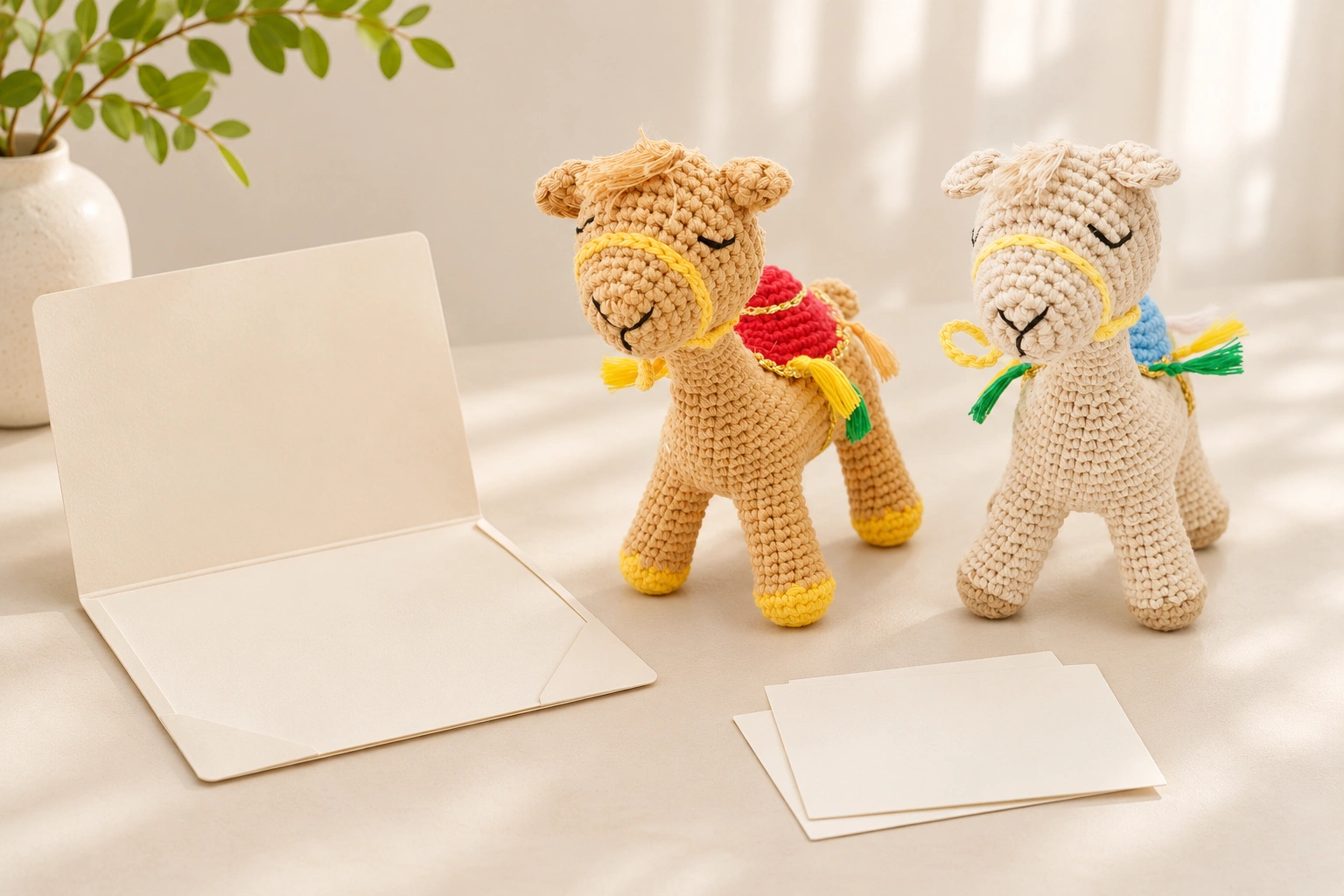
Keep a Specification That Describes the Whole Product
The physical sample shows appearance, but some details may be difficult to judge from the sample alone. A concise specification should record the decisions that matter when the item is made and checked again.
| Record | Information to retain | Why it matters for a reorder |
|---|---|---|
| Dimensions | Agreed measuring points and target measurements | Prevents different interpretations of size |
| Yarn and materials | Approved type, texture, color references, and relevant components | Supports material review and substitution decisions |
| Construction | Distinctive stitches, shaping, attachments, and finishing details | Protects recognizable design features |
| Face or design features | Placement, expression, embroidery, and accessories | Helps preserve the approved appearance |
| Packaging | Pack format, inserts, labels, and packing orientation | Ensures the new order is prepared for its sales channel |
| Quality review | Agreed checks and acceptable handmade variation | Gives both teams a consistent review basis |
| Approval history | Current version and changes since earlier samples | Reduces conflicting instructions |
The level of detail should fit the product. A simple flower stem and a licensed character may require different approval records. Retain enough information for someone who did not manage the first order to understand what was approved.
Separate “Repeat as Approved” From Requested Changes
Buyers sometimes send a previous sample with a message such as “same as last time, but slightly better.” That leaves the production team to interpret what should stay and what should change.
Use two short lists:
- Keep as approved: the features that must match the identified reference.
- Change for this order: each requested revision, its reason, and the new approval needed.
A change in yarn, color, dimensions, attachment, or packaging can affect more than one part of the product. Ask for the impact on appearance, cost, and timing to be assessed before treating the reorder as an unchanged repeat.
If no changes are intended, say so explicitly and still confirm that the recorded specification is the one used for the new quotation.
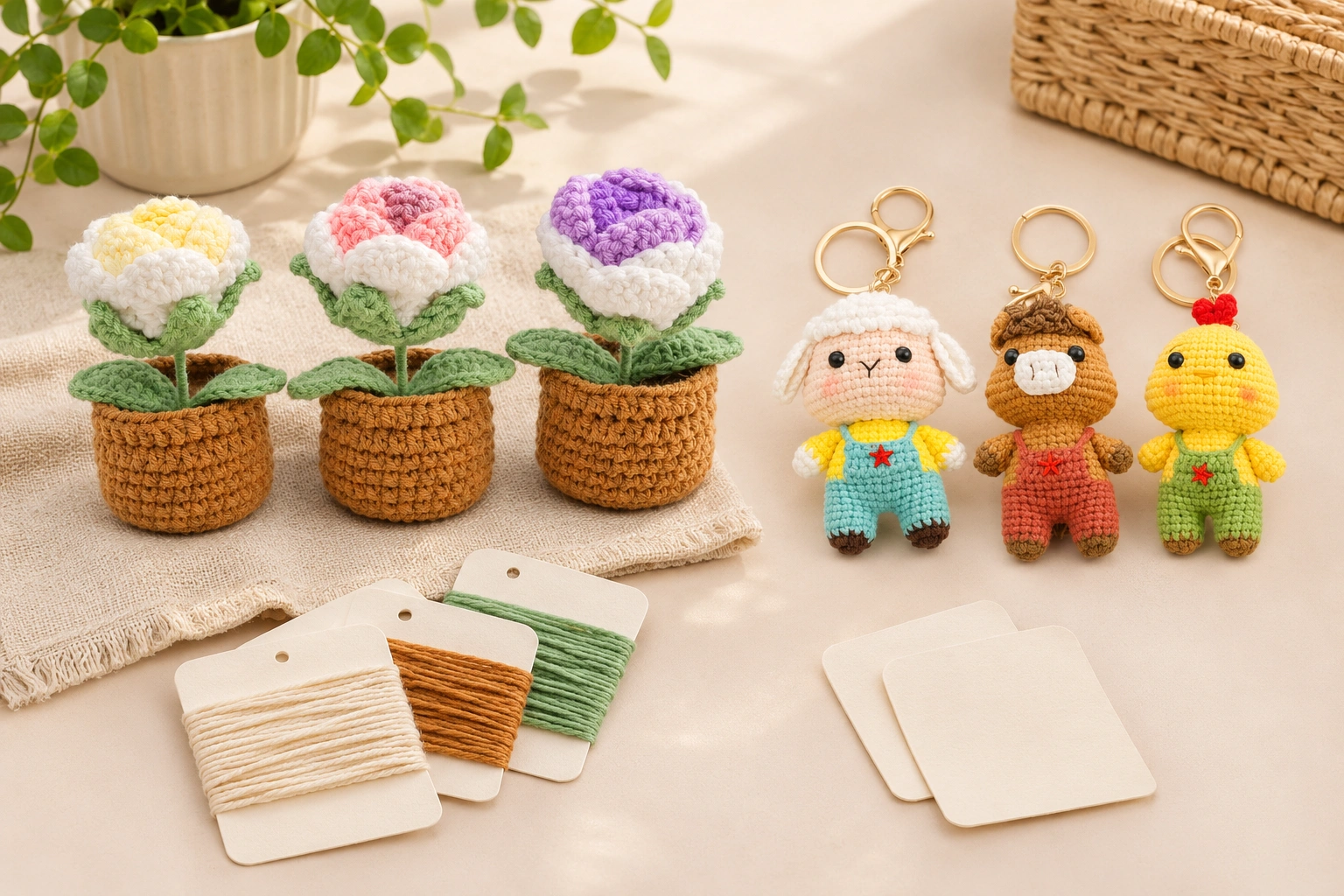
Reconfirm What May Have Changed Since the First Order
A reorder record helps identify the intended product; it does not guarantee that every earlier input is available under the same conditions. Ask the manufacturing partner to reconfirm:
- Availability of the approved yarn, colors, and accessories
- Any proposed material substitution
- Current quotation and order quantity
- Sampling or approval needs for requested changes
- Production and delivery timing
- Packaging materials and print files
- Destination-specific requirements relevant to the new order
If a component must change, review a physical or otherwise agreed reference before approving the revised specification. Keep that approval with the reorder record.
Make the Records Easy to Hand Over
A reorder may be managed by someone different from the person who approved the original product. Store the final sample photographs, specification, artwork files, packaging references, and approval decisions in one clearly named location.
A practical handover folder can contain:
- Current approved specification
- Approved sample photographs from several angles
- Material and color references
- Current packaging files and packing photographs
- Revision and approval log
- Previous order reference and proposed reorder brief
Avoid keeping contradictory “final” files without a version history. The buyer should be able to identify the current instruction quickly and trace why it replaced an earlier one.
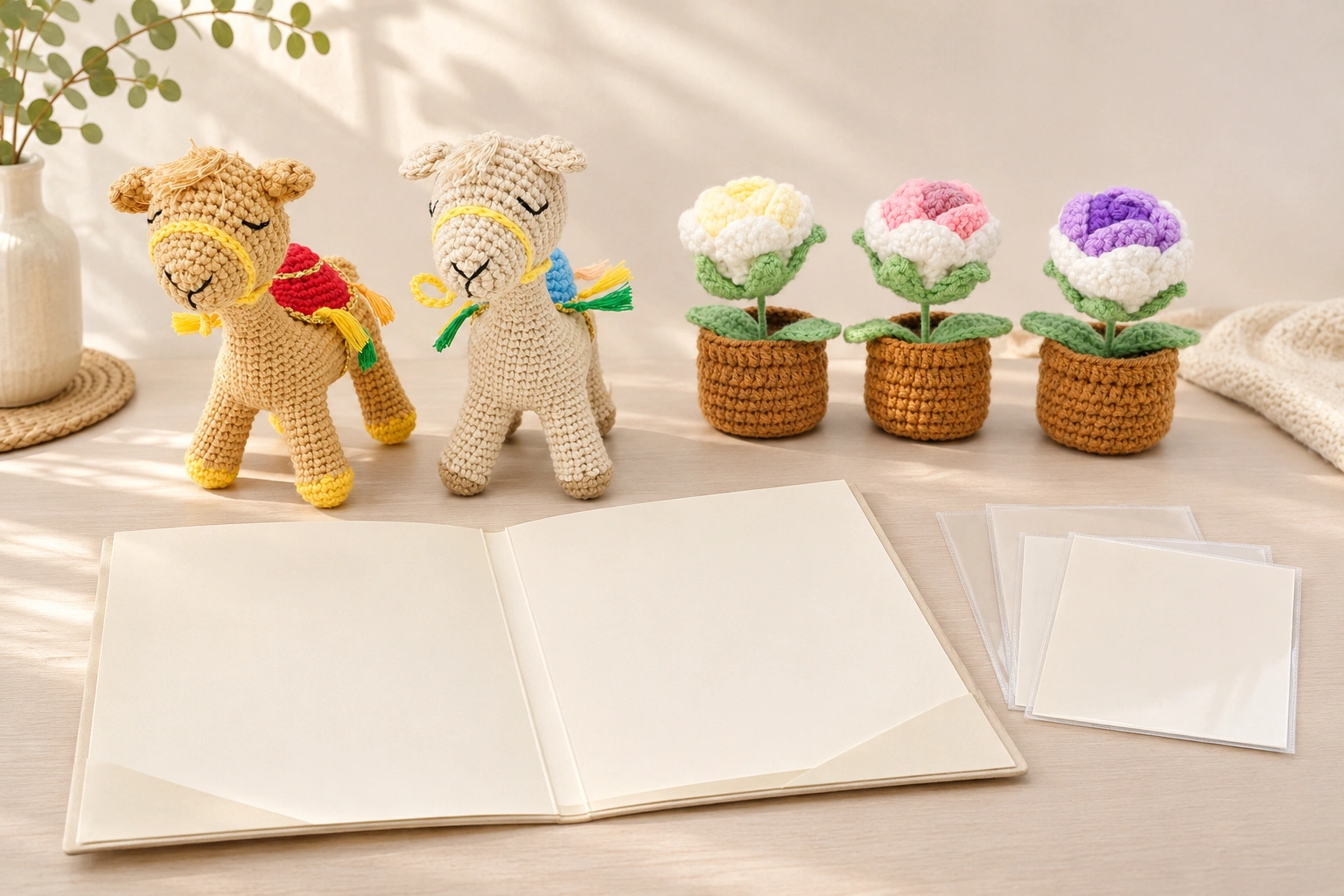
How UMY Can Review a Reorder Brief
UMY Crochet is a product development and manufacturing partner for crochet, DIY craft kits, knitted toys and creative gifts. When a buyer provides the approved sample reference, current specification, packaging requirements, proposed quantity, and any requested changes, the reorder can be reviewed against a defined product rather than a general description.
UMY and the buyer can then identify which details need reconfirmation and whether a revised sample or approval is appropriate. The applicable quotation and schedule should be based on the new order’s confirmed requirements.
Frequently Asked Questions
Is the previous purchase order enough to place a crochet reorder?
It is a useful reference, but it may not contain the final sample, later changes, material details, or current packaging instructions.
Should buyers keep the physical approved sample?
Keep it where practical. Clear photographs and a specification support the record, but a physical reference can help assess shape, texture, and finishing.
What if the approved yarn is no longer available?
Ask the manufacturing partner to propose an alternative and assess its effect on appearance, construction, cost, and timing before approving the change.
Does a packaging change require a new product sample?
It depends on whether the new pack affects product presentation, fit, protection, or labeling. Review the assembled product and pack together when those factors may change.
How should an older approved sample be handled?
Retain its history if useful, but mark it as superseded and identify the current controlling version.
Can the buyer request an unchanged reorder without reviewing details again?
The buyer can request a repeat of the approved specification, but material availability, quotation, timing, and other current order conditions should be reconfirmed.
Which record matters most when photographs and written instructions conflict?
The buyer and manufacturing partner should resolve the conflict before production and issue one updated approval reference. Neither team should have to guess which instruction controls.
Prepare Your Reorder Review
If you are planning a repeat order, send UMY Crochet the approved sample or its reference photographs, current specification, material and packaging details, proposed quantity, destination, and a clear list of changes or a statement that none are intended. We can review the brief and identify what needs confirmation before the new order is quoted.
<!--[googlesitekit-end-of-content]-->

 Chinese