
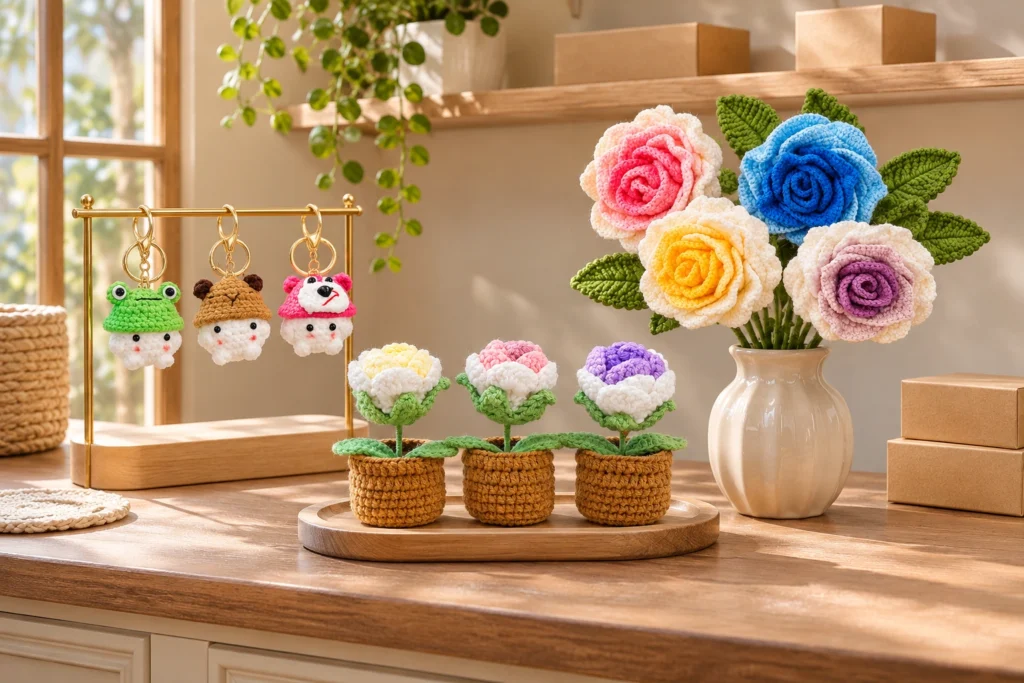
A retail crochet gift assortment works best when each price point gives the shopper a clear reason to choose it. Buyers can build that structure by assigning distinct roles to small add-on gifts, core products, and more substantial gift options, then checking how the products look and sell together in the intended store.
This guide is for gift shops and lifestyle retailers planning a mixed crochet category. It offers an assortment framework rather than suggested retail prices: the right price levels depend on the market, channel, product specification, packaging, and retailer margins.
Give Each Price Point a Job
Begin with the shopping occasions your store serves. A customer looking for a small thank-you gift may need a different format from someone buying a birthday present or a coordinated gift set.
| Assortment role | Possible crochet format | Buyer decision to check |
|---|---|---|
| Small add-on gift | Keychain, bag charm, or small hanging item | Is the product easy to understand and display near a relevant purchase? |
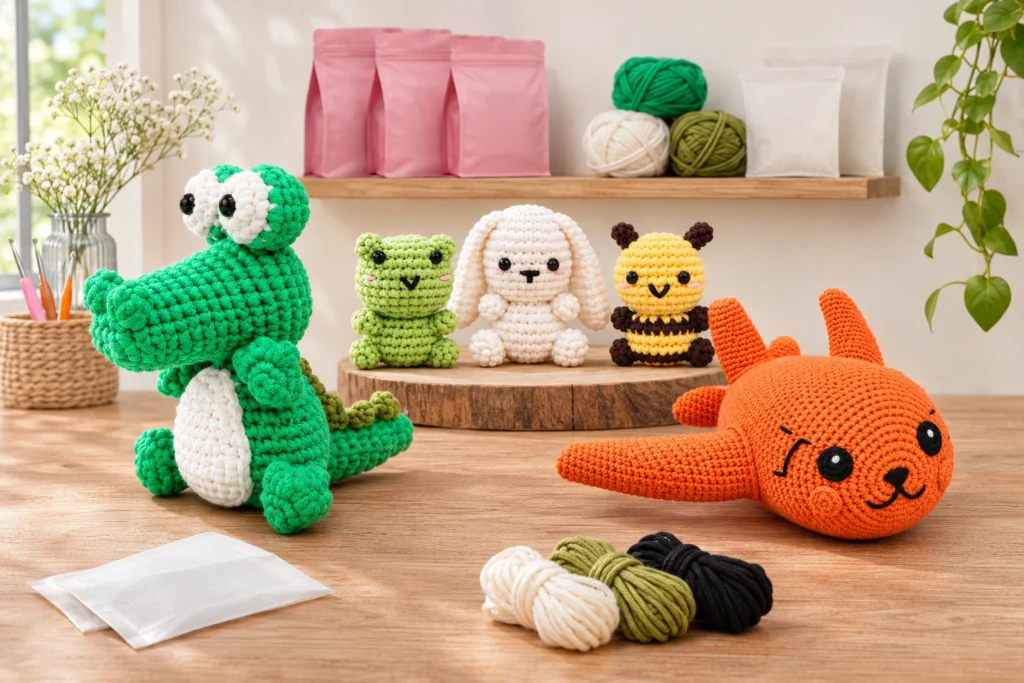
| Core gift | Crochet flower, small character, or decorative piece | Does it feel complete as a standalone present? |
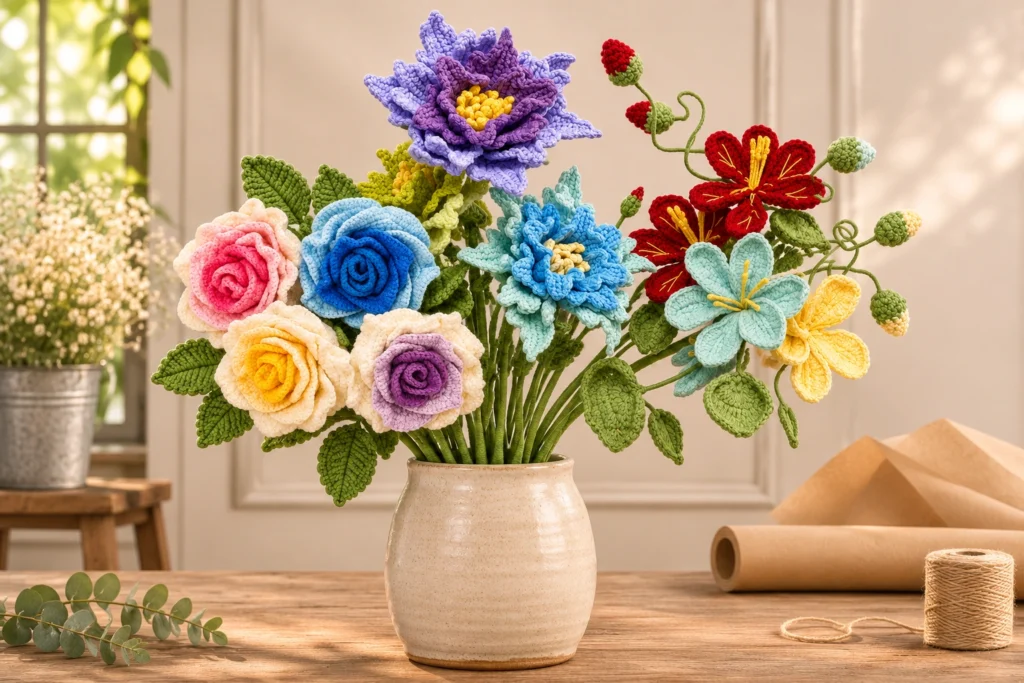
| More substantial gift | Bouquet, larger character, or coordinated set | Does the added product content and presentation justify its place in the assortment? |
These roles are a starting point. A compact but intricate product may require a higher price than a larger, simpler one. Evaluate each SKU against its actual design and delivered cost rather than assigning prices by size alone.
Build a Coherent Collection Without Repeating the Same Gift
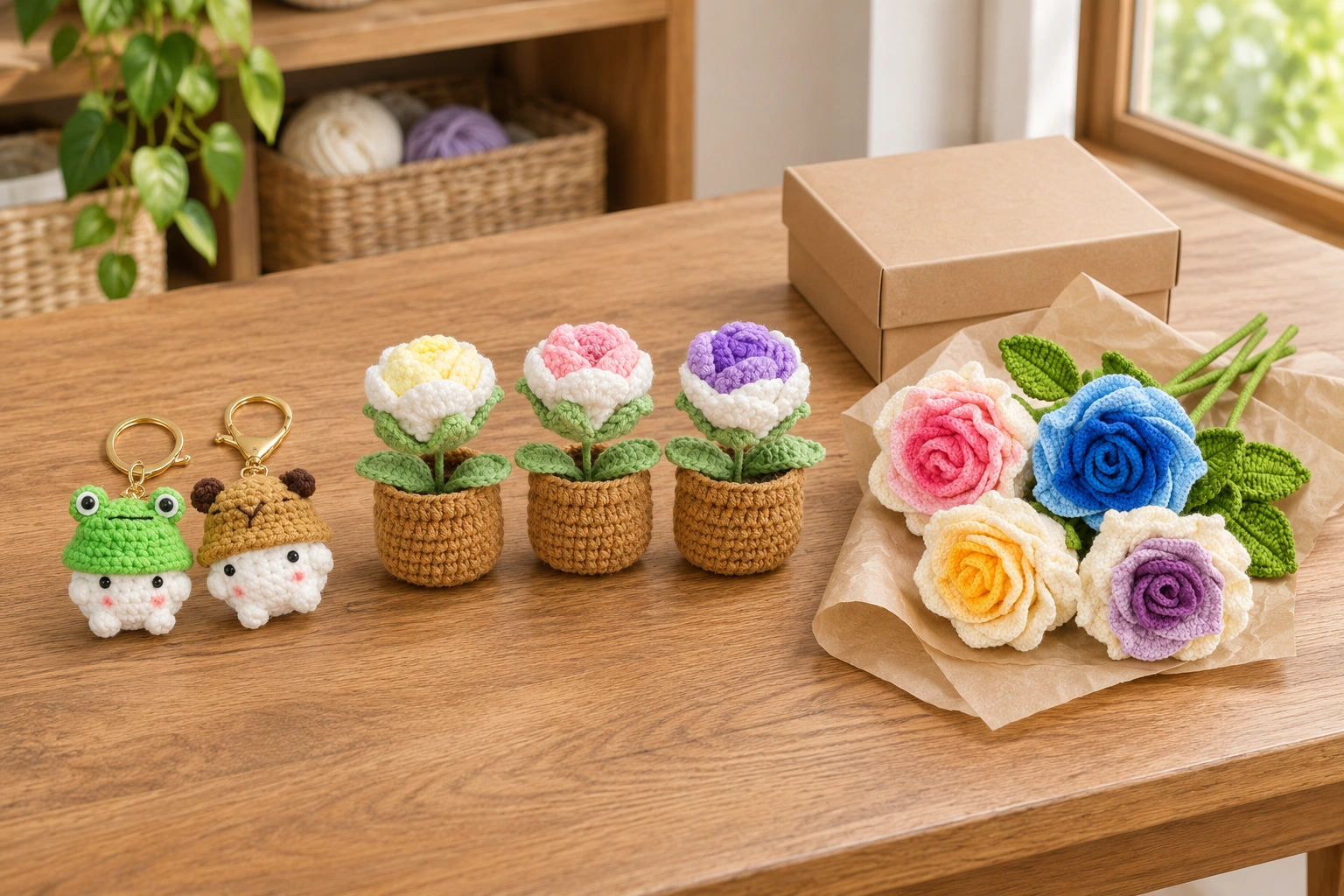
A useful assortment offers choice while maintaining a recognizable visual direction. The connection might come from a color palette, seasonal story, character family, floral theme, or intended recipient. Every SKU does not need the same shape or material.
Ask what changes as the shopper moves through the range:
- Function: Does the gift move from an accessory to a display item?
- Presentation: Does packaging make the more substantial option feel ready to give?
- Choice: Are color and character variants meaningful to the customer?
- Occasion: Can the products serve everyday gifting as well as a specific event?
- Display: Will the formats sit together without obscuring the smaller items?
Avoid filling every price point with a larger version of the same product unless size is the reason customers are expected to trade up. A small charm, an individual crochet flower, and a bouquet can offer distinct uses within a related visual collection.
Check Price Architecture Against Actual Costs
Before confirming the range, work backward from the retailer’s intended selling prices and margin requirements. Request a quotation based on the real product specifications and proposed order quantities.
Consider:
- Product complexity and handwork
- Materials and accessories
- Packaging for each format
- Wholesale pack configuration
- Transport and handling requirements
- The retailer’s target margin and any channel costs
The goal is a clear progression between offers. If two products land at a similar retail price, decide whether they serve different customers or whether one makes the other difficult to sell. If a gift set costs substantially more than its component products, check what value its coordination and packaging add.
The final prices should be based on the buyer’s confirmed costs and market positioning. A supplier’s generic price ladder cannot replace that calculation.
Mock Up the Display Before Finalizing the SKU Mix
Products that look coherent in a spreadsheet may compete for the same shelf space. Make a simple display mock-up using the proposed quantities and packaging.
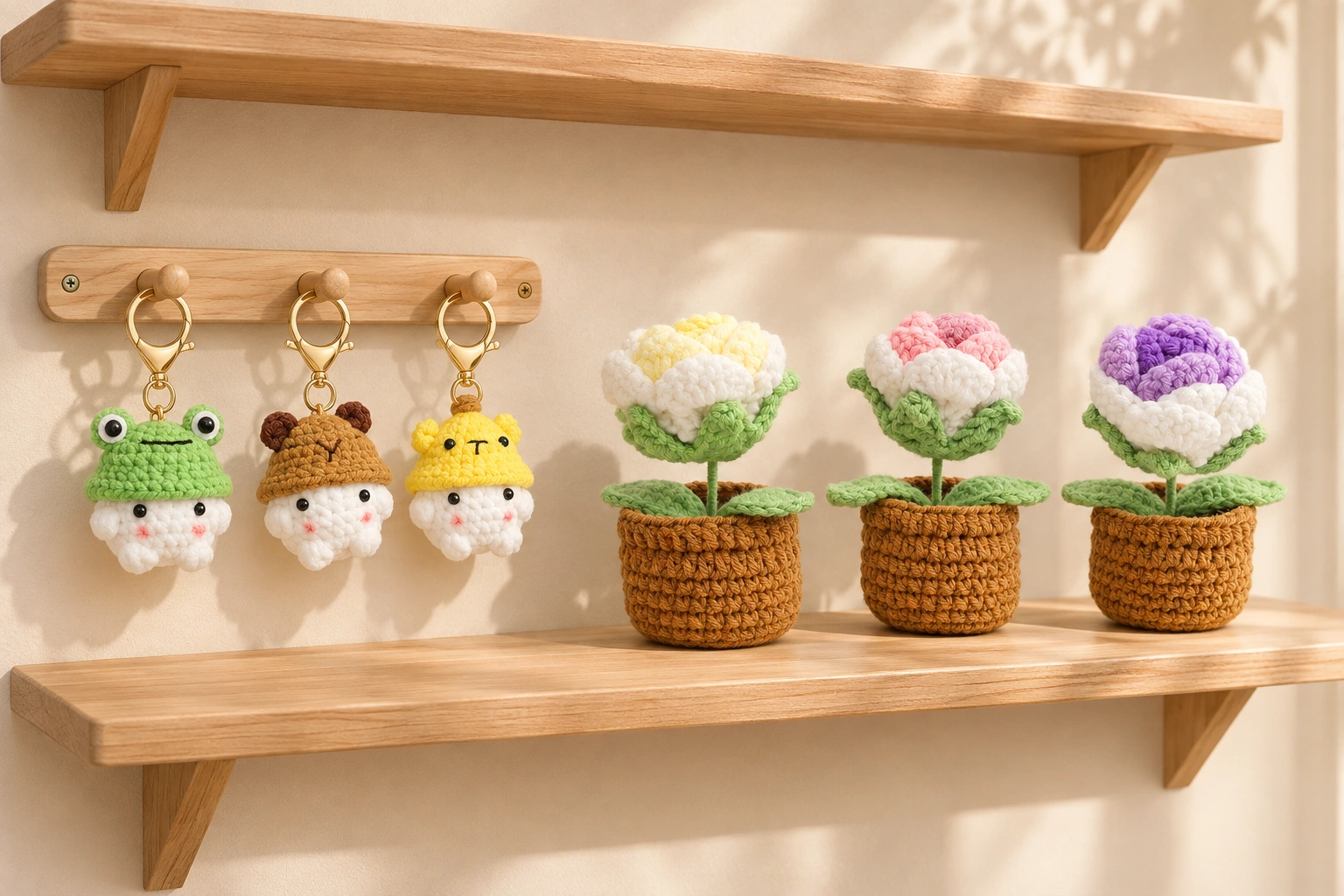
Review the assortment from the shopper’s point of view:
- Can a customer identify the smallest gift without searching through larger products?
- Is the core gift easy to pick up and examine?
- Does the larger gift have enough room to show its full shape?
- Are hanging products and tabletop products presented appropriately?
- Do the package sizes work on the store’s actual fixtures?
A display review may reveal that the range needs a different pack format or fewer variants in one category. Adjust the assortment before committing to every planned SKU.
Test a Focused Range and Record What Shoppers Choose
For a new category, begin with a range small enough to understand. Select products that represent genuinely different gift roles and record why each is included. During the retail trial, review more than total sales:
- Which products attract attention but are rarely purchased?
- Which variants sell within each format?
- Are customers buying small items as add-ons or as standalone gifts?
- Are larger gifts being bought for the occasions the store expected?
- Do staff receive repeated questions about use, size, or packaging?
Use those observations to revise the next assortment brief. A low-performing SKU may need a different presentation or role rather than a completely new design.

How UMY Can Support Assortment Development
UMY Crochet is a product development and manufacturing partner for crochet, DIY craft kits, knitted toys and creative gifts. A retailer can share its target customer, gift occasions, desired formats, intended retail price levels, and display constraints as one development brief.
That allows product samples and packaging options to be reviewed as a collection. The buyer can then compare product roles, specifications, and quotations before selecting the mix for a retail trial or broader program.
Frequently Asked Questions
How many price points should a crochet gift assortment have?
There is no universal number. Start with the distinct shopping decisions your store needs to serve, then add a price level only when it gives customers a meaningful new option.
Should every product use the same colors?
Not necessarily. A shared palette can help the display, but different products may need different colors to remain recognizable or suitable for their gift occasions.
Are keychains always the lowest-priced products?
No. Materials, construction, accessories, and packaging affect cost. Compare actual specifications before placing any product in a price tier.
Should a gift set contain the same items sold individually?
It can, but the set should have a clear reason to exist, such as a coordinated theme or gift-ready presentation. Review its value against the individual products.
What should retailers check before ordering a broad range?
Review physical samples, quotations, packaging, shelf space, target margins, and the role of each SKU in the assortment.
Can one assortment serve gift shops and lifestyle retailers equally well?
The underlying products may overlap, but the mix and presentation should reflect each store’s shoppers, fixtures, and gift occasions.
What is the most useful result from a small retail trial?
An understanding of which product roles and formats customers choose. Record questions and display observations alongside sales so the next assortment decision has context.
Plan Your Crochet Gift Range
Share your retail channel, intended customers, gift occasions, target selling price levels, and display constraints with UMY Crochet. We can review suitable product formats, sample requirements, and packaging options for a focused assortment.
<!--[googlesitekit-end-of-content]-->
 Chinese