
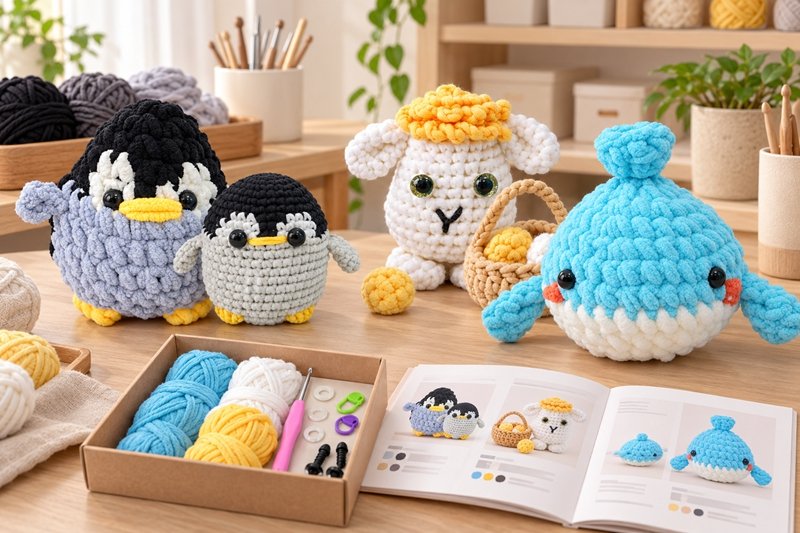
Before launching a retail crochet kit, brands should define how customers report problems, who reviews them and how instruction help or replacement components will be provided. Connect each request to the relevant kit and instruction version so the team can select an appropriate response. Agree responsibilities, replacement arrangements and escalation routes before making support promises on the packaging.
This guide is for crochet kit brands, craft retailers, importers and distributors preparing a retail launch. It focuses on support after purchase, including missing components, instruction questions and feedback that may require a product review.
Establish a Clear Customer Support Route
Choose a support route the customer can find and use.
This may be a support page, email address or another channel managed by the brand or retailer. Decide which organization receives the initial request when products are sold through several retail partners.
Clarify:
- Where the customer should ask for help.
- Who owns the first response.
- Which questions the support team can answer directly.
- When a request goes to a technical reviewer.
- When the retailer or manufacturing partner needs to be involved.
- Who authorizes a replacement or another resolution.
A contact address alone does not define a support process. The team behind it needs access to the correct product information and authority to act.
Separate Common Request Types
Different problems require different evidence and responses.
A customer who cannot locate a stitch marker needs a different review from someone whose printed instructions do not match the video.
Use a simple classification system:
| Request type | Information to review | Possible next step |
|---|---|---|
| Component identification | Kit photograph and component list | Help the customer identify the supplied item |
| Reported missing item | Kit version, expected contents and available evidence | Check packing information and assess replacement |
| Reported insufficient yarn | Color, supplied quantity information and project progress | Review the report against the approved kit specification |
| Instruction question | Guide version, step and relevant photograph | Provide guidance or refer to technical review |
| Digital access problem | Printed access reference, destination and device behavior | Check the relevant resource |
| Damaged or unsuitable component | Component identification and description | Review the issue and agree a response |
| Repeated product concern | Related requests and production records | Escalate for investigation |
These categories support investigation. They should not be used to assume the cause before reviewing the request.
Give the Support Team a Reliable Product Reference
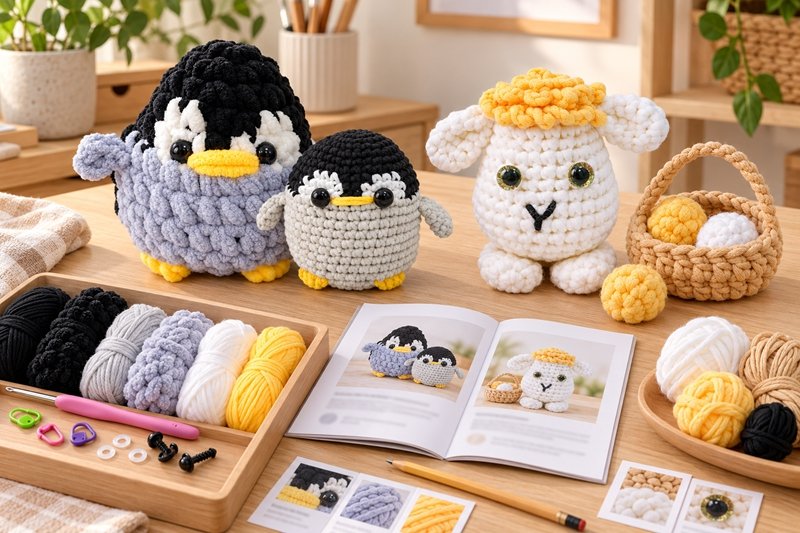
Prepare a support reference for each kit version.
Include the approved component list, photographs, instruction files and relevant digital resources. Identify changes that affect how the kit is assembled or explained.
The team should be able to establish:
- Which components belong in the kit.
- How the customer can distinguish similar yarn colors.
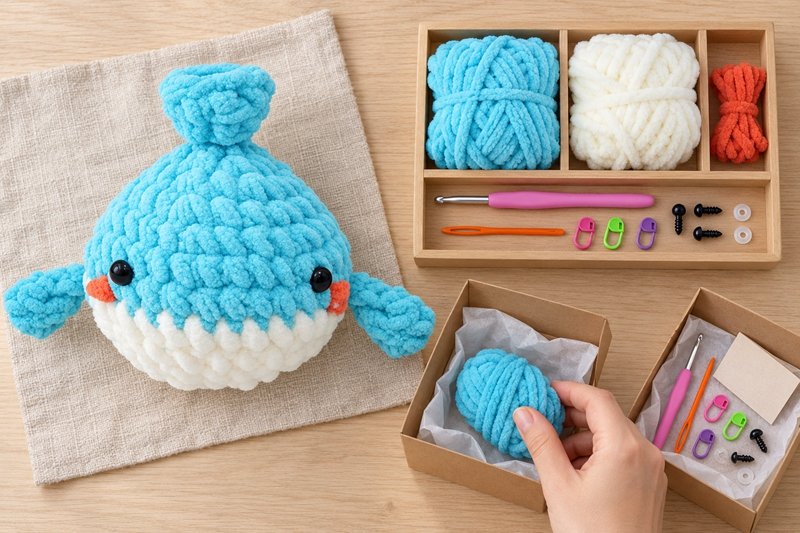
- Which tools and accessories are supplied.
- Which items the customer must provide.
- Which instruction version applies.
- Whether a correction has been issued.
- Which replacement components are compatible.
Use the same product references that support packing checks. For preparation before sealing the kit, see How to Check Every Component in a Crochet Kit Before Retail Packing.
Ask for Enough Information to Investigate
Design an intake checklist that helps the customer explain the issue without unnecessary back-and-forth.
Depending on the request, useful information may include:
- Product name or reference.
- A photograph of the packaging.
- Purchase channel.
- Available lot or version identification.
- The component or instruction step involved.
- A photograph showing the issue.
- The instruction format being used.
Collect information relevant to the problem. For a video access issue, a description of what happens after opening the link may be more useful than photographs of every component.
If identification is missing, provide another route for review rather than making the request impossible to submit.
Plan Replacement Components Before Launch
Decide which replacement items can be supplied and how they will be identified.
Review yarn, tools, accessories, printed guides and packaging components separately. Their availability and matching requirements may differ.
For each supported replacement, establish:
- The component specification.
- Which kit versions it matches.
- Where stock will be held.
- Who can authorize release.
- How it will be packed and dispatched.
- How stock will be replenished.
- How substitution requests will be reviewed.
Do not assume that the original material will remain available indefinitely.
If an alternative is proposed, assess whether it affects the intended result, instructions or other product requirements. A similar-looking yarn is not automatically a suitable replacement.
Give Yarn Replacements Particular Attention
Identify the color and material required before arranging a replacement.
Consider whether the customer will join the new yarn to an unfinished project and whether a visible difference needs review. Use available material and production records rather than promising an exact match without evidence.
A report of insufficient yarn should also be investigated separately from the immediate customer response. Sending replacement yarn may resolve the request without establishing why it occurred.
Agree the Commercial and Fulfilment Responsibilities
Replacement support has practical costs.
Before launch, agree how the parties will handle component supply, packing, dispatch and any other agreed resolution.
Questions include:
- Does the retailer hold replacement stock locally?
- Does the brand send components directly?
- Does the manufacturer supply spare components with the main order?
- How are urgent requests handled?
- Who reviews disputed or unclear reports?
- How are repeated issues escalated?
Set these arrangements for the actual sales channels and destinations. Avoid assuming that sending one small component follows the same process as shipping the original bulk order.
Document the agreed scope in the project arrangements.
Prepare Instruction Support That Matches the Kit
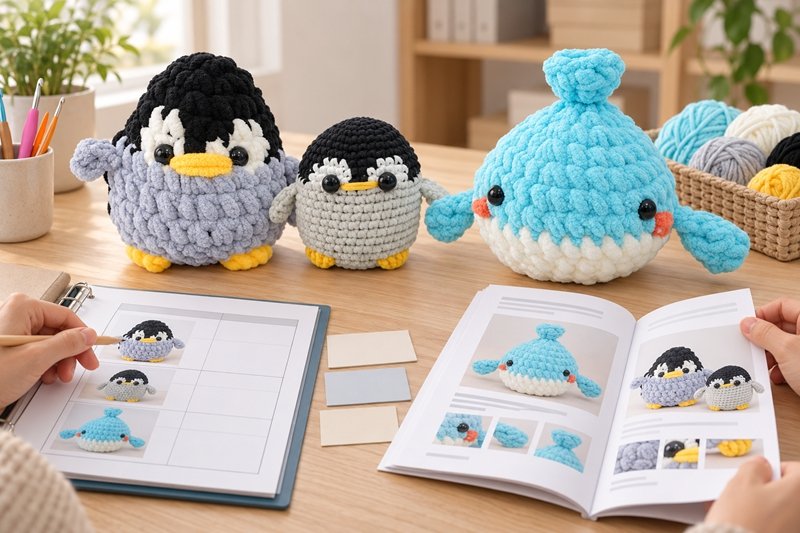
Support guidance should lead the customer back to the applicable construction and resources.
Create references for questions about component identification, stitch terminology, round transitions, assembly and finishing. Have technical guidance reviewed by someone competent in the relevant pattern.
When support staff are uncertain, give them a clear escalation route.
Avoid improvising a new construction method in response to one request without checking its effect on later steps.
For multilingual kits, identify both the language and terminology convention. A response based on a different instruction version may create further confusion.
For preparation before launch, see How to Validate Crochet Kit Instructions Before a Retail Launch.
Manage Corrections Across Printed and Digital Resources
If a confirmed instruction issue requires correction, identify the affected resources and product versions.
Record:
- What the issue is.
- Which versions are affected.
- The reviewed correction.
- Where the correction will appear.
- Who updates the support guidance.
- How affected stock and customers will be addressed.
Updating an online guide does not change a printed booklet already inside a sealed kit.
Keep support staff informed about the difference so they can direct the customer to the appropriate correction.
Maintain useful access to resources for earlier kits where those versions remain in customer use.
Distinguish Customer Resolution From Root-Cause Review
A customer request may need a prompt practical response while investigation continues.
Record these as separate activities.
For example, a replacement component may be sent while the team checks whether the report relates to packing, identification, materials or instructions. Do not treat the replacement itself as proof of a manufacturing error or proof that the issue has been fully investigated.
Keep the investigation tied to evidence and record any remaining uncertainty.
Turn Feedback Into Development Actions
Use support records to identify repeated problems.
Review requests by SKU, version, component, instruction step and reported issue. Where reliable sales or distribution figures are available, use them to put request counts in context.
A larger number of reports alone does not establish a higher issue rate if one kit has sold substantially more units.
Possible actions include:
- Clarifying a component photograph.
- Revising a difficult instruction step.
- Improving yarn identification.
- Reviewing packing checks.
- Reassessing a supplied component.
- Adding a more useful tutorial segment.
Assign an owner and verify the change before considering the issue closed.
Discussing Support Preparation With UMY Crochet
For a retail kit project, discuss support requirements alongside product specifications, instructions and packing arrangements.
Provide the sales channels, markets, intended customer support route and proposed replacement approach. Agree which product references, spare components and technical review activities are included in the project.
Confirm responsibilities before presenting a support service as part of the retail offer.
Frequently Asked Questions
Should the brand or manufacturer answer customer questions?
Assign responsibility before launch. A brand or retailer may manage customer communication while the manufacturer provides agreed product information or technical review.
Should every kit have spare components?
Assess the support plan and component requirements for the project. Specify any spare stock separately, including quantity, matching information and replenishment arrangements.
Can a similar yarn be used for a replacement?
Review compatibility first. Differences may affect appearance, working behavior and the instructions the customer is following.
Does a missing-item report prove a packing error?
It requires review. The item may be missing, difficult to identify or associated with a different kit version. Investigate the evidence while arranging the appropriate customer response.
Can online corrections replace printed instructions?
An online correction can support customers, but the team must account for the printed version already supplied and explain which correction applies.
How should repeated complaints be handled?
Group related reports, identify affected versions and investigate the cause. Assign and verify corrective actions rather than relying only on repeated individual replacements.
Plan Support Before Your Crochet Kit Launch
Send UMY Crochet your proposed kit range, sales channels, instruction resources and replacement component requirements.
Request a project-specific discussion of support reference materials, spare component planning, technical escalation and feedback responsibilities before retail production.

 Chinese