
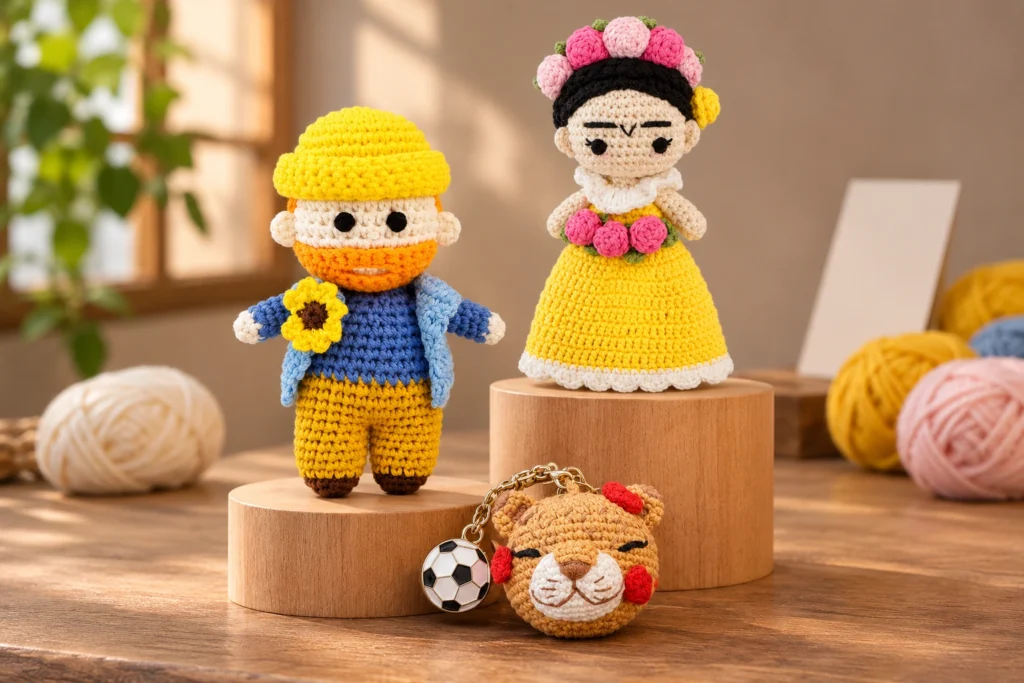
A brand character’s face should be translated into crochet by identifying the few features that make it recognizable, then testing how those features work at the product’s intended size. Buyers should approve the expression on a physical sample from several viewing angles, with the facial construction recorded for future production.
This guide is for IP owners, toy brands, museums, and creative teams developing a crochet version of an existing character. It addresses design translation and sample approval. Any use of third-party artwork or character rights should be authorized by the rights holder before development.
Identify the Character’s Recognition Cues
A character illustration may rely on fine lines, shading, or a complex expression. Crochet has a different surface and scale. Begin by asking which facial elements a customer must recognize when the product is seen from a normal retail viewing distance.
Possible recognition cues include:
- The shape and spacing of the eyes
- The angle of the eyebrows
- A distinctive nose or mouth
- Cheek color or markings
- The relationship between facial features and the head shape
- Hair, headwear, or accessories that frame the face
Rank these cues before sampling. A small adjustment to eye spacing may matter more than adding several minor markings.
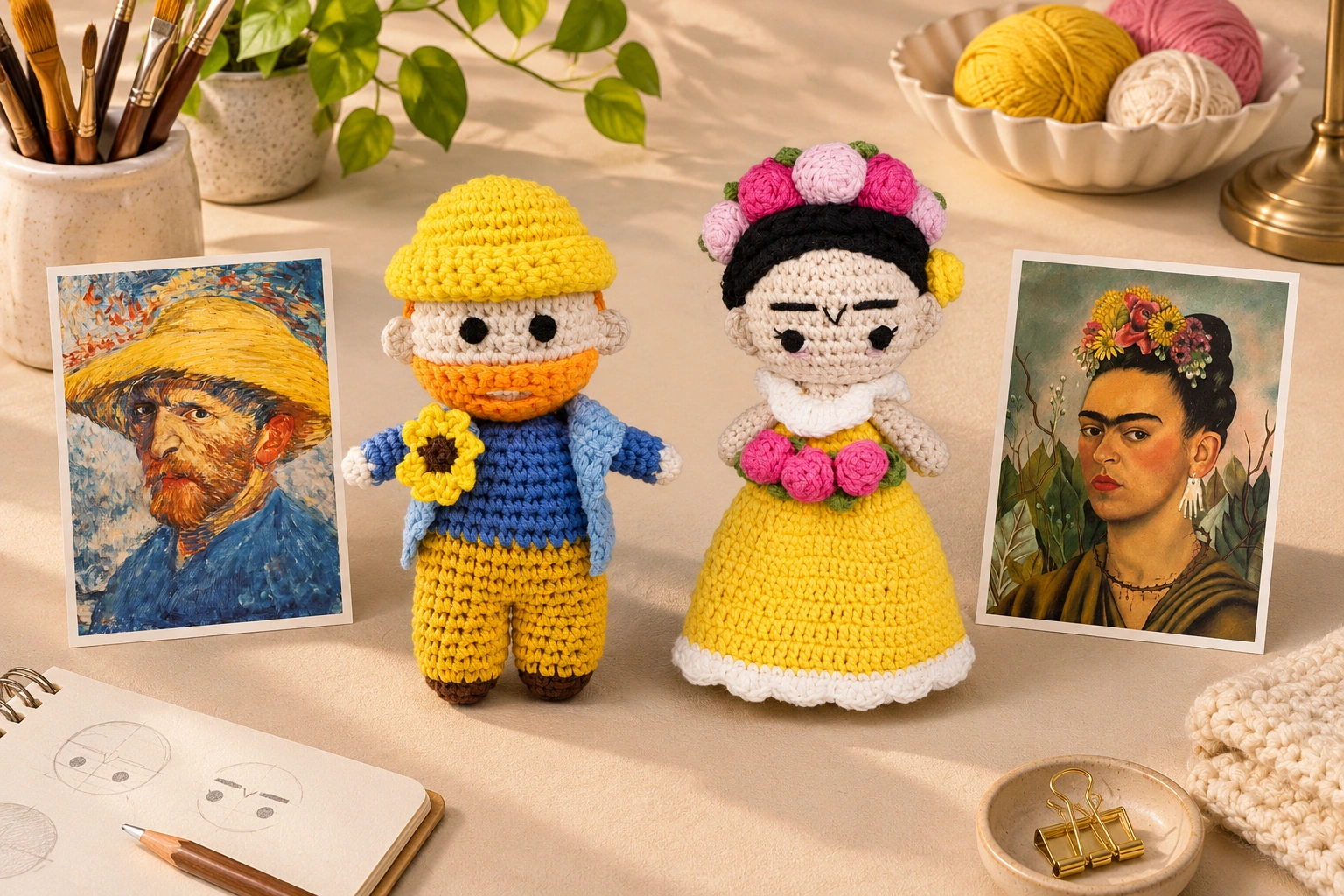
Choose a Construction Method for Each Feature
Different facial details may call for different construction methods. The decision should reflect the character’s appearance, product size, intended use, and applicable product requirements.
| Feature approach | What to assess on the sample | Common design trade-off |
|---|---|---|
| Embroidered detail | Line placement, thickness, shape, and consistency | Fine illustration lines may need simplification |
| Crocheted surface detail | Shape, texture, attachment, and visual weight | Raised details can change the expression or profile |
| Separate attached component | Position, construction, and suitability for the intended product | Additional components require careful approval and assessment |
| Color change within the crochet surface | Color boundary, stitch appearance, and placement | Small shapes may become less precise at a reduced scale |
This table is a development framework, not a safety determination. For toys or products intended for children, the buyer should assess component choices and applicable requirements for the target market with qualified specialists.
A useful sample brief specifies the intended look of each feature without assuming that the method used in an illustration will work unchanged in yarn.
Review the Face at the Intended Product Size
Enlarged sample photographs can make a detail look more important than it appears on a shelf. Review the product at its actual size and compare it with the approved character reference.
Check the face from the front, both three-quarter views, and the side. Then place the sample at a realistic retail viewing distance. Ask:
- Is the character identifiable without an explanatory label?
- Does the intended expression remain clear?
- Do the eyes, mouth, and other features sit in the correct relationship to one another?
- Does hair or headwear obscure a defining feature?
- Are there details that add work without improving recognition?
If the answer changes dramatically between the front and side views, revise the placement before approving the sample.
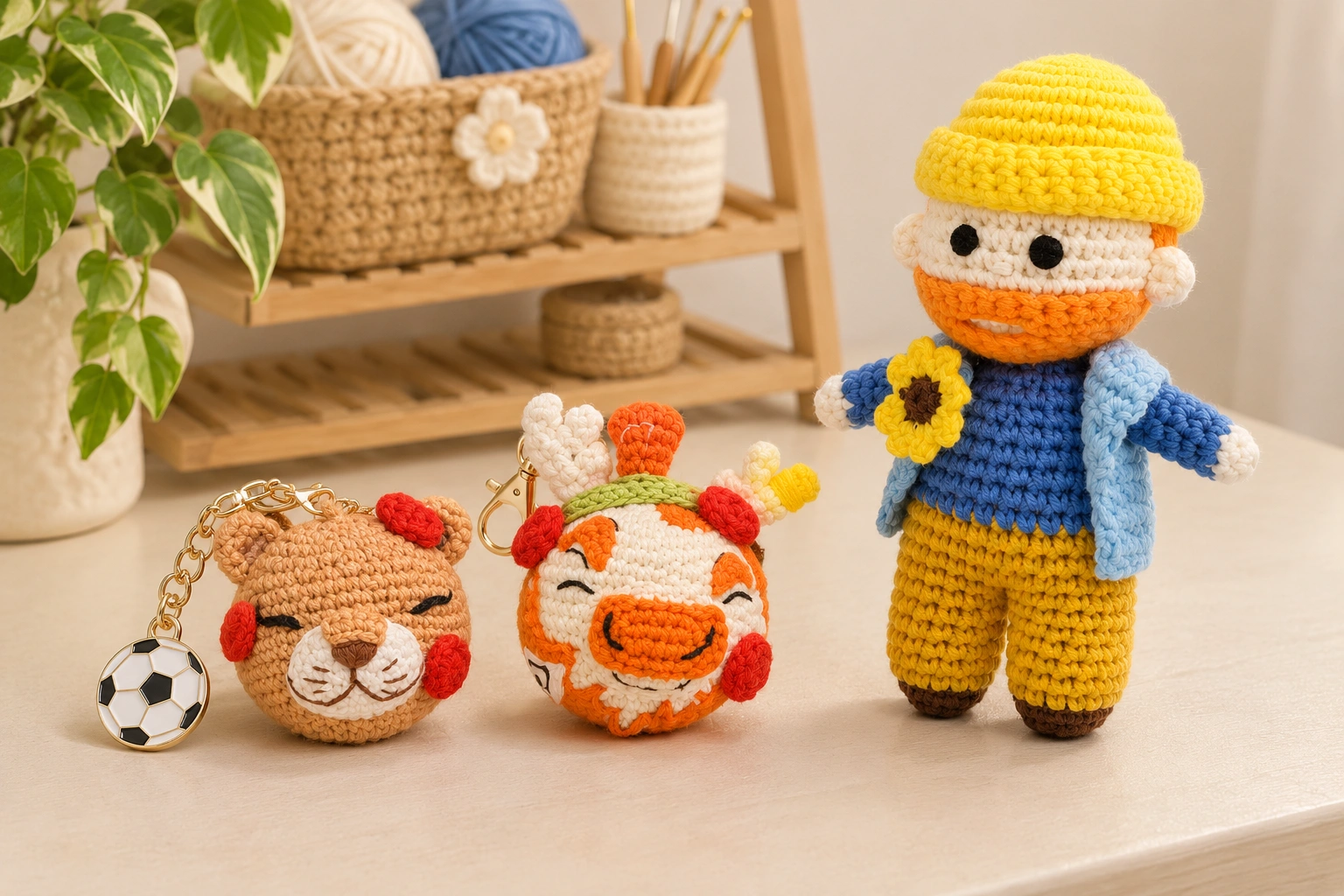
Simplify Deliberately, Then Compare
Simplification should be a documented design decision. For example, an illustrated face may contain several short lines around an eye. On a small crochet head, those lines may merge visually. A clearer version may retain the eye shape and eyebrow angle while removing less important marks.
Compare revisions against the same character reference. Photograph each sample from the same angles and under similar lighting so the team can see what changed. Record why a detail was retained, altered, or removed.
Do not approve a sample solely because it is attractive as a standalone toy. The question is whether it represents the intended character closely enough for the project brief and rights-holder approval.
Record the Approved Expression for Production
A single front-facing photograph may not communicate enough information to reproduce an expression. The approval record should include:
- The approved character artwork or permitted reference
- The physical sample identifier and intended product size
- Front, side, and three-quarter photographs
- Close views of the eyes, brows, nose, mouth, and other defining marks
- Material and color references
- The approved construction method and placement for each feature
- Any agreed tolerances or review points
- The person or team authorized to approve character changes
If a later revision changes the face, update the approved record. A production team should not have to choose between two conflicting reference images.
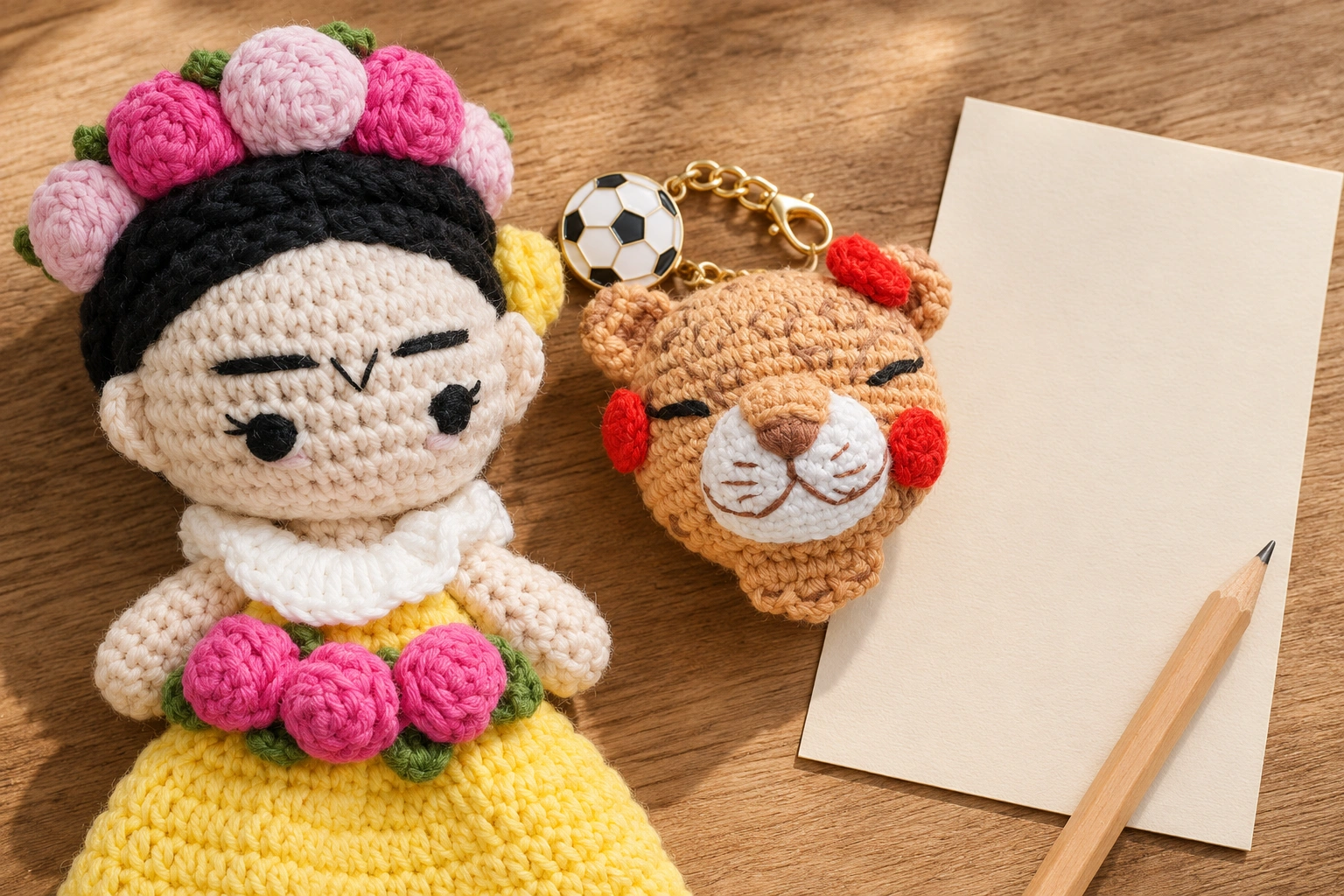
How UMY Can Support Character Translation
UMY Crochet is a product development and manufacturing partner for crochet, DIY craft kits, knitted toys and creative gifts. For a character project, a useful development brief includes authorized artwork, the intended product format and size, priority recognition cues, target use, and approval process.
Sample development can then focus on how the expression reads in yarn and which details need revision. The buyer and any relevant rights holder should approve the final physical reference and its supporting records before production decisions are finalized.
Frequently Asked Questions
Can every detail in a character illustration be reproduced in crochet?
Not always at every size. Identify the features that carry recognition and test how they appear on a physical sample.
Should a small crochet character use the same facial details as a larger version?
Not automatically. Small features can read differently when scaled down. Review each intended size against the character reference.
Is a front photograph enough to approve the face?
Who should approve changes to a licensed character’s face?
Follow the project’s authorization and approval process. The rights holder or its designated reviewer may need to approve the sample and any later revisions.
When should the facial construction method be chosen?
Consider possible methods during the brief, then confirm the choice through sampling and review of the finished product.
Can hair or headwear compensate for simplified facial features?
They may help recognition, but the full character should be assessed together. Check that they do not conceal an essential expression cue.
What should be kept after the sample is approved?
Keep the approved physical reference where practical, authorized artwork, photographs from several angles, and a record of materials, colors, feature placement, and approvals.
Evaluate Your Character for Crochet Development
If you are developing an authorized crochet character, share the approved artwork, intended size, product use, and the facial features your audience must recognize with UMY Crochet. We can use that brief to assess what should be tested in a physical sample and documented for approval.
<!--[googlesitekit-end-of-content]-->

 Chinese