
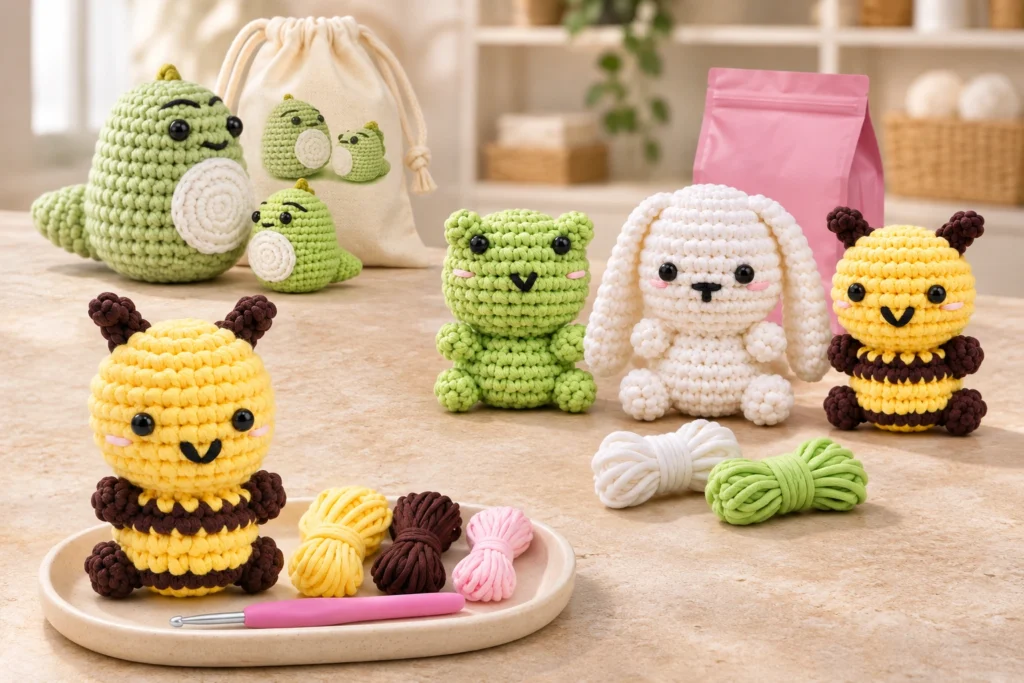
Choose a single-project crochet kit when the retail offer centers on one clearly defined making experience. Choose a multi-project kit when the relationship between projects—such as a coordinated collection, a learning sequence or separate gifts—adds value that the components, instructions and packaging can support.
For craft brands and retail buyers, the decision starts with what customers should be able to complete from one purchased pack. Project count alone does not explain the scope, difficulty or completeness of a kit.
This guide compares retail kits intended for customers to use independently. Instructor-led workshops require a separate assessment of participant materials, shared resources and teaching support.
Define What Counts as a Project
Before comparing formats, describe the finished outputs.
“One project” might mean one animal, one flower or one coordinated arrangement containing several pieces. A multi-project kit might contain several different designs, repeated versions of one design or a sequence of related makes.
These configurations should be described precisely.
For example:
- One character with several sewn-on components is one finished project.
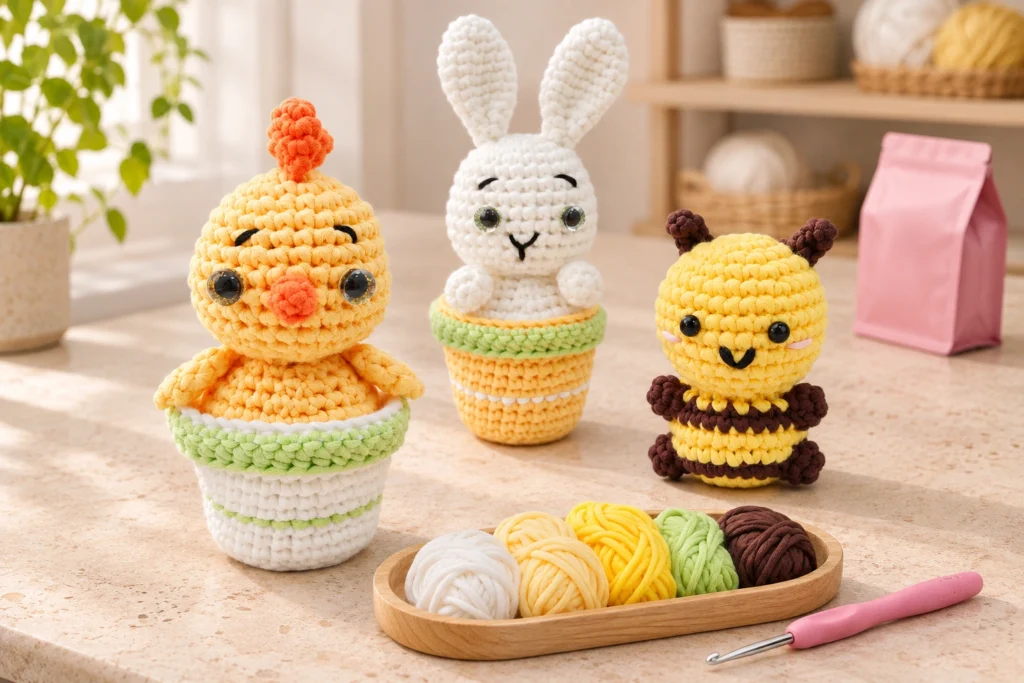
- Three separately completed characters are three projects.
- A flower and its pot may form one finished project.
- Several coasters may be separate makes sold as one coordinated set.
Distinguish the number of designs from the number of finished items. A pack that makes three copies of one design offers a different experience from a pack containing three different patterns.
Compare the Two Formats Against the Buying Occasion
The strongest format depends on the intended customer, purchasing occasion and finished result.
| Decision area | Single-project kit | Multi-project kit |
|---|---|---|
| Main customer promise | Complete one defined make | Complete a specified group or sequence of makes |
| Product explanation | Show one finished outcome and its included materials | Explain the outputs, relationships and shared resources |
| Instruction structure | One main making route | Separate project routes, a sequence or both |
| Material allocation | Materials assigned to one output | Materials divided by project or shared under defined rules |
| Making order | Usually one primary route | May be optional or necessary |
| Storage between sessions | Keep one project and its remaining components together | Keep unfinished projects and shared materials identifiable |
| Review priority | Verify the complete making experience | Verify every project and the combined configuration |
Neither format establishes a skill level by itself. A single detailed character may require more techniques than several simple flat projects.
When a Single-Project Kit Fits the Retail Brief
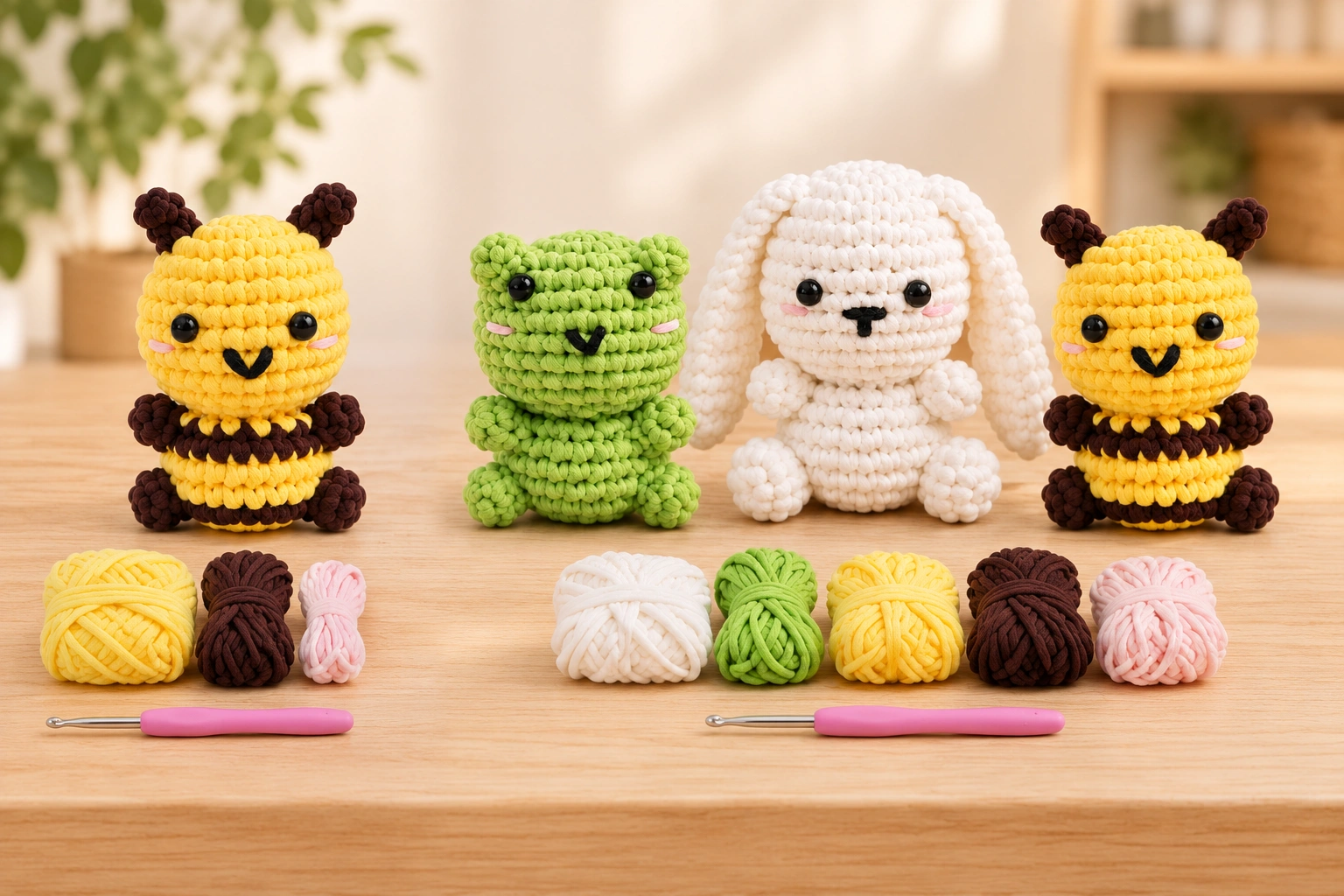
It gives the buyer a direct way to define the output, review its making route and explain the product on the shelf.
Consider this format when:
- One finished object is the main reason to buy.
- The intended user benefits from a focused starting point.
- The design requires dedicated materials or detailed instructions.
- The package needs to communicate its contents quickly.
- Each design should be purchased and replenished separately.
A focused format still needs careful scope control. If the packaging shows accessories, a display base or additional finished examples, make clear which items customers can make and which are presentation props.
A single-project kit should also identify whether the finished sample shown in the photographs is included or represents what the customer will make.
When a Multi-Project Kit Has a Clear Purpose
A multi-project kit needs a reason for its projects to belong together.
That reason might be:
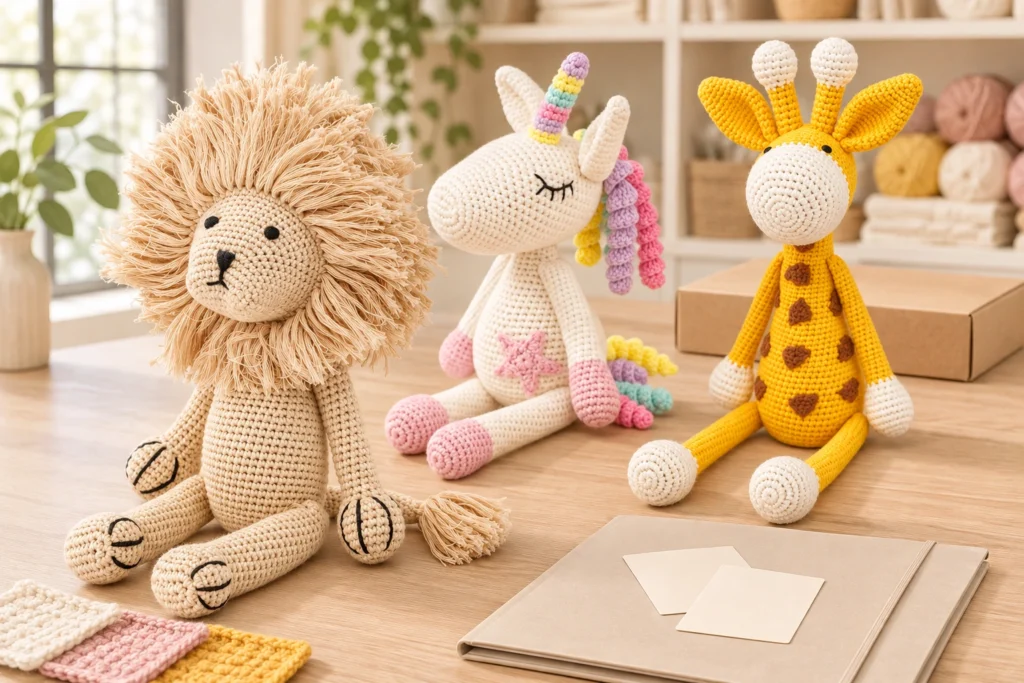
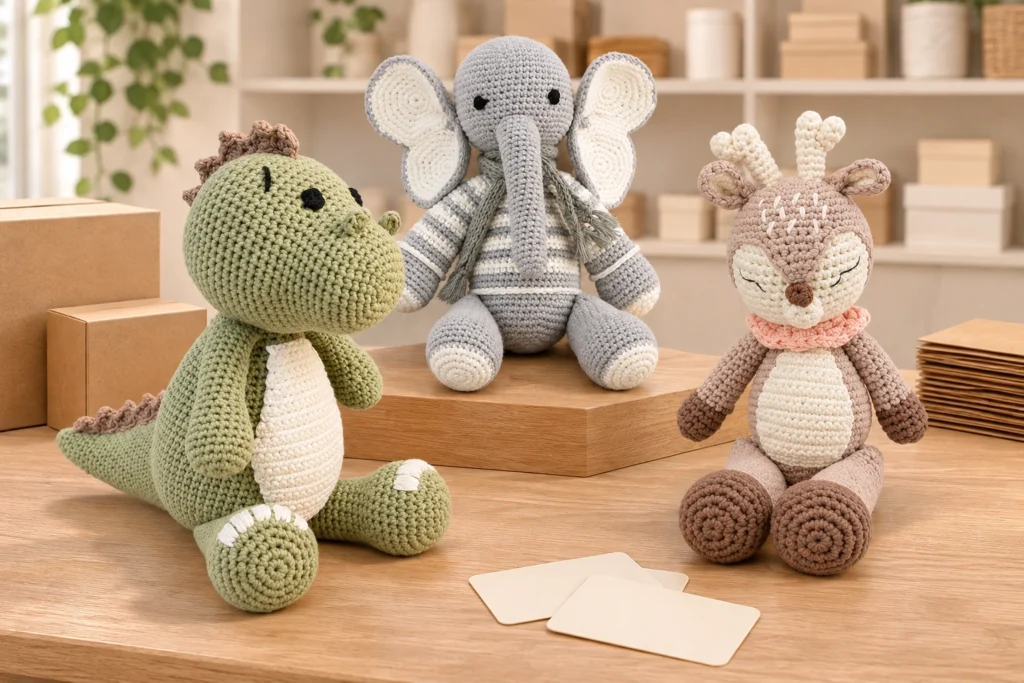
- A coordinated group of characters.
- Several gifts intended to be made separately.
- A sequence that introduces additional techniques.
- A decorative set with a shared visual theme.
- Repeated practice using one design.
Review the relationship before adding more projects. Each additional design introduces its own instructions, material requirements and review work.
A useful concept statement might be: “This pack makes three coordinated animals, each with a separate pattern and individually allocated yarn.”
That statement is more actionable than “a large crochet kit.” It defines what development and packing must deliver.
Avoid assuming that a multi-project pack is suitable for several simultaneous users. Shared hooks, instructions or materials may make that configuration impractical unless it is specifically developed for that purpose.
Decide Whether Projects Are Independent or Sequential
This is one of the most important decisions in a multi-project brief.
Independent Projects
Customers can choose which project to start and complete each one without relying on another project.
For this configuration, review whether each project has:
- An identifiable instruction route.
- Sufficient allocated materials.
- Access to the necessary tools.
- Clearly assigned accessories.
- A practical way to store unused components.
Independent projects may still share a tool. State that arrangement clearly, particularly if the pack is presented as suitable for gifting individual projects.
Sequential Projects
Customers are expected to complete projects in a recommended or required order.
Explain why that order matters. An early project might introduce a technique that later instructions build on, or the material arrangement may follow the intended sequence.
Do not make a sequence necessary through an unexplained dependency. If later projects require knowledge from an earlier section, direct users to that section explicitly.
Choose a Material Allocation Method
Multi-project kits can use project-specific portions, shared supplies or a combination of both.
| Allocation method | Potential benefit | What to resolve |
|---|---|---|
| Separate materials for each project | Makes project ownership easier to understand | Identification, packing space and repeated components |
| Shared yarn by color | Avoids dividing every color into several portions | Consumption across projects, making order and remaining-material identification |
| Mixed allocation | Allows main colors to be separated while small accents are shared | Clear instructions showing which materials are shared |
| Alternative-design allocation | Supports a choice of finished designs | Explicit confirmation that materials do not necessarily make every option |
For shared yarn, validate the complete advertised set. Completing each project separately from a fresh supply does not establish that one shared retail allocation is sufficient for all projects.
Record how trial makers use and retain shared materials. Assess the allowance approach against the full configuration rather than assuming that leftover yarn from an early project will always cover later work.
For a more detailed quantity review, see How to Plan Yarn Quantities for a Retail Crochet Kit.
Build Instructions Around Clear Entry Points
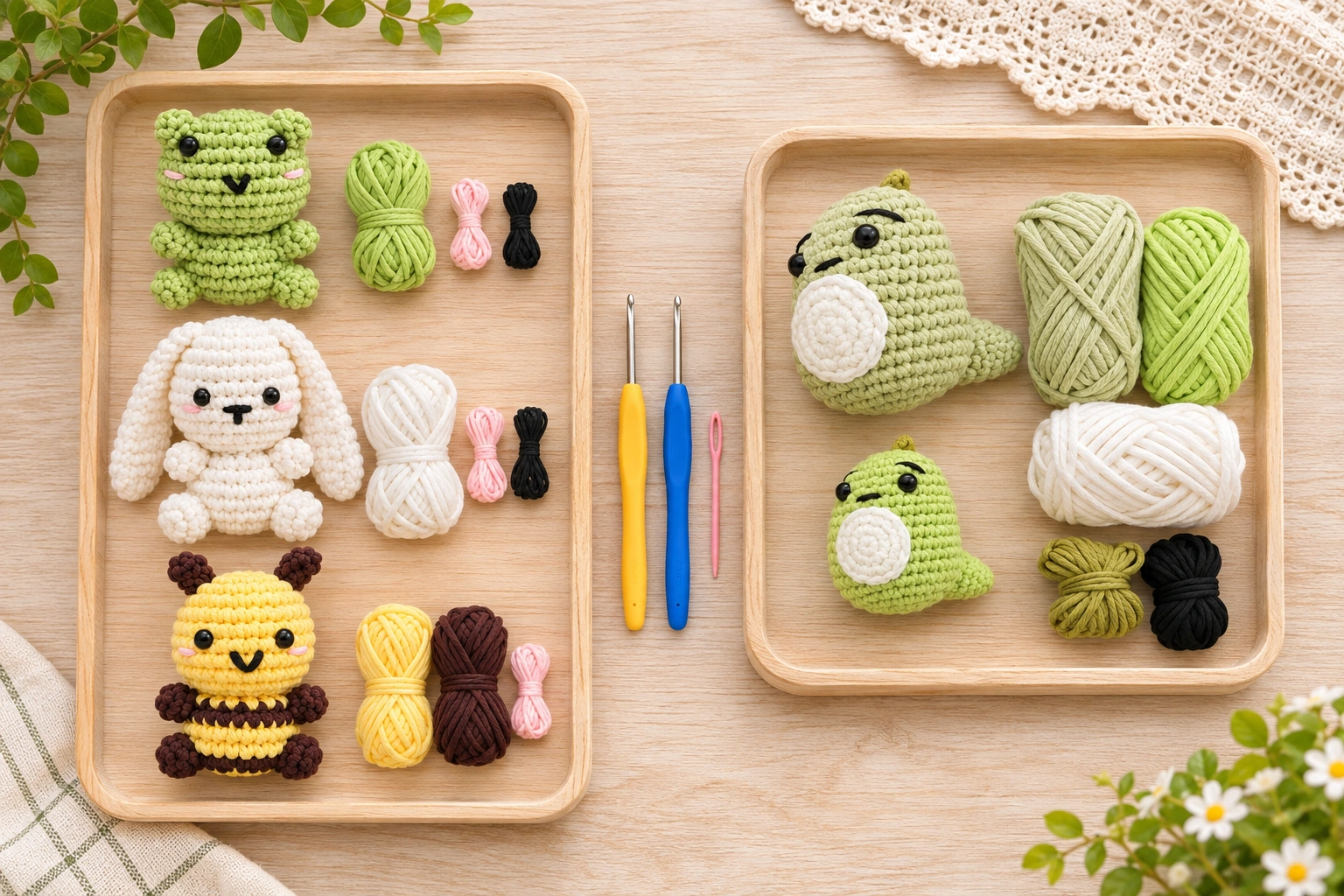
A multi-project kit should make it easy to answer three questions:
- Where do I start?
- Which materials belong to this project?
- What should I keep for the remaining projects?
Common techniques can be explained in a shared reference section, with clear directions from each project pattern. Project-specific steps should remain easy to locate.
Keep names, colors and component references consistent across:
- The outer packaging.
- The contents list.
- Material identifiers.
- Printed patterns.
- Digital tutorials.
- Customer support references.
If one project has alternative colors or optional accessories, explain how that choice affects the remaining materials.
Validate the actual navigation experience as well as the pattern. A technically correct set of instructions can still be difficult to use if customers cannot identify the right starting point.
See How to Validate Crochet Kit Instructions Before a Retail Launch for a separate review process.
Review the Complete Pack Through Its Making Journey
Evaluate the proposed retail configuration from opening through completion.
For a single-project kit, follow the complete route using the supplied components and resources.
For a multi-project kit, review all advertised outputs and any permitted making orders that affect material availability or instruction use. Include the practical task of stopping, storing components and returning later.
Record:
- Which materials are removed first.
- How users distinguish similar colors or accessories.
- Where unfinished work is kept.
- Whether shared components remain identifiable.
- Whether the final project can be completed from the remaining supply.
- Whether the finished outputs match the package description.
A finished display of all projects is useful, but it does not replace this configuration review.
Compare Commercial Scope Before Comparing Price
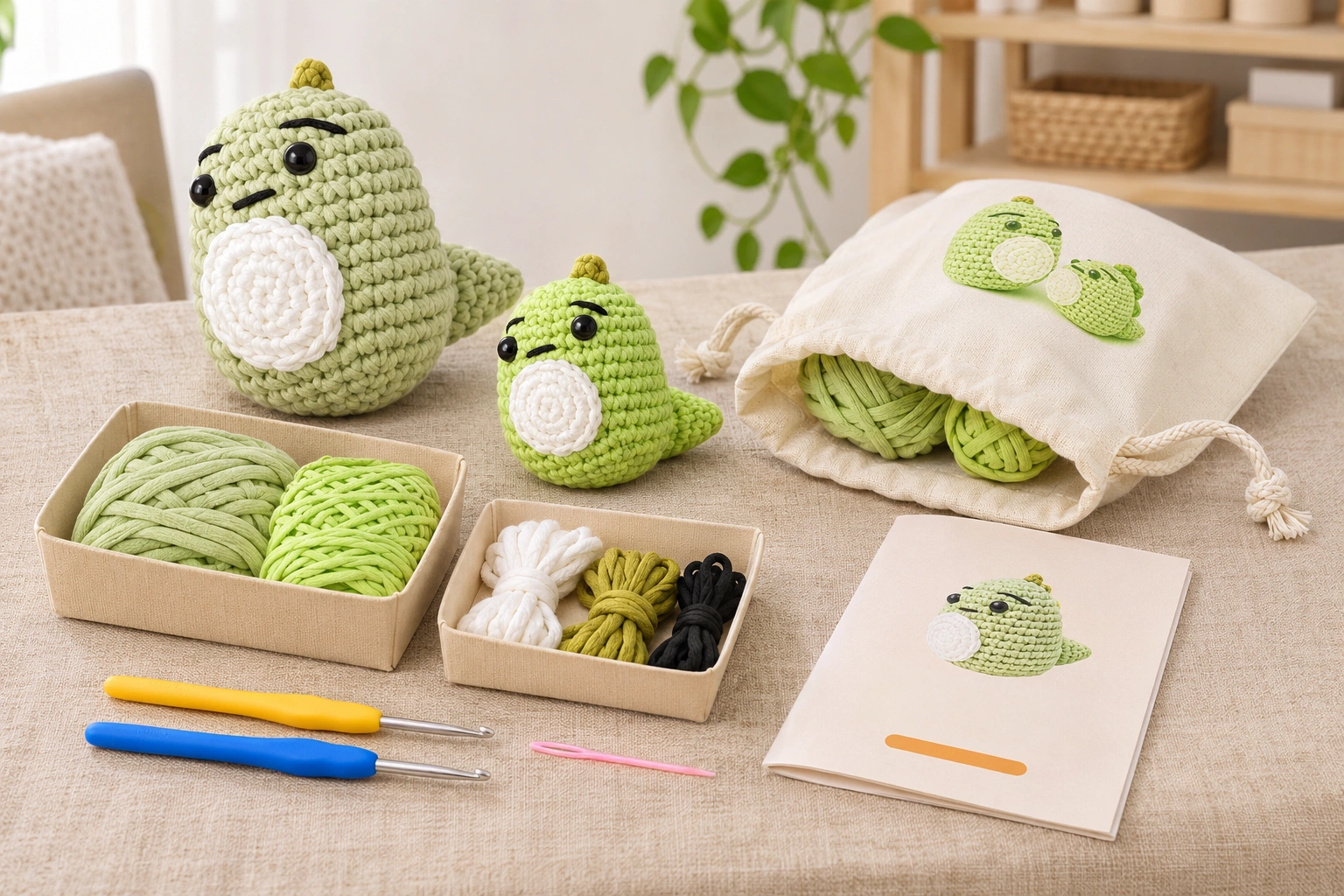
Ask suppliers to identify the scope of each proposal:
- Number of designs and finished outputs.
- Tools supplied and shared.
- Material allocation method.
- Printed and digital resources.
- Individual project packaging, if required.
- Sampling and review scope.
- Outer packaging configuration.
Compare these details alongside price. A multi-project proposal containing shared tools and one instruction booklet is different from several individually complete kits packed together.
Developing the Format With UMY Crochet
UMY Crochet is a product development and manufacturing partner for crochet, DIY craft kits, knitted toys and creative gifts.
A practical development brief should define the intended outputs, the relationship between projects and the proposed material allocation. These decisions provide the basis for discussing sampling, instructions, packaging and quotation scope.
For a multi-project concept, review the individual projects and their combined configuration. Keep unresolved questions visible until full kit trials provide the evidence needed for approval.
Frequently Asked Questions
Is a multi-project kit better value than a single-project kit?
That depends on the finished outputs, materials, resources and purchasing occasion. Compare the complete offer rather than project count alone.
Does a single-project kit mean it is suitable for beginners?
No. Skill requirements depend on the techniques, construction, materials and guidance involved.
Can several projects share one hook?
They can if the proposed hook works for each project. Shared tools also affect whether projects can be made simultaneously or given away separately.
Can customers make the projects in any order?
Only if the instructions and material allocation support that choice. Review any dependencies before making the claim.
Should every project have a separate inner bag?
Separate grouping can help identification, but the choice depends on the component arrangement and packaging brief. Review clarity, access and storage in the proposed pack.
Can packaging show several design options when materials make only one?
The choice must be explained clearly. Customers should be able to distinguish alternative designs from a pack that supplies materials for every displayed output.
Request a Crochet Kit Format Assessment
Send UMY Crochet your proposed designs, intended customer, number of finished outputs, sales channel and target purchasing budget.
Specify whether projects should be independent, sequential or alternative choices. Request a comparison of material allocation, shared tools, instruction structure and packaging requirements before selecting the format for sampling.
<!--[googlesitekit-end-of-content]-->
 Chinese