
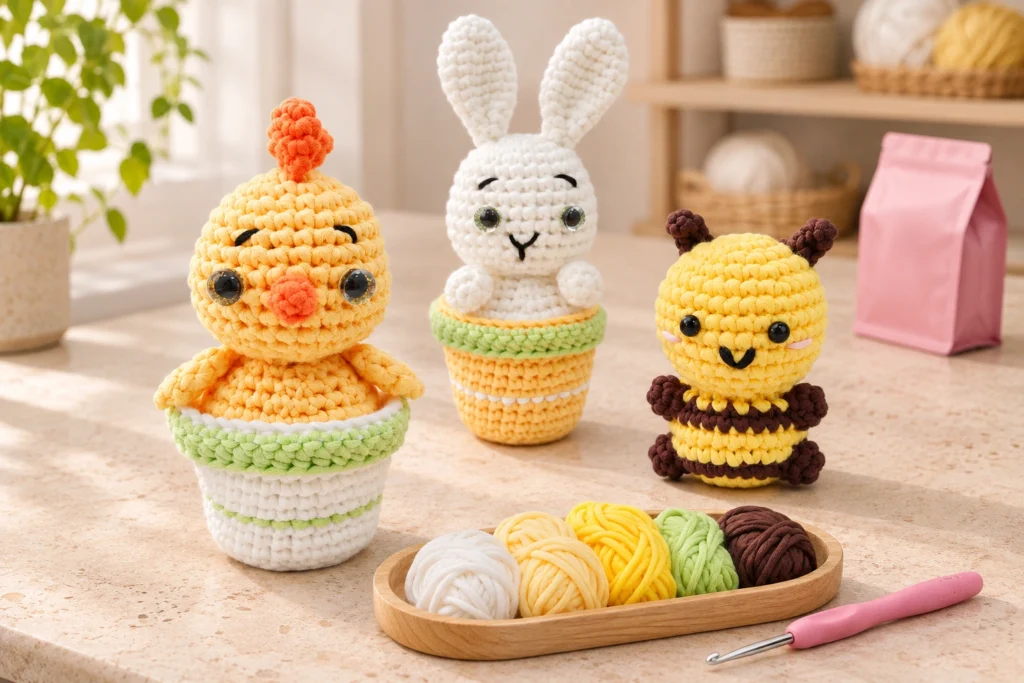
Choose yarn for a beginner crochet kit by assessing how clearly users can identify stitches, how the material behaves during handling and corrections, and whether it produces the intended finished object. Compare candidate yarns against the same project requirements before approving the material for full kit sampling.
For craft brands, private-label kit developers and retailers, yarn selection affects more than the appearance of a finished sample. It also shapes the making experience, instructions, component quantities and packed presentation.
This guide focuses on the initial yarn decision for a new kit. Replacing yarn in an existing approved product requires a separate review of the affected specifications and resources.
Start With the Intended User and Project
“Beginner” can describe someone holding a crochet hook for the first time or someone who already understands basic stitches. These users may need different levels of visual guidance and material support.
Before comparing yarns, define:
- What the user is expected to know before opening the kit.
- Which techniques the project introduces.
- Whether the project is completed independently or with guidance.
- Which design details must remain recognizable.
- The intended finished size and feel.
- The packaging format and target purchasing budget.
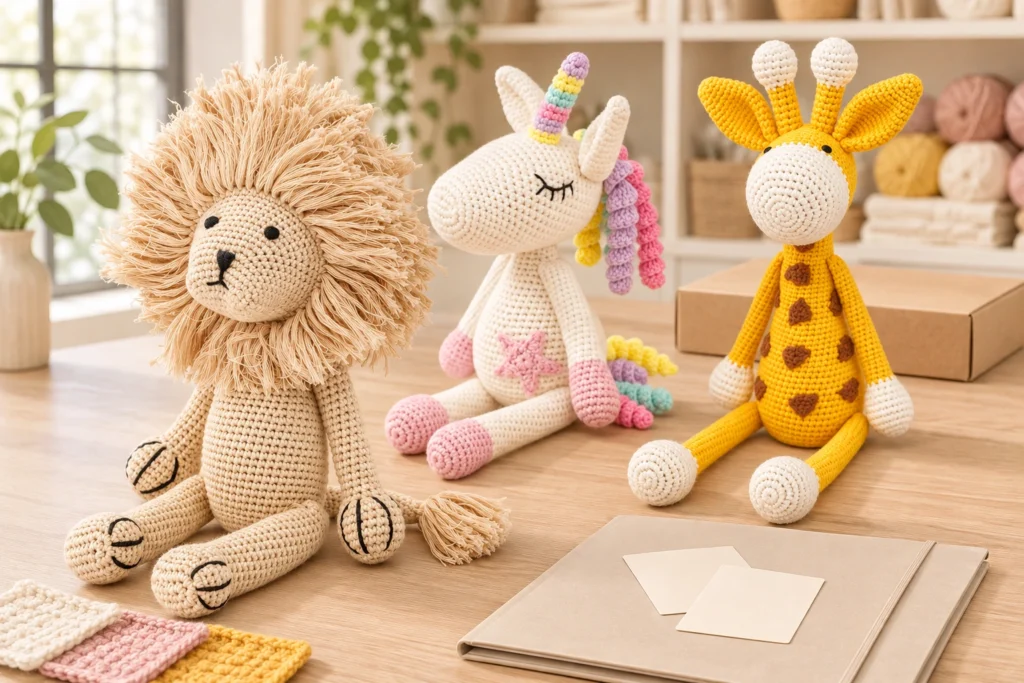
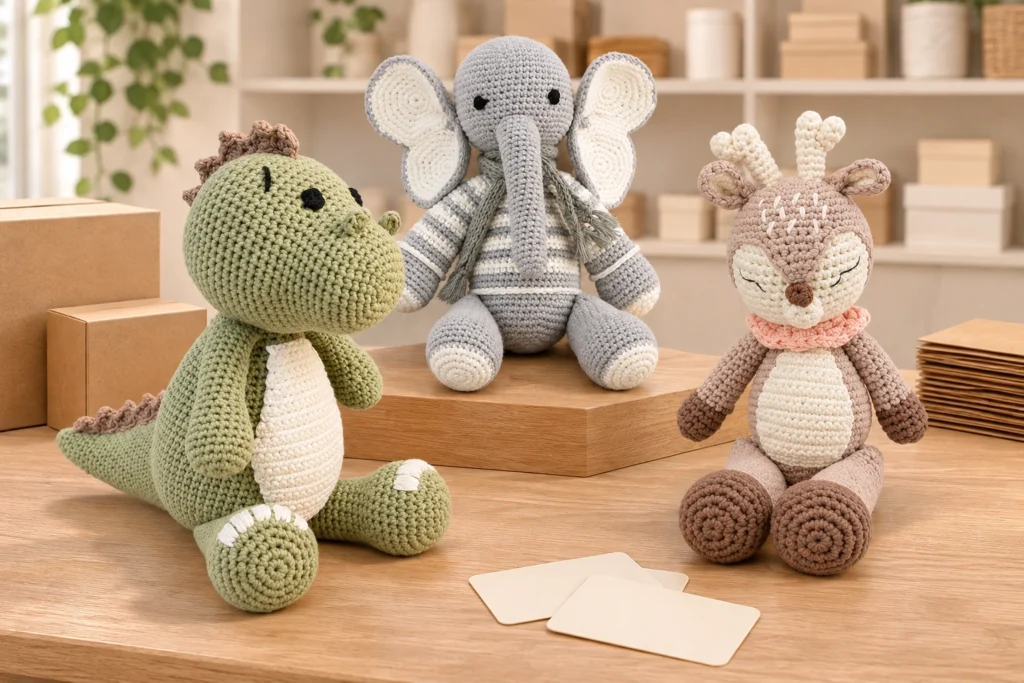
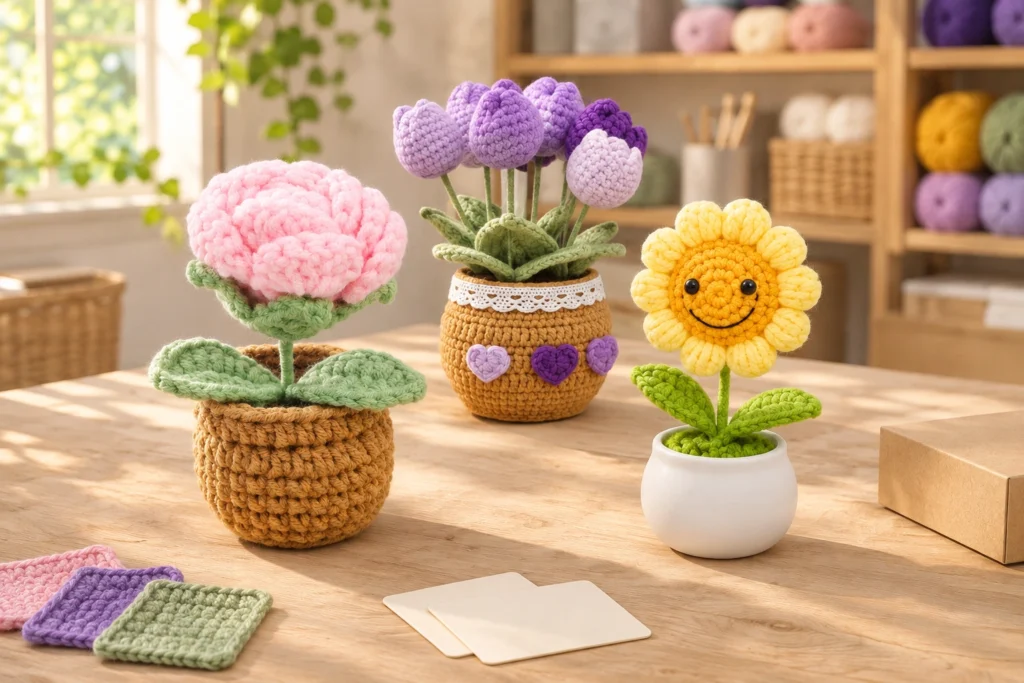
A simple animal, a flat coaster and a small flower can place different demands on yarn. A material that makes one project easy to follow may hide important details in another.
The useful question is: Can the intended user work with this yarn and follow the project as supplied?
Assess Yarn Against a Practical Selection Matrix
Use the same review categories for each candidate. Record observations rather than relying only on descriptions such as “soft,” “premium” or “easy.”
| Review area | What to examine | Why it matters |
|---|---|---|
| Stitch visibility | Whether loops and stitch boundaries remain distinguishable | Users need to identify where to insert the hook and count their work |
| Hook interaction | Whether the proposed hook enters stitches and moves through the yarn comfortably | Yarn and tool should be evaluated together |
| Splitting and snagging | What happens during insertion, withdrawal and repeated attempts | Repeated catches can interrupt the making process |
| Correction behavior | How the yarn responds when stitches are undone and remade | Beginners need a workable way to recover from mistakes |
| Shape and detail | How the material expresses the intended silhouette and features | A comfortable yarn still needs to support the design |
| Handling | Whether the supplied yarn form is manageable during use | Loose ends, tangling or difficult unwinding can complicate the project |
| Color differentiation | Whether adjacent colors and teaching details are distinguishable | Color choices affect both the product and instructional clarity |
| Packing behavior | How the required quantity fits and presents in the proposed package | The approved material must work as a retail component |
This matrix is a development tool. Acceptance criteria should be defined for the individual project.
Check Stitch Visibility in the Actual Project Colors
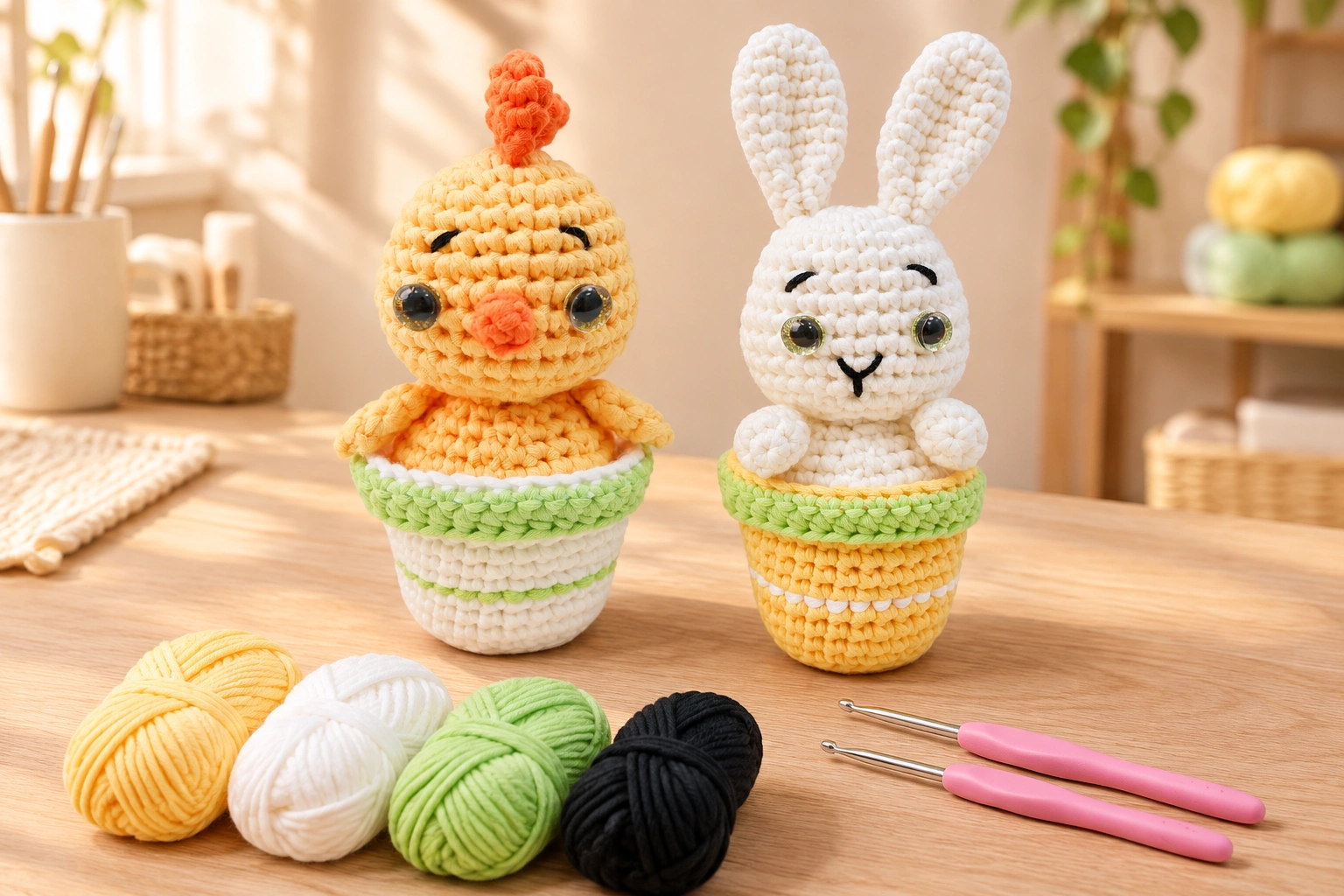
A yarn may look clear in one color and become harder to read in another. Surface texture, color depth and the contrast between yarn and hook can affect what a learner sees.
Review stitch visibility in the colors intended for the kit. Examine the points where the instructions require users to:
- Count stitches around a small piece.
- Identify an increase or decrease.
- Find a joining point.
- Change colors.
- Locate an attachment position.
Look at the work directly and through the proposed tutorial format. A close-up photograph or video should show the action the learner needs to perform.
If a key step is difficult to see, consider a different yarn, a different teaching view or a revised construction. Record which option resolves the problem before proceeding.
Evaluate Yarn and Hook as a Working Combination
Yarn descriptions alone do not establish the right hook for a commercial kit.
Use the proposed yarn and hook together to assess:
- Access to the stitches.
- Ease of drawing loops through the work.
- Control during shaping.
- The resulting fabric and finished dimensions.
- Comfort during the tasks included in the project.
Changing the hook may alter the result, so record the pairing used for each review sample.
The supplied tool should also match the tool shown in the instructions closely enough for the user to follow the demonstrated actions. If a different tool is used during development, review the retail tool before approval.
Include Mistake Recovery in the Review
A finished sample shows what a skilled maker can achieve. It does not show how the material behaves when a learner needs to correct their work.
Include a short correction exercise:
- Make a representative section using the proposed materials.
- Undo a defined portion.
- Remake that section.
- Observe changes in yarn appearance, handling and stitch clarity.
- Record whether the instructions need additional guidance.
Use the same exercise when comparing candidates. Avoid turning an informal observation into a durability or performance claim.
For a project that involves several small pieces, also review how easily users can restart a piece without confusing the remaining materials.
Confirm That the Yarn Preserves the Design
A material should support the features that make the project recognizable.
For an animal character, these might include the head-to-body relationship, ears or facial placement. For a flower, they might include petal definition and the relationship between the flower head and stem.
Separate essential features from optional decoration before judging the yarn sample.
Ask:
- Does the silhouette remain clear at the intended size?
- Are important details achievable with the selected material?
- Does the construction require additional sewing or finishing?
- Can the instructions explain those tasks at the intended user level?
- Does the finished item match the appearance shown on the packaging?
If the design becomes difficult to execute, assess whether the material or the construction should change. Keep a record of the features that must be preserved.
Compare Candidates Fairly
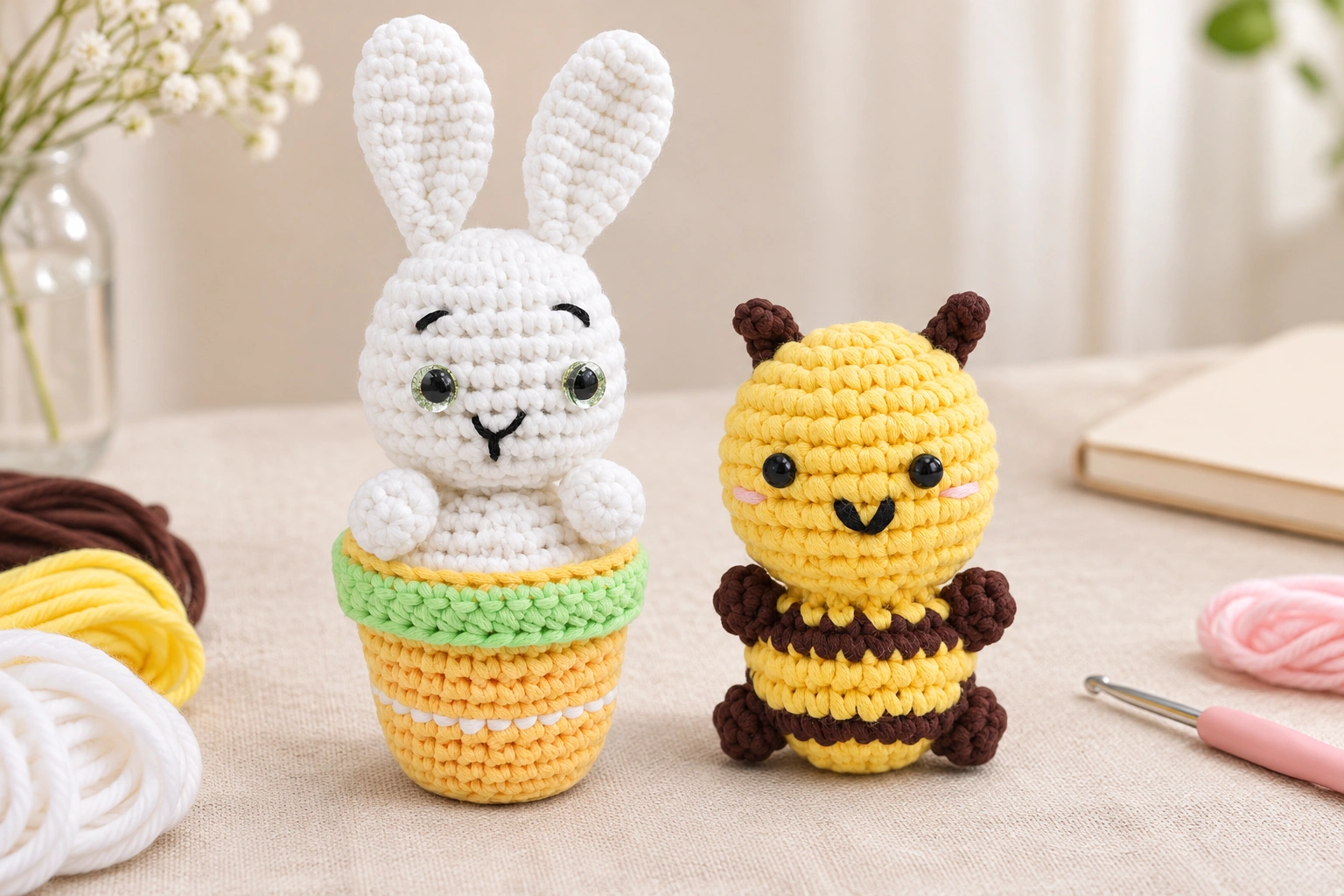
There are two useful comparisons, and they answer different questions.
Compare Material Behavior
Use a defined exercise to examine stitch visibility, hook interaction and correction behavior. Record the yarn, hook, color and conditions used.
This helps identify practical handling differences.
Compare Complete Project Options
Develop each candidate into a workable project proposal. The hook, construction or instructions may need adjustment for each material.
This shows the consequences of selecting that material for the actual kit.
Do not assume that the same pattern will produce equivalent dimensions, appearance or material consumption with every yarn. If specifications change during comparison, make those changes visible in the review record.
A lower yarn purchase price should also be assessed alongside the proposed quantity, preparation, packing and development requirements.
Review the Yarn in Its Retail Form
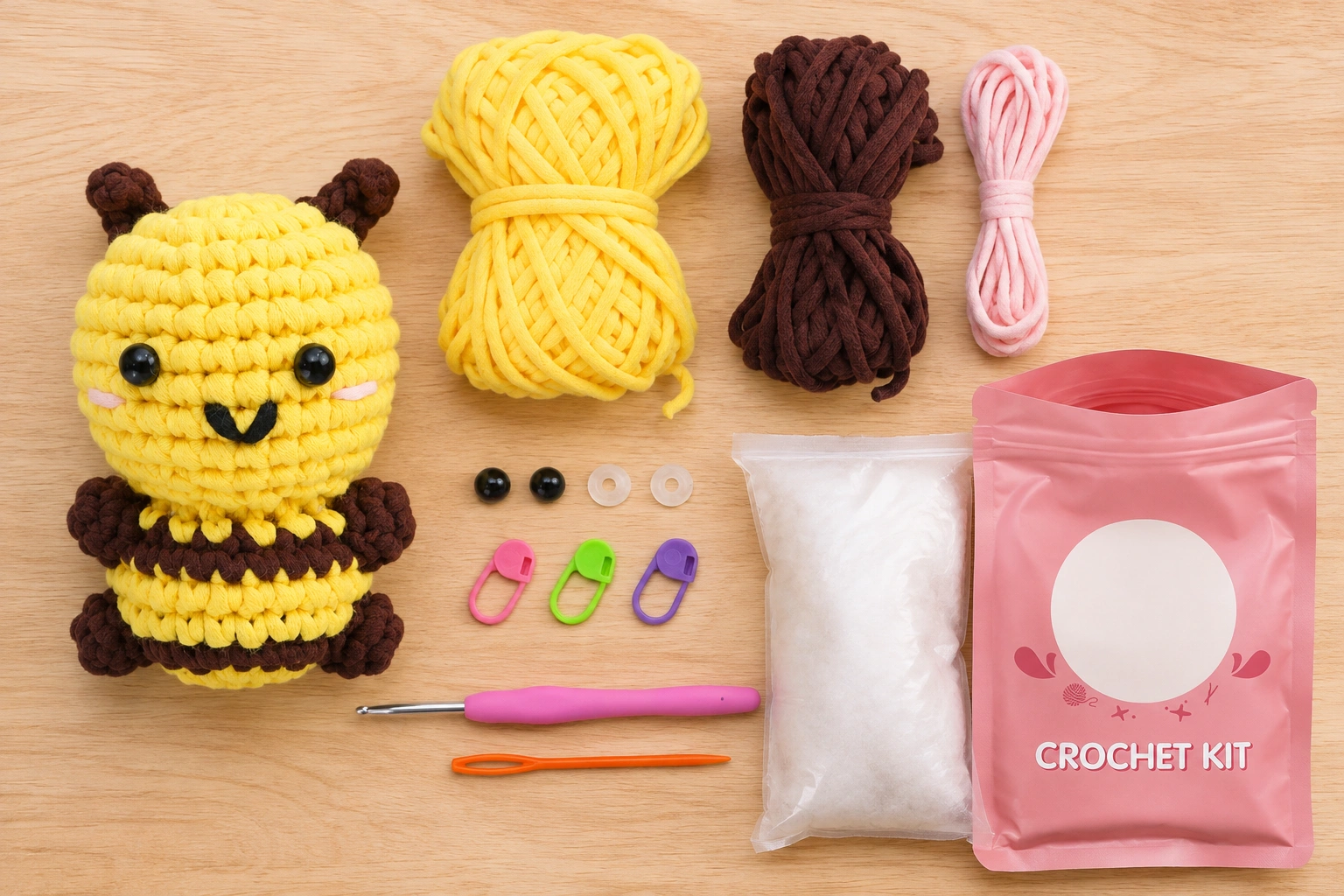
Development yarn may arrive on a large cone or in a supplier sample format. The customer may receive a smaller ball, skein or prepared portion.
Review the form that will actually be packed.
Check whether:
- The starting end is reasonably accessible.
- Different colors can be identified.
- The yarn can be removed without disturbing other components.
- The component arrangement remains understandable after opening.
- The required quantity fits the proposed package.
- Any bands or identifiers correspond to the instructions.
Approve yarn quantity separately through complete project trials. The amount used by a skilled sample maker should not automatically become the packed quantity.
For that next stage, see How to Plan Yarn Quantities for a Retail Crochet Kit.
Turn the Selection Into a Sampling Brief
A useful yarn decision produces a clear brief for the next development stage.
Record:
- The selected material reference and supplier information available.
- Confirmed composition information and any unresolved documentation.
- Intended colors and physical color references.
- The proposed hook.
- The project version used in the review.
- Observations on visibility, handling and corrections.
- Essential finished-product features.
- The proposed retail yarn form.
- Questions that full kit sampling must resolve.
Keep rejected candidates and the reasons for rejecting them in the development record. This can help prevent an unsuitable option from being reintroduced later without review.
Working With UMY Crochet on Material Selection
UMY Crochet is a product development and manufacturing partner for crochet, DIY craft kits, knitted toys and creative gifts.
For a beginner kit project, a practical material review starts with the intended user, finished-product reference and retail requirements. Candidate yarn-and-hook combinations can then be discussed against the project’s visual and making requirements, with the agreed evaluation scope recorded before sampling.
Material selection is one stage of development. Full kit review should subsequently address quantities, instructions, component completeness and packed presentation.
Before launch, use a separate process to validate the crochet kit instructions with the intended user group.
Frequently Asked Questions
Is thicker yarn always better for a beginner crochet kit?
Thickness alone does not establish suitability. Review stitch visibility, hook interaction, handling and the intended finished result together.
Should every project in a beginner collection use the same yarn?
A shared yarn can simplify some development and component decisions, but each project still needs review. Different shapes and details may require different material properties.
Can we choose yarn from photographs?
Photographs can support an initial shortlist. Physical review is needed to assess handling, hook interaction, corrections and the resulting fabric.
Should the pattern remain unchanged when comparing yarns?
An unchanged exercise can help compare material behavior. Complete project proposals may require different hooks or construction adjustments, which should be recorded.
When should packed yarn quantities be approved?
After the selected material and project configuration have been evaluated through complete making trials. Quantity approval should include a defined allowance approach and packing verification.
Does choosing the yarn approve the entire kit?
No. Instructions, tools, accessories, quantities and packaging still require review as a complete configuration.
Request a Beginner Crochet Kit Material Review
Share your intended user, finished-project references, preferred size, target purchasing budget, sales market and packaging concept with UMY Crochet.
Include any yarn samples or material preferences you already have. Request an assessment of candidate materials, proposed yarn-and-hook combinations and the questions to resolve during full kit sampling.
<!--[googlesitekit-end-of-content]-->
 Chinese