
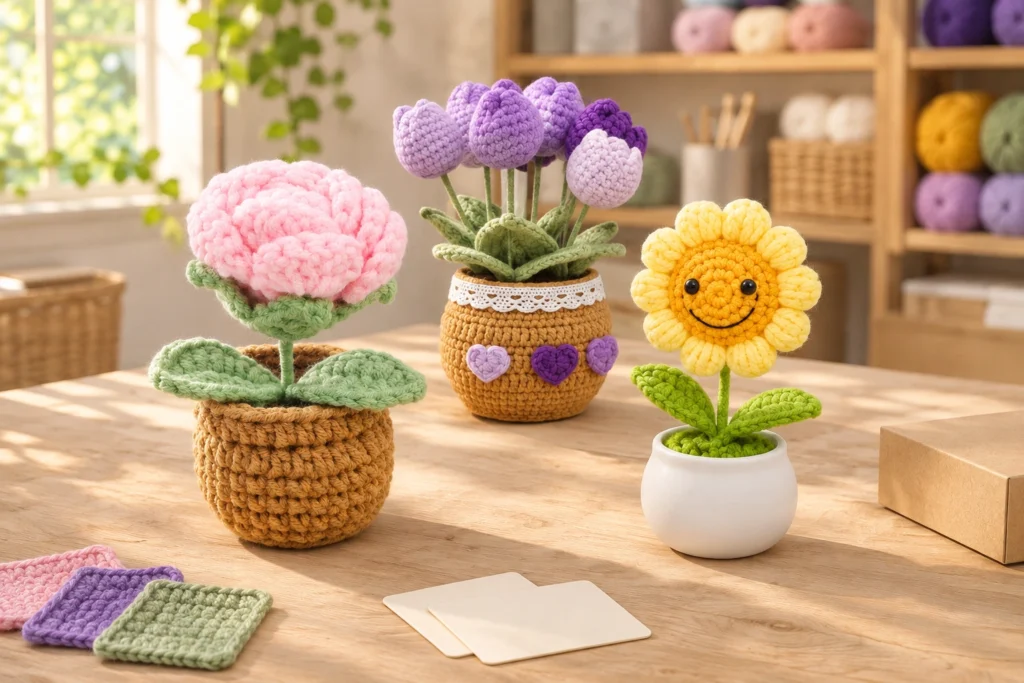
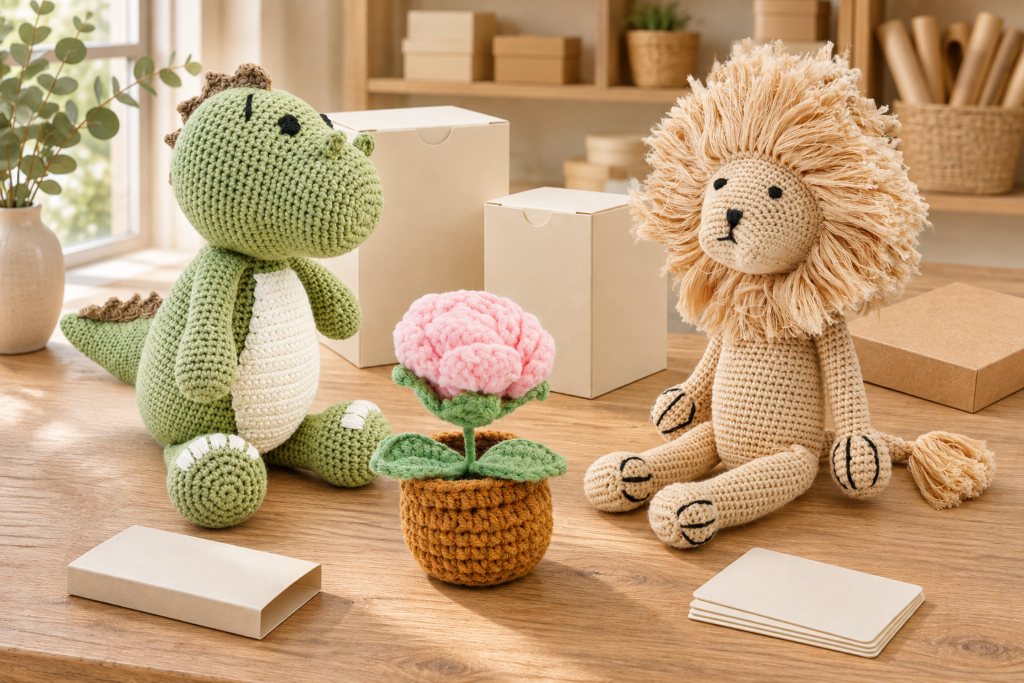
Buyers developing crochet potted flowers should review the flower head, stem, leaves, pot and internal support as one complete product. Confirm how the arrangement stands, how its parts hold their intended position, what handling it is designed for, and how it should look after unpacking.
An attractive front-view sample is a useful starting point. Approval also needs physical evidence that the proposed construction and presentation work together.
Define the Product’s Intended Presentation First
A crochet potted flower may be intended for a retail shelf, an office desk, a gift box or a seasonal display. Each setting creates different expectations for visibility, handling and packaging.
Before sampling, define:
- The intended placement and supporting surface.
- Whether customers will view it from one direction or several.
- Whether the arrangement has a fixed shape or allows adjustment.
- How customers are expected to lift and move it.
- Whether any assembly or shaping is required after unpacking.
- The proposed selling and packaging format.
This guide focuses on the potted product itself. For arrangements made from separate stems, the development questions differ: stem compatibility and bouquet recipes need their own review.
Do not assume that a product described as decorative is intended for every setting or user. Keep the intended use consistent across the brief, product construction, packaging and customer information.
What Should the Product Specification Describe?
Record the complete arrangement as well as its individual parts.
Overall height alone will not explain whether a sample matches the brief. Buyers also need a consistent way to describe the pot, flower head, leaf spread and intended orientation.
| Product area | What to define | What to review physically |
|---|---|---|
| Flower head | Shape, dimensions and intended facing direction | Recognition, fullness, position and support |
| Stem | Visible length, construction and permitted adjustment | Lean, bending, handling and connection points |
| Leaves | Number, placement and intended spread | Visibility, natural position and interference |
| Pot | Shape, dimensions, material and base construction | Surface contact, deformation and handling |
| Internal support | Proposed construction and its relationship to the pot | Whether the assembled product holds its intended arrangement |
| Complete product | Overall dimensions, viewing directions and presentation | Balance, standing position and consistency |
| Packed product | Orientation, support and unpacking instructions | Arrival appearance and any required recovery |
Specify how measurements are taken. For example, define whether width includes the widest leaf spread and whether height is measured in the approved natural position.
Avoid forcing a flexible sample into a preferred shape solely to obtain a measurement.
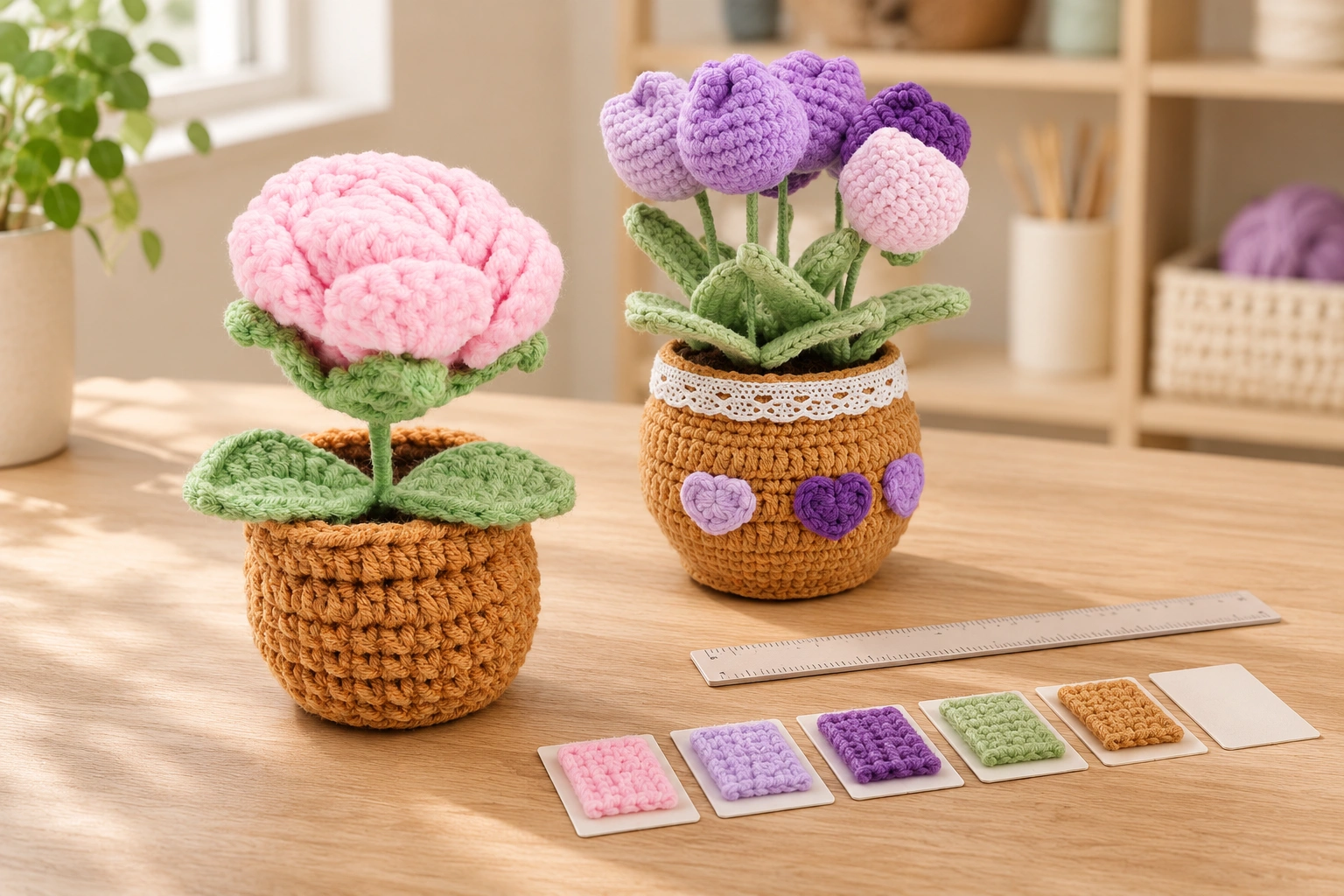
How Should Buyers Review Standing Stability?
Start with the actual complete sample on the surfaces relevant to its intended placement.
Check whether it stands without hidden support. Observe which parts of the base contact the surface and whether the arrangement settles into a different position after being placed.
Review the product from the front, side and rear. A pot can appear upright from one angle while the stem or flower head leans noticeably from another.
Questions to record include:
- Does the sample rock during ordinary placement?
- Does the base retain its intended shape?
- Does a natural change in flower orientation affect its standing position?
- Can leaves touch the table and conceal a support problem?
- Does the product require a stand or surrounding display fixture?
Agree on a project-specific review method and acceptance criteria. The method should describe the surface, product position, handling sequence and observations.
A successful tabletop review supports a defined presentation decision. It should not be presented as proof of performance under every possible condition.
How Do the Flower Head and Stem Work Together?
Review the head and stem as a connected assembly.
A broad flower head, a long visible stem and a narrow pot create a different development problem from a compact flower positioned close to a wider base. Evaluate the proposed combination rather than approving each component separately.
Flower Orientation
Define whether the flower faces forward, upward or at an angle. Record which variation is acceptable and how the reference position is established.
For a multi-flower arrangement, check how the heads relate to one another. A pleasing arrangement should not depend on one specific camera position.
Stem Adjustment
If adjustment is intended, define who performs it and what movement is permitted.
Ask the development team to assess whether the proposed construction supports that adjustment. Review the complete sample after the agreed handling sequence.
If adjustment is not intended, make that boundary clear in the product information.
Leaf Position
Check whether leaves obscure the flower, press against adjacent stems or need repeated repositioning. Record the intended spread in photographs and written specifications.
Do not treat leaf repositioning as a solution to an unresolved support issue.
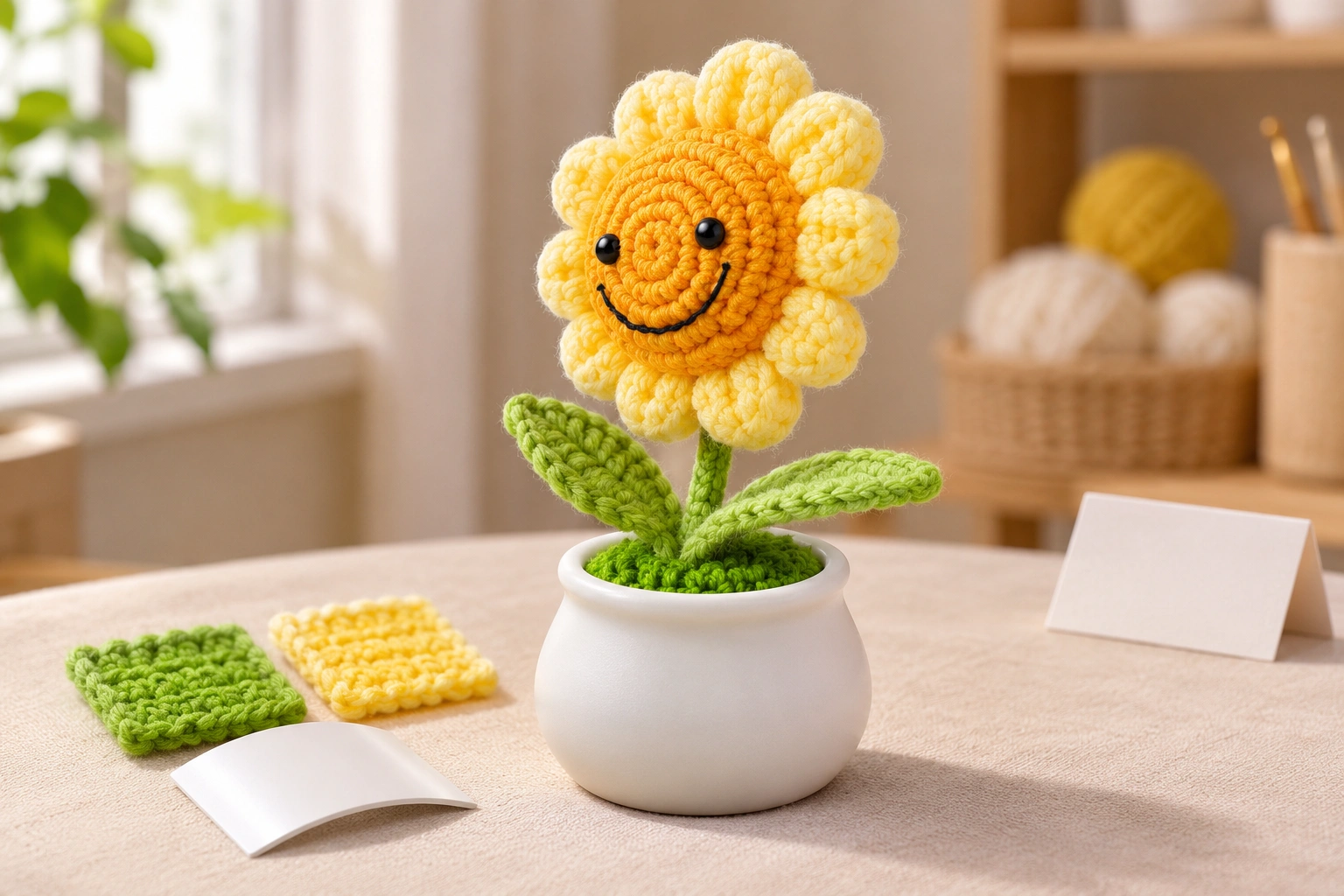
What Should Buyers Ask About the Pot and Internal Support?
Ask how the proposed pot construction holds the arrangement and maintains its external shape.
Different designs may use different combinations of crochet, filling, a separate container or internal support. The visible yarn surface does not reveal the full construction.
Useful development questions include:
- What forms the base and sides?
- How is the stem positioned within the pot?
- How are the supporting materials retained?
- Which parts can deform during packing or handling?
- Can the assembly be produced consistently?
- What changes would require another sample review?
Request construction information appropriate to the project. Where the interior cannot be assessed from a finished sample, separate material references or a dedicated construction sample may help explain the proposal.
A construction illustration is not evidence that the finished product has been tested. Keep design explanation and performance verification clearly identified.
How Should Handling Be Reviewed?
Define a realistic handling sequence based on how the product will be packed, displayed, purchased and moved.
For example, the review may include removing the product from its package, placing it on a shelf, lifting it by the pot and returning it to the package.
Observe whether the pot changes shape, the stem shifts or the flower needs attention afterward. Record what happened and which action caused it.
If care or handling instructions are necessary, make them consistent with the reviewed construction. Product claims and instructions should be supported by suitable evidence for the intended use.
**## What Should Buyers Check After Unpacking?
Assess the product together with its proposed packaging.
Identify the areas most likely to be affected by contact or compression: petals, leaf edges, stem position, the pot rim and the base.
After the agreed packaging review, record:
- The product’s appearance immediately after removal.
- Any shaping or adjustment required.
- Whether the customer can understand that adjustment.
- Whether the arrangement stands in its intended position.
- Any permanent change or unresolved issue.
If recovery time is part of the proposed presentation, define and verify it. Do not assume every material or construction will recover in the same way.
For the broader process, see How to Validate Protective Packaging for Crochet Products Before Shipment.
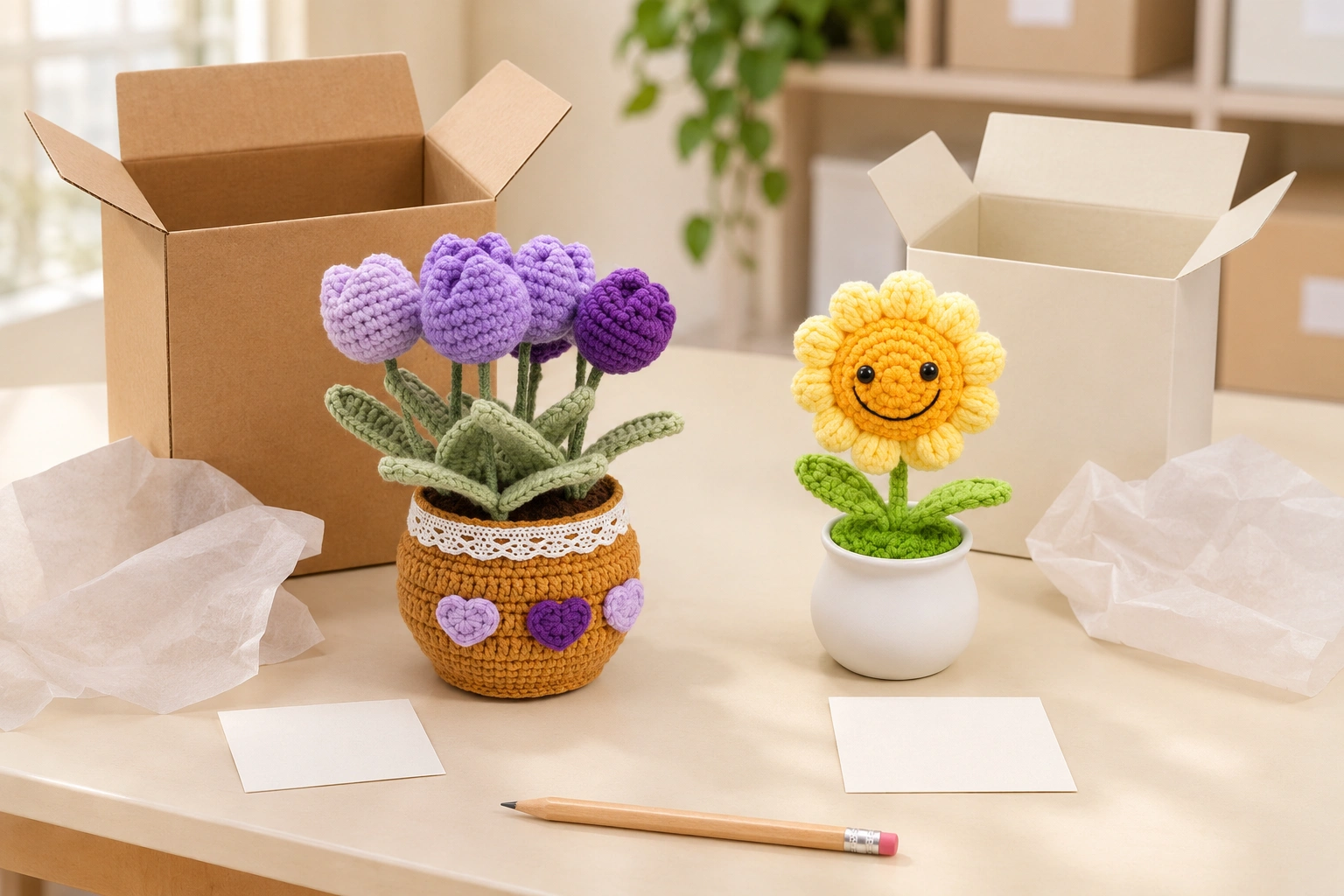
How Should a Potted Flower Collection Be Reviewed?
Evaluate each construction within the collection.
A shared pot style does not establish that every flower arrangement will behave identically. Changes to flower-head size, stem length, leaf spread or the number of stems can affect the complete product.
Use a review matrix to identify which samples represent the range and which variants need individual assessment. Include the versions with materially different proportions or construction.
Keep approved references specific to each configuration. Record any shared materials separately from features that vary by SKU.
How Can UMY Crochet Support Development?
UMY Crochet is a product development and manufacturing partner for crochet, DIY craft kits, knitted toys and creative gifts.
For a potted flower project, the development discussion can begin with the intended setting, flower references, pot format, dimensions, handling expectations and packaging requirements.
The proposed construction can then be assessed through sample development, physical review and documented revisions.
Approval should connect the selected sample to its materials, arrangement, packaging and agreed acceptance criteria. A photograph alone should not stand in for unresolved construction decisions.
Frequently Asked Questions
Can a crochet potted flower stand without a separate display holder?
That depends on its complete construction. Review the actual sample on the intended surface and confirm whether any external support forms part of the product configuration.
Is a wider pot always the best solution?
No single dimension determines suitability. Assess the base, internal support, stem position, flower arrangement and intended handling together.
Can buyers change the flower head while retaining the same pot?
Potentially, but the new combination needs review. A different head may change proportions, orientation, support requirements and packaging fit.
Should stems be adjustable?
Only when adjustment supports the intended product and the construction has been reviewed for that purpose. Define the permitted movement and customer instructions.
Can all colors share one approved sample?
Shared construction can be recorded, but material or specification differences may require further review. Define what the sample represents and which variants remain outstanding.
Does a good unpacking result prove shipping protection?
It supports the specific review performed. Broader protection claims require an appropriate validation plan and evidence covering the proposed product and packaging arrangement.
Request a Crochet Potted Flower Development Review
Send UMY Crochet your flower references, intended placement, proposed dimensions, pot preferences and quantities by style.
Include your expectations for stem adjustment, handling and arrival presentation. Request an assessment covering construction options, sample needs, packaging and the physical review required before approval.
<!--[googlesitekit-end-of-content]-->
 Chinese