
A Practical Guide to China's Handmade Crochet Manufacturing Industry for International Brands
China has long been recognized as one of the world's largest manufacturing hubs. From electronics and textiles to consumer goods and toys, buyers worldwide rely on Chinese suppliers for quality, efficiency, and innovation.
But when it comes to handmade crochet production, many buyers have questions.
Can handmade products really be produced at scale?
How do Chinese crochet factories maintain quality consistency?
Who actually makes the products?
Is handmade crochet manufacturing in China suitable for premium brands?
After more than 12 years of specializing in crochet manufacturing, U-MY Crochet has worked with retailers, museum stores, gift brands, e-commerce sellers, distributors, and corporate buyers across more than 150 countries and regions.
One thing we have consistently observed is:
Successful handmade crochet manufacturing is not built on machines—it is built on organized systems.
This guide explains how professional handmade crochet production works in China and what international buyers should know before choosing a manufacturing partner.
Why China Has Become a Global Hub for Handmade Crochet Manufacturing
Many buyers associate China with automated production lines.
However, crochet products belong to a different manufacturing category.
Unlike knitted garments or molded plastic toys, crochet products are created stitch by stitch by skilled artisans.
China has developed an ecosystem that combines:
- Handmade craftsmanship
- Industrial production management
- Material sourcing
- Product development
- Quality control
- Packaging
- International logistics
This combination allows Chinese crochet manufacturers to support both small development projects and large commercial programs.
Today, Chinese crochet factories produce products for:
- Retail brands
- Museum gift shops
- Baby brands
- Promotional campaigns
- DIY craft companies
- Educational institutions
- Licensed character programs
Handmade Does Not Mean Unorganized
One of the biggest misconceptions is that handmade production lacks consistency.
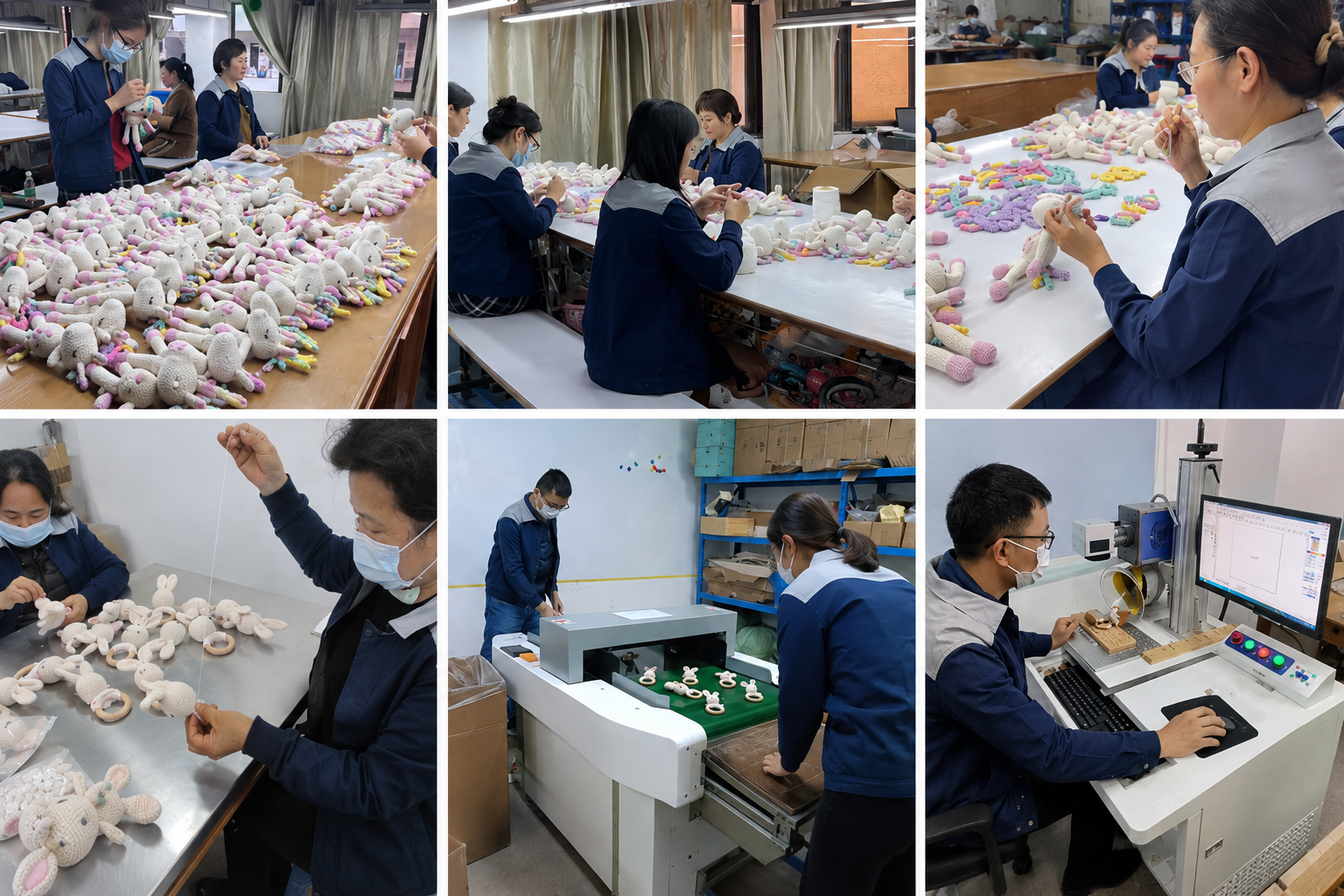
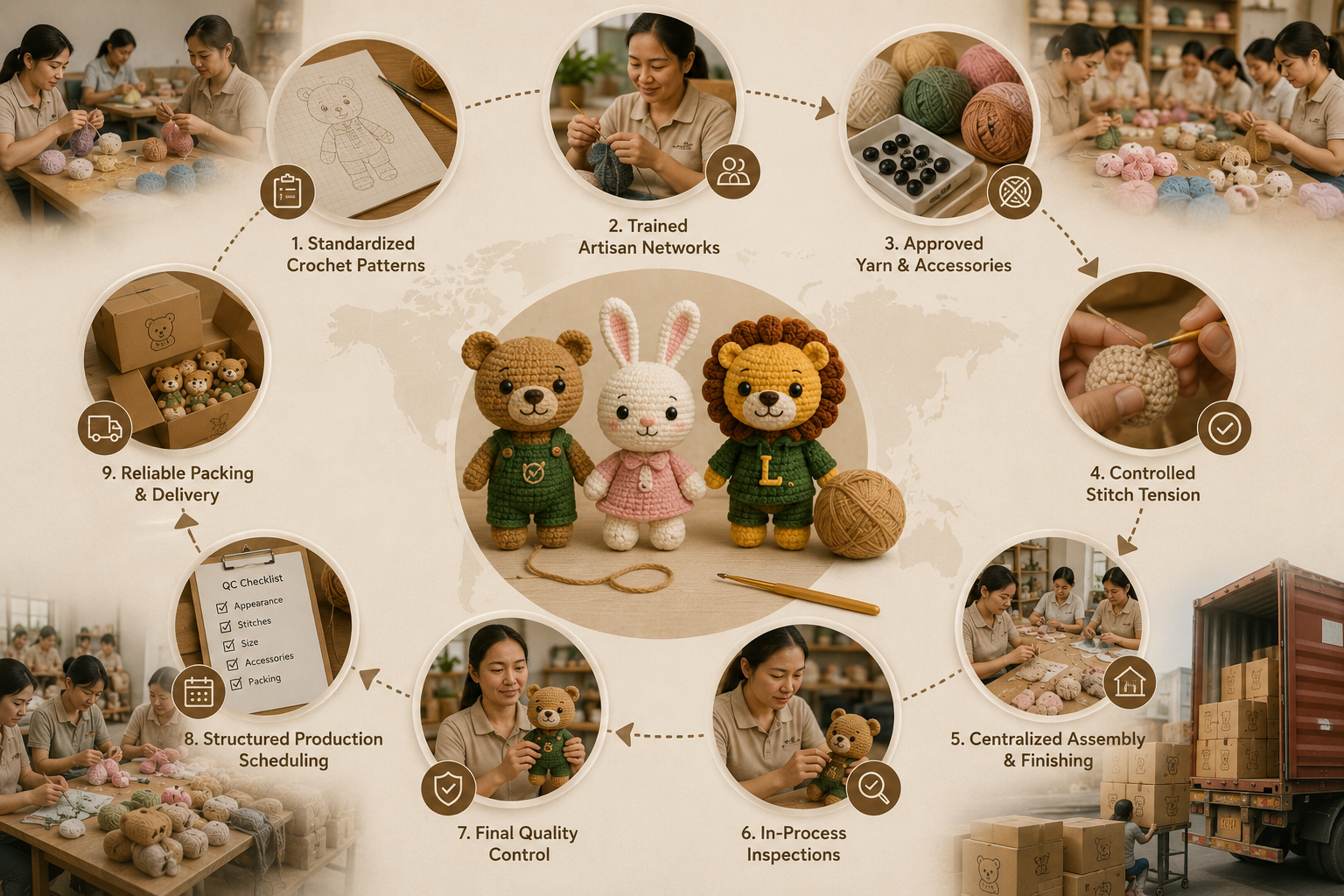
At U-MY Crochet, production typically follows a structured workflow:
- Product development
- Pattern standardization
- Material preparation
- Artisan assignment
- In-process quality inspection
- Assembly and finishing
- Final inspection
- Packaging and shipment
Every artisan follows approved production specifications.
Rather than relying on personal interpretation, professional factories establish:
- Standard crochet patterns
- Approved yarn colors
- Stitch-density guidelines
- Size tolerances
- Assembly instructions
- Quality checkpoints
This systematic approach helps maintain consistency across large production runs.
Who Makes Handmade Crochet Products?
Many international buyers ask:
"Who actually makes the crochet products?"
The answer depends on the factory's production model.
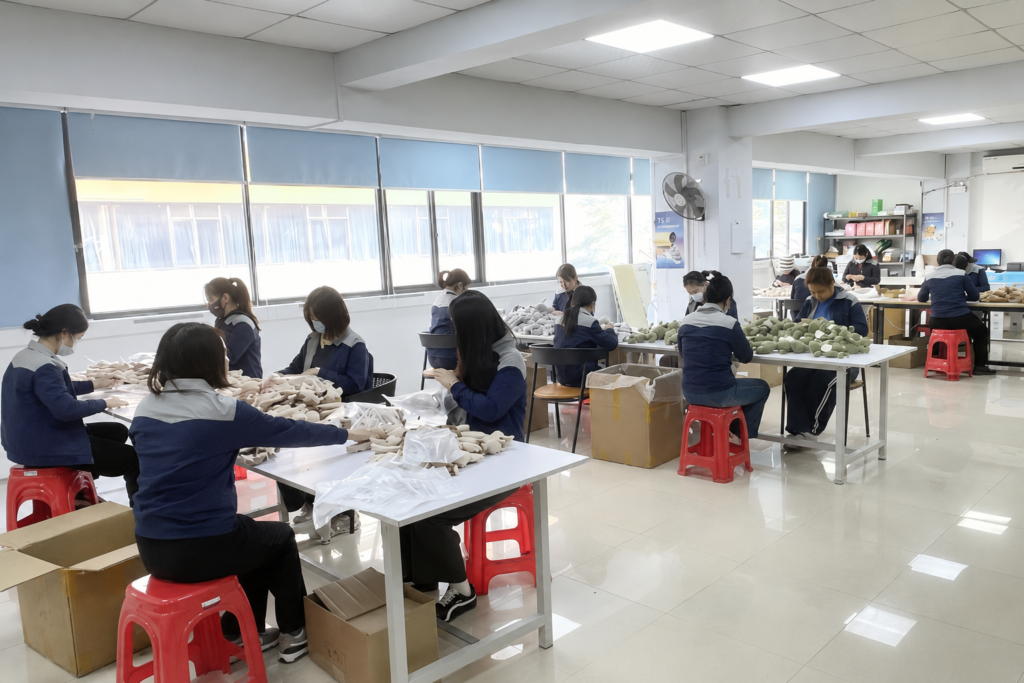
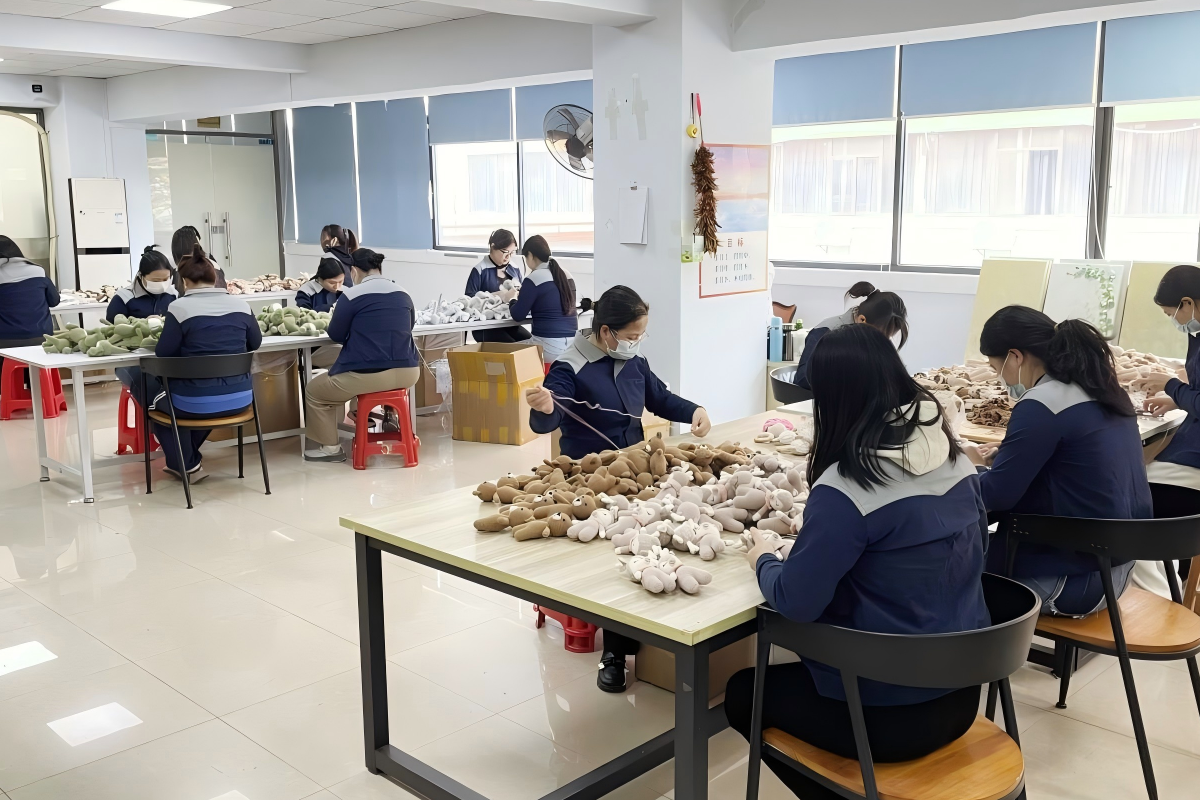
Professional crochet manufacturers often coordinate distributed artisan networks supported by centralized production management.
At U-MY Crochet, our production network includes more than 2,000 artisans working under standardized manufacturing procedures.
The process combines:
- Skilled crochet artisans
- Technical supervisors
- Material coordinators
- Quality inspectors
- Assembly teams
- Packaging specialists
This model allows handmade production to remain flexible while maintaining commercial production standards.
One thing we have learned is:
Handmade production succeeds when craftsmanship is supported by management systems.
How Product Development Begins
Every crochet product starts with an idea.
Customers may provide:
- Hand sketches
- Digital illustrations
- Existing mascots
- Brand guidelines
- Product references
- Mood boards
The development team then transforms the concept into a manufacturable crochet design.
During this stage, engineers and designers evaluate:
- Product proportions
- Yarn selection
- Crochet structure
- Embroidery placement
- Filling methods
- Assembly sequence
Sometimes small design adjustments improve:
- Durability
- Production efficiency
- Appearance
- Safety
- Cost control
The goal is to preserve the original character while ensuring reliable production.
Why Material Selection Matters
The quality of a crochet product depends heavily on its materials.
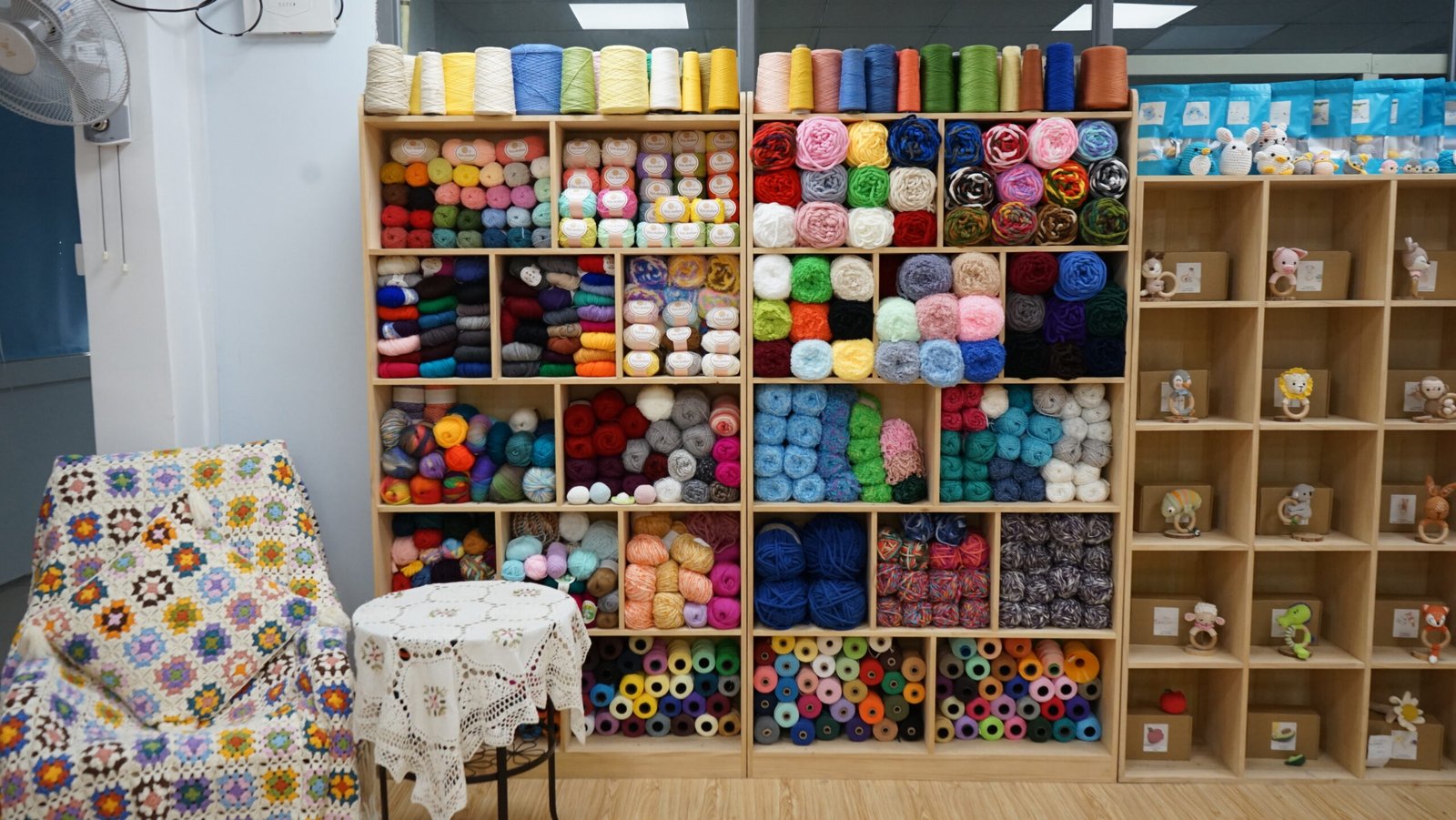
Professional manufacturers typically offer options such as:
- Cotton yarn
- Organic cotton
- Recycled fibers
- Velvet yarn
- Milk cotton yarn
- Polyester filling
- Wooden accessories
- Safety eyes
- Embroidered details
Material selection affects:
- Product appearance
- Softness
- Durability
- Safety
- Retail positioning
- Production cost
For children's products, material choices should also align with the safety requirements of the destination market.
How Chinese Crochet Factories Maintain Consistent Quality
Since crochet products are handmade, quality management is essential.
Professional factories establish quality-control procedures throughout production.
Typical inspections include:
Material Inspection
Checking:
- Yarn colors
- Yarn quality
- Filling materials
- Accessories
In-Process Inspection
Verifying:
- Stitch consistency
- Product dimensions
- Shape accuracy
- Assembly quality
Final Inspection
Reviewing:
- Appearance
- Embroidery
- Packaging
- Labels
- Product cleanliness
At U-MY Crochet, approved samples serve as the quality benchmark throughout production.
One lesson we have learned is:
Consistency comes from standardized processes—not from chance.
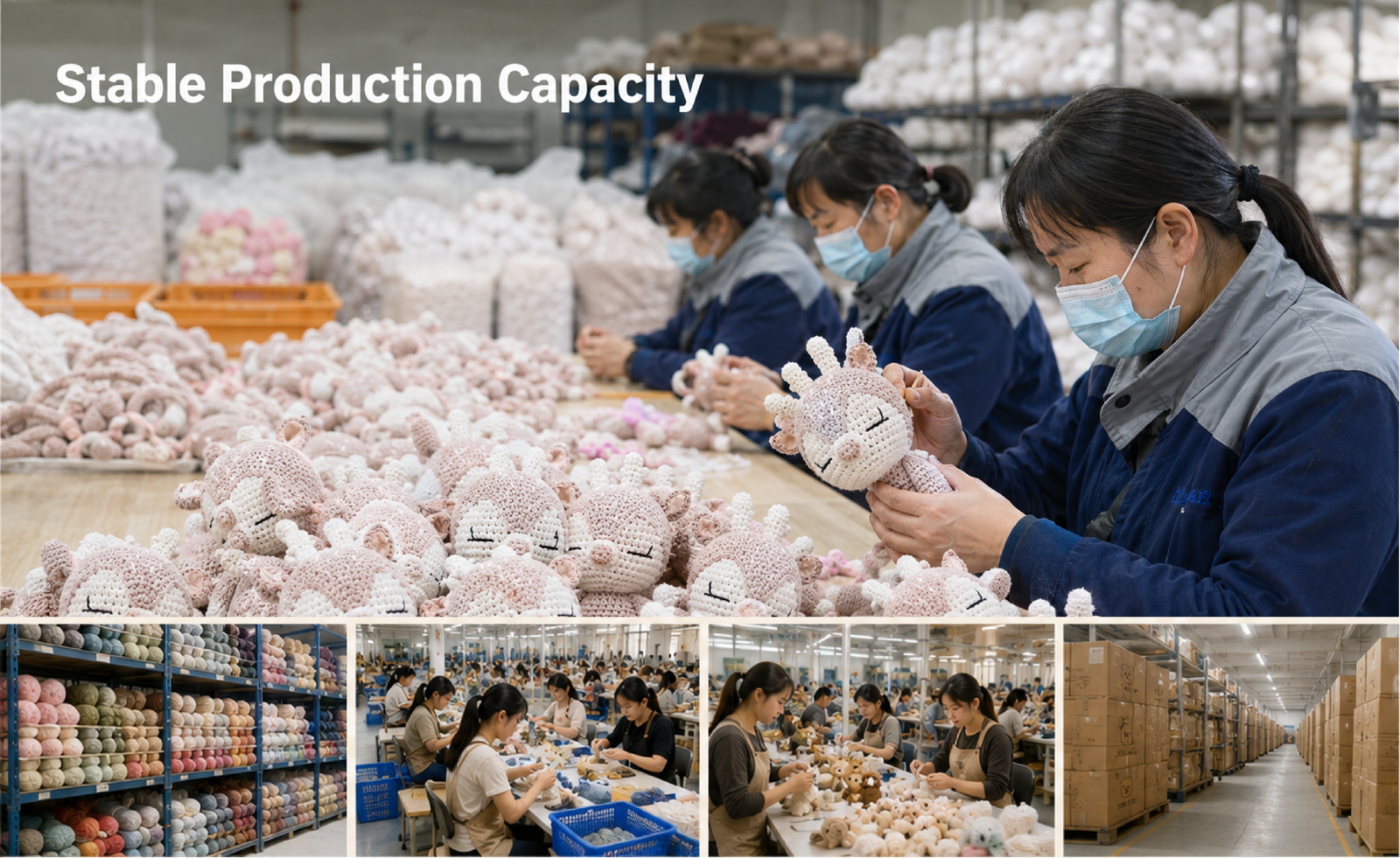
Can Handmade Crochet Be Produced at Scale?
Yes.
Large-scale crochet production does not rely on one artisan making thousands of identical products.
Instead, factories coordinate organized artisan networks using standardized production systems.
Large programs typically involve:
- Unified crochet patterns
- Production scheduling
- Material allocation
- Batch management
- Centralized finishing
- Multiple inspection stages
This allows brands to launch:
- Retail collections
- Seasonal campaigns
- Corporate gifts
- Promotional products
- Museum souvenir programs
while maintaining product consistency.
How Chinese Factories Support OEM and ODM Projects
Professional crochet manufacturers provide more than production.
Many also support product development.
OEM Services
Suitable when customers provide:
- Existing designs
- Technical drawings
- Brand specifications
The factory manufactures according to customer requirements.
ODM Services
Suitable when customers provide:
- Product concepts
- Reference images
- Market ideas
The factory assists with:
- Design development
- Pattern creation
- Material recommendations
- Packaging
- Product optimization
At U-MY Crochet, many projects begin with nothing more than a simple sketch.
Our team helps transform those ideas into retail-ready crochet collections.
Beyond Manufacturing: Packaging and Collection Development
Today's buyers often need more than individual products.
They require complete retail solutions.
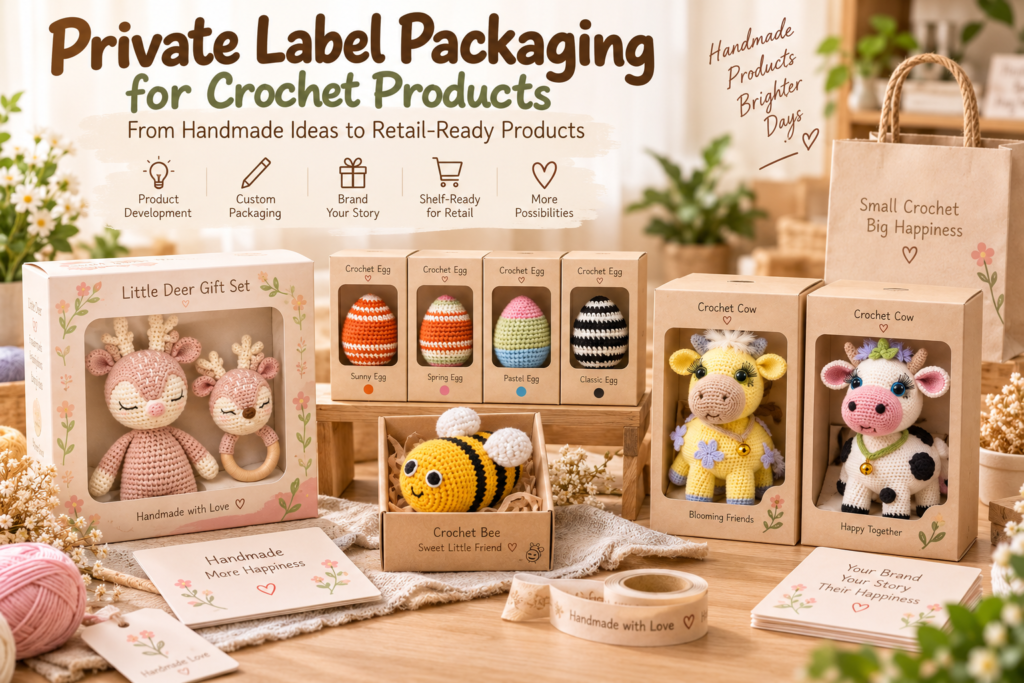
Professional crochet manufacturers may support:
- Custom gift boxes
- Story cards
- Hang tags
- Printed labels
- Retail packaging
- Seasonal collections
- Product photography guidance
This integrated approach simplifies product launches and strengthens brand presentation.
One thing we have consistently observed is:
Customers rarely purchase only a crochet toy—they purchase an entire brand experience.
Real Project Example: From Sketch to Retail Collection
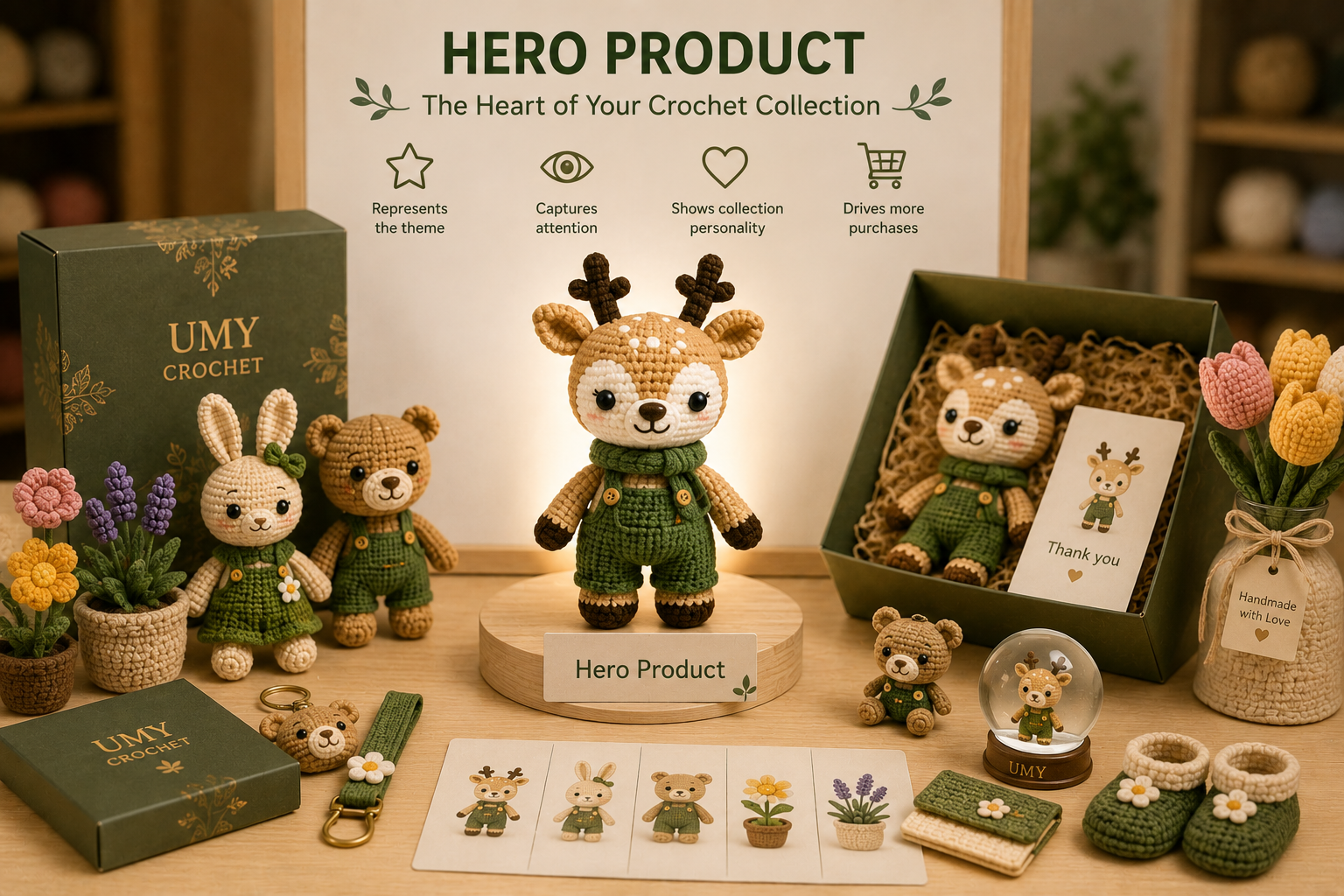
One international retailer approached us with a sketch for a custom mascot.
Initially, the project included only one product.
During development, we recommended expanding the concept into:
- A hero mascot
- Mini keychains
- Gift-box editions
- Seasonal accessories
- Story cards
The retailer first tested the hero product.
Customer demand quickly expanded the program into a complete product collection.
This project demonstrated an important lesson:
Successful crochet manufacturing often involves product strategy—not just production.
How Buyers Should Evaluate a Handmade Crochet Factory
Choosing a crochet supplier involves more than comparing prices.
Consider asking:
Production
- How many artisans support production?
- What is the monthly capacity?
- How are patterns standardized?
Product Development
- Do you provide OEM services?
- Do you offer ODM support?
- How long does sampling take?
Quality
- What inspection process do you use?
- Do you follow AQL standards?
- How do you manage product consistency?
Compliance
- Can you support CE, CPC, ASTM, UKCA, or EN71 requirements where applicable?
- Do you have recent product test reports?
- Can you explain your quality documentation process?
Packaging
- Can you customize gift packaging?
- Do you support retail-ready products?
- Can you produce complete collections?
Common Misconceptions About Handmade Crochet Manufacturing
"Handmade means inconsistent."
Not when standardized production systems are in place.
"Crochet factories only make toys."
Many manufacturers also produce:
- DIY kits
- Home décor
- Fashion accessories
- Baby gifts
- Corporate merchandise
- Museum souvenirs
"Large orders require machine production."
Professional artisan networks can support commercial-scale handmade production.
"Every crochet factory offers the same capabilities."
Factories vary significantly in:
- Design support
- Material sourcing
- Packaging
- Compliance
- OEM/ODM services
- Quality management
Why More Global Buyers Choose Professional Crochet Manufacturers
Buyers increasingly value suppliers that provide:
- Design support
- Flexible MOQs
- Stable quality
- Product development
- Packaging solutions
- Reliable communication
- International compliance support
Rather than sourcing from multiple vendors, many brands prefer one manufacturing partner capable of managing the complete project.
This improves efficiency while reducing coordination costs.
U-MY Crochet Factory at a Glance
Founded in 2013, U-MY Crochet is a professional handmade crochet manufacturer based in China.
Today, we support customers across more than 150 countries and regions, including:
- Retail brands
- Museum stores
- Baby product companies
- E-commerce sellers
- Gift companies
- Corporate buyers
- Distributors
Our capabilities include:
- More than 12 years of crochet manufacturing experience
- A network of more than 2,000 artisans
- OEM and ODM services
- Custom mascot development
- Sample development within approximately 7–15 working days
- Ready-stock and custom production
- Packaging customization
- Gift-set development
- International quality management
- Support for global compliance planning
Our mission is to combine the warmth of handmade craftsmanship with the reliability of professional manufacturing.
Frequently Asked Questions
Are handmade crochet products really made by hand?
Yes. Professional crochet products are handcrafted by trained artisans following standardized production specifications and quality-control procedures.
Can handmade crochet products be mass-produced?
Yes. Large-scale production is achieved through organized artisan networks, standardized patterns, centralized quality management, and structured production planning.
What products can Chinese crochet factories manufacture?
Many factories produce:
- Crochet toys
- Baby products
- DIY kits
- Home décor
- Crochet flowers
- Fashion accessories
- Corporate gifts
- Museum souvenirs
- Seasonal collections
How long does sample development usually take?
At U-MY Crochet, most samples are completed within approximately 7–15 working days, depending on product complexity.
What should buyers look for when choosing a crochet factory?
Evaluate:
- Product development capability
- Quality-control systems
- OEM/ODM experience
- Compliance support
- Packaging options
- Communication
- Production management
- Export experience
Final Thoughts
China's handmade crochet industry combines traditional craftsmanship with modern manufacturing management.
Professional factories do far more than produce crochet products.
After more than 12 years of working with customers around the world, we have learned that successful crochet manufacturing depends on three things:
✓ Skilled artisans.
✓ Standardized systems.
✓ Long-term collaboration.
Because while every crochet product is handmade, every successful project is built on careful planning.
Looking for a Reliable Handmade Crochet Manufacturer in China?
Whether you are developing your first crochet mascot, expanding a retail collection, launching a museum gift program, or sourcing OEM and ODM products, U-MY Crochet is ready to support your project from concept to delivery.
Contact us today to discuss your ideas and discover how professional handmade crochet production can help bring your brand to life.


 Chinese