
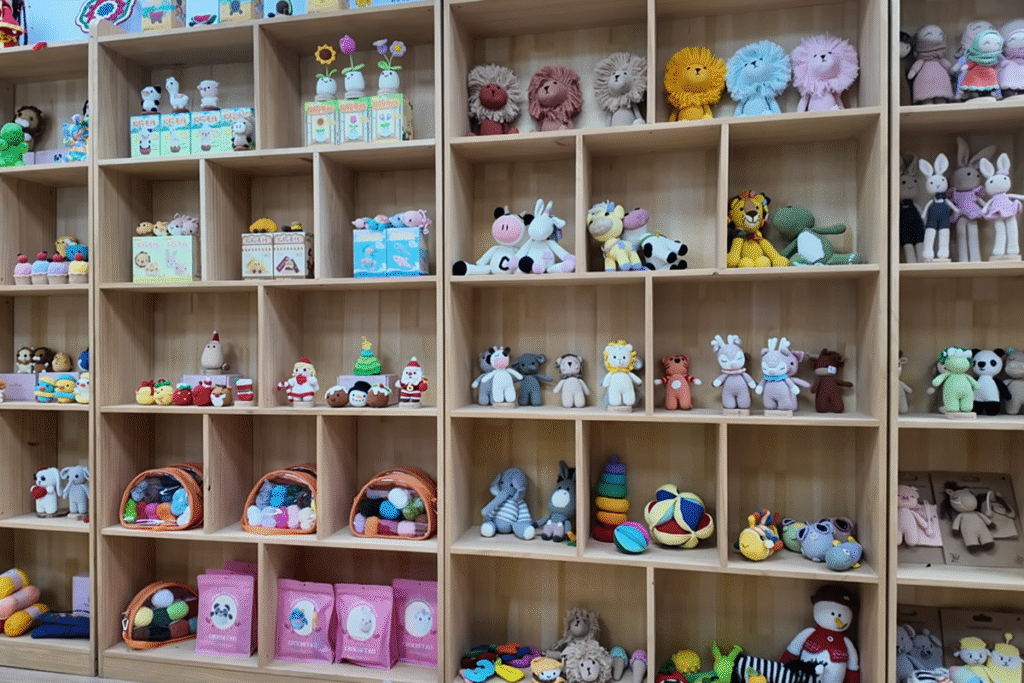
How Brands Transform Simple Ideas Into Market-Ready Crochet Products
Many successful crochet mascots do not begin as finished product designs.
They begin as sketches.
Sometimes it is a hand-drawn character on a notebook. Sometimes it is a digital illustration from a designer. Sometimes it is simply an idea described during a meeting.
Over the past 12 years, UMY Crochet Factory has helped museums, gift brands, retailers, startups, and corporate buyers across more than 150 countries and regions transform sketches into market-ready crochet products.
One thing we have consistently observed is that creating a successful crochet mascot involves much more than reproducing a drawing. The real challenge is turning a two-dimensional concept into a product that is attractive, manufacturable, safe, and commercially viable.
This article explains how a custom crochet mascot moves from the designer's sketchbook to the retail shelf.
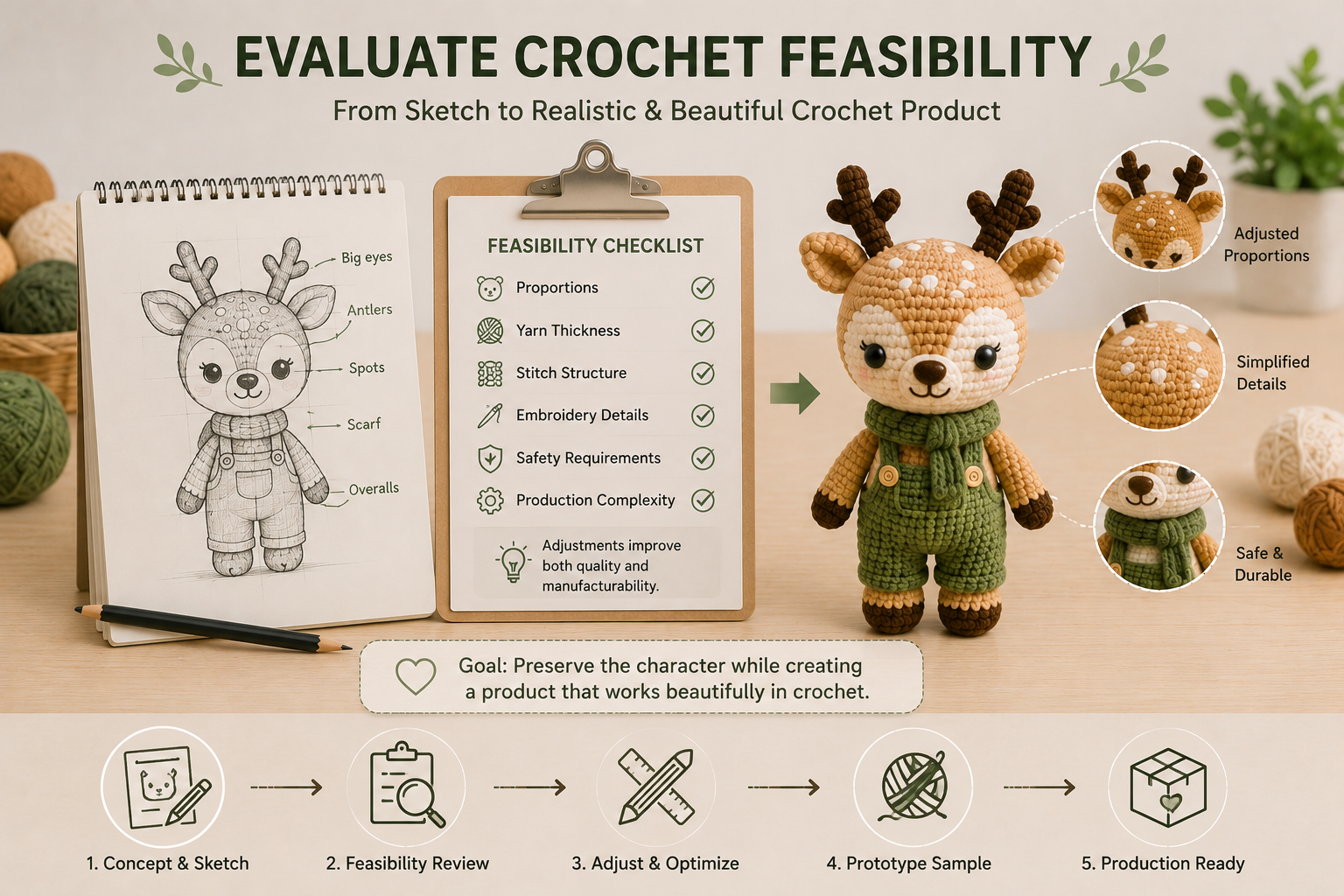
Why More Brands Are Creating Custom Crochet Mascots
In recent years, brands have increasingly used crochet mascots to strengthen emotional connections with customers.
Unlike mass-produced plastic products, crochet mascots offer:
- A handmade appearance
- Strong storytelling potential
- High customization flexibility
- Gift-ready appeal
- Cultural and emotional value
At UMY, we have supported projects for:
- Museum souvenir programs
- Corporate promotional campaigns
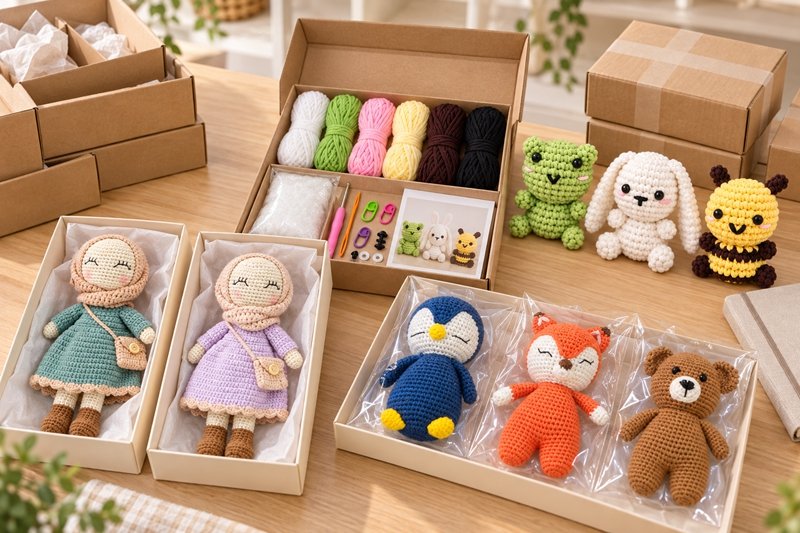
- Retail collections
- Tourism gifts
- Educational organizations
- Character licensing programs
One lesson we have learned is that customers rarely remember products alone.
They remember the stories attached to them.
Step 1: Starting With a Sketch or Concept
Every project begins with an idea.
Customers usually provide:
- Hand-drawn sketches
- Digital illustrations
- Brand guidelines
- Reference photos
- Existing mascots
- Product concepts
The initial sketch does not need to be perfect.
Many buyers worry that their drawings are too simple, but in reality, the goal at this stage is not technical accuracy—it is communication.
The most important questions are:
- Who is the mascot for?
- Where will it be sold?
- What emotions should it convey?
- What makes it recognizable?
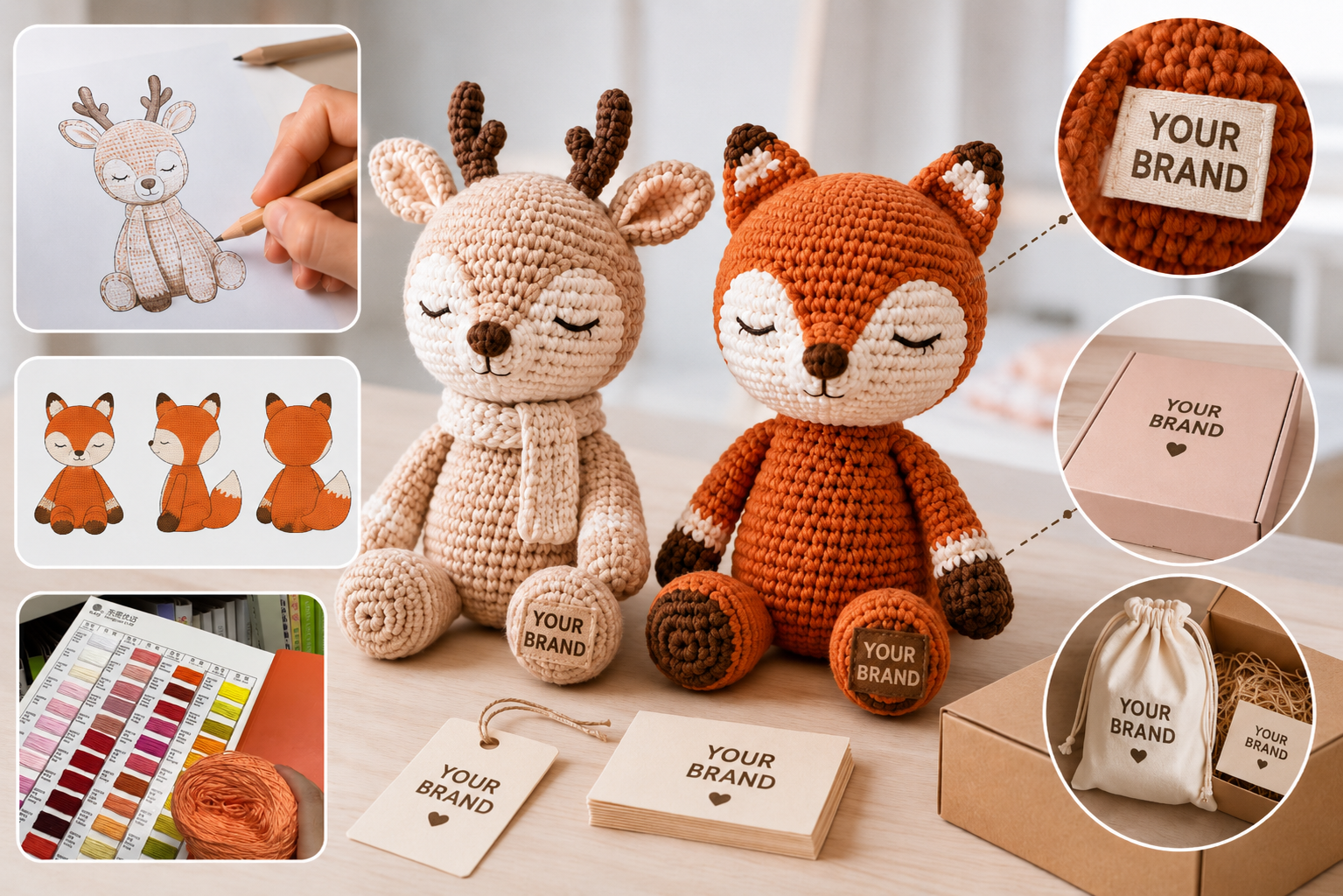
Step 2: Translating the Design Into Crochet Language
One of the biggest differences between illustration and crochet manufacturing is that not every design detail can be replicated exactly.
A sketch exists on paper.
A crochet mascot exists in yarn.
Our development team reviews:
- Body proportions
- Facial expressions
- Color combinations
- Accessories
- Embroidery details
- Structural stability
Over the years, we have found that successful crochet mascots balance two goals:
✓ Staying faithful to the original character.
✓ Adapting the design for handmade production.
Sometimes small changes improve the final product significantly.
For example:
- Simplifying tiny accessories
- Enlarging facial details
- Adjusting proportions
- Replacing printed elements with embroidery
These adjustments often improve durability and reduce production complexity without changing the personality of the mascot.
Step 3: Material Selection
Material selection has a major impact on both appearance and cost.
Depending on the project, customers may choose:
- Cotton yarn
- Organic cotton
- Recycled yarn
- Velvet yarn
- Milk cotton yarn
- Blended fibers
Additional components may include:
- Wooden accessories
- Safety eyes
- Embroidered logos
- Packaging inserts
- Hang tags
One thing we consistently observe is that material selection influences much more than aesthetics.
It affects:
- Product safety
- Retail pricing
- Texture
- Durability
- Compliance requirements
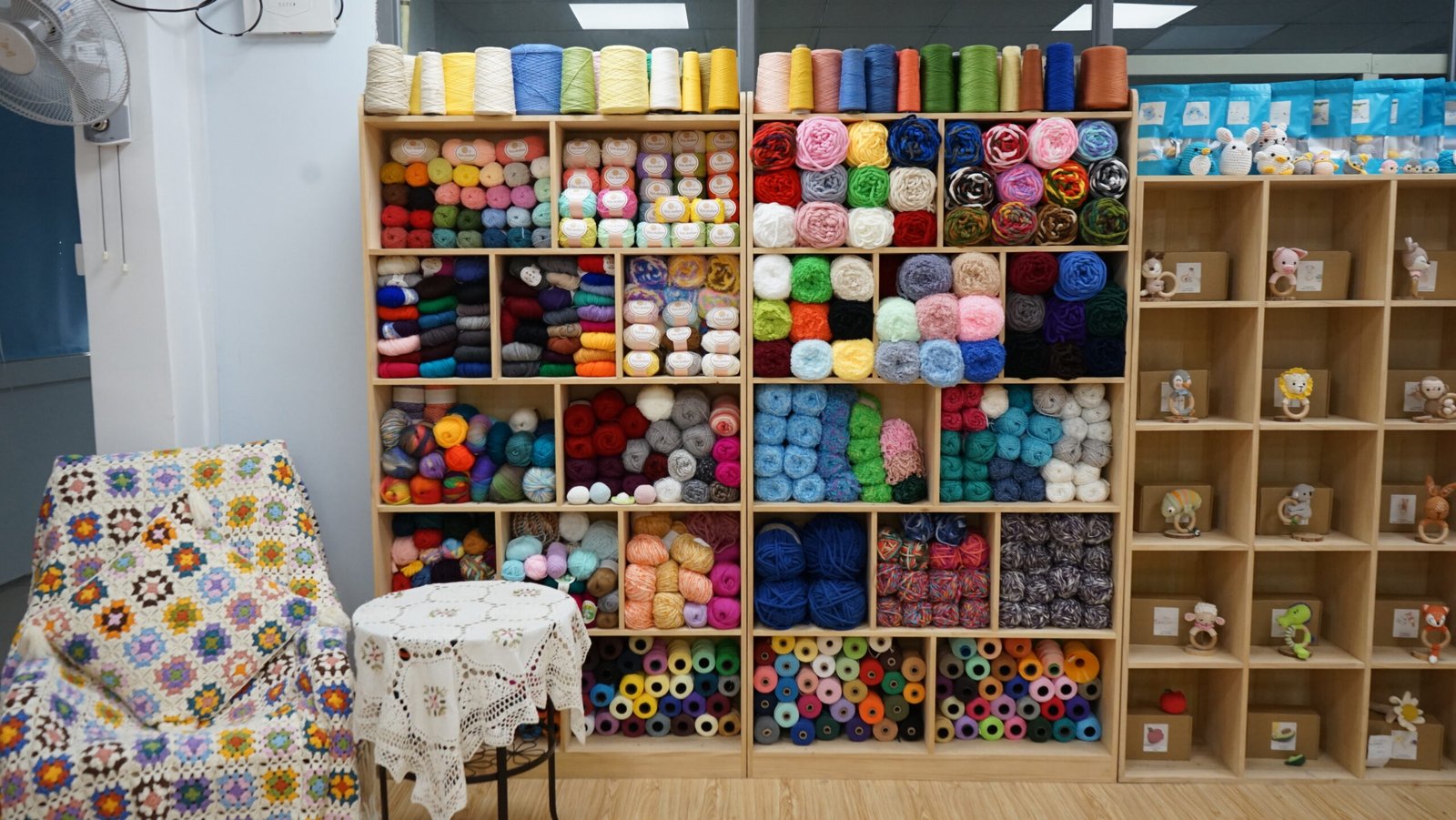
Step 4: Creating the First Sample
Once the design and materials are approved, sampling begins.
At UMY Crochet Factory, most crochet samples can be completed within approximately 7–15 working days, depending on complexity.
The sampling stage typically includes:
| Stage | Tasks |
|---|---|
| Design review | Evaluate feasibility |
| Material preparation | Select yarn and accessories |
| Crochet production | Create the first sample |
| Internal quality review | Check construction and details |
| Customer feedback | Collect revision requests |
One lesson we have learned from supporting more than 1,000 custom development projects is that sampling is not simply about making a product.
It is about solving problems before mass production begins.
Real Project Example: A Museum Mascot Collection
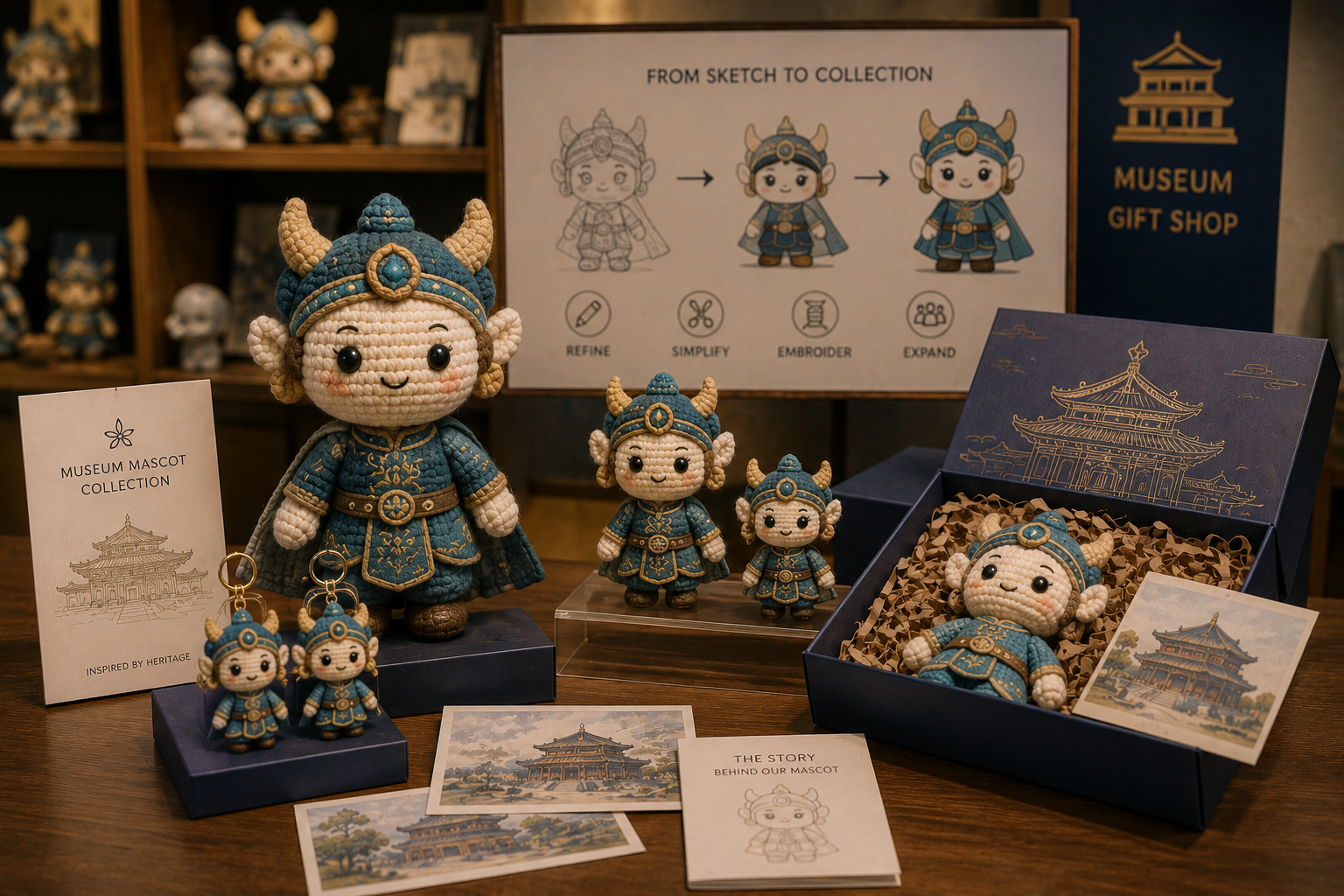
One museum customer approached us with a hand-drawn sketch inspired by a local cultural symbol.
Initially, the illustration contained many small decorative elements and highly detailed patterns.
After reviewing the design, our team suggested:
- Simplifying several accessories
- Enlarging embroidered details
- Creating multiple size options
- Developing matching packaging
The museum first launched:
- One hero mascot
- Two keychains
- One gift-box edition
After receiving positive visitor feedback, the collection gradually expanded into seasonal editions and limited releases.
This project reinforced an important lesson:
The most successful mascots are rarely individual products—they often become collections.
Step 5: Testing the Product Before Mass Production
Many buyers assume that once the sample is approved, production can begin immediately.
In reality, successful brands often conduct additional testing.
Common evaluations include:
- Customer feedback
- Retail display testing
- Packaging review
- Cost analysis
- Compliance checks
- Photography and marketing preparation
Retailers frequently ask:
- Does the mascot stand out on the shelf?
- Does the packaging communicate the story?
- Is the retail price appropriate?
- Will customers recognize the character?
Testing reduces risk and improves long-term product performance.
Step 6: Preparing for Production
Once the sample is finalized, production planning begins.
At UMY, preparation typically includes:
- Production scheduling
- Yarn sourcing
- Quality-control planning
- Packaging preparation
- Compliance verification
- Shipping coordination
Over the years, we have found that production challenges are often planning challenges.
Strong preparation helps ensure:
✓ Consistent quality.
✓ Stable delivery times.
✓ Lower production risk.
✓ Better customer experience.
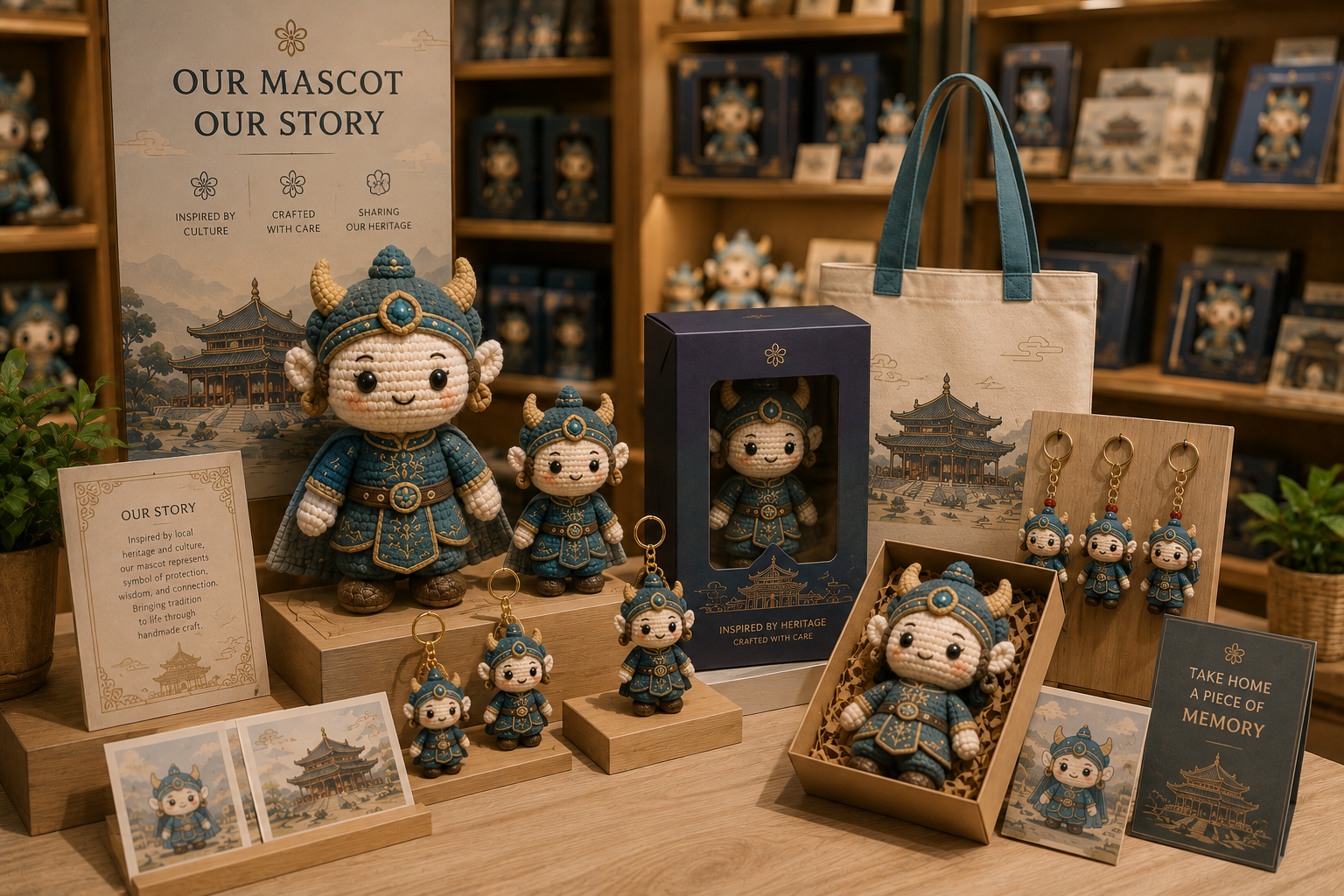
Step 7: Bringing the Mascot to Retail Shelves
The final stage is often overlooked.
A successful mascot launch involves much more than manufacturing.
Brands must consider:
- Retail display
- Packaging design
- Storytelling
- Product photography
- Social media content
- Seasonal campaigns
One thing we have consistently observed is that customers do not simply buy mascots.
They buy:
- Memories
- Stories
- Cultural connections
- Emotional experiences
That is why successful brands treat mascots as part of a larger ecosystem rather than standalone products.
Common Mistakes Buyers Make When Developing Crochet Mascots
After working with customers across more than 150 countries and regions, we have identified several common mistakes.
Expecting the Crochet Product to Match the Sketch Exactly
Crochet is a handmade medium, and certain adjustments are necessary.
Adding Too Many Small Details
Complex accessories often increase cost without improving customer experience.
Focusing Only on Production Cost
The cheapest design is not always the strongest commercial product.
Ignoring Packaging
Packaging influences perceived value and gift appeal.
Launching Too Many Variations Too Early
Many successful mascot programs begin with a small collection and expand later.
What Makes a Crochet Mascot Successful?
Across museum projects, retail collections, and promotional campaigns, several factors consistently contribute to success:
✓ A recognizable character.
✓ A clear story.
✓ Strong emotional appeal.
✓ Thoughtful packaging.
✓ Scalable production.
✓ Long-term collection potential.
One lesson we have learned after more than 12 years of crochet manufacturing is:
Great mascots are not created by copying sketches—they are created by translating ideas into experiences.
UMY Crochet Factory at a Glance
Founded in 2013, UMY specializes exclusively in crochet manufacturing.
Today, we support:
- Museums
- Retailers
- Gift brands
- Corporate buyers
- Tourism organizations
- Distributors
across more than 150 countries and regions.
Our capabilities include:
- More than 12 years of crochet manufacturing experience
- A network of more than 2,000 artisans
- OEM and ODM services
- Sample development within approximately 7–15 working days
- Custom packaging solutions
- Compliance support
- Gift-set and collection development
- International quality management systems
From the first sketch to the final retail product, our goal is to help customers turn creative ideas into successful crochet collections.
Frequently Asked Questions
Can you create a crochet mascot from a hand-drawn sketch?
Yes. Many projects begin with simple drawings, reference images, or written concepts.
How long does sample development take?
Most crochet samples can be completed within approximately 7–15 working days, depending on complexity.
Can the mascot include custom packaging?
Yes. Many customers develop gift boxes, story cards, labels, and branded packaging alongside the product.
Can crochet mascots be produced at scale?
Yes. With proper planning, quality control, and production management, crochet mascots can be manufactured in large quantities.
Can one mascot become an entire collection?
Absolutely. Many successful projects expand from a single character into keychains, gift sets, seasonal products, and collectible series.
Final Thoughts
The journey from sketch to shelf involves much more than manufacturing.
It requires collaboration between designers, developers, artisans, and retailers.
After supporting custom crochet projects for customers around the world, we have found that the strongest mascots combine:
✓ Creativity.
✓ Craftsmanship.
✓ Storytelling.
✓ Commercial strategy.
✓ Long-term vision.
Because in the end, customers rarely remember how a mascot was produced.
They remember how it made them feel.
Looking to Develop Your Own Crochet Mascot?
At UMY Crochet Factory, we help brands, museums, and retailers transform sketches into market-ready crochet products.
Whether you have a finished design or just an idea on paper, our team is ready to help bring your character to life.
Contact us today to start your next project.
 Chinese