
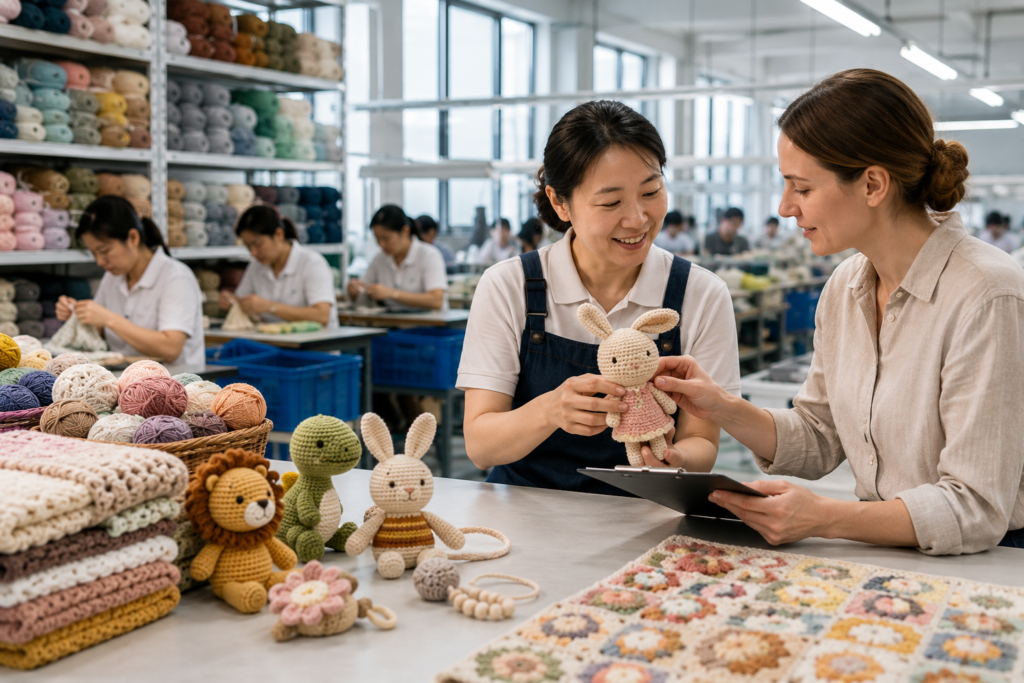
Lessons We’ve Learned After 12 Years of Crochet Manufacturing
Choosing a crochet factory in China can be challenging.
With thousands of suppliers offering similar products, many buyers struggle to determine which factory can truly deliver consistent quality, reliable lead times, and professional customization services.
Over the past 12 years, our team at UMY Crochet Factory has worked with gift companies, baby brands, retailers, distributors, museums, and international partners across multiple markets. During this journey, we have seen both successful sourcing partnerships and costly supplier mistakes.
One thing we have learned is simple:
The right crochet manufacturing partner can help you launch products faster, reduce quality risks, improve customer satisfaction, and support long-term growth.
In this guide, we share practical insights based on real manufacturing experience to help you choose a reliable crochet factory in China.
Why Choosing the Right Crochet Factory Matters
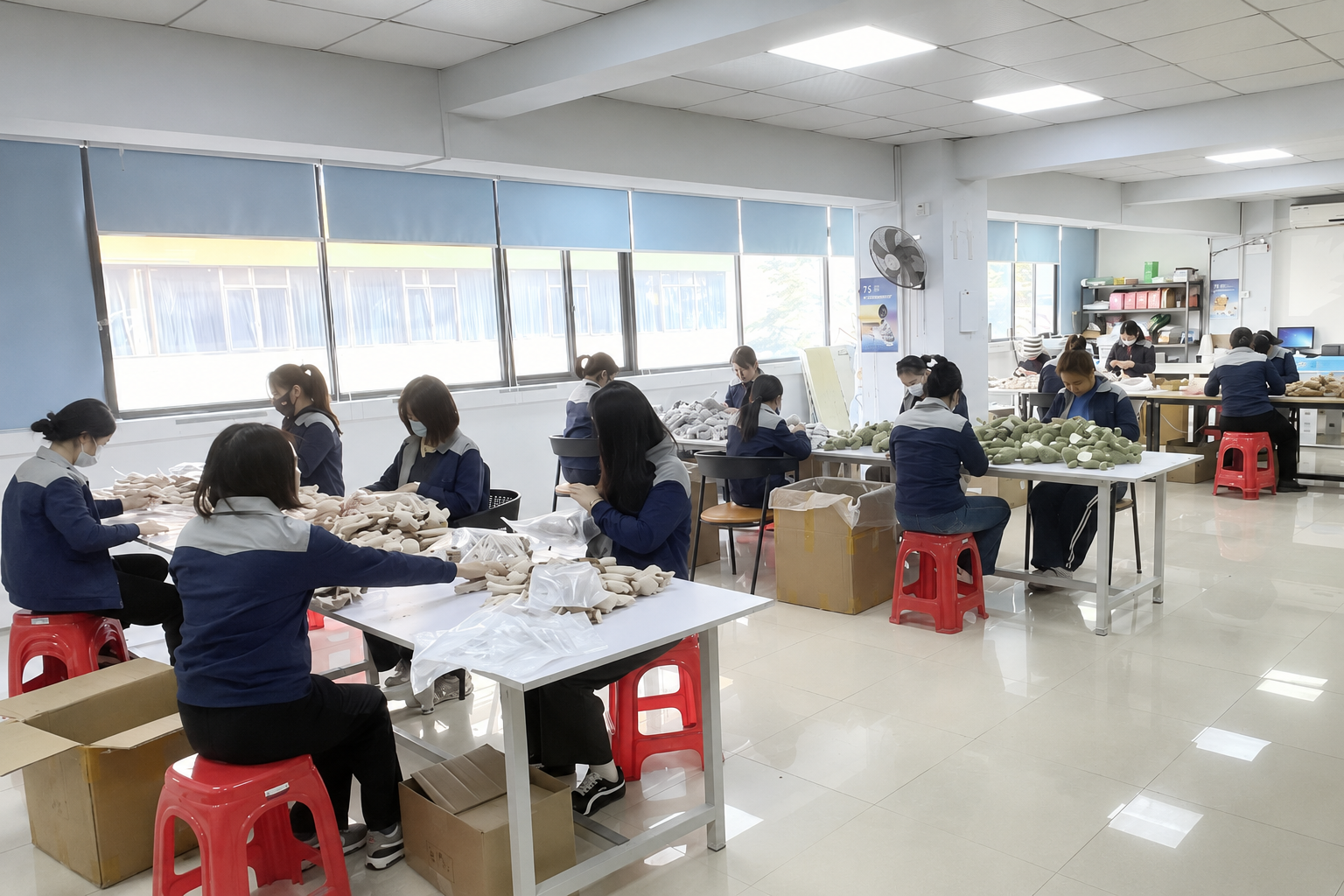
Unlike machine-molded products, crochet products rely heavily on handmade craftsmanship.
Every crochet toy, gift set, flower bouquet, DIY kit, or decorative item is created through a combination of artisan skills, production management, quality control, and material selection.
Many first-time buyers focus primarily on pricing.
However, experienced buyers know that supplier capability directly affects:
- Product quality consistency
- Delivery reliability
- Compliance performance
- Customer satisfaction
- Brand reputation
A factory that saves a few cents per unit but creates quality issues can ultimately cost far more than a professional manufacturing partner.
1. Look for Specialized Crochet Experience
One of the biggest mistakes buyers make is assuming that all textile factories can produce crochet products professionally.
Before selecting a supplier, ask:
- How long have they specialized in crochet products?
- Do they have dedicated crochet technicians?
- Have they worked with international customers?
- Can they support both development and production?
At UMY, crochet has been our core specialization since 2013.
Over the years, we have worked on everything from baby toys and gift sets to custom crochet flowers, DIY kits, museum projects, and large-scale brand collaborations.
2. Evaluate Their Custom Development Capability
Today's buyers rarely want generic products.
Instead, they need:
- Custom crochet dolls
- Brand-exclusive gift sets
- Licensed character products
- Seasonal collections
- Promotional products
- Private label packaging
One question we hear frequently is:
"Can you develop a crochet product from just a sketch?"
The answer should be yes.
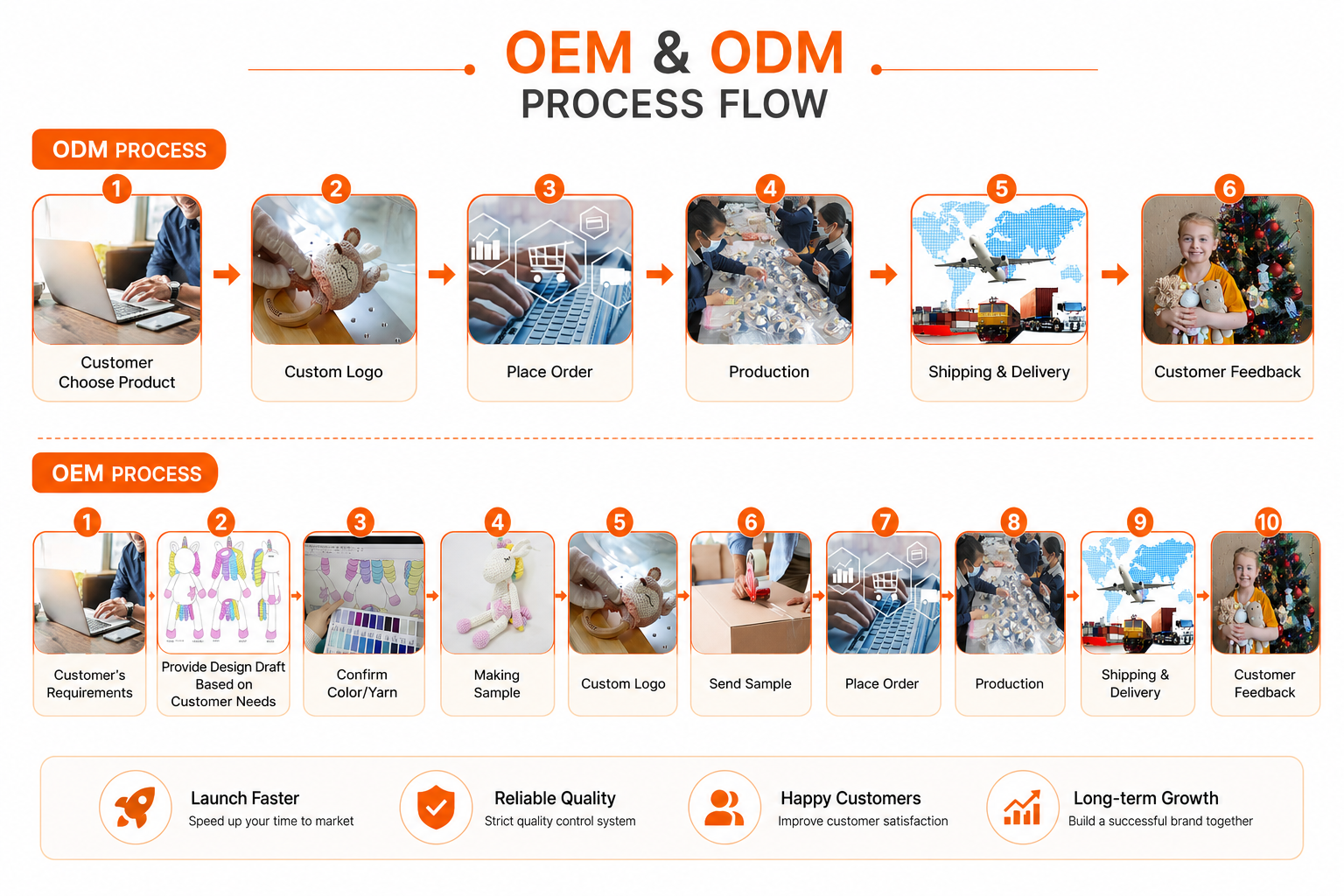
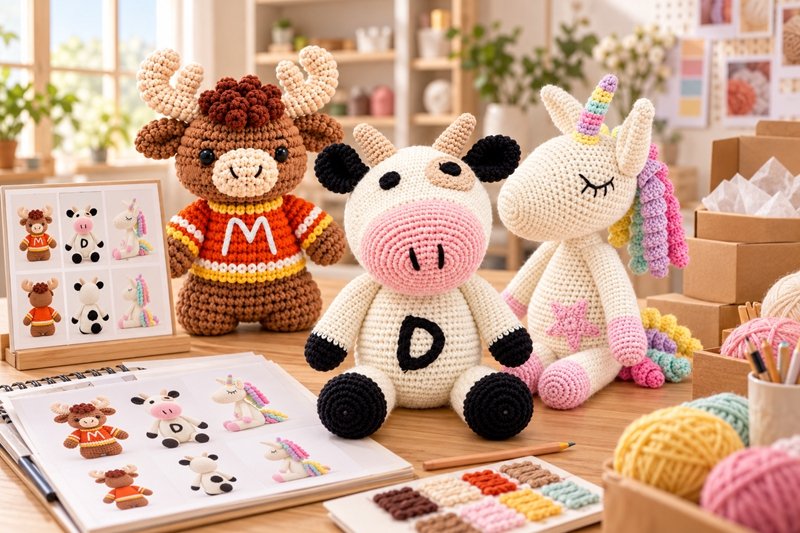
A professional factory should be able to transform:
- Hand sketches
- Reference photos
- Product concepts
- Character artwork
- Packaging ideas
into production-ready crochet products.
3. Verify Certifications and Compliance Experience
Many buyers underestimate the importance of compliance.
In reality, certification requirements vary significantly across markets.
For example:
United States
- CPC
- ASTM F963
Europe
- CE
- EN71
United Kingdom
- UKCA
A reliable supplier should not only provide testing support but also understand which certifications are required for your target market.
4. Review Production Capacity
Many suppliers can make beautiful samples.
Far fewer can deliver large-volume orders consistently.
Ask questions such as:
- What is your monthly production capacity?
- How do you manage peak seasons?
- Do you have backup production resources?
- How many experienced crochet technicians support production?
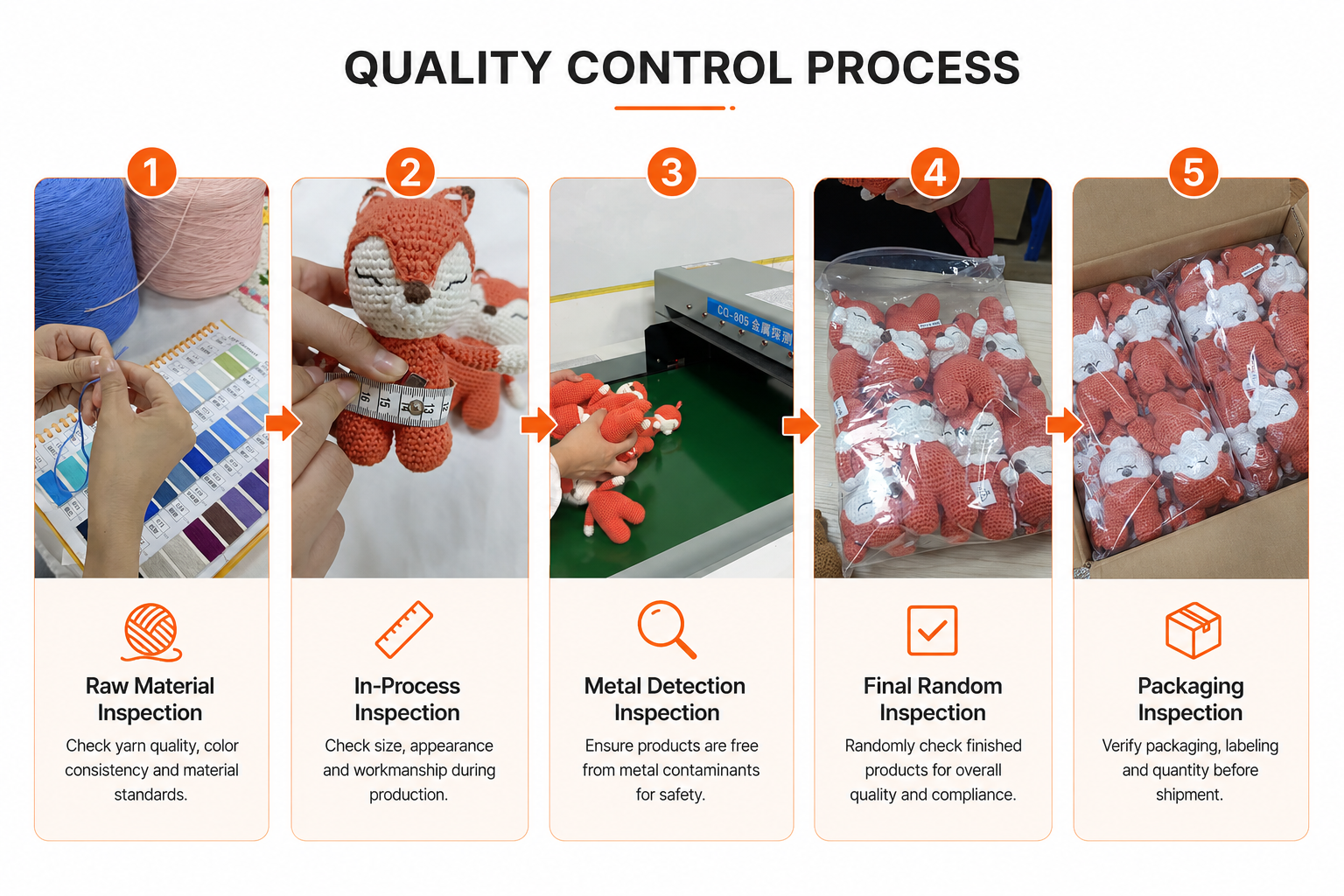
5. Understand Their Quality Control Process
Handmade products require structured quality management.
Quality should not depend solely on individual workers.
Instead, it should be supported by systems.
When evaluating suppliers, ask about:
- Material inspection
- In-process inspections
- Final inspections
- Needle detection procedures
- Packaging checks
This helps reduce defects and maintain consistency across production batches.
6. Check Sample Development Speed
Product development speed can significantly influence your market success.
Whether you are launching a new collection or responding to a trend, faster sampling means faster decision-making.
Ask:
- How long does sampling take?
- Can revisions be made during development?
- What information is required to start?
7. Evaluate Product Diversity
Examples include:
- Crochet toys
- Baby gift sets
- Crochet flowers
- DIY crochet kits
- Home decorations
- Fashion accessories
- Doll clothes
- Apparel
Many successful brands eventually expand from individual products into complete collections.
Working with a versatile supplier can simplify that process.
8. Assess Communication and Service
One lesson many experienced importers learn is that communication often matters as much as manufacturing capability.
Ask yourself:
- Are responses timely?
- Do they understand your requirements?
- Do they offer proactive suggestions?
- Do they identify potential risks?
The best suppliers do not simply take orders.
They act as partners who help improve products, solve problems, and support long-term growth.
9. Look for Real Project Experience
One of the strongest indicators of reliability is proven project history.
Look for evidence such as:
- Brand collaborations
- Customer visits
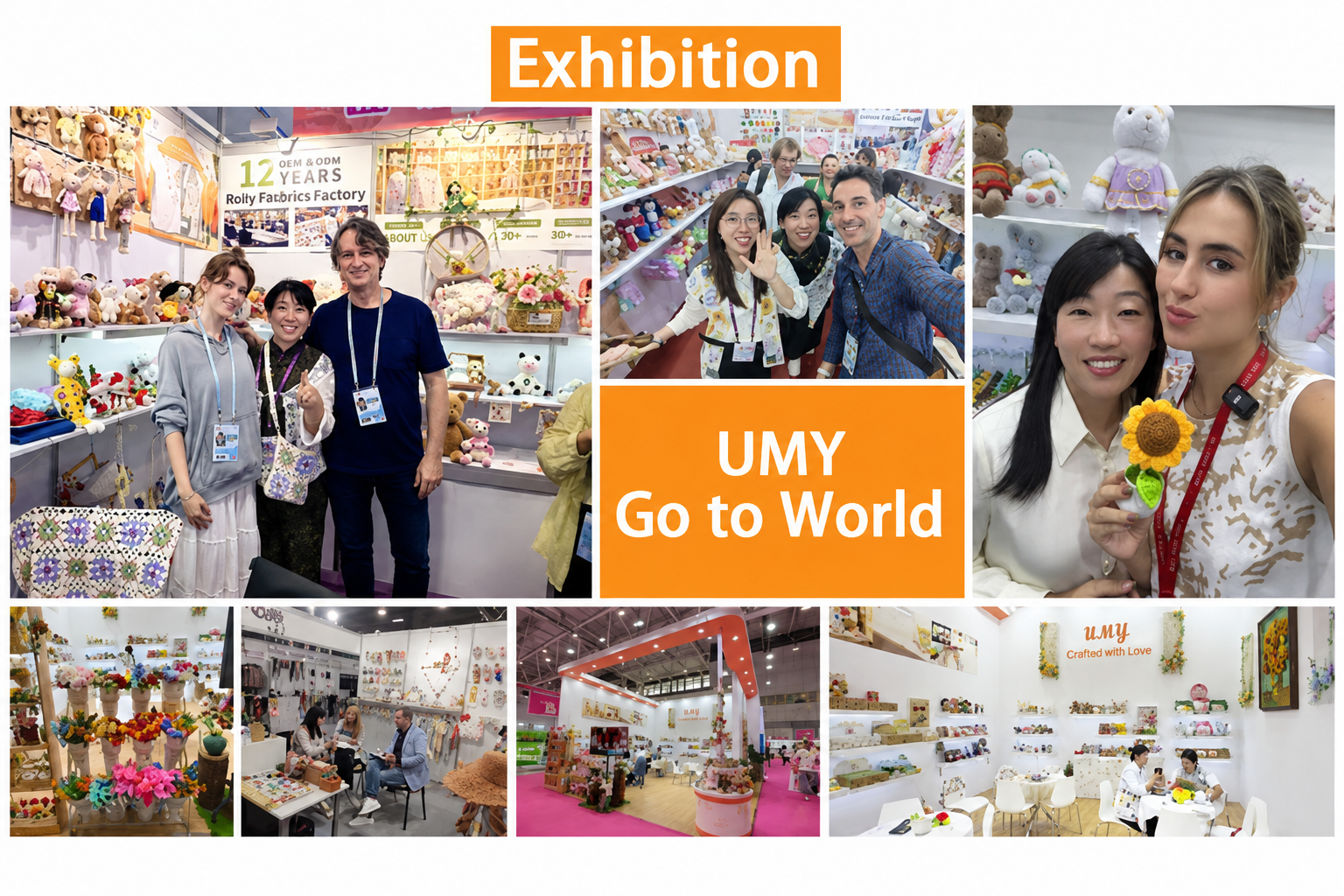
- Exhibition participation
- Case studies
- Long-term partnerships
Experienced factories often understand the realities of international business better than suppliers with limited project exposure.
Real project experience usually leads to better communication, stronger problem-solving, and smoother execution.
10. Consider Social Responsibility
Modern consumers increasingly care about where products come from and how they are made.
Many brands now evaluate suppliers based on both manufacturing capability and social impact.
For crochet products, social responsibility often includes:
- Supporting artisan communities
- Preserving traditional craftsmanship
- Creating employment opportunities
- Promoting sustainable production
Factories that invest in people often create stronger products and stronger partnerships.
Frequently Asked Questions
What is a reasonable MOQ for custom crochet products?
MOQ varies depending on product complexity, materials, and customization requirements. Professional factories should provide flexible solutions whenever possible.
Can crochet products be customized with my brand?
Yes. Most experienced crochet manufacturers support private label development, logo customization, packaging customization, and exclusive designs.
How long does crochet sampling take?
Sampling timelines vary, but experienced factories typically provide samples within a few weeks depending on complexity.
Can handmade crochet products be produced at scale?
Yes. With proper production systems, artisan networks, and quality management, crochet products can be produced consistently at commercial scale.
Final Thoughts
After more than a decade in crochet manufacturing, we have learned that choosing the right factory is about much more than price.
The best manufacturing partner combines:
✓ Real experience
✓ Professional development capability
✓ Compliance knowledge
✓ Quality management
✓ Reliable production capacity
✓ Strong communication
✓ Long-term partnership support
Whether you are developing crochet dolls, gift sets, flowers, DIY kits, or custom collections, investing time in supplier selection can have a lasting impact on your business success.
Looking for a Reliable Crochet Manufacturing Partner?
If you are exploring custom crochet products, private label collections, or scalable handmade production, our team would be happy to discuss your project and share practical recommendations based on years of manufacturing experience.
Contact us today to start your next crochet project.
 Chinese