
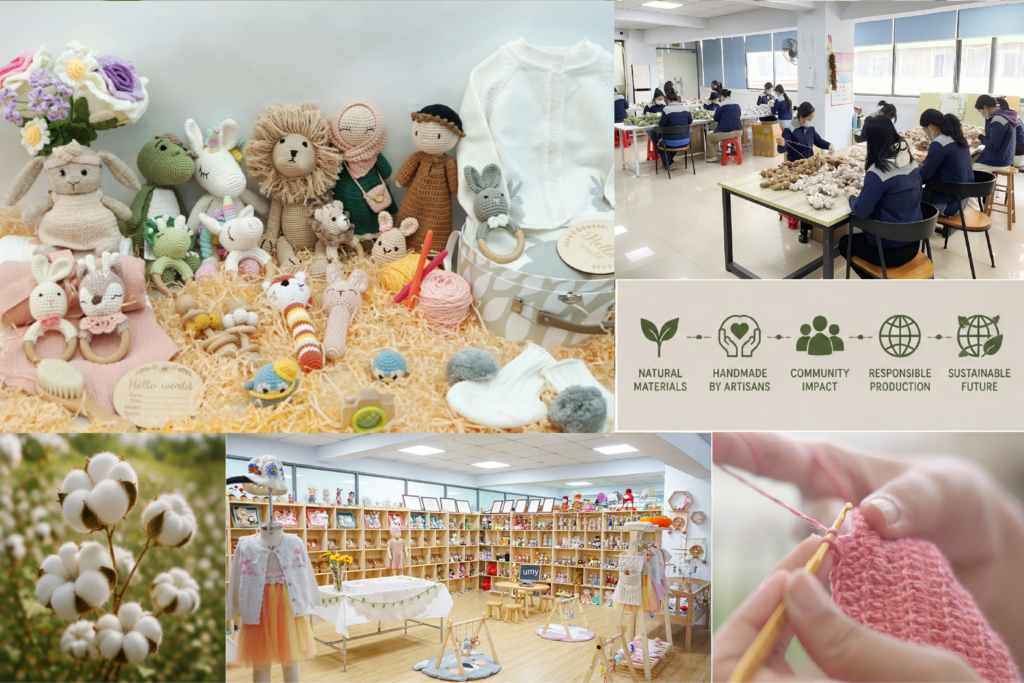
Turning Craftsmanship, Responsible Production, and Human Connection Into Meaningful Brand Value
Today’s consumers are increasingly looking beyond the products they purchase.
They want to understand:
- Where products come from
- Who makes them
- What values brands represent
- Whether their purchases create a positive impact
For many global brands, ESG (Environmental, Social, and Governance) is no longer only a corporate responsibility topic.
It has become part of:
- Brand storytelling
- Customer connection
- Product differentiation
- Long-term business strategy
Handmade crochet products provide a unique opportunity for brands to build ESG stories because every product naturally connects:
- Materials
- Human craftsmanship
- Community impact
- Responsible production
At U-MY Crochet, we have specialized in handmade crochet manufacturing since 2013, supporting global brands, retailers, museum stores, gift companies, and cultural organizations across more than 150 countries and regions.
Through years of developing crochet toys, gift collections, cultural products, and custom brand projects, we have observed:
The strongest ESG stories are not created by adding sustainability messages after production. They are built into the product development process from the beginning.
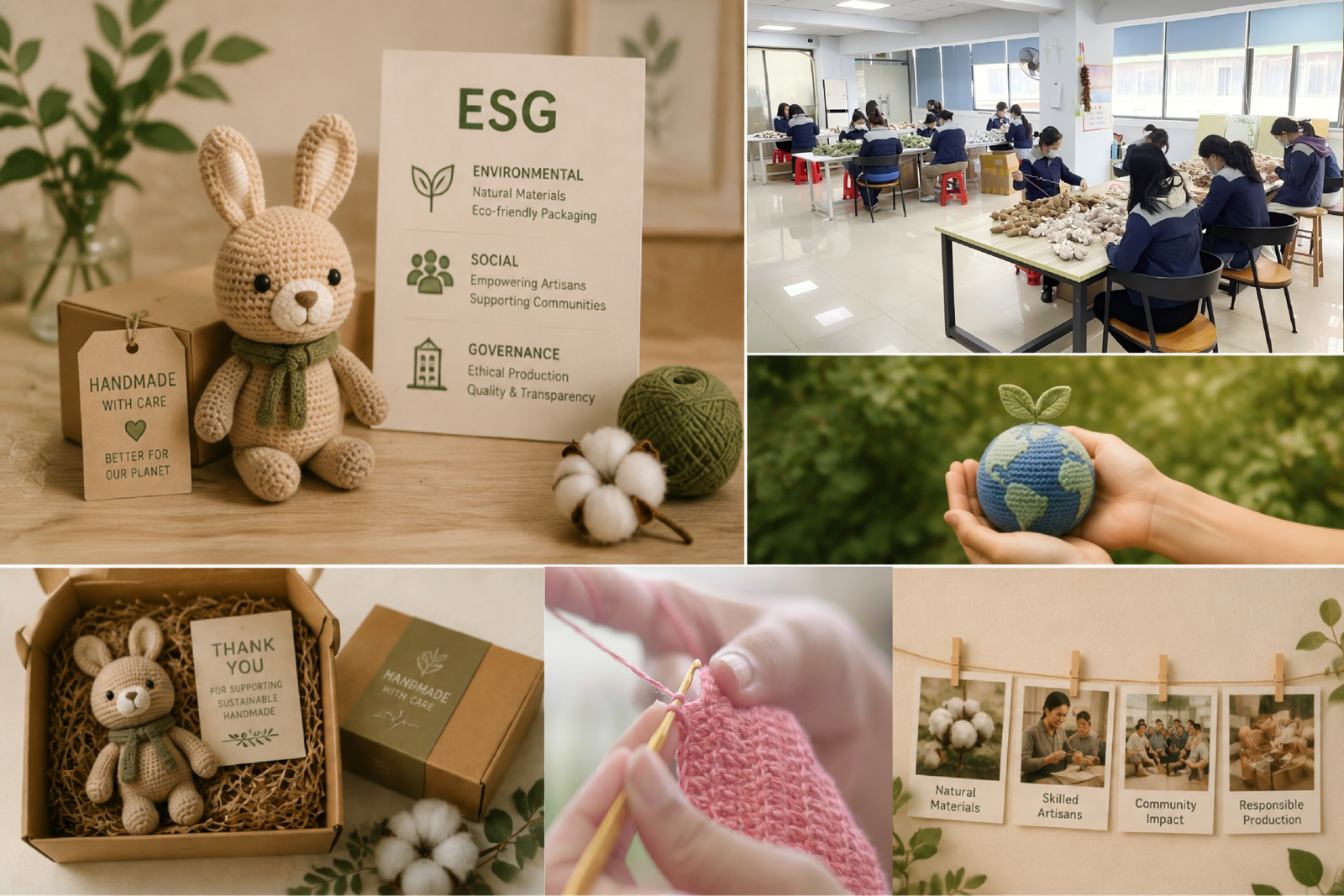
What Does ESG Mean in Handmade Crochet Manufacturing?
ESG represents three important areas:
Environmental
How products and materials impact the environment.
Examples include:
- Responsible material selection
- Sustainable yarn options
- Waste reduction
- Long-lasting product design
Social
How production affects people and communities.
Examples include:
- Supporting artisan skills
- Creating employment opportunities
- Maintaining fair production relationships
- Preserving traditional craftsmanship
Governance
How businesses manage responsibility and transparency.
Examples include:
- Production transparency
- Quality management
- Compliance systems
- Responsible supplier relationships
Every stitch represents time, knowledge, and craftsmanship.
Why Handmade Crochet Is Naturally Connected With ESG Storytelling
Many manufactured products are separated from the people who create them.
Handmade crochet is different.
The production process itself contains a story.
A crochet product can communicate:
- Who created it
- How it was developed
- Why it was made
- What values it represents
This makes crochet especially suitable for brands that want to create emotional connections.
Common applications include:
- Sustainable lifestyle brands
- Museum gift shops
- Ethical gift companies
- Baby product brands
- Cultural organizations
- Premium retailers
Environmental Stories: Choosing Materials With Purpose
Sustainability often begins with material decisions.
Brands developing crochet products can consider different material options based on their goals.
Common choices include:
- Cotton yarn
- Organic cotton yarn
- Recycled fibers
- Responsible material blends
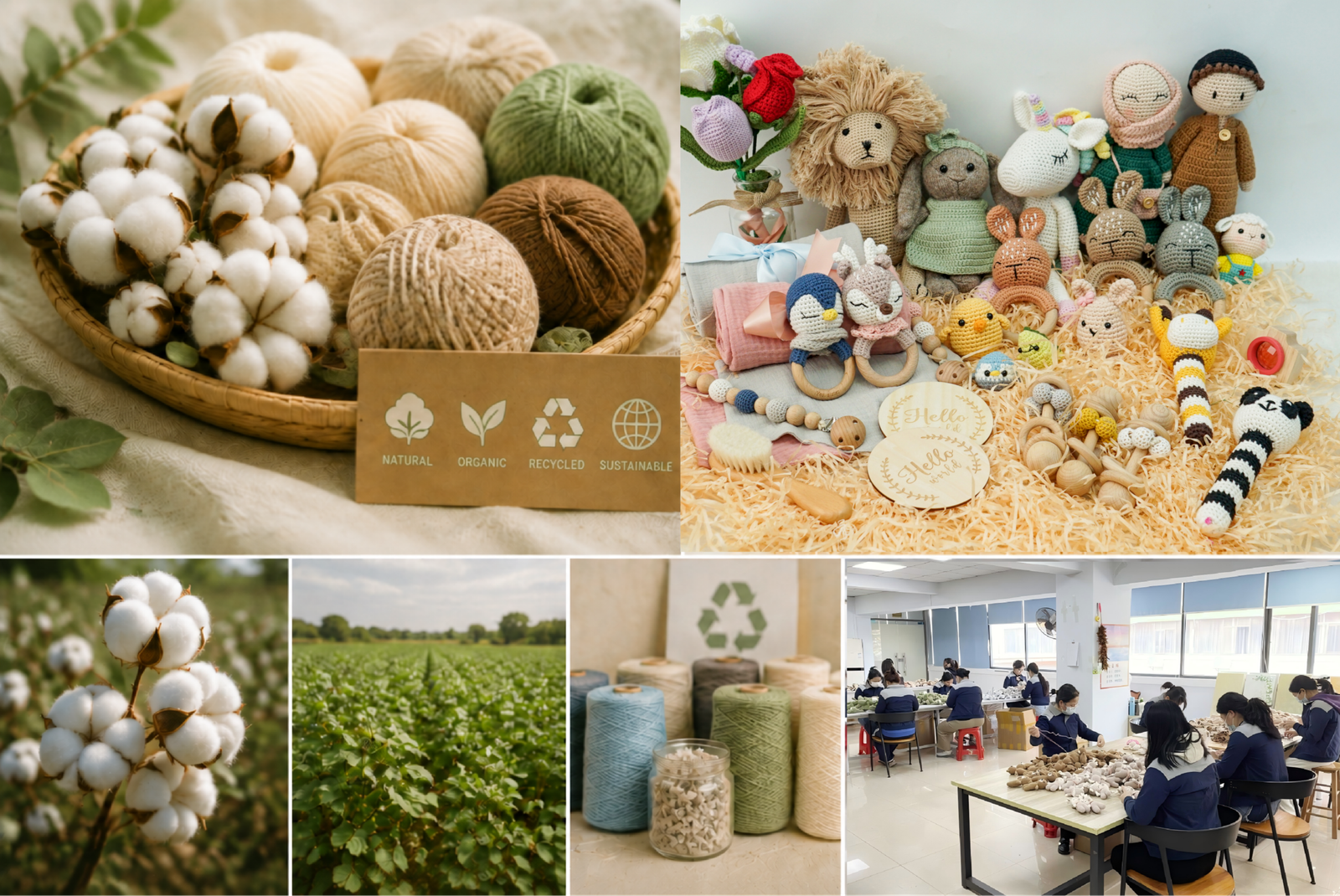
Cotton Yarn: Natural Craftsmanship and Versatility
Cotton yarn is one of the most widely used materials in crochet manufacturing.
It is popular because of:
- Soft texture
- Natural appearance
- Good stitch definition
- Strong color performance
Cotton is commonly used for:
- Crochet dolls
- Baby gifts
- Amigurumi toys
- Crochet flowers
- Home decorations
For many brands, cotton helps connect handmade craftsmanship with natural product positioning.
Organic Yarn: Supporting Premium Sustainability Positioning
Organic yarn options are often selected by brands that want stronger sustainability communication.
They are commonly considered for:
- Premium collections
- Eco-conscious brands
- Natural lifestyle products
- Baby-related products
However, professional product development requires balancing:
- Sustainability goals
- Product performance
- Cost expectations
- Market positioning
The most sustainable choice is not always the most expensive material.
The best choice is the one that matches the product purpose.
Recycled Fibers: Supporting Circular Design Concepts
Recycled fibers provide another pathway for brands exploring sustainable collections.
They can support stories around:
- Waste reduction
- Circular materials
- Environmental awareness
However, brands should evaluate:
- Texture
- Durability
- Appearance
- Customer expectations
Sustainability should improve the product story while maintaining product quality.
Social Impact: The Human Story Behind Every Crochet Product
The biggest difference between crochet and many automated products is the human element.
Crochet requires:
- Skill
- Patience
- Training
- Experience
A handmade crochet product is not only a physical item.
It represents human creativity.
How Crochet Manufacturing Can Support Communities
A professional artisan-based production system can provide:
- Skill development
- Stable production opportunities
- Income opportunities
- Preservation of traditional crafts
At U-MY Crochet, our production model supports a large artisan network, including many skilled crochet workers from local communities.
Our goal is not only producing products.
It is creating a sustainable connection between craftsmanship and global business opportunities.
Preserving Traditional Craftsmanship Through Modern Markets
Many traditional handmade skills face challenges when younger generations move away from craft-based work.
Commercial crochet projects can help preserve these skills by creating new market opportunities.
For example:
A traditional crochet technique can be transformed into:
- A modern gift collection
- A cultural souvenir
- A lifestyle product
- A brand collaboration
This allows craftsmanship to continue evolving.
Governance: Why Transparency Matters in ESG Manufacturing
A strong ESG story requires more than good intentions.
Brands increasingly want transparency about:
- Manufacturing processes
- Supplier relationships
- Quality systems
- Product compliance
Professional crochet manufacturers should be able to explain:
Production Process
How products move from:
Concept
↓
Sample
↓
Production
↓
Inspection
↓
Shipment
Quality Management
Including:
- Sample approval
- Production monitoring
- Final inspection
- Safety checks
Compliance Requirements
[Depending on the market, crochet products may require consideration of:
- ASTM F963
- CPC
- EN71
- CE
- UKCA](https://www.cpsc.gov/Business--Manufacturing/Business-Education/Toy-Safety)
Responsible manufacturing combines craftsmanship with professional systems.
Real Project Insight: Building an ESG Story Through a Crochet Collection
One common situation we see is that brands want to create products with stronger emotional and sustainability value.
However, many brands initially focus only on:
- Product appearance
- Cost
- Packaging
During development, we often help brands evaluate:
- Material selection
- Product story
- Artisan craftsmanship
- Packaging communication
- Customer experience
For example:
A gift-focused brand wanted to develop a handmade crochet collection that represented warmth and connection.
Instead of simply creating individual products, the project focused on:
- Natural material selection
- Meaningful product design
- Handmade storytelling
- Gift-ready presentation
The result was not just a product collection.
It became a brand experience.
This reflects an important lesson:
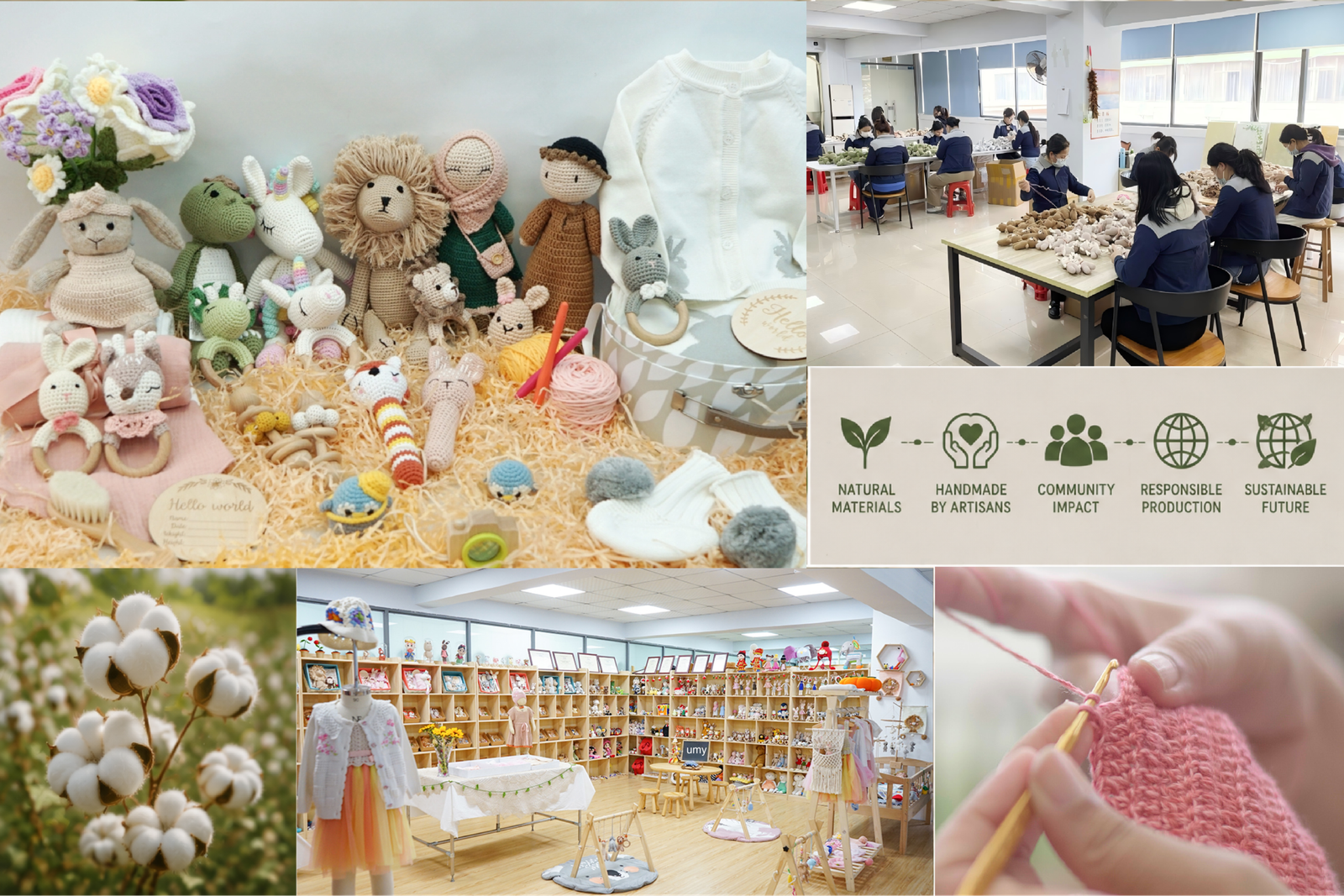
How Brands Use Handmade Crochet Products for ESG Marketing
Handmade crochet products can support different brand storytelling approaches.
1. Sustainability Story
Brands can highlight:
- Natural materials
- Responsible choices
- Long-lasting products
Example:
“A handmade collection created with thoughtfully selected materials.”
2. Social Impact Story
Brands can highlight:
- Artisan craftsmanship
- Community connection
- Human creativity
Example:
“Each product represents the skill and dedication behind handmade creation.”
3. Cultural Story
Brands can highlight:
- Traditional techniques
- Local inspiration
- Cultural preservation
Example:
“A modern product inspired by traditional craftsmanship.”
4. Emotional Story
Brands can highlight:
- Care
- Connection
- Meaningful gifting
Example:
“A product designed to create emotional moments.”
Why ESG Storytelling Creates Business Value
ESG is not only about responsibility.
It can also strengthen commercial value.
For brands, meaningful ESG stories can support:
Customer Trust
Consumers often connect more strongly with products that have authentic stories.
Brand Differentiation
Handmade products can stand apart from mass-produced alternatives.
Premium Positioning
Craftsmanship and responsible production can increase perceived value.
Long-Term Brand Loyalty
Customers remember products that represent meaningful values.
How U-MY Helps Brands Build ESG-Focused Crochet Collections
Since 2013, U-MY Crochet has supported international customers in developing:
- Custom crochet dolls
- Baby gift collections
- Museum souvenirs
- Cultural products
- Lifestyle collections
- Corporate gifts
Our support includes:
Product Development
From:
- Sketches
- Concepts
- Samples
- Material selection
to:
- Final production
Sustainable Material Evaluation
Helping brands choose suitable options based on:
- Product purpose
- Market positioning
- Customer expectations
Responsible Manufacturing Support
Combining:
- Artisan craftsmanship
- Production management
- Quality control
- International export experience
Global B2B Experience
Supporting:
- Retailers
- Gift companies
- Museum stores
- Lifestyle brands
- E-commerce businesses
Our mission is to help brands create crochet products that are not only beautiful, but meaningful.
Frequently Asked Questions
Can crochet products support ESG branding?
Are handmade products automatically sustainable?
Not necessarily. Sustainability depends on material choices, production practices, supplier transparency, and product lifecycle considerations.
Why are crochet products suitable for social impact programs?
Can sustainable crochet products be produced at commercial scale?
Yes. Professional crochet manufacturers combine artisan networks, standardized processes, and quality systems to support larger production programs.
How can brands communicate ESG value through crochet products?
Brands can communicate ESG value through:
- Material stories
- Artisan stories
- Production transparency
- Cultural connections
- Product storytelling
Conclusion
The future of responsible products is not only about what brands sell.
It is also about the stories behind those products.
Handmade crochet creates a unique connection between:
- Sustainable materials
- Human craftsmanship
- Community impact
- Brand values
For global brands, crochet products provide an opportunity to transform ESG principles into something customers can see, touch, and remember.
At U-MY Crochet, we believe every stitch can carry meaning.
Because the strongest brand stories are not simply created through marketing.
They are created through responsible choices made throughout the entire product journey.
 Chinese